
 Bitaigen Research
In this article we systematically outline the core concepts and use‑cases of Ethereum, helping newcomers quickly understand why it is often called a blockchain operating system, and unpacking the practical significance of key technologies such as smart contracts and DApps. Through easy‑to‑follow examples, you will gain a clearer picture of Ethereum’s value and ecosystem—continue reading for the full answer.
What is Ethereum? What can Ethereum do?
Ethereum is a decentralized blockchain platform that supports smart contracts and distributed applications (DApps). Its native token is Ether, and the network runs trust‑less operations through a worldwide set of nodes.
Ethereum functions like an operating system for blockchains, offering an open development environment built specifically for decentralized applications (DApps). The name combines “Ether” (the original term for the cryptocurrency) with the Greek suffix “‑rum”; early Chinese communities translated it as “以太坊” (Ethereum).
As a self‑contained economic system, Ethereum can execute transferable computation and data. The cryptocurrency used on the platform is Ether (ETH). Developers can write and deploy smart contracts on‑chain, allowing code to run automatically and thereby implement a wide range of business logic.
Ethereum is capable of carrying virtually any type of transaction or protocol. Compared with traditional payment methods such as credit cards or PayPal, the cost is generally lower, and the process is fully decentralized, trust‑free, secure, and resistant to censorship.
Thanks to its programmable nature, thousands of applications and digital assets have been built on Ethereum worldwide. Since 2017, more than 20 enterprises—including JPMorgan Chase, Microsoft, and Intel—have launched the Enterprise Ethereum Alliance, and today the alliance counts over 150 member organizations.
Frequently Asked Questions About Ethereum
How does Ethereum differ from Bitcoin?
- Technical level: Both use blockchain technology and a distributed ledger, but Bitcoin is primarily designed for value storage and transfer.
- Functional level: Ethereum aims to provide a general‑purpose runtime environment that supports a variety of smart contracts and decentralized applications, whereas Bitcoin focuses on the digital currency itself.
Why is Ethereum called the “world computer”?
- The Ethereum network consists of thousands of nodes around the globe that collectively execute on‑chain code, effectively forming a distributed “world computer.”
- In the future, anyone can run their own applications on this platform without relying on centralized servers.
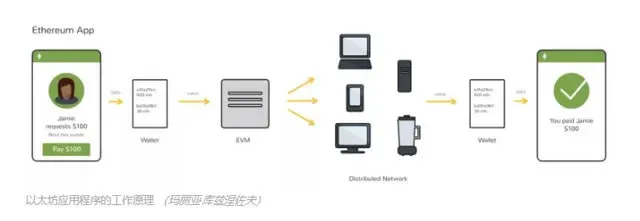
How do Ethereum applications work?
- Similar to colorful icons in a traditional app store, an Ethereum DApp relies on on‑chain smart contracts beneath the user‑interface layer to manage data and business logic.
- When using these applications, users must pay Ether as a gas fee to incentivize nodes to validate and execute the contracts.
What’s next for Ethereum?
- Today Ethereum faces scalability challenges; the network’s throughput is limited, making it hard to serve a massive number of simultaneous users.
- Ethereum 2.0 launched on December 1 2020, introducing Proof‑of‑Stake (PoS) and sharding technologies to boost performance and reduce energy consumption.
- Other scaling solutions, such as the Raiden Network—which has been under development for several years—continue to improve transaction speed and cost on the main chain.

Ethereum and a Decentralized Internet
Before diving into Ethereum, it is essential to understand the role of intermediaries.
Currently, platforms such as Gmail, Facebook, and PayPal act as intermediaries, handling users’ personal data,
*Note: While this article does not delve into tax matters, be aware that cryptocurrency gains may be taxable in your jurisdiction. For fiat transactions, the global market typically uses USD and SEPA/SWIFT transfers. U.S. residents should use Binance.US rather than the global Binance platform.*
Related Reading
- TRC20 vs ERC20: Transfer Speed, Fees & Security Comparison
- Ethereum Mining Explained: How to Earn ETH Rewards
- AXS Review: Governance Token, Ecosystem & Industry Trends
💡 Register on Binance with referral code B2345 for the maximum trading fee discount. See Binance complete guide.



