
 Bitaigen Research
 In this article we outline the underlying logic behind Ethereum’s recent on‑chain activity reaching a historic high, analyze the links between Layer‑2 scaling, fee reductions and capital flows, and discuss the potential impact of these factors on ETH price movements. If you want to understand genuine market signals, feel free to keep reading.
Key Takeaways
- Over the past six months, ETH’s price has fallen roughly 30%, while on‑chain activity on the Ethereum network has set a new all‑time high.
- With the widespread adoption of Layer‑2 solutions, fee revenue and economic activity are shifting from the Ethereum mainnet to off‑chain layers.
- Currently, the scale and direction of capital flows explain ETH price fluctuations better than pure on‑chain usage alone.
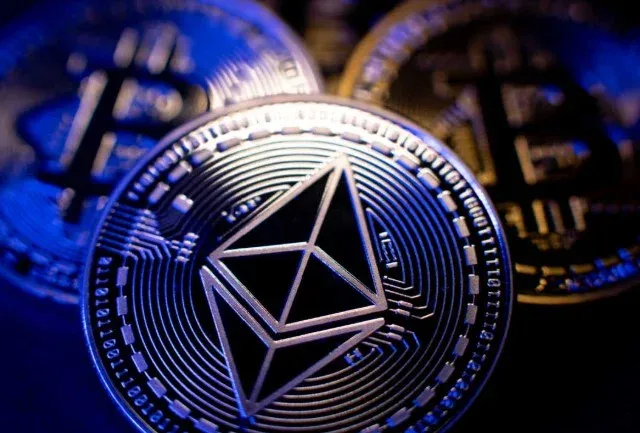
Network Activity Reaches New Highs
Ethereum’s blockchain is experiencing an unprecedented level of busyness. In February 2026 the daily count of active addresses approached 2 million, surpassing the peak seen during the 2021 bull market. At the same time, daily smart‑contract calls broke 40 million calls, and token transfers driven by internal contracts also set new records.
What Signals Does This Reveal
- Broad adoption: The rise in activity indicates that decentralized finance (DeFi), stablecoins and automated protocols continue to expand in usage.
- Transaction‑fee decline: Since the 2021 peak, Ethereum’s gas fees have dropped by roughly 99%, dramatically lowering the cost for developers and users.
- Value‑capture gap: Despite the flurry of on‑chain activity, ETH’s market cap has experienced a net outflow over the past year, and the price has not risen in step.
This surge in usage underscores Ethereum’s role as the core infrastructure for decentralized applications, especially within the stablecoin sector. However, higher activity no longer automatically translates into a token‑price increase; a clear decoupling has emerged.
Disconnection Between Usage and Token Price
Historically, ETH price tended to climb alongside rising on‑chain activity, with network usage viewed as a bullish precursor. Recent trends, however, show that high usage often coincides with relatively subdued prices.
Main Drivers of This Phenomenon
- Capital flows: Compared with Bitcoin, Ether is moving into exchanges at a faster rate, creating selling pressure that outweighs demand generated by usage growth.
- Fee‑revenue decline: In the most recent 30‑day window, Ethereum generated about $10.3 million in transaction fees, now lagging behind networks such as Tron and Solana. By contrast, Layer‑2 protocols like Base earn fee revenue roughly three times that of Ethereum’s base layer.
- Layer‑2 expansion: Networks such as Base and Polygon have absorbed a large share of transactions, collecting fees on their own layers rather than on the main chain, thereby pulling economic activity and revenue away from Ethereum’s base layer.
These factors together create a new landscape: network adoption continues to grow, but the token’s economics no longer move in lockstep.
Adoption Trends and Future Outlook
Even with lackluster price performance, Ethereum’s adoption in the stablecoin and DeFi arenas remains robust. Approximately $162 billion worth of stablecoins reside on‑chain, representing 52% of global stablecoin supply and highlighting Ethereum’s position as a digital‑finance cornerstone.
Key Observations
- Stablecoin‑driven: The massive circulation of stablecoins underscores Ethereum’s continued importance within the worldwide financial system.
- Layer‑2 integration: By off‑loading transactions to Layer‑2 networks, Ethereum can sustain high activity levels without experiencing congestion or high fees.
- Price potential: Over the long term, ETH’s price may gradually reflect its adoption rate, but in the short term it remains dominated by capital flows and market sentiment.
Overall, Ethereum is enhancing efficiency and scalability, providing developers and users with a more solid foundational layer. Even if the token price lags temporarily, the strong trend in on‑chain activity points to a sizeable, yet still untapped, value‑capture opportunity.
Conclusion
Ethereum is experiencing historic levels of on‑chain activity, with smart‑contract call frequencies setting new records and gas fees nearing zero. Yet, ETH’s price has fallen markedly during the same period, illustrating a clear disconnect between adoption depth and valuation. As Layer‑2 networks like Base and Polygon capture increasing fee revenue and economic activity, the main‑chain’s contribution to overall earnings is being diluted.
For participants, the key insight is that ETH price movements are now driven more by capital flows than by raw network usage. The vibrancy of stablecoins and DeFi continues to affirm Ethereum’s core relevance, even though this value has not yet been fully reflected in the token’s market price.
Frequently Asked Questions
What does high Ethereum network activity mean?
It indicates widespread usage across DeFi, stablecoins, and smart‑contract applications, showing that the blockchain remains heavily relied upon even when ETH’s price declines.
Why does ETH price drop while network activity rises?
Current price swings are more influenced by capital inflows/outflows and exchange‑based selling pressure than by traditional usage metrics, weakening the historical positive correlation.
How have Ethereum’s transaction fees changed?
Since the 2021 peak, fees have fallen by roughly 99%, dramatically reducing costs while still supporting high on‑chain activity levels.
What role do Layer‑2 networks play?
Solutions like Base and Polygon handle a large volume of transactions, collect fees on their own layers, and shift economic activity away from the Ethereum mainnet, helping keep latency and costs low.
Will stablecoin activity boost ETH price?
The extensive circulation of stablecoins raises Ethereum’s adoption profile, but in the short term it has not directly translated into higher ETH prices.
This article discusses “Ethereum network activity hits new highs, will ETH price rise?” For more details, refer to previous Bitaigen (比特根) articles or continue browsing the related content below. We appreciate your ongoing interest and support for Bitaigen (比特根).
💡 Register on Binance with referral code B2345 for the maximum trading fee discount. See Binance complete guide.



