
 Bitaigen Research
The European Union is set to launch a cryptocurrency tax‑reporting regime on January 1 2026, bringing digital‑currency transactions into the existing cross‑border information‑exchange network and boosting overall tax transparency.
In this article we systematically outline the upcoming EU crypto‑asset tax‑reporting framework, explain its concrete impact on individual users and service platforms, and show how a unified reporting standard can lower compliance costs. By dissecting the legislative background and the positioning of DAC8, readers will be able to prepare in advance and grasp the key points of future tax compliance.
Key Takeaways
- The directive does not create a new tax; instead, through a standardized reporting template it enables member states to share crypto‑transaction information, closing gaps in cross‑border filing.
- The reporting obligation falls on Crypto‑Asset Service Providers (CASPs) that operate within the EU or offer services to EU users. They must collect and submit user identity, tax‑residence status, and transaction details in a regulated format.
- Reported data will automatically flow between EU tax authorities, ensuring that each user’s transaction record can be accessed by the tax office of their home country.
- The framework aligns with the OECD’s Global Crypto‑Asset Reporting Framework (CARF), enhancing data‑exchange capabilities with jurisdictions outside the EU.
Legislative Background and the Role of DAC8
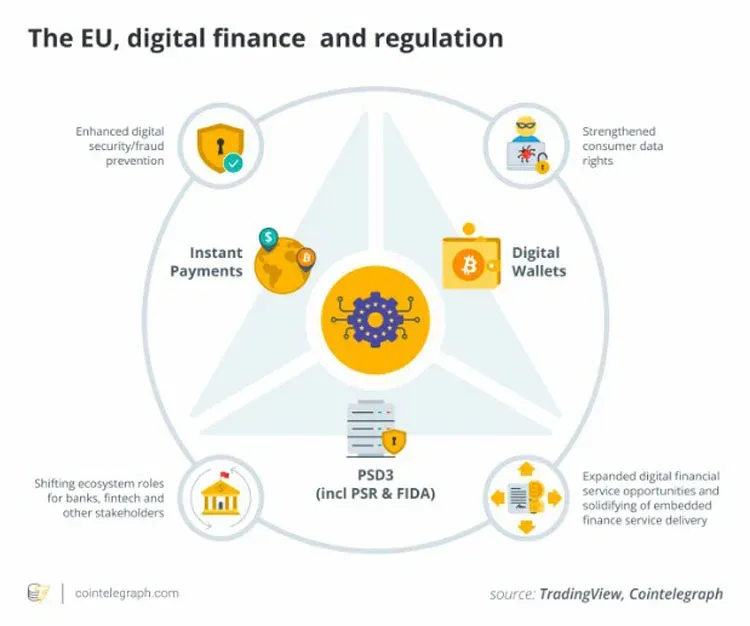
For more than a decade the EU has used the Administrative Cooperation Directives (DAC) to automate the exchange of traditional financial information such as bank accounts and investment income. Crypto‑currency transactions, however, have remained outside this system, creating a potential tax‑evasion loophole. As digital‑asset penetration continues to rise across Europe, the EU concluded that exempting crypto solely on the basis of its technological nature is unreasonable.
In 2023 the Council adopted Directive (EU) 2023/2226, commonly referred to as DAC8, formally incorporating crypto‑assets into the tax‑information‑exchange framework. Unlike the Markets in Crypto‑Assets Regulation (MiCA), which focuses on market entry and investor protection, DAC8 concentrates on tax‑related information disclosure.
Alignment with CARF
When drafting DAC8, the EU referenced the 2023 OECD Crypto‑Asset Reporting Framework (CARF), which specifies:
- Which categories of crypto‑assets must be reported;
- Which entities bear the reporting responsibility;
- The user and transaction details that must be included in the report.
Adopting the CARF model enables the EU to achieve data interoperability with other countries that have already implemented similar rules.
Tip: Before crypto‑specific legislation was in place, some EU tax authorities relied on estimates from blockchain‑analytics firms, leading to widely divergent statistics for the same market.
Scope of Application: Covered Assets and Platforms
DAC8’s reporting duties apply to all crypto‑asset service providers offering services in the EU, including centralized exchanges, brokers, custodial wallets, and other intermediaries. The reporting scope covers the majority of cryptocurrencies, stablecoins, tokenised assets, and certain investment‑grade NFTs (the focus is on transferability and investment purpose rather than collectible value).
It is important to note that even if a platform’s headquarters are outside the EU, it may still fall under the directive’s extraterritorial reach if it provides services to EU residents.
Implementation Timeline
- October 2023: DAC8 formally adopted.
- By 31 December 2025: Each member state must transpose the directive into national law.
- From 1 January 2026: Platforms begin collecting and reporting the required information.
- 2027: The first batch of 2026 reports are submitted to national tax authorities, typically completed within nine months after the end of the reporting year. Thereafter, tax authorities will automatically exchange data with other EU members each year.
Several member states have already received formal reminders from the EU due to slow legislative transposition, indicating that further delays will no longer be tolerated.
Tip: Early drafts debated whether self‑custodied wallets should be included, highlighting the regulatory challenge of dealing with decentralized ownership.
Specific Reporting Obligations for Platforms
Under DAC8, CASPs must perform enhanced due‑diligence and submit the following to their national tax authority:
- User identity: full name, residential address, tax‑residence status, tax identification number (if any).
- Transaction details: transaction type (buy, sell, swap, transfer), total disposal proceeds, transaction date, and the corresponding amount in fiat (reported in USD or the local fiat equivalent, with SEPA/SWIFT details where relevant).
Once collected, this data is transmitted through the EU’s internal automatic exchange system, ensuring that—even if the platform is based in a different member state—the user’s home‑country tax office receives a complete record.
For platforms, this requirement makes crypto‑tax reporting resemble ordinary financial reporting rather than an occasional disclosure.
Impact on End‑Users
For the average crypto holder, DAC8’s most immediate effect is greater tax transparency. Tax authorities will be able to query a user’s transaction history directly from the reporting platforms, which may lead to:
- Requests for more complete tax‑residence information when opening an account or updating details.
- Easier cross‑checking of platform data against an individual’s annual tax return, exposing potential mismatches.
- Lower costs for tax authorities to detect discrepancies between reported data and declared income.
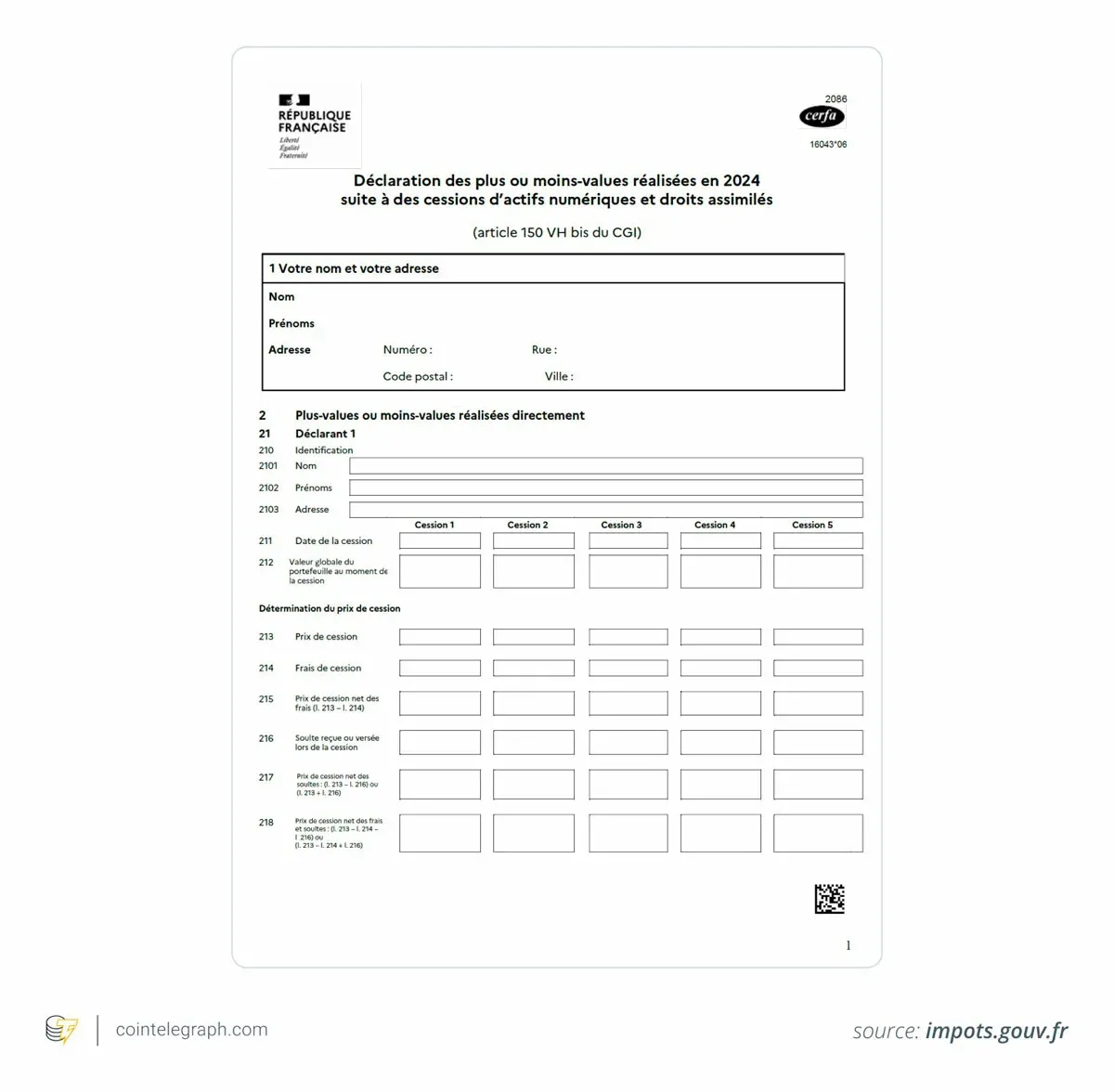
It is essential to stress that the directive does not impose a uniform tax rate or create a new tax; each member state retains the right to tax crypto‑assets according to its own legislation. Users must still report relevant gains on their domestic tax returns, and local jurisdictions may tax those gains. (For example, in the United States, crypto gains are taxable and must be reported on the appropriate IRS forms; U.S. residents should use Binance.US rather than the global Binance platform.)
Compliance Challenges and Risks for Platforms
Implementing DAC8 will require platforms to upgrade significantly in several areas:
- Precise tracking of every transaction’s timestamp, amount, and counter‑party.
- Robust verification of users’ tax‑residence status.
- Secure, compliant data‑storage and transmission infrastructure.
For small‑ and medium‑sized providers with limited resources, these obligations—combined with MiCA and anti‑money‑laundering (AML) requirements—could drive compliance costs upward sharply. Failure to submit complete and timely reports may result in fines, other administrative sanctions, or even a ban from operating in the EU market.
Users often conflate DAC8 with MiCA: the former focuses on the backend flow of tax information, while the latter governs licensing, investor protection, and market conduct. Together they form a comprehensive regulatory scaffold for the crypto economy.
Certain gray areas remain, such as how to handle decentralized finance (DeFi) protocols that lack a centralized intermediary to collect and forward data. Privacy advocates have voiced concerns about large‑scale data collection, but the EU has responded that the General Data Protection Regulation (GDPR) and related data‑protection laws will continue to apply, with detailed operational guidance to follow.
Tip: Asia‑Pacific and Latin‑American jurisdictions are also exploring similar crypto‑tax‑reporting models; the EU approach may gradually become a de‑facto global standard.
A Wider International Context
DAC8 is only one piece of the broader move toward regulatory convergence worldwide. As crypto‑assets become more embedded in mainstream finance, governments are treating them as ordinary assets rather than fringe commodities. By aligning with CARF and enabling automatic cross‑border information exchange, the EU sends a clear signal that digital assets should be subject to the same transparency requirements as traditional assets. For European users and service providers, the previously relatively lax tax‑regulatory environment is now officially over.
*Cointelegraph maintains full editorial independence. Topic selection, commissioning, and publication of feature and magazine content are not influenced by advertisers, partners, or commercial relationships.*
For further details on how the EU’s crypto‑tax rules benefit users and platforms, follow Bitaigen (比特根) and its related coverage.
💡 Register on Binance with referral code B2345 for the maximum trading fee discount. See Binance complete guide.
⚠️ Risk Disclaimer: Crypto prices are highly volatile. This is not investment advice.



