
 Bitaigen Research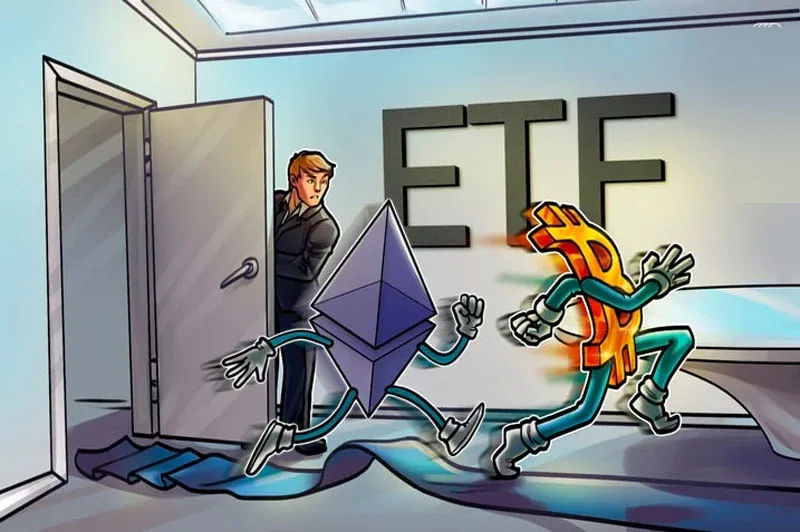
Starting from three major drivers—regulation, institutional deployment, and product innovation—we systematically outline the evolution of crypto ETFs from a single‑bitcoin offering to multi‑coin baskets and spot‑based altcoin products. The article reveals the compliance challenges and market opportunities behind regulatory easing, helping investors grasp the key elements of these new‑generation ETFs. It is well worth a careful read.
Evolution Path of Crypto ETFs and Emerging Trends
In recent years, ETFs have moved from an experimental phase to large‑scale expansion, becoming a crucial bridge for digital assets to enter traditional investment channels. After the U.S. stock market approved the first spot Ethereum ETF in 2024, institutional allocation to crypto assets became more systematic, laying the groundwork for the multi‑coin basket ETFs and single‑altcoin spot ETFs that appeared in 2025.
Shifts in Regulation and Exchange Rules
Clarifications—or redefinitions—of compliance pathways by regulators have enabled exchanges and issuers to find viable routes to market. At the same time, exchanges have streamlined listing procedures, allowing new products to launch quickly during “window periods.” This regulatory relaxation creates room for product diversification, but it also raises requirements for information disclosure, asset‑valuation transparency, and redemption mechanisms.
Three Sources of Innovation Momentum
Key factors driving the current wave of innovation include:
- Clear or reshaped compliance pathways – Transparent regulatory guidance lets issuers introduce new products within a lawful framework.
- Ongoing deployment by large asset‑management firms – Traditional financial players continuously increase their crypto‑asset exposure, bringing sizable capital inflows and rebalancing demand.
- Market appetite for diversified exposure – Investors seek allocation opportunities beyond Bitcoin, such as Ethereum, Solana, XRP, and other coins.
Latest Developments in Product Offerings
Recently, several issuers have launched multi‑coin index ETFs covering Ethereum and Solana, attempting to bring “multi‑coin allocation” to mainstream trading platforms. At the same time, a handful of spot ETFs that track a single altcoin have received approval and been listed; some of these products amassed substantial asset bases shortly after launch, indicating immediate market demand and strong absorption capacity for this new ETF class.
Characteristics of Capital Flows
Since the debut of Bitcoin and Ethereum ETFs, long‑term capital has continued to flow in, while short‑term volatility remains influenced by macro events, interest‑rate expectations, and market sentiment. In recent weeks, daily or weekly net inflows and outflows have reached the multi‑billion‑USD level. Spot ETFs have become tools for traders to rapidly allocate or hedge against macro information, moving beyond a purely passive, long‑term holding role. (Transfers are typically executed in USD via SEPA or SWIFT for fiat settlements; U.S. residents should use Binance.US rather than the global Binance platform.)
Potential Impact on Market Structure
- Liquidity channel for large holders: ETFs give sizable token holders a regulated pathway to liquidate, restructure, or exit positions, influencing on‑chain circulating supply, market depth, and price discovery.
- Cross‑coin contagion effects: The emergence of multi‑coin and altcoin ETFs may amplify the transmission of sentiment from mainstream assets to secondary tokens, synchronizing their price movements more closely.
- Fees and custody competition: As the number of products grows, fee levels, custody transparency, and the robustness of market‑making become core metrics for assessing issuer competitiveness.
Regulatory Outlook and Future Direction
Regulators walk a delicate line between protecting investors and encouraging financial innovation. Currently, some issuers are leveraging updated exchange rules to accelerate new product rollouts, creating a “window‑period acceleration” phenomenon. Looking ahead, supervisory focus may shift toward custodial security, visualisation of asset valuations, and the health of redemption mechanisms, aiming to curb cross‑market arbitrage and mitigate the impact of high volatility on the underlying spot markets.
Key Points to Watch in the Short‑ to Mid‑Term
- Continued enrichment of product formats – Expansion from single‑asset ETFs to basket, strategy‑based, and region‑specific offerings.
- Changing structure of capital sources – Retail inflows are expected to further penetrate institutional and wealth‑management channels, driving larger‑scale allocation demand.
- Stability of regulatory and exchange frameworks – Determines which assets can enter the mainstream ETF ecosystem.
- Capital flows as sentiment indicators – ETF inflows and outflows will more directly reflect market mood and price trends, enhancing the correlation between crypto assets and traditional financial markets.
Closing Remarks
Overall, crypto ETFs have moved from an “entry stage” into a “differentiation and scaling stage.” They provide investors with more convenient exposure to crypto assets, but they also bring heightened structural risk and regulatory uncertainty. In an environment of rapid product iteration, investors and intermediary firms need to focus on product transparency, custodial solutions, the risk characteristics of underlying constituents, and sensitivity to macro factors; regulators should continue refining a unified, clear rule set that safeguards investor interests while preserving innovative momentum.
The above constitutes the full analysis titled “Accelerating Evolution of Crypto ETFs: From Bitcoin (BTC) to Multi‑coin and Altcoin Expansion.” For more coverage of the cross‑chain ETF era from BTC to multi‑coin offerings, stay tuned to additional articles from Bitaigen.
Related Reading
- U.S. Spot Bitcoin ETF Outflows: BlackRock’s $2.47B Withdrawal
- Bitcoin Returns to $90K, BlackRock ETF Investors Profit
- BlackRock Puts Bitcoin ETF Beside Treasuries & Tech Giants
💡 Register on Binance with referral code B2345 for the maximum trading fee discount. See Binance complete guide.
⚠️ Risk Disclaimer: Crypto prices are highly volatile. This is not investment advice.



