
 Bitaigen Research
 We approach the topic from a macro perspective, outlining the differing roles of gold tokens and silver tokens in next‑year asset allocation, dissecting the macro drivers and on‑chain mechanisms behind them, and helping investors determine which type of token better fits diversified needs. The full text will reveal a deep analysis of the key considerations.
2026 Outlook: Gold $5,000 vs. Silver $200 Target Ranges
After a substantial rally in 2025, analysts broadly expect the metals market to enter a new consolidation phase in 2026. Most institutions forecast that gold will trade throughout the year within $3,750‑$5,000 per ounce, supported primarily by continued central‑bank buying, geopolitical risk, and a still‑accommodative monetary environment. By contrast, silver’s expected range is wider, roughly $43‑$62 per ounce, driven by two main factors: the same “monetary metal” tailwind that benefits gold, and growing industrial demand from solar energy, electric vehicles, electronics, and defense sectors. Because silver’s price swings are typically about twice those of gold, investors must balance the potential for higher returns against a greater downside risk when allocating to the metal.
Takeaways for Tokenized‑Commodity Investors
- Defensive demand: If you aim to preserve asset value amid central‑bank policy shifts, geopolitical tensions, or currency depreciation, gold tokens remain the preferred hedge.
- High‑volatility growth opportunity: If you can tolerate more frequent price swings and want to capture upside from industrial demand, silver tokens offer a more explosive allocation idea.
---
What Are Tokenized Gold and Silver, and How Do They Work?
Tokenized gold and silver essentially map physical precious metals held by a trusted custodian onto a blockchain, with each token representing 1 troy ounce or 1 gram of the underlying metal stored in the vault. Custodians conduct regular audits to ensure a 1:1 correspondence between on‑chain tokens and offline metal, thereby providing holders with a verifiable proof of ownership.
Unlike traditional ETFs or paper certificates, these tokens can be traded 24/7 on public chains such as Ethereum, Polygon, Avalanche, etc., with low transfer costs and instant cross‑border settlement, while ownership data remains fully transparent and publicly accessible. As of January 2026, the total market capitalization of tokenized commodities has surpassed $4 billion, with gold accounting for the overwhelming majority and silver accelerating its growth thanks to rising industrial demand.
---
Market Snapshot: 2025 Gold Tokens vs. Silver Tokens
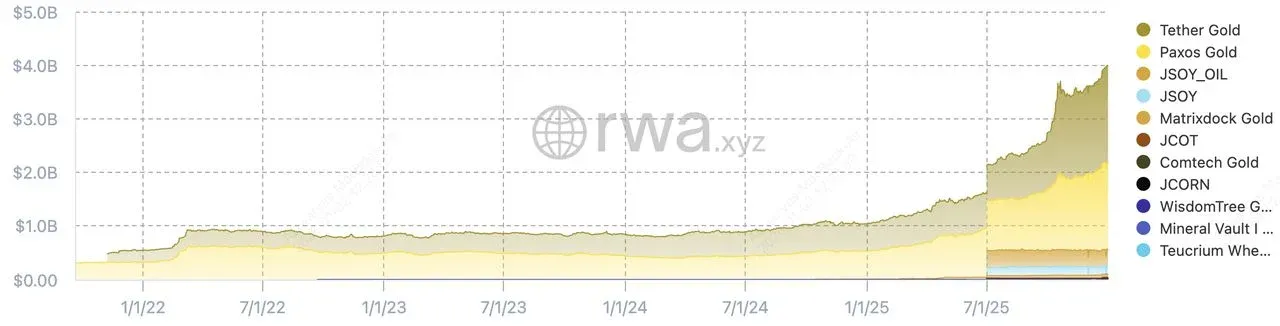
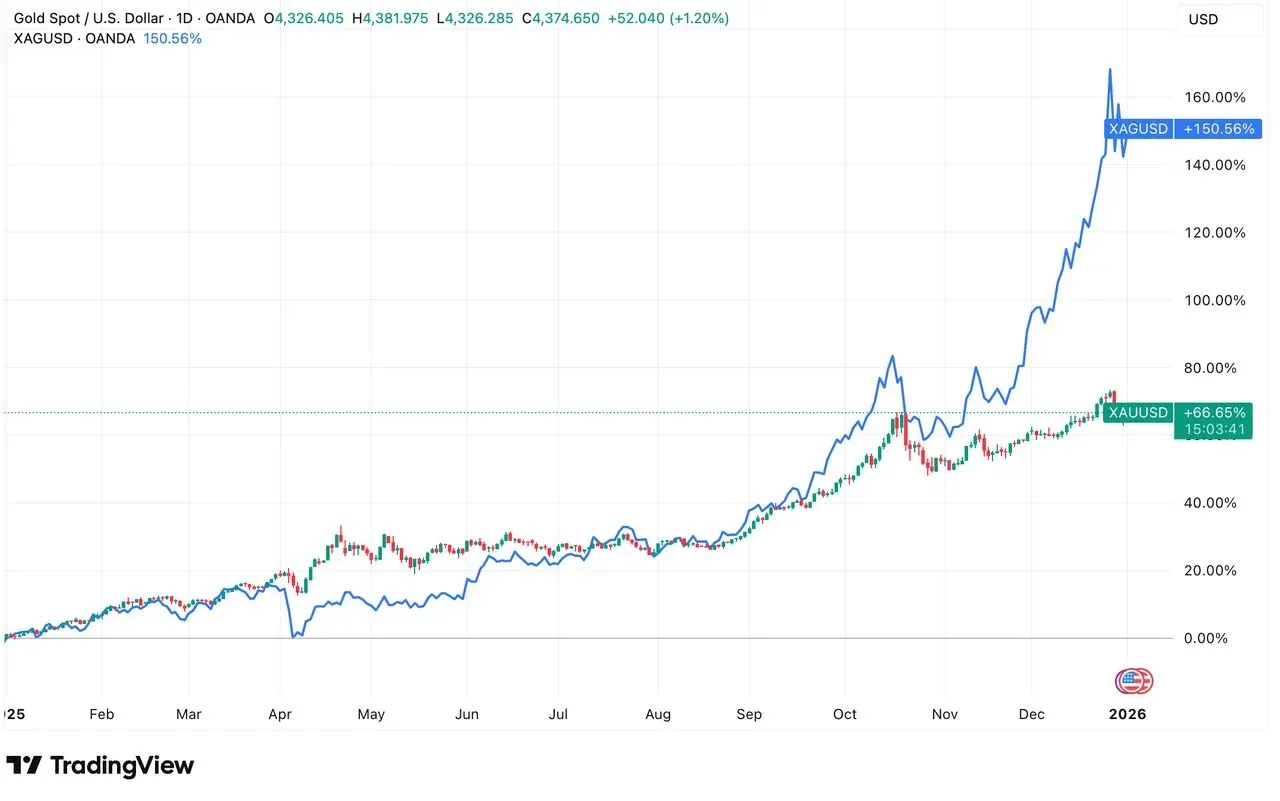
Tokenized gold remained the market leader in 2025, with a cumulative market cap exceeding $4.4 billion. This scale is largely driven by products such as Tether Gold (XAUT) and Pax Gold (PAXG), which continue to attract inflows. Gold itself, in the context of loose monetary policy, geopolitical uncertainty, and ongoing central‑bank accumulation, is still regarded as a core store of value. By the end of 2025, spot gold had broken $4,500 per ounce.
In comparison, silver tokens held a total market cap of only about $270 million, but they grew at a faster pace. Benefiting from surging demand in solar, electric‑vehicle, and electronics sectors and from persistently tight supply, silver prices rose nearly 170 % in 2025, out‑performing gold on a percentage basis. The rapid expansion of silver tokens also underscores their “high‑growth segment” character within the tokenized‑commodity space.
---
Popular Tokens Overview
Gold Tokens
- Tether Gold (XAUT): Each token corresponds to 1 troy ounce of LBMA‑certified gold stored in a Swiss vault, offering the best liquidity and commonly used for hedging, trading, and on‑chain collateral.
- Pax Gold (PAXG): Issued by Paxos Trust Company under NYDFS supervision, it also represents 1 troy ounce of physical gold and is favored by institutions for its rigorous audits and compliance framework.
Silver Tokens
- Kinesis Silver (KAG): The largest‑cap token, each unit represents 1 ounce of silver and returns a portion of transaction fees to holders through a revenue‑sharing mechanism.
- Silver Token (XAGX): Focused on cross‑chain liquidity and trading efficiency, suited for medium‑ to short‑term active traders.
- Gram Silver (GRAMS): Each token stands for 1 gram of silver, lowering the entry barrier for users who wish to gain exposure to physical silver with a small amount of capital.
---
Core Differences Between Tokenized Gold and Silver
---
Why Investors Tend Toward Tokenized Gold
- Value Stability: Spot gold climbed above $4,500/oz in 2025, making its wealth‑preserving trait especially pronounced amid rising inflation and geopolitical risk.
- Institution‑Level Compliance & Transparency: Both PAXG and XAUT are backed by LBMA‑certified bars, undergo third‑party audits, and meet regulatory requirements in New York (NYDFS) and on‑chain.
- Low Volatility: Gold’s annualized volatility is roughly 40‑50 % lower than silver’s, allowing it to act as a “shock absorber” in crypto portfolios.
- Deep Liquidity: Combined market cap of the two major gold tokens tops $4 billion, with tight bid‑ask spreads on centralized exchanges and on‑chain DEXs.
Suitable For: Institutions, wealth‑management clients, and risk‑averse individual investors seeking capital preservation, inflation hedging, and long‑term value storage.
---
Why Silver Tokens Remain Attractive in 2026
- Robust Industrial Demand: In 2025, industrial consumption accounted for 55 % of total silver demand, with solar panels alone consuming over 20 % of global supply. The rapid expansion of clean‑energy and electric‑vehicle markets continues to push demand upward.
- Structural Supply Deficit: The global silver market has faced a multi‑year shortage; in 2024‑2025 demand outstripped supply by roughly 100 million ounces. Because most silver is a by‑product of copper, zinc, and lead mining, supply elasticity is limited.
- Higher Beta: Silver’s price swing is about twice that of gold, with a 2025 rally exceeding 150 %, offering greater upside for investors comfortable with higher risk.
- Enhanced On‑Chain Utility: Tokens such as KAG, XAGX, and GRAMS are increasingly integrated into DeFi protocols for collateral, yield farming, and cross‑border settlement, driving transaction volume as use cases expand.
Suitable For: Active traders, investors favoring high‑risk/high‑return portfolios, and those looking to capture the upside from industrial silver demand.
---
Portfolio Strategy: Balanced Allocation of Gold + Silver
Incorporating both gold and silver tokens into a single pool can keep overall volatility in check while capturing the extra returns generated by industrial demand. Gold supplies downside protection; silver adds upside exposure during periods of economic expansion. Many institutions already employ this “dual‑metal” approach within their RWA allocations to achieve a more flexible risk‑return curve.
---
How to Diversify Within Tokenized Commodities in 2026
No single asset meets every investor’s needs. If your goal is defensive hedging, gold tokens, with their low volatility and strong institutional demand, remain the top choice. If you prefer to capture potential gains from high volatility, silver tokens’ industrial‑driven dynamics and larger price elasticity are more appealing. For most investors, allocating a proportion of both can deliver a more balanced return across differing macro scenarios.
Key Reminder: While tokenized commodities provide on‑chain transparency and 24/7 trading, they still face risks such as market liquidity, issuer creditworthiness, and real‑world metal supply‑demand shifts. Conduct thorough risk assessments before investing. Additionally, cryptocurrency gains may be taxable in your jurisdiction; consult a tax professional and be prepared to report any taxable events via SEPA/SWIFT‑compatible fiat conversions where applicable.
---
Conclusion
Tokenized gold and silver are marrying the traditional store‑of‑value function of precious metals with the efficient circulation of blockchain technology. The 2026 market environment offers space for each to play to its strengths. Whether you are a steady‑value seeker or a speculator hoping to ride the wave of industrial demand, the on‑chain ecosystem now provides corresponding asset tools. We hope this comparison helps you make a clearer choice when building a diversified investment portfolio.
That concludes the analysis of Gold Token vs. Silver Token: Which Is More Suitable for Portfolio Diversification in 2026? For deeper insights into tokenized precious metals, stay tuned to Bitaigen’s upcoming articles or follow the related links below. Happy investing!
💡 Register on Binance with referral code B2345 for the maximum trading fee discount. See Binance complete guide.



