
 Bitaigen Research
 In this article we unpack the rationale behind the latest collaboration among PayPal, MoonPay, and M0, analyze how PYUSDx offers developers a plug‑and‑play stablecoin layer, and explore its potential impact on payment experiences within application ecosystems. Understanding this cross‑industry innovation—how it lowers technical barriers and speeds up real‑world deployments—is well worth a close read.
The Rise of Stablecoins at the Application Layer
Recently, several tech giants—including Meta—have begun piloting stablecoin‑based payment functions on platforms such as Facebook, Instagram, and WhatsApp. The use‑case landscape for stablecoins is rapidly expanding from traditional finance into broader application ecosystems. Developers are eager to provide users with differentiated experiences without having to rebuild the underlying monetary infrastructure from scratch.
PayPal, MoonPay, and M0 Team Up to Launch PYUSDx
Against this backdrop, PayPal, MoonPay, and the stablecoin‑infrastructure platform M0 announced PYUSDx together on Friday. The project is designed to give developers a tokenized solution backed by PayPal’s USD stablecoin (PYUSD) and customized for a particular app or ecosystem. In a joint statement to *Cointelegraph*, both parties said PYUSDx will enter a promotional phase next month.
“The next phase of stablecoins is penetrating the application layer. Developers want to craft unique user experiences, but they should not have to build a trusted monetary foundation from zero,” said Me Zhabaneh, Head of PayPal’s crypto business.
Technical Characteristics of PYUSDx
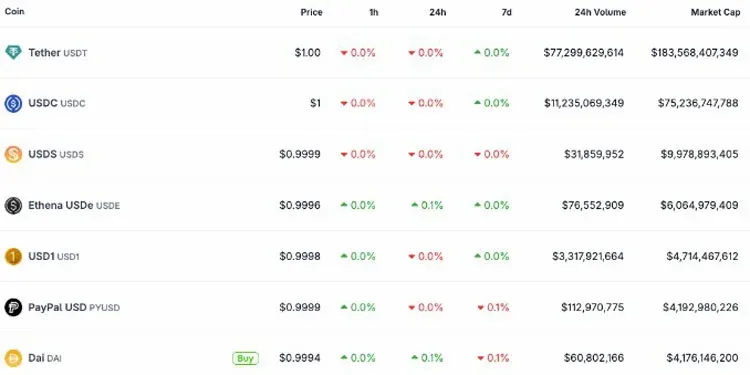
- Separate from PYUSD: Although it leverages the same underlying US dollar peg as PayPal’s PYUSD (issued in August 2023 by Paxos Trust Company, listed on CoinGecko with a market cap of roughly $4.2 billion, ranking sixth among stablecoins), PYUSDx utilizes the tokenization and issuance framework supplied by MoonPay Digital Assets.
- Integration of M0 and MoonPay: By marrying M0’s universal stablecoin technology with MoonPay’s digital‑asset infrastructure, PYUSDx reduces both technical and operational costs while enabling rapid deployment and cross‑chain compatibility.
- Flexible Economic Model: The platform supports a transparent reserve mechanism, customizable brand‑token options, and seamless multi‑chain asset transfers.
First Projects to Go Live
The inaugural use case built on PYUSDx is USD.ai, a decentralized finance protocol that issues stablecoins such as USDai and the yield‑bearing sUSDai. The protocol focuses on providing dedicated financial tools for artificial‑intelligence infrastructure. It is important to note that PYUSDx itself is not directly linked to PayPal accounts (including Venmo), meaning it cannot be transferred or stored on those platforms.
Market Outlook and Future Roll‑Out Plans
PayPal continues to broaden the real‑world applications of its stablecoin. Industry rumors suggest that by the end of 2025, YouTube will allow U.S. creators to receive earnings in PYUSD, underscoring how a digital US dollar is gradually permeating domains beyond traditional finance.
“We are thrilled to see MoonPay and M0 leveraging PYUSDx to build regulated, trustworthy stablecoins for specific applications,” Zhabaneh added.
---
For further details on the PayPal‑MoonPay‑M0 partnership and the launch of PYUSDx, or to follow additional coverage of app‑specific stablecoins, stay tuned to Bitaigen (比特根).
*Note for U.S. users:* If you wish to trade or hold PYUSDx tokens on Binance, be sure to use Binance.US rather than the global Binance platform.
*Tax reminder:* Crypto gains may be subject to taxation in your jurisdiction; consult a local tax professional for guidance.
💡 Register on Binance with referral code B2345 for the maximum trading fee discount. See Binance complete guide.
⚠️ Risk Disclaimer: Crypto prices are highly volatile. This is not investment advice.



