 Bitaigen Research
 Source: planetrefi.com
Planet ReFi (PLANET) centers on its native token PLANET and aims to fuse real‑world assets (RWA) with Web 3 technology to drive sustainable growth and yield generation.
In a world where the urgency of environmental protection is growing, pure conservation efforts alone can no longer satisfy modern demands. Planet ReFi rewards Earth‑friendly actions on the blockchain, creating an incentive system that aligns the behavior of individuals and organizations with the Sustainable Development Goals. By leveraging the innovative power of Web 3, the platform provides token incentives for initiatives that generate positive environmental impact, showcasing the potential of a digital economy intertwined with green development.
From both a technical and ecological perspective, we dissect how Planet ReFi merges real assets with Web 3, explore the governance model of the PLANET token, its cross‑chain deployment, and its prospective value in sustainable finance. This analysis will help you grasp the core logic of the project and the considerations for participation. The discussion unfolds layer by layer below.
What Is the PLANET Token?
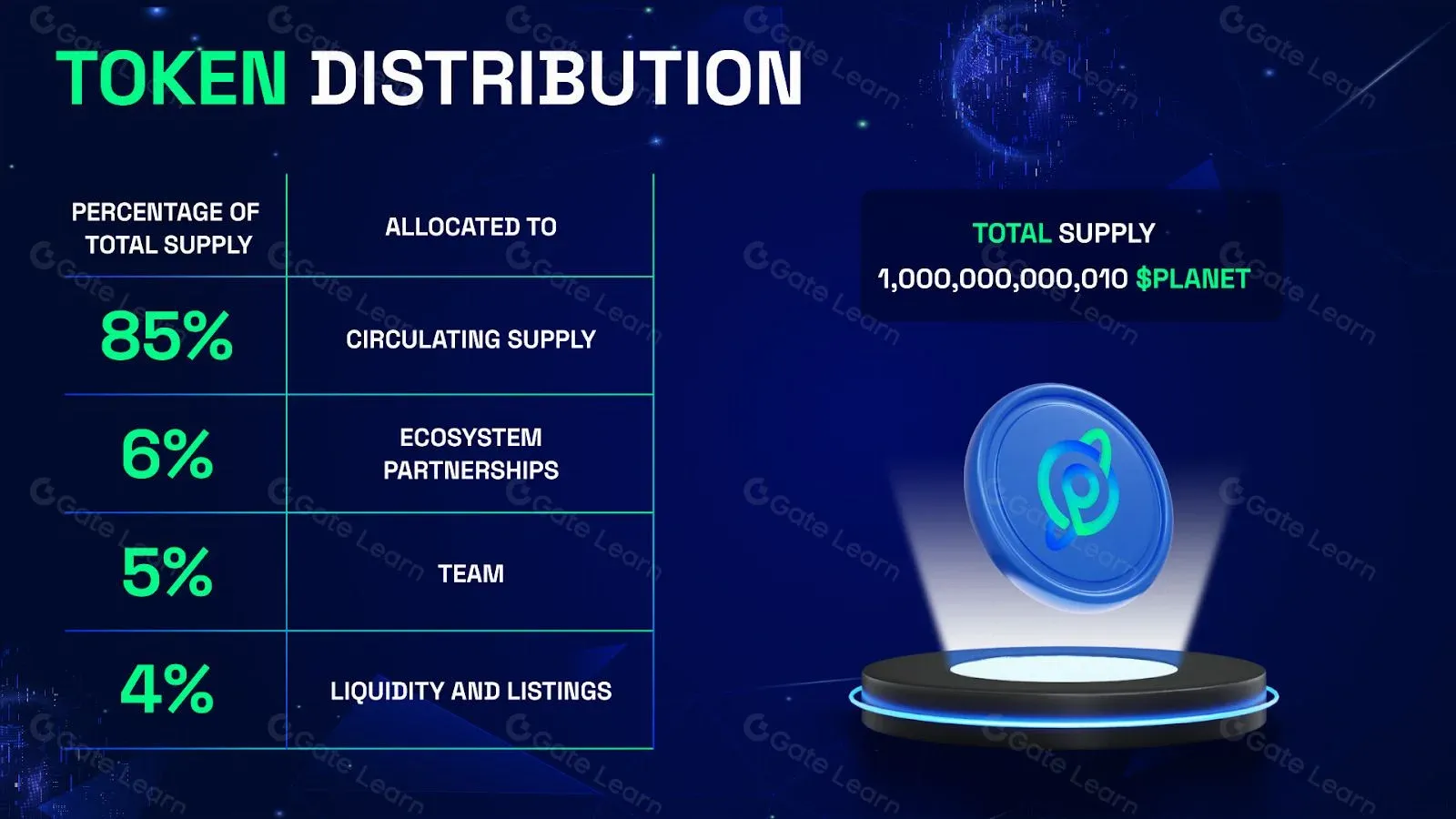
PLANET is the digital currency used for governance and sustainable operation within the Planet ReFi ecosystem. The total supply is capped at 1 trillion tokens, of which 85.15 % (approximately 851.45 billion tokens) are already circulating as of March 2024.
The token was initially issued on Ethereum and later expanded to the BNB Chain and Base Chain to improve accessibility. The allocation breakdown is as follows:
- 85 % entered circulation,
- 6 % earmarked for ecosystem partners,
- 5 % retained by the founding team,
- 4 % reserved for liquidity support.
To demonstrate a commitment to long‑term value, the project team has burned PLANET tokens worth roughly US $3.6 billion, thereby reducing the circulating supply and boosting market confidence.
PLANET also introduces an innovative staking mechanism: holders can stake any amount (minimum US $1 million) on Ethereum or BNB Chain and receive daily reward points, refreshed every 24 hours. While stakers must cover their own gas fees, this design underscores the platform’s emphasis on transparency and user responsibility.
Practical Uses of PLANET
- Blind Boxes: The platform plans to launch between 80,000 and 10 million digital collectible blind boxes, priced at roughly US $10‑15 each. Each box contains a hidden JTP RWA NFT, a “Super Experience Pass,” a yield‑generating device, and other perks. To amplify the environmental impact, the platform pledges to plant one tree for every box sold, converting token spend into tangible carbon reduction.
- PLANET Rewards: Token holders can stake PLANET to earn substantial rewards, with some individual payouts exceeding US $100,000. The platform allocates 10 % of its revenue specifically to enrich this reward pool, aiming to continuously raise community participation.
- Discounts, Early‑Access, and NFT Whitelists: Users holding PLANET enjoy exclusive discounts, early access to RWA and NFT releases, and the ability to unlock whitelist eligibility or receive free RWA during limited‑time windows—benefits designed to encourage long‑term holding and active ecosystem involvement.
- Exclusive NFT Series: The project partners with several well‑known NFT platforms to release rare artwork combined with hidden RWA assets. Token holders receive early‑bird whitelist spots and special discounts, further enriching the ecosystem’s artistic and asset value.
Through these offerings, PLANET serves as the central pillar that connects the community and incentivizes sustainable behavior.
How PLANET Works: RWA and DAO
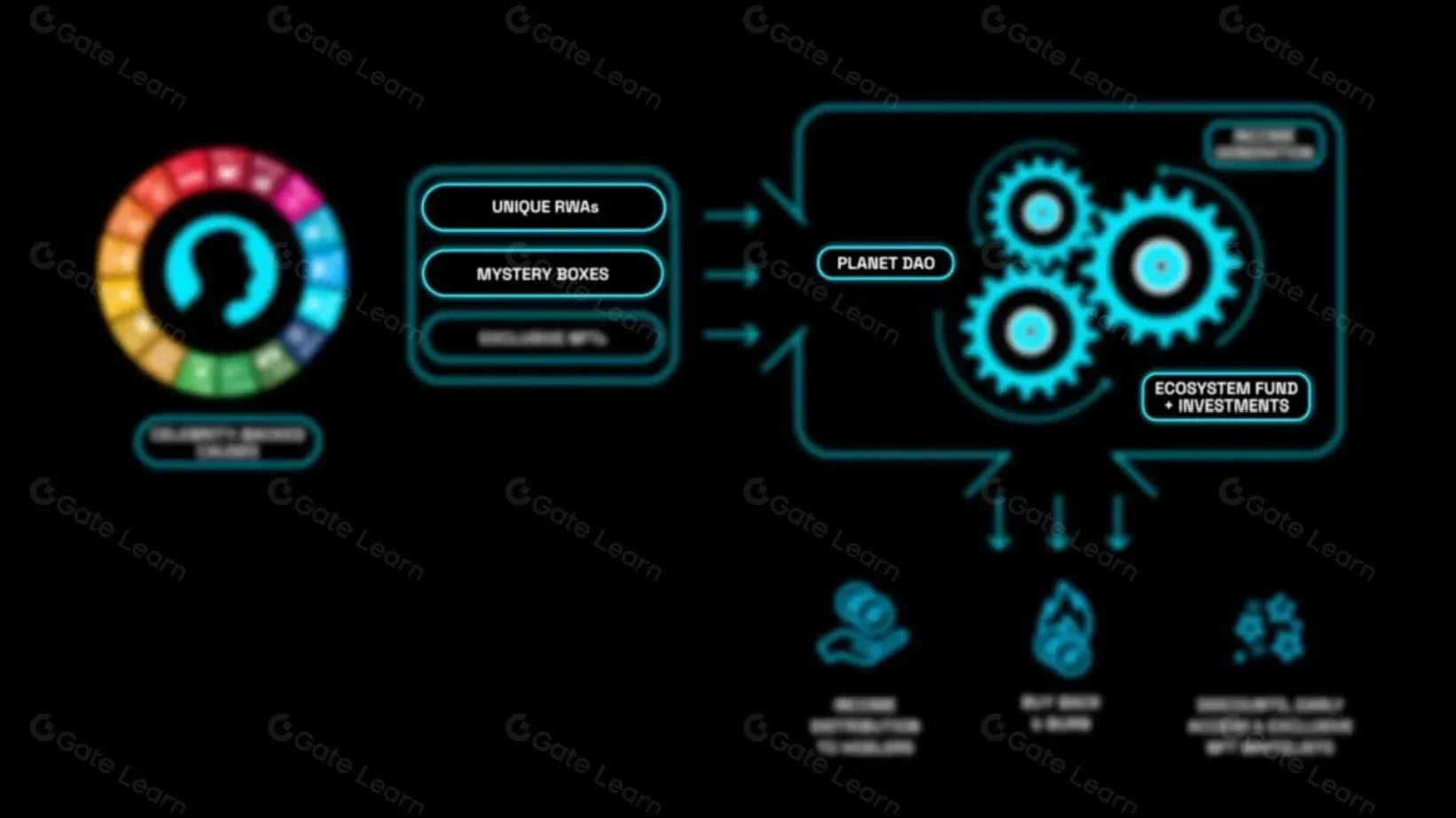
Planet ReFi’s core premise is tokenizing real‑world assets and governing them via a DAO (Decentralized Autonomous Organization). The platform first issues a unique series of RWA tokens that generate on‑chain yields, marking the debut of an ecosystem‑friendly RWA implementation. Users can track the full lifecycle—production, transport, and delivery—of each asset through a dedicated mobile app, receiving transparent data and exclusive benefits.
During the pre‑sale phase, the project intends to issue 10,000‑30,000 JTP RWA tokens, with events running simultaneously in multiple international cities. Three lucky purchasers will receive “Super Experience Passes” valued at over US $100,000 each. Partnerships with public chains such as BNB Chain and Polygon grant pre‑sale participants significant discounts, enhancing token accessibility.
Once the RWA projects are operational, Planet ReFi will launch the PLANET DAO, allowing token holders to participate directly in platform governance. The DAO manages the ecosystem fund, selects and finances sustainability projects with measurable environmental impact, and ensures transparent, efficient capital deployment. By leveraging collective intelligence to identify high‑potential initiatives, the DAO embodies the project’s dual commitment to collaborative innovation and ecological responsibility.
Core Functions of the PLANET DAO
- Decentralized Decision‑Making: $PLANET holders can vote on critical project directions and resource allocations.
- Fund Management: The DAO oversees the ecosystem fund, supporting innovative solutions aligned with Sustainable Development Goals.
- Environmental Project Support: Through community consensus, the DAO channels resources toward initiatives that deliver genuine ecological benefits, fostering a healthy Regenerative Finance (ReFi) ecosystem.
Main Features of Planet ReFi
- RWA Innovation Rollout: The upcoming “JTP RWA” is endorsed by football superstar Lionel Messi, representing the first deep integration of an RWA with a mainstream sports figure and expanding the audience bridge between Web 2 and Web 3.
- Ecosystem Fund: Dedicated to financing projects that align with environmental sustainability, providing capital and strategic support to nurture collaborative innovation.
- Celebrity Partnerships: Collaborations with public figures committed to environmental causes boost platform visibility and introduce RWA concepts to broader communities.
- COP28 Participation: Messi’s public statement at COP28 highlighted Planet ReFi’s resolve to leverage blockchain for sustainable development, establishing a foothold for the platform on the global stage.
Together, these features construct an ecosystem that merges digital assets with real‑world sustainable actions, aiming to harness blockchain technology for wider positive environmental impact.
Considerations from an Investment Perspective
Blockchain technology inherently offers tamper‑proof records and reduced fraud risk for environmental projects. However, the incorporation of NFTs and gamified elements—while effective at expanding the user base—can also raise questions about the actual environmental contribution of such activities. When evaluating PLANET, investors should weigh the community engagement generated by these digital innovations against the tangible progress they drive in real sustainability projects. A sustainable value proposition will emerge only if the technological benefits translate into a virtuous cycle between on‑chain environmental impact and offline project execution.
Note for U.S. participants: Residents of the United States should acquire PLANET tokens through Binance.US or other compliant U.S. exchanges, as the global Binance platform is not available to U.S. users.
Tax reminder: Crypto‑related gains may be subject to taxation in your jurisdiction. It is advisable to consult a tax professional regarding any potential obligations.
This article concludes here. For deeper insights on PLANET, you may search for previous Bitaigen (比特根) articles or follow the related links below. Thank you for supporting Bitaigen!
💡 Register on Binance with referral code B2345 for the maximum trading fee discount. See Binance complete guide.



