
 Bitaigen Research
 The Solana ecosystem DePIN track recorded a cumulative revenue of $458,000 in April, a 33 % year‑over‑year increase, and set a new high for the current year.
The DePIN track within the Solana ecosystem reached its year‑to‑date peak in April 2025, with total monthly revenue climbing to $458,000, up 33 % compared with the same month last year, marking the best performance recorded so far in 2025. This growth was primarily driven by the steady expansion of projects such as Helium, Render, Hivemapper, and XNET.
However, the number of active contributors to DePIN protocols showed a slight decline. Helium, Hivemapper, Nosana, Render, Sallar, Sourceful, and XNET together maintained roughly 87,000 active contributors.
In April 2025, smaller DePIN protocols experienced a pronounced rise in contributor counts, with Nosana posting a growth rate of over 100 %, while large‑scale protocols such as Helium and Hivemapper saw their contributor numbers remain flat or dip marginally.
We have compiled an overview of the Solana ecosystem DePIN track’s overall performance for April, focusing on revenue trends and contributor dynamics of core projects like Helium and Render, and providing an in‑depth analysis of the rapid growth among smaller chains. This should help readers grasp the development trajectory of the ecosystem, with further details worth monitoring in the coming weeks.
Review of April 2025 Performance for Solana Ecosystem DePIN Projects
Below is a snapshot of the main DePIN projects’ performance in April:
Dabba Network
- Dabba Network is built on Solana and targets the Indian market, employing a “hosted deployment” model in partnership with local wired telecom operators.
- Data consumption surged to 8,000 TB from March to April, representing a 2‑fold increase.
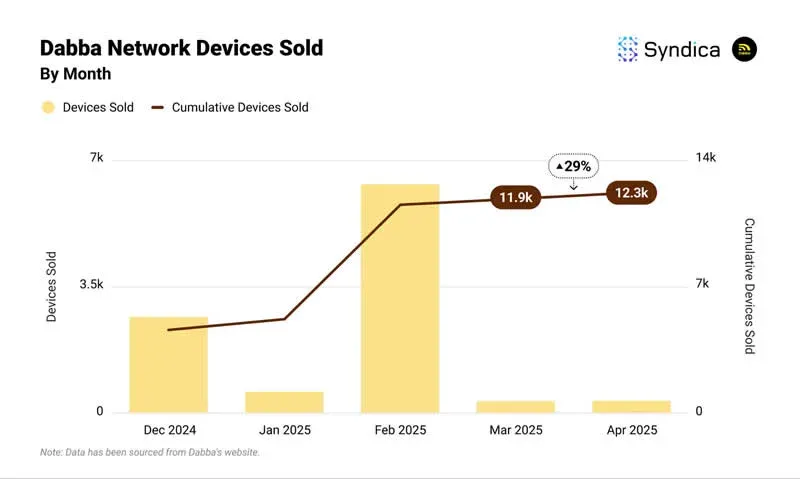
- Device sales grew 29 % over the same period, further expanding the network’s footprint.
Helium Mobile
- Helium Mobile is the mobile virtual network operator (MVNO) operating under the Helium network. It blends community‑deployed Wi‑Fi hotspots with cellular base stations from partner carriers to deliver low‑cost mobile data and voice services.
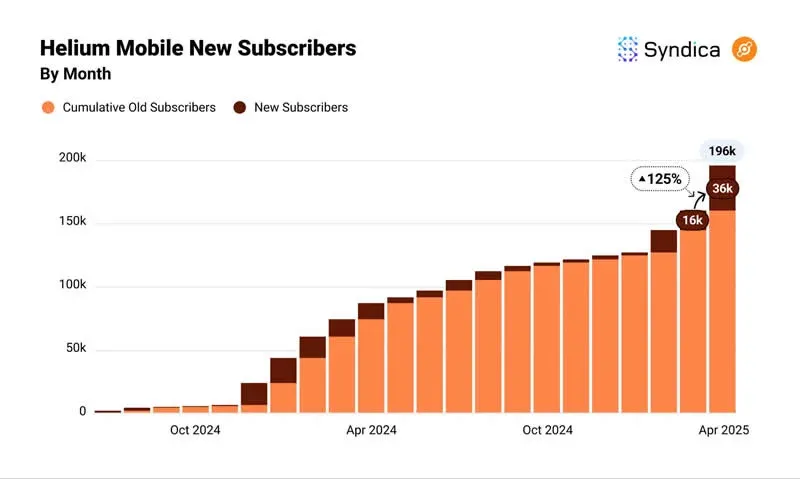
- After the launch of a free‑phone plan, new subscriber sign‑ups jumped 125 %, reaching 36,000 users—an all‑time high.
- Monthly revenue surpassed $250,000, with income from data‑point burn (a metric that tracks the destruction of earned data credits) climbing 34 %; off‑load data now accounts for 79 % of that revenue.
- The average daily off‑load subscription count rose 65 %, and off‑load data volume increased 32 %, both setting new records.
*(Note: When users consume mobile data, a portion of the traffic is “off‑loaded” to Helium network hotspots for transmission and billing. This traffic is referred to as “off‑load data.”)*
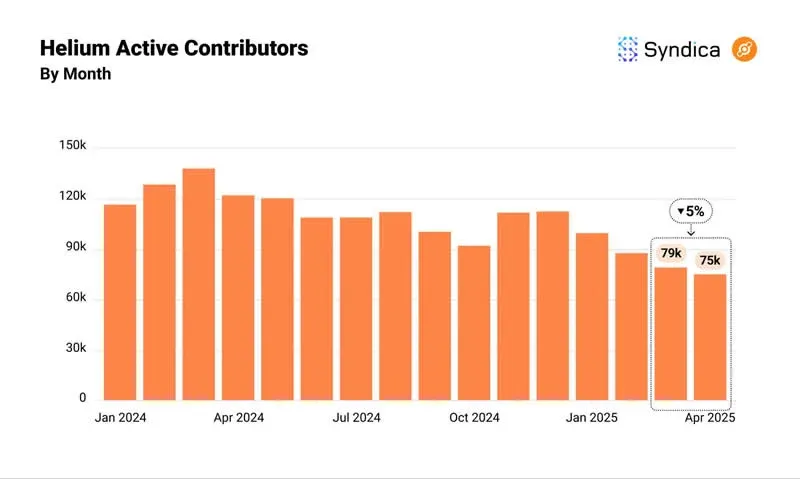
- Since the start of 2025, the overall number of active Helium contributors has shown a modest downward trend, stabilizing at roughly 75,000 participants.
XNET
- XNET is a decentralized mobile network built on Solana.
- In April, off‑load data continued its upward trajectory, with the average daily off‑load volume rising an additional 16 %, marking the eighth consecutive month of steady growth.
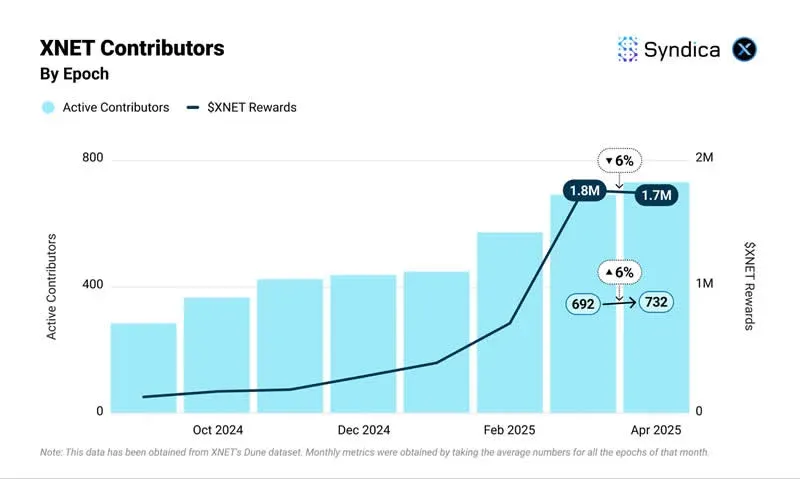
- Although rewards fell 6 %, XNET Mobile’s active contributor count increased 6 % to 732, establishing a new historical peak.
Roam
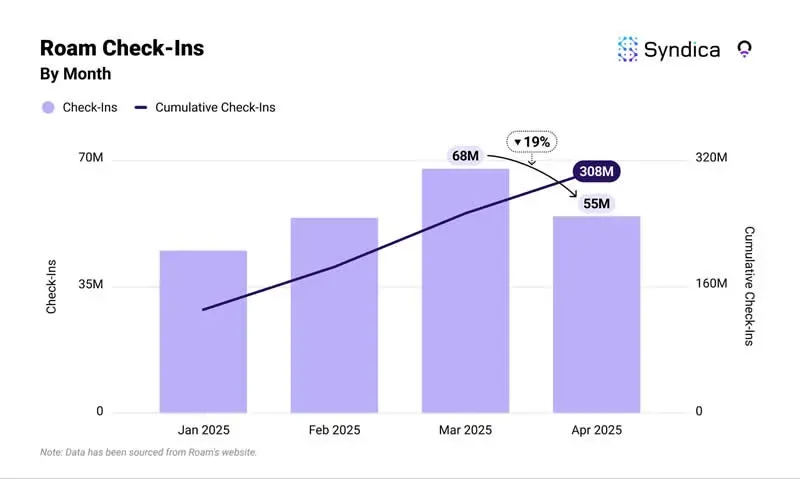
- April saw the addition of 535,000 new Wi‑Fi nodes (the second‑highest figure on record) and 87,000 new users, pushing the protocol’s total node count close to 4 million and the user base near 3 million.
- Monthly user check‑ins dropped 19 %, yet the cumulative number of check‑ins surpassed 300 million, indicating that user stickiness remains robust.
Shaga
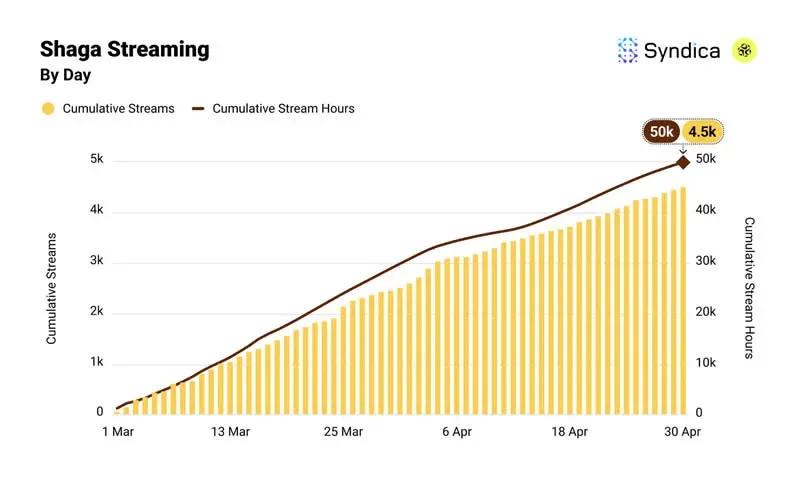
- The Shaga protocol leverages idle GPU compute power to support Web3 gaming, now covering 74 GPU models and delivering 33.12 TB of storage with a throughput of 15.27 Gbps.
- Over a two‑month span, Shaga facilitated 4,500 interactive game‑streaming sessions, accumulating 50,000 hours of runtime, during which viewers could control and participate in the streamer’s gameplay in real time.
Hivello
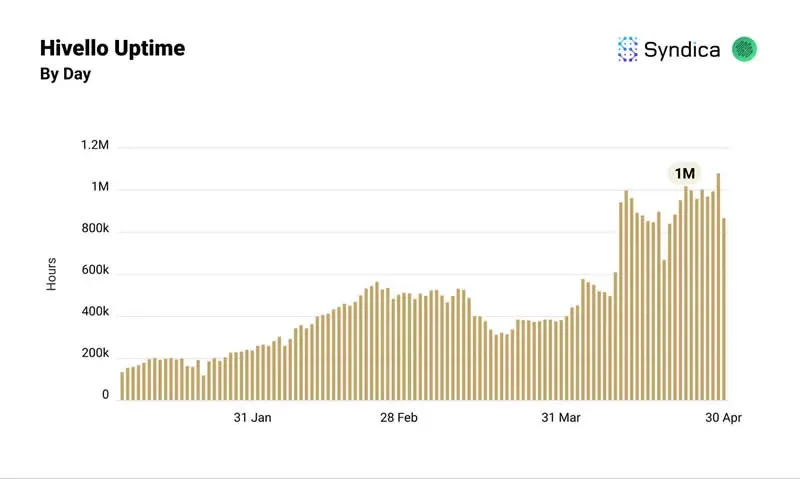
- Hivello, a DePIN aggregation platform, aims to monetize idle resources.
- In April, online time doubled compared with March, reflecting a surge of nodes joining the network to contribute resources.
Nosana
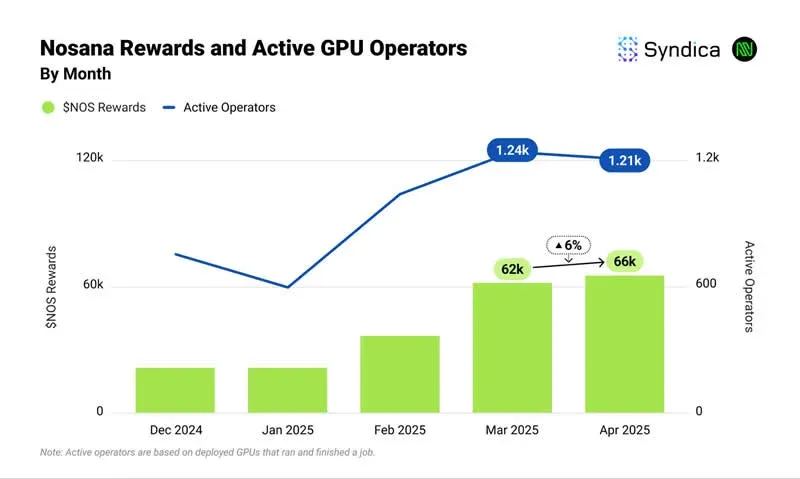
- Nosana is a decentralized GPU compute network built on Solana, focusing on AI inference workloads.
- April saw a modest rise in job completion volume and contributor rewards, while GPU node counts remained stable.
- The newly launched Gaianet AI partnership enables AI agents to run on Nosana’s infrastructure, further accelerating job growth.
Sallar.io
- Sallar taps into idle compute power from smartphones and other devices, constructing a distributed computing node network to satisfy high‑performance computing demands.
---
Additional Context for Global Readers
- All fiat transactions referenced above are denominated in USD. For users outside the United States, payments can be processed via SEPA or SWIFT where applicable.
- U.S. residents wishing to engage with these protocols should use Binance.US rather than the global Binance platform, in compliance with local regulations.
- While this report focuses on operational metrics, please note that cryptocurrency gains may be subject to taxation in your jurisdiction; consult a tax professional for advice tailored to your situation.
*No investment advice or guarantees of profit are provided in this analysis.*
Related Reading
- Solana Explorer Query Guide: Wallets, Tokens, Contracts
- DePIN Explained: Top 10 Crypto Projects Trending in 2025
- Solana vs Ethereum: Trading Volume & Liquidity Analysis 2024
💡 Register on Binance with referral code B2345 for the maximum trading fee discount. See Binance complete guide.
⚠️ Risk Disclaimer: Crypto prices are highly volatile. This is not investment advice.



