
 Bitaigen Research
 If you are already familiar with the blockchain ecosystem, you have certainly noticed that Ethereum draws a lot of attention because of its smart‑contract and NFT ecosystems. However, as the number of users surged, bottlenecks such as longer transaction‑confirmation times and soaring fees have become evident. To address these pain points, the industry has introduced a variety of scaling approaches, among which Solana positions itself with the core selling points of “high speed and low cost,” aiming to provide a more efficient underlying network for the next generation of decentralized applications.
In this article we systematically review Solana’s technical foundation, current ecosystem status, and beginner‑friendly acquisition pathways. We also combine industry trends to offer an objective analysis of SOL’s development outlook and price trajectory, helping readers quickly gauge the chain’s investment potential. Later sections contain deeper case studies that are worth a thorough read.
History of Solana
Solana was founded by Solana Labs in 2017 in San Francisco, with founder Anatoly Yakovenko and several former Qualcomm colleagues. The team accumulated experience in distributed systems and chip design while at Qualcomm, gaining a deep appreciation for the importance of clock synchronization. Yakovenko believed that by introducing a reliable time reference into the network, transaction throughput could be dramatically increased without sacrificing bandwidth. Consequently, his whitepaper introduced the concept of Proof of History (PoH) to break the ~15‑transactions‑per‑second ceiling that limits traditional chains such as Bitcoin and Ethereum.
What Exactly Is Solana?
Solana is a high‑performance blockchain platform aimed at both developers and end users. Since its launch in 2017, it has grown—thanks to native smart‑contract support—into one of the world’s top‑by‑market‑cap crypto assets. Its design goal is to deliver near‑instant confirmation speeds for dApps while keeping transaction fees extremely low, allowing it to carve out a niche alongside programmable chains like Ethereum and Cardano.
How Does Solana Operate?
Solana’s speed and low cost stem from the organic combination of two consensus mechanisms: Delegated Proof of Stake (DPoS) and Proof of History (PoH).
Delegated Proof of Stake
DPoS is a variant of Proof of Stake (PoS) in which validators must lock up a certain amount of SOL as collateral. Unlike Proof‑of‑Work, which relies on raw computational power, DPoS elects a small set of trusted nodes to produce blocks through a voting process, thereby dramatically reducing energy consumption. The mechanism also distributes voting power, making it difficult for any single validator to wield excessive influence over the network.
Proof of History (PoH)
PoH timestamps each transaction, functioning like a stopwatch in a race to guarantee that all records are ordered in a strict chronological sequence. Because nodes can verify transaction order directly from the timeline, the network does not need to repeatedly compete for ordering rights in each round. This design enables Solana’s throughput to far exceed that of traditional PoW/PoS chains. The official whitepaper claims a peak capacity of up to 65,000 TPS, while real‑world operation typically averages 300‑1,000 TPS, already outpacing most EVM‑based chains.
Unique Advantages of Solana
- Transaction speed: The single chain can handle roughly 65,000 transactions per second at peak.
- Very low fees: The average cost per transaction is only $0.00025.
- Hybrid consensus: The PoH + DPoS combo delivers an efficient yet secure consensus process.
- Open‑source ecosystem: A rich set of developer tools supports NFTs, DeFi, blockchain games, and many other use cases.
SOL Token Use Cases and Tokenomics
SOL, the native token of the Solana network, fulfills several core functions:
- Paying transaction fees: Every on‑chain operation consumes SOL, which compensates validators.
- Staking and validation: Holders can run their own validator nodes or delegate SOL to existing validators to earn block rewards.
- Governance participation: As decentralization progresses, SOL holders will gain voting rights on protocol upgrades and other critical decisions.
SOL’s total supply is capped at 500 million tokens; the circulating supply is affected by burning, staking, and lock‑up dynamics. Since its launch in 2020, SOL has risen into the upper tiers of market‑cap rankings and is widely used across Solana’s DeFi, NFT, and payment applications.
Applications Within the Solana Ecosystem
GameFi
Solana offers a dedicated toolkit for game developers, lowering the entry barrier for Web3 gaming. Notable projects include Star Atlas, Aurory, and Panzerdogs.
NFT
Thanks to ultra‑low minting costs (around $0.00012 per NFT), more than 32 million NFTs have been issued on Solana to date. Major marketplaces include Magic Eden, Solanart, and Solsea.
DeFi
A single DeFi transaction on Solana typically costs about $0.18, with total locked value exceeding $11 billion and daily trading volume surpassing $430 million. The ecosystem hosts 160+ projects and partners with entities such as Pyth and OKX.
Payments
USDC circulating on Solana approaches $700 million, with daily active users over 280 k and per‑transaction fees as low as $0.00025. Partners include Phantom, Circle, and Checkout.com.
DAO
To date, more than 140 DAOs have been built on Solana, collectively managing community funds close to $1 billion.
Solana vs. Ethereum
Solana’s single‑chain efficiency allows it to process a large volume of transactions without relying on additional layer‑2 scaling solutions. However, the hardware requirements for validator nodes are relatively high, which fuels ongoing debate about the network’s degree of decentralization.
SOL – The Native Cryptocurrency of Solana
Core Functions
- Transaction fees: Pay network fees and ensure validator compensation.
- Staking: Lock SOL to participate in consensus and earn block rewards.
- Governance: Token holders can vote on protocol upgrades, parameter adjustments, and other governance matters.
Application Scenarios
- DeFi: Provide liquidity, pay fees, or earn yields on decentralized exchanges, lending platforms, and liquidity‑mining programs.
- NFT & Digital Assets: Used to buy, sell, or mint NFTs and other digital collectibles on Solana marketplaces.
- Ecosystem incentives: Reward developers, validators, and active users, fostering healthy growth of the ecosystem.
Future Outlook for Solana
Solana has successfully tackled three of the most pressing challenges facing blockchains today: speed, security, and scalability. Although the network experienced 11 outages over the past two years—including a five‑hour halt in February 2024—the community continues to refine node governance and monitoring mechanisms. Its NFT and DeFi ecosystems keep expanding, attracting a steady stream of projects and investors.
Tax disclaimer: Crypto gains, including those realized from SOL, may be subject to taxation in your local jurisdiction. Please consult a qualified tax professional to understand your obligations.
SOL Price Forecast
2025 Forecast
- Low estimate: $205.20
- High estimate: $421.46
- Potential annual increase of roughly 99.51 %.
2026‑2031 Forecast
- 2026 range: $62.11‑$274.84 (peak increase ≈ 30.1 %).
- 2027 range: $66.43‑$161.52 (possible decline of‑23.54 %).
- 2028 range: $110.96‑$305.61 (increase ≈ 44.67 %).
- 2029 range: $291.20‑$918.88 (increase ≈ 334.97 %).
- 2030 range: $135.41‑$477.52 (increase ≈ 126.05 %).
- 2031 range: $158.49‑$353.83 (increase ≈ 67.49 %).
2032‑2036 Forecast
- 2032 high $833.67, low $242.92 (increase ≈ 294.64 %).
- 2033 high $2,003.37, low $752.27 (increase ≈ 848.34 %).
- 2034 high $969.25, low $295.23 (increase ≈ 358.82 %).
- 2035 high $771.43, low $371.62 (increase ≈ 265.18 %).
- 2036 high $2,273.65, low $631.90 (increase ≈ 976.28 %).
The forecasts above are for reference only and should not be taken as investment advice. Market volatility remains unpredictable.
How to Purchase SOL
The primary way to obtain SOL today is through major cryptocurrency exchanges. The following example uses OKX (also known as OKEx) to demonstrate the complete flow from registration to executing a SOL trade. Global users should note that:
- U.S. residents must use Binance.US (or another U.S.-compliant exchange) instead of the global Binance platform.
- Fiat deposits can be made via SEPA (for EUR) or SWIFT (for USD, GBP, etc.) where supported.
Step‑by‑Step Guide (OKX)
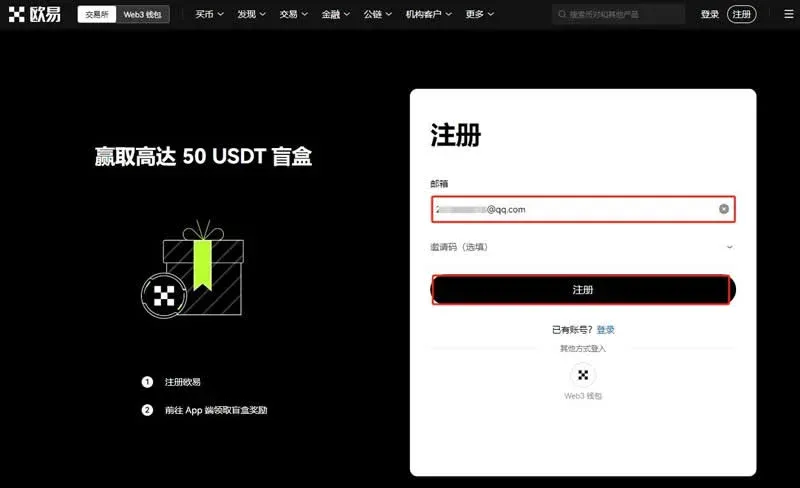
- Visit the OKX website, enter your email address, and click “Register.” Then input the verification code sent to you (valid for 10 minutes).
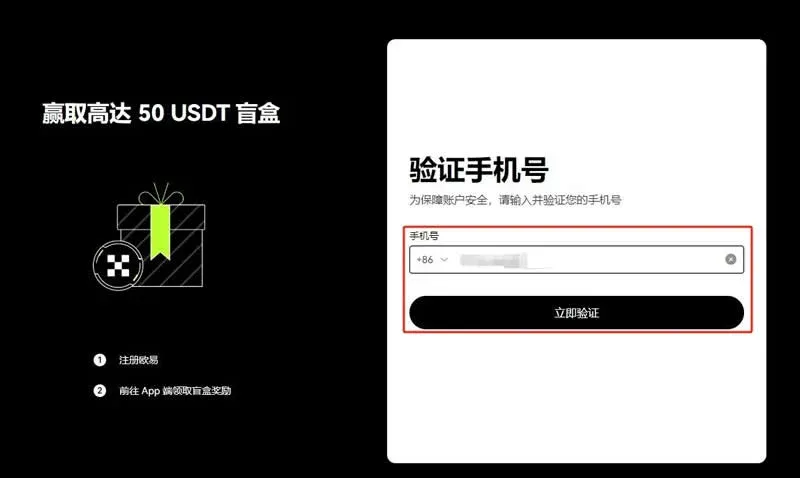
- Enter your mobile phone number, click “Verify now,” and type the six‑digit SMS code (also valid for 10 minutes).
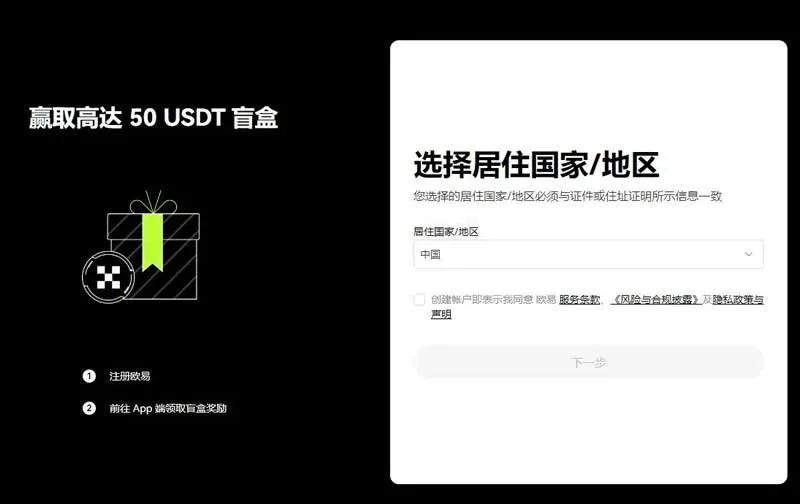
- Select your country/region, then tick the boxes for “Terms of Service,” “Risk & Compliance Disclosure,” and “Privacy Policy.”
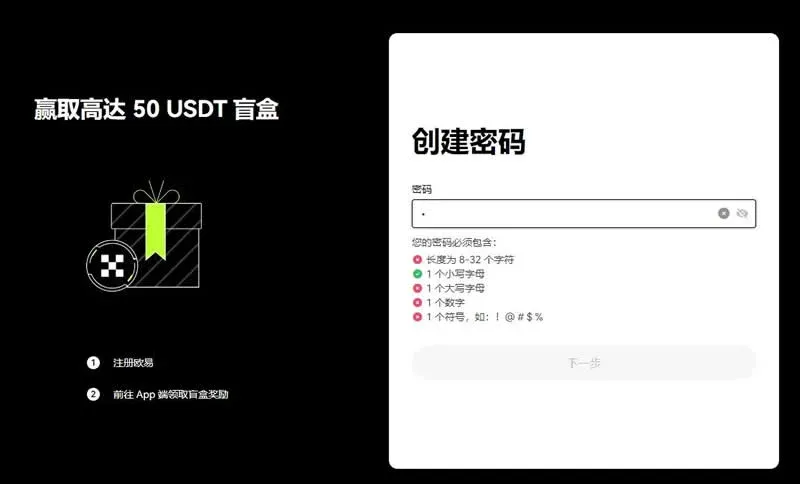
- Set a login password (8‑32 characters, must include upper‑ and lower‑case letters, numbers, and symbols such as !@#$%).
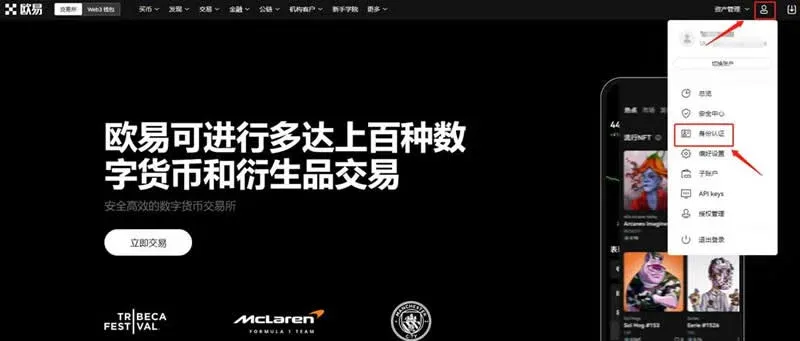
- After logging in, go to “User Center” and complete identity verification (KYC).
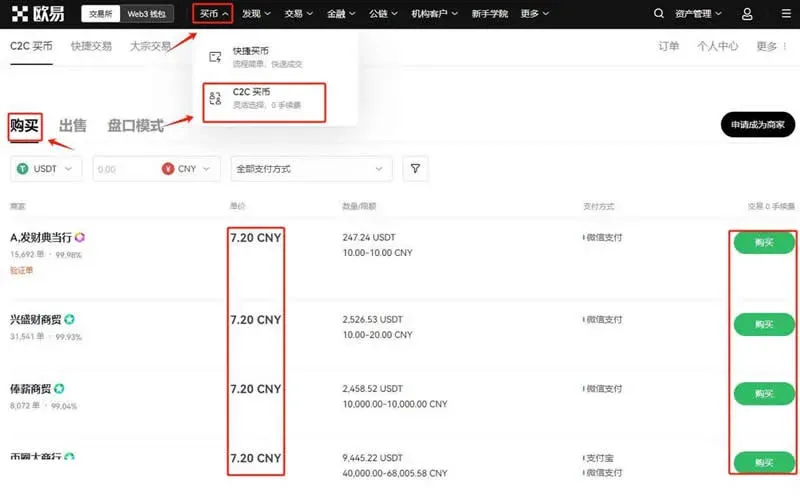
- To trade, you first need USDT in your account. In the C2C marketplace, select a suitable seller, click “Buy,” follow the payment instructions, and wait for the funds to be released (if the transfer is delayed, contact customer support).
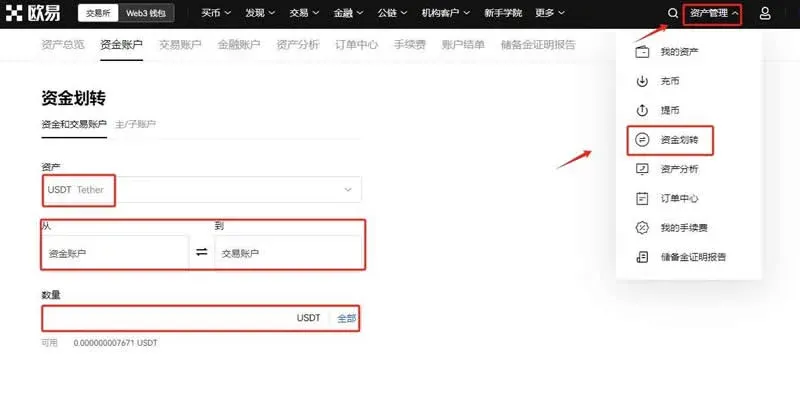
- The purchased USDT will appear in your “Funding Account.” Transfer it to your “Trading Account” via Funds → Transfer (direction: Funding → Trading).
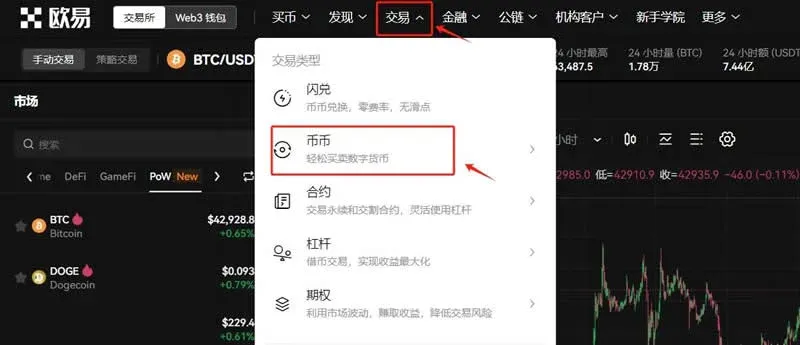
- Once the transfer is complete, click “Trade → Spot” on the homepage to open the trading interface.
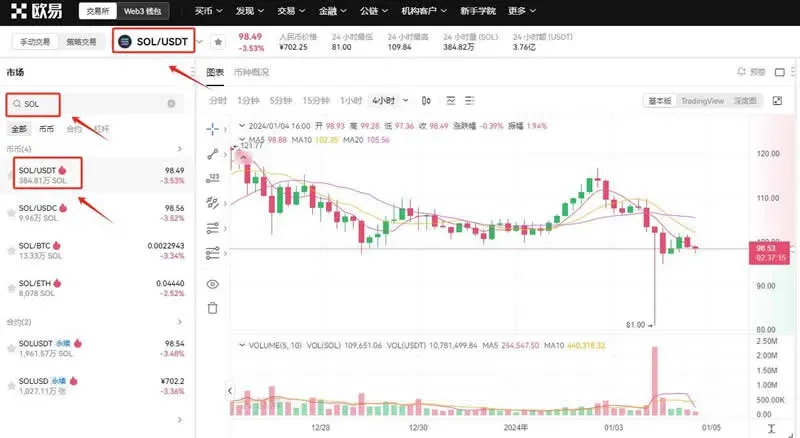
- In the left‑hand search bar, type SOL, then select the SOL/USDT trading pair.
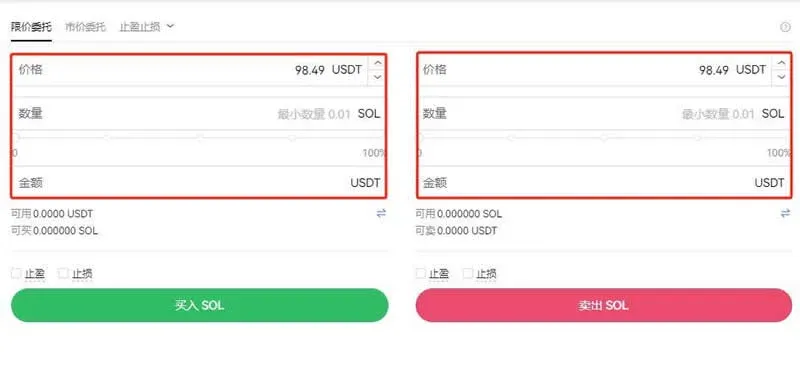
- Enter the amount you wish to buy and click “Buy.” To sell, input the amount you want to sell and click “Sell.” Note that the minimum order size for SOL is 0.01 SOL.
Closing Thoughts
Solana’s high speed, low fees, and energy‑efficient design provide a viable scaling path for the blockchain industry. Leveraging innovations such as PoH, it addresses the performance bottlenecks that have hampered traditional chains, making it a popular choice for building NFT, DeFi, GameFi, and payment solutions. While occasional network interruptions have occurred, ongoing technical upgrades and governance improvements suggest that Solana could continue to solidify its position within the public‑chain landscape.
For the latest updates on SOL and its ecosystem, feel free to follow Bitaigen (比特根) or explore other articles on this site. Happy exploring in the world of crypto!
💡 Register on Binance with referral code B2345 for the maximum trading fee discount. See Binance complete guide.



