
 Bitaigen Research
In the crypto ecosystem, the core purpose of stablecoins is to peg a token’s value to an underlying asset so that price fluctuations are minimal. Stablecoins that are anchored to the U.S. dollar aim to stay close to $1.00, which is why they are often referred to as “digital dollars.” They serve as a bridge for trading, payments, and cross‑chain transfers. Apart from the dollar, there are also stablecoins backed by gold or other physical assets; the price of those tokens moves with the market performance of the underlying commodity rather than staying strictly near $1.00.
Entering 2026, Tether split its dollar‑pegged products into two distinct tracks: USDT continues to act as the primary source of global liquidity, appearing widely in offshore markets, a multitude of trading pairs, and DeFi scenarios; USAT (USA₮) is positioned as a compliant token that meets the regulatory requirements of the United States’ GENIUS Act, designed specifically for U.S.‑based institutions and regulated platforms.
This article systematically compares USAT and USDT across three dimensions—concept, operational mechanism, and points of similarity versus differentiation—to help readers determine which token better fits their own needs.
This piece walks through the concept, mechanics, and compliance attributes of USAT and USDT, outlining their key differences and commonalities. It aims to enable you, in the diversified 2026 ecosystem, to quickly decide which Tether dollar‑pegged coin aligns with your trading or asset‑management requirements. The following sections provide in‑depth analysis and are worth a careful read.
Overview of Tether’s Two Dollar‑Pegged Stablecoins
Tether, one of the world’s largest stablecoin issuers, offers not only the dollar‑backed USDT but also XAUT, which tracks physical gold. By early 2026, the daily transaction volume supported by Tether‑issued tokens had reached several hundred billion USD, making them a critical infrastructure for cross‑chain and cross‑border value flow.
In the same year, Tether operated two dollar‑supported tokens, each targeting a different regulatory and market positioning: USDT for global liquidity, and USAT (USA₮) for the U.S. regulatory environment.
USDT: The Global Digital Dollar
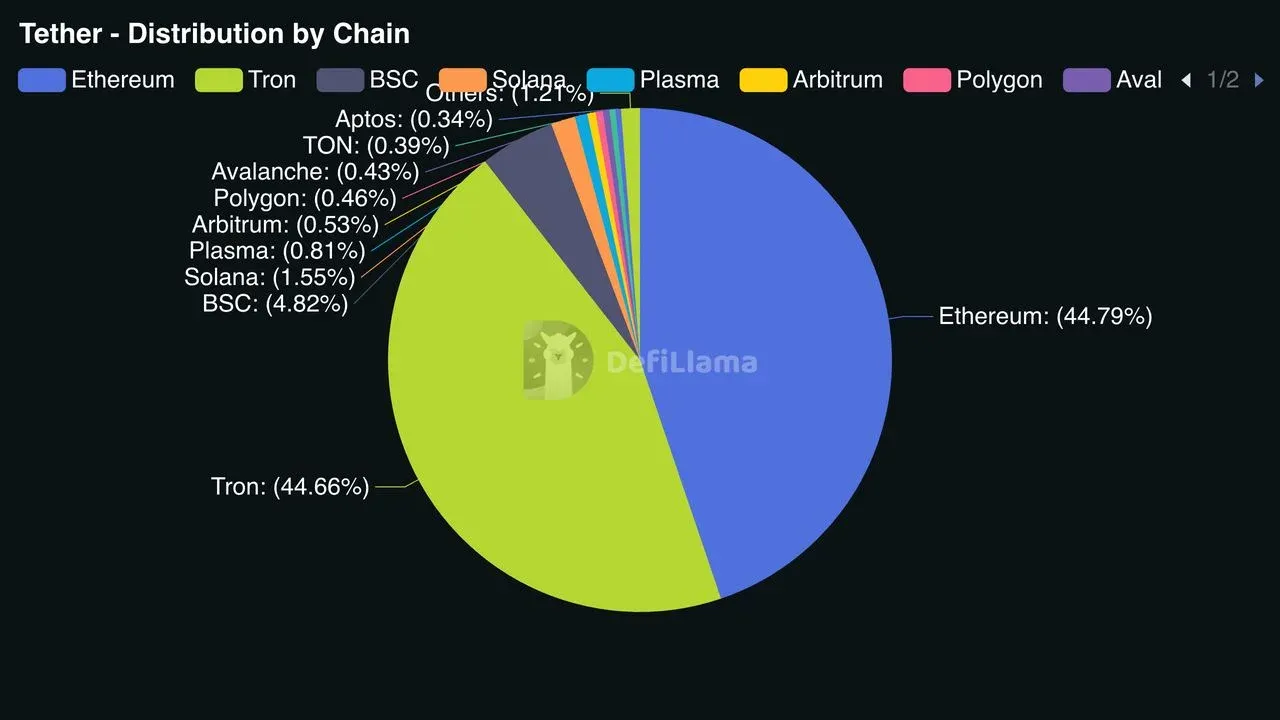
USDT is Tether’s flagship product, with a market capitalization of roughly $186 billion and a daily trading volume that exceeds $90 billion. It is the default settlement asset on centralized exchanges, derivatives platforms, and many DeFi markets, commonly appearing in pairs such as BTC/USDT. USDT’s advantage lies in its scale and liquidity rather than any specific regulatory framework; it operates on multiple blockchains and across numerous jurisdictions, enabling fast trades and cross‑border payments. However, it is important to note that USDT is not a compliant token issued by a U.S. federal bank.
USAT (USA₮): The Dollar Stablecoin Tailored for U.S. Compliance
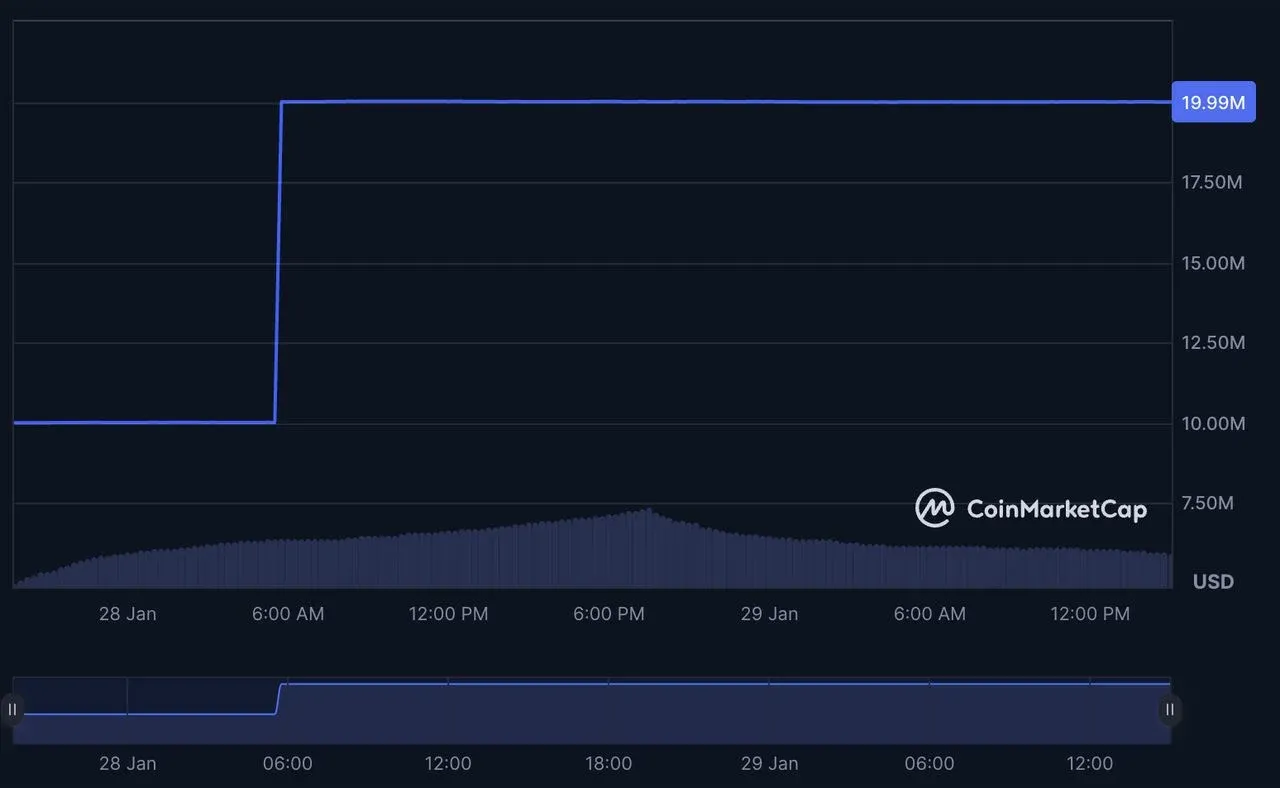
USAT (branded as USA₮) launched on January 27 2026, issued by Anchorage Digital Bank, N.A.—a federally chartered digital‑asset bank supervised by the U.S. Office of the Comptroller of the Currency (OCC). Tether appointed Cantor Fitzgerald as the reserve custodian and “preferred primary dealer,” highlighting an institution‑level reserve management and regulatory linkage.
USAT was initially released as an Ethereum ERC‑20 token with a circulating supply of 20 million units, a market cap of about $20 million, and a daily trading volume ranging between $15 million and $16 million. Approximately 220 addresses hold USAT. Compared with USDT, USAT places a stronger emphasis on compliance under the U.S. GENIUS Act, targeting U.S.‑based institutions, regulated exchanges, and fintech firms that must satisfy federal supervisory requirements.
The Significance of the GENIUS Act
The GENIUS Act (Guidance and Innovation for US Stablecoins Act) became law on July 18 2025, establishing the first federal regulatory regime for payment stablecoins within the United States. The legislation mandates that only federally chartered banks or other regulated entities may issue stablecoins, requiring a 1:1 backing with highly liquid assets, periodic reserve disclosures, and oversight by regulators such as the OCC for AML, sanctions, and compliance matters.
For Tether, the GENIUS Act delineates the regulatory boundary between its product lines: USAT is issued through a federally chartered bank to provide a compliant solution for entities operating under the Act, while USDT continues to serve global liquidity needs without the constraints of a U.S. federal bank charter.
Shared Characteristics: Similarities Between USAT and USDT
Although the two tokens operate under vastly different regulatory environments, their core economic designs are aligned—they are both centrally issued, dollar‑pegged stablecoins whose objective is to keep the token price tightly coupled to $1.00. Both employ a “mint‑burn” mechanism, with the issuer managing reserves and minting or redeeming tokens in response to market demand. Consequently, they offer comparable price‑stability functions, yet both remain subject to the issuer’s operational practices, reserve management, and market‑liquidity risks.
Key Comparison: Differences Between USAT and USDT
| Feature | USAT (USA₮) | USDT (Tether) |
|---|---|---|
| **Primary Positioning** | compliant token under the U.S. GENIUS Act | global‑liquidity stablecoin |
| **Launch Date** | January 27 2026 | 2014 |
| **Issuing Entity** | Anchorage Digital Bank, N.A. (OCC‑regulated) | Tether‑affiliated entities (global model) |
| **Reserve Custodian** | Cantor Fitzgerald (preferred primary dealer) | diversified reserve pool, publicly disclosed tracker |
| **Blockchain Coverage** | Ethereum ERC‑20 (single‑chain) | ~90 chains (Ethereum, Tron, Solana, Polygon, etc.) |
| **Market Cap** | ≈ $20 million | ≈ $186 billion |
| **24‑Hour Volume** | $15‑$16 million | > $91 billion |
| **Typical Use Cases** | U.S.‑regulated scenarios (institutions, compliant payments) | trading liquidity + global transfers |
The table shows that the differences between USAT and USDT lie primarily in regulatory compliance and market reach rather than in the underlying technology.
1. Regulatory Track & Target Users
- USAT is aimed at U.S.‑based regulated institutions, fintech firms, and exchanges that must adhere to federal compliance, emphasizing “compliance first.”
- USDT serves the worldwide crypto market’s liquidity demand, especially in offshore jurisdictions, emerging economies, and cross‑border payment contexts.
2. Issuer Structure
- USAT is issued through a federally chartered bank supervised by the OCC, embedding it directly within the U.S. banking system.
- USDT is issued by Tether‑related entities operating on a global basis and is not subject to a U.S. federal bank charter.
3. Reserve Management Approach
- USAT explicitly designates Cantor Fitzgerald as the reserve custodian, reflecting deep integration with traditional U.S. finance.
- USDT utilizes a more diversified reserve composition, publishing periodic audit reports, but it is not a native compliant product under the GENIUS Act.
4. Blockchain Ecosystem Support
- USAT currently exists only on Ethereum as an ERC‑20 token, resulting in a relatively narrow on‑chain compatibility.
- USDT is deployed on Ethereum, Tron, Solana, Polygon, TON, Avalanche, and many other chains, ensuring that global users can move the token across different networks.
5. Scale & Liquidity
- USDT, with a market cap near $186 billion and daily volume exceeding $90 billion, forms the backbone of liquidity in the global crypto market.
- USAT is still in an early adoption phase, with a market cap of about $20 million, daily volume around $15‑$16 million, and roughly 220 holders. Its focus is compliance rather than rapid scale.
Choosing Between USAT and USDT: When to Use Which?
The decision hinges on balancing liquidity needs against regulatory compliance requirements:
- Prioritize Global Liquidity: If your operations require seamless movement across multiple chains, various countries’ exchanges, or DeFi protocols, and you need deep order‑book depth, USDT is the more suitable option. Its massive market cap and cross‑chain deployment provide lower slippage and faster settlement.
- Need to Satisfy U.S. Compliance: If your institution must operate under the U.S. federal regulatory framework, or your product targets regulated fintech firms, banks, or payment platforms, USAT offers a structure that complies with the GENIUS Act, complete with a designated custodian. Although its liquidity pool is smaller, the compliance guarantees may be essential for your use case.
Bottom Line: USDT is ideal for users seeking scale and cross‑border convenience; USAT caters to entities that must adhere to U.S. regulatory standards and are comfortable with a more modest liquidity pool.
Main Risks to Watch Before Using Either Token
Even though both aim to maintain a $1.00 peg, several risk vectors remain:
- Issuer & Redemption Risk
- The token’s value depends on the issuer’s ability to redeem on a 1:1 basis. Typically only approved counterparties can redeem directly; retail users often must rely on secondary markets. Under market stress, redemption processes may experience delays or additional restrictions, affecting liquidity.
- Regulatory & Platform Risk
- Legal environments can shift rapidly. Exchanges or payment platforms may add or remove support for a particular stablecoin based on jurisdictional compliance requirements. A token marketed as “compliant” today could face restrictions tomorrow.
- On‑Chain & Transfer Risk
- Always verify the official contract address, selected blockchain, and wallet compatibility before transacting. Mistakes such as sending to the wrong network, interacting with counterfeit tokens, or using insecure bridges can result in irreversible loss. USAT currently exists only on the Ethereum ERC‑20 contract; confirm that the platform you use supports that contract before proceeding.
Tax Note: In many jurisdictions, gains or losses realized from trading or redeeming stablecoins may be taxable. Users should consult local tax regulations or a qualified professional to understand their obligations.
Closing Thoughts
USDT and USAT fulfill distinct roles within the Tether ecosystem. USDT continues to dominate as a liquidity engine thanks to its huge market cap, deep trading volume, and multi‑chain presence, making it the core of the global crypto market. USAT, issued through a federally chartered bank, concentrates on delivering a dollar‑stablecoin that complies with the U.S. GENIUS Act, targeting regulated institutions.
When choosing, first clarify your business requirements: if you seek the highest liquidity and worldwide accessibility, USDT is the natural choice; if you must obey U.S. federal regulations and serve institutional clients, USAT aligns better. Regardless of the selection, conduct thorough due diligence on the issuer’s reserve management, redemption mechanisms, and on‑chain security.
Frequently Asked Questions About USAT vs. USDT
1. Are USAT and USDT the same coin?
No. USDT is Tether’s globally recognized stablecoin; USAT (USA₮) is issued by Anchorage Digital Bank, N.A. and is designed specifically to meet the U.S. GENIUS Act requirements.
2. Which stablecoin has the larger scale?
USDT’s market cap far exceeds that of USAT. Data from January 2026 shows USDT’s market cap approaching $190 billion, whereas USAT’s is around $20 million.
3. Can either token decouple from the dollar?
In theory, both aim to maintain a $1.00 peg, but extreme market pressure, redemption frictions, or platform limitations could cause short‑term deviations. Before using, assess the issuer’s reserve transparency and redemption channels.
That concludes the analysis of USAT vs. USDT differences: Which Tether stablecoin should you use in 2026? For more details on USAT and USDT, you can search for previous Bitaigen (比特根) articles or continue reading the related links below. Thank you for supporting Bitaigen (比特根)!
*If you are a U.S. resident, please use Binance.US or other U.S.-compliant exchanges when accessing these tokens.*
Related Reading
- 2026 Stablecoin Market: $300B Cap & Key Growth Drivers
- TRON (TRX) Guide: Concept, Tech, Ecosystem & Risks
- What Is a Stablecoin? Principles, Benefits & Real-World Use Cases
💡 Register on Binance with referral code B2345 for the maximum trading fee discount. See Binance complete guide.



