
 Bitaigen Research
 We examine USDT and USDC from everyday usage, cross‑border payments to DeFi yield‑generation, dissecting their origins, operating mechanisms, and the potential value points that ordinary investors might watch. Through case studies and risk warnings, readers can quickly grasp the role and opportunities of these two major stablecoins within the global financial ecosystem. Subsequent sections will delve deeper, so a thorough read is worthwhile.
The Value of Stablecoins for the Average Person
“Lifeline Dollars” in Emerging Markets
In regions where local fiat currencies are depreciating and inflation is soaring—such as Venezuela, Turkey, and Niger—USDT and USDC have already become common tools for residents to preserve wealth. In 2023, USDT accounted for over 20 % of retail payments in Venezuela, topped peer‑to‑peer transactions in Niger, and saw transaction volume in Turkey grow by 200 %.
A “Second‑Level Channel” for Cross‑Border Transactions
For overseas workers and small businesses, using stablecoins for cross‑border remittances can complete in a few seconds with near‑zero fees, far outpacing the multi‑day settlement of traditional banks that rely on SEPA, SWIFT, or correspondent‑bank networks.
Investment Opportunities Within the Dollar System
- Basic Yield: Depositing USDC on platforms such as Coinbase can generate roughly 4 % annualized return, comparable to the yield of money‑market funds.
- Advanced Yield: Lending or providing liquidity with USDC on DeFi protocols like Aave or Morpho can produce 5 %–10 % annualized returns, but participants must bear the risk of smart‑contract hacks or forced liquidations.
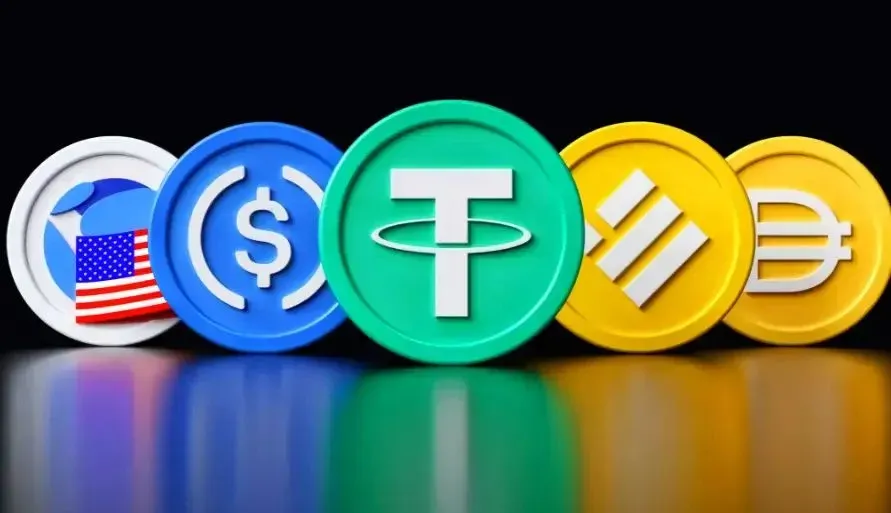
USDT’s Grassroots Rise
In the early days of cryptocurrency (2013‑2014), the space was a largely unregulated “wilderness.” Bitcoin briefly hit $1,000, yet most exchanges lacked fiat on‑ramps and traditional banks remained wary of digital assets; cross‑border transfers were both slow and expensive.
At the end of 2014, the team behind Bitfinex launched USDT, promising a 1:1 peg to the U.S. dollar. Users simply transferred dollars to the Tether company and received an equivalent amount of USDT, bypassing the banking layer—earning USDT the nickname “shadow bank” of the crypto world. The company is headquartered in Hong Kong, incorporated in the British Virgin Islands, and maintains a close relationship with Bitfinex, often operating near regulatory boundaries.
When Bitcoin surged past $20,000 in 2017, USDT quickly evolved from an internal settlement token for Bitfinex into an industry‑wide “digital dollar.” Exchanges such as Binance (U.S. users must use Binance.US), Huobi, and OKX listed USDT, enabling around‑the‑clock, cross‑border trading. At the same time, market observers began questioning the authenticity of its reserves: research showed that USDT’s issuance spikes frequently coincided with Bitcoin price rallies, and the purported Puerto Rico bank account was closed within a year.
Despite ongoing controversy, USDT’s low fees and instant settlement have secured widespread adoption in emerging markets—particularly Southeast Asia and Latin America. In 2016, Bitfinex suffered a hack that stole roughly 120,000 BTC (valued at over $70 million at the time). Tether responded by issuing BFX Tokens as compensation, successfully defusing the crisis and strengthening its ties to exchanges.
USDC’s Path of Compliance
Unlike USDT’s grassroots origins, USDC was launched in 2018 by Boston‑based fintech firm Circle in partnership with exchange heavyweight Coinbase, positioning itself as a compliant “digital dollar.” Each USDC is backed 1:1 by cash or short‑term U.S. Treasury securities, with top‑tier accounting firms conducting monthly audits—providing a high degree of transparency.
Circle enjoys capital backing from financial giants such as Goldman Sachs and Fidelity. CEO Jeremy Allaire brings more than two decades of technology and finance experience and aims to build USDC into the “Citibank of the blockchain era.” Since 2022, global asset‑manager BlackRock has overseen the cash and Treasury reserves backing USDC, further bolstering its credibility. USDC also collaborates with Visa and Mastercard to enter the cross‑border payments arena, acting as a bridge between traditional finance and blockchain.
The Soul of USDT vs. USDC: Teams and Belief Systems
USDT: The Adventurous Spirit of a Rogue Warrior
The founding team behind USDT is decidedly grassroots, featuring former Hollywood child actor Brock Pierce, branding strategist Reef Collins, and technical core Craig Sellars. The real mastermind is former plastic‑surgeon Giancarlo Devasini, who sold tens of millions of dollars in assets in 2012 before devoting himself fully to crypto. After Bitfinex’s hack, Devasini rebuilt trust through a “debt‑for‑equity” restructuring.
Current CEO Paolo Ardoino is a tech geek; in 2017 he logged 37,720 code commits on GitHub and continues to drive USDT’s multi‑chain deployment as a self‑identified “coder,” likening USDT to a “chaotic yet efficient marketplace.”
USDC: The Wall‑Street‑Silicon‑Valley Elite Aura
USDC’s team is often described as a “Wall Street + Silicon Valley” dream squad. Allaire sold a web‑development company he founded in the 1990s for $360 million; co‑founder Sean Neville leads the technical architecture; Coinbase provides exchange support and compliance infrastructure. Circle’s backers include Goldman Sachs, BlackRock, and other top institutions, and the firm has applied for a banking license with the intention of competing directly with traditional banks.
Revenue Models Unveiled: How Stablecoins “Print Money”
USDT: The Finance World’s Low‑Risk Arbitrage Engine
By 2023, USDT’s market capitalization exceeded $100 billion, with roughly 80 % of its reserves held in U.S. Treasuries and the remainder in corporate bonds, Bitcoin, and gold. During the 2022‑2024 rate‑hike cycle, Tether deployed users’ “free deposits” into Treasury securities yielding 4 %‑5 % and corporate bonds yielding 5 %‑7 %, generating approximately $13 billion in profit. Minting and redeeming USDT incurs fees ranging from 0.1 % to 1 %.
Reinvested profits have been allocated to:
- Holding about 84,000 BTC;
- Developing a hydro‑electric‑powered Bitcoin mining farm in Uruguay;
- Planning a 70‑story skyscraper in Serbia;
- Spending €128 million to acquire a 10.7 % stake in Juventus and investing $775 million in video platform Rumble;
- Committing $1 billion to AI data‑center infrastructure and an additional $200 million to brain‑computer‑interface research.
When the interest‑rate environment shifted to a lowering cycle in 2025, Treasury yields fell, pressuring Tether’s high‑profit model.
USDC: Steady Returns Under a Compliance Framework
USDC’s income stream is more straightforward, with about 70 %‑80 % derived from cash and short‑term U.S. Treasuries (annual yield 3 %‑5 %). Circle also earns fees from cross‑border payment and API services offered in partnership with Visa and Mastercard. Should Circle obtain a banking license, it could expand into digital‑asset custody and lending, though higher compliance costs may limit competitiveness in Asian markets.
Stablecoins in the Crypto “Underworld”: Centralization vs. Decentralization
USDT: The Underground Emperor of Centralized Exchanges
On centralized exchanges (CEXs) such as Binance, OKX, and others, USDT accounts for over 60 % of stablecoin trading volume, attracting massive liquidity thanks to its high market depth. On the TRON network, low fees and fast finality make USDT the preferred choice for Asian traders, even finding use in illicit gambling and money‑laundering activities.
USDC: The DeFi‑Friendly Sovereign
On decentralized exchanges (DEXs) like Uniswap and Curve, USDC dominates. In 2024, USDC issuance on the Solana chain reached $9 billion, far surpassing USDT’s $2 billion on the same network. Its compliance pedigree and ERC‑20 compatibility make it a core asset in the DeFi ecosystem, widely used for lending, staking, and liquidity mining. Visa’s support for USDC cross‑border payments marks a positive penetration into traditional finance. The 2023 collapse of Silicon Valley Bank temporarily locked $3.3 billion of USDC reserves, pushing the price briefly to $0.88; swift remedial actions restored confidence but highlighted reliance on the banking system.
The Future of Stablecoins: A Clash of Two Belief Systems
USDT and USDC embody two divergent development philosophies in the blockchain space:
- USDT – a bottom‑up experimental project that leverages grassroots networks and pragmatic utility to expand rapidly in gray‑area markets;
- USDC – a top‑down financial innovation backed by Wall Street and regulators, aspiring to become the globally unified digital dollar.
As of June 2025, USDT’s market cap has surpassed $150 billion, still representing over 60 % of stablecoin trading volume, while USDC’s market cap sits around $61.5 billion, showing strong growth—particularly within DeFi and institutional segments. USDT continues to dominate CEX ecosystems; USDC steadily expands its footprint in DeFi and institutional pipelines.
This competition is not merely a token‑to‑token showdown; it reflects a broader clash between centralization and decentralization, grassroots versus elite finance ideologies. As the first gateway for blockchain integration into the global financial system, stablecoins are reshaping cross‑border payments, trade settlement, and the digitalization of the U.S. dollar. Which will ultimately prevail remains to be seen.
---
*This article concludes here. For deeper analyses of USDT and USDC, please search for prior Bitaigen (BitRoot) articles or continue reading the related links below. We appreciate your continued interest and support for Bitaigen (BitRoot)!*
Note: Crypto transactions may generate taxable events. Gains, losses, or income derived from stablecoin activities could be subject to tax in your jurisdiction; consult a local tax professional for guidance.
💡 Register on Binance with referral code B2345 for the maximum trading fee discount. See Binance complete guide.



