
 Bitaigen Research
 We start from Vitalik’s latest perspective to comprehensively map the convergence paths between Crypto and AI, focusing on sub‑segments such as decentralized data protocols and compute‑incentive models. The goal is to help readers uncover innovation opportunities created by technological complementarity and to glimpse possible future ecosystem evolutions.
5 AI as the Objective
The three scenarios discussed earlier emphasized AI providing capabilities to Crypto. This section, by contrast, concentrates on how Crypto can give back to AI, enabling the construction of more efficient and decentralized models and services. The core ingredients of AI are data, compute, and algorithms; on each of these dimensions, blockchain technology is attempting to supply incentives and security guarantees.
5.1 Decentralized Data Protocols
Decentralized data platforms use crowd‑sourced incentives to encourage individuals or institutions to upload raw data, annotation information, or algorithms, while cryptographic techniques protect privacy. A common implementation pattern is to tokenize data assets as NFTs or data‑tokens, then match supply and demand on a Data Marketplace.
- Ocean Protocol – Uses NFTs to establish ownership and issues corresponding datatokens, thereby enforcing access control over data. Its Compute‑to‑Data (C2D) mechanism ensures that users only receive model outputs without ever seeing the underlying raw data. Launched in 2017, Ocean has become a major data supplier for the AI sector.
- Synesis One – A Train‑2‑Earn platform built on Solana. Users who contribute natural‑language data or perform annotation tasks earn $SNS rewards. Tasks are divided into three roles: Architect (task creator), Builder (corpus provider), and Validator (quality reviewer). Once completed, the data is stored on‑chain via IPFS for consumption by AI companies (currently Mind AI). !Diagram of Ocean Protocol and Grass Data Network
- Grass – Positions itself as a decentralized crawling layer for AI, leveraging idle broadband and multiple IP addresses to bypass website scraping limits, collect publicly available web pages, and perform initial cleaning. The project is still in beta; users can earn points by providing bandwidth and may later receive airdrops. !Diagram of Grass and AIT Protocol Decentralized Data Layer Architecture
- AIT Protocol – Focuses on high‑quality annotation services. Global labor forces receive on‑chain task incentives; after annotation, data scientists review the work, and approved data become instantly downloadable for developers. !Illustration of AIT Protocol Data Annotation Workflow
Traditional decentralized storage networks such as Filecoin and Arweave also provide the foundational infrastructure for long‑term data preservation and distribution.
5.2 Decentralized Compute
Compute power is the critical resource for AI training and inference. Decentralized compute platforms incentivize owners of idle GPUs, CPUs, or specialized accelerators to lease their resources on an open market, thereby lowering costs and improving utilization. Current projects in the compute space generally fall into two business categories:
- Model Inference – High‑throughput prediction services for already‑trained models.
- Model Training – Supplying the massive bandwidth and compute density required for large‑scale model training.
Principal Projects
- Akash – Offers generic compute resources. It currently hosts roughly 282 GPUs and over 20,000 CPUs, has executed more than 160,000 rental transactions, and maintains GPU utilization between 50 % and 70 %.
- Render – Initially targeted at graphics rendering, it has gradually expanded into AI inference, operating 4,318 GPUs (including about 200 H100 units) and 159 CPUs.
- io.net – A compute platform built specifically for AI, with a cumulative deployment of 40,272 GPUs and 5,958 CPUs, completing 151,879 inference jobs. Partnerships with Render, Filecoin and others accelerate capacity expansion. !Resource distribution diagram for Akash and io.net GPUs/CPUs
- Gensyn – Concentrates on decentralized training, constructing a verification layer based on probabilistic proof of learning and graph‑structured location to ensure the trustworthiness of compute providers’ results.
- Fluence (on Solana) and Nosana – Implement on‑chain verification mechanisms that let users inspect proofs of computation, thereby boosting system credibility.
Competition among compute platforms hinges on resource scale, rental rates, utilization efficiency, and verification mechanisms. As AI demand explodes, the matching of supply and demand in the decentralized compute market will become a major driver of capital inflows.
5.3 Decentralized Models
True decentralized AI requires that the models themselves possess composability, incentive compatibility, and verifiability. While the “trustworthy black box” envisioned by Vitalik remains aspirational, several projects are already experimenting with economic incentives that cause models to learn from each other, compete, and collectively improve inference quality.
- Bittensor – Provides a network for model inference services, consisting of 32 sub‑nets each dedicated to tasks such as data crawling, text generation, or text‑to‑image synthesis. Rewards are distributed daily at roughly 7,200 TAO (1 TAO per token). The network’s 64‑bit validators allocate rewards among sub‑nets based on performance, and each sub‑net further splits rewards according to individual miner quality. This mechanism pushes models to continuously optimize through competition. !Illustration of a trustworthy AI black box powered by blockchain and cryptography !Diagram of Bittensor sub‑network architecture showing AI model collaboration and TAO reward flow
---
4 AI as the Game Rules
When AI moves from being an auxiliary tool to directly handling decision‑making and execution, systemic risk rises. This tier can be broken down into three technical pillars: AI Applications, Autonomous Agent Protocols, and zkML / opML.
4.1 Autonomous Agents
An Agent is an entity capable of understanding natural‑language commands, registering an on‑chain identity, and autonomously completing tasks. Blockchain supplies Agents with token incentives, NFT‑based ownership, and immutable logs, enabling them to acquire off‑chain compute while leaving trustworthy on‑chain records.
- Autonolas – Uses an on‑chain protocol to NFT‑mint Agent code and components, allowing service owners to compose multiple Agents into composite services that users can pay to consume.
- Fetch.ai – Features a four‑layer architecture: AI Agents, Agentverse, AI Engine, and the Fetch Network. Agentverse acts as a SaaS portal for developers to register Agents; the AI Engine translates natural language into executable commands and selects appropriate Agents; the Fetch Network handles on‑chain identity and coordination.
- Delysium – Provides a unified communication layer (based on a standardized messaging protocol) and an on‑chain identity layer (Agent ID and Chronicle contracts), enabling efficient, auditable interactions among Agents.
- Altered State Machine – Leverages NFTs to establish ownership and facilitate trading of AI Agents; it has already been integrated into games such as FIFA, forming a metaverse‑style AI ecosystem.
- Morpheous – Constructs an ecosystem involving four roles—Coder, Computer Provider, Community Builder, and Capital—using a fair‑launch incentive scheme that rewards compute providers, developers, and community contributors alike.
4.2 zkML / opML
Zero‑knowledge technologies offer two pathways for trustworthy AI inference:
- Inference Verification – After performing off‑chain model inference, a ZK‑Proof is generated; the blockchain verifies the proof to confirm that the computation was not tampered with.
- Privacy Preservation – Encrypts input data or model weights so that execution on a public chain does not expose sensitive information.
Typical implementations translate a model into a ZK‑circuit (or rely on the AnyTrust assumption of OpML), deploy verification contracts on‑chain, and retrieve inference results through a main contract. The field remains nascent, facing challenges from circuit‑conversion costs and computational overhead.
- Modulus Labs – Released the zkML prover *Remainder*, which claims roughly a 180‑fold speed improvement over conventional inference, and has partnered with projects like Upshot and AI Arena to apply ZK‑AI to market‑data collection and NFT price assessment.
- Risc Zero – Runs machine‑learning models directly inside its ZKVM, delivering fully verifiable model computation.
- Ingonyama – Develops dedicated ZK hardware aimed at lowering the barrier to zkML and providing encrypted guarantees during the training phase.
4.3 AI Applications
Projects in this category focus on automating decisions for specific business use‑cases, such as automated trading bots or DeFi yield bots. They typically sit between the interface layer and the rules layer, requiring reliable models while also confronting security and transparency concerns. Most AI applications are still in an “assistant” stage; fully autonomous decision‑making is not yet mature, so we omit detailed case studies here.
---
3 AI as the Interface
At this level, AI primarily serves as an information intermediary and risk‑alerting tool, helping everyday users, developers, or analysts interact more smoothly with blockchain ecosystems. Although AI does not execute decisions directly, erroneous outputs can still mislead users, introducing a nascent level of systemic risk.
Representative Projects
- PaaL – A ChatGPT‑style chatbot trained on crypto‑specific corpora, integrated with Telegram and Discord. It can perform token fundamental analysis, generate images, and more. Users may also create custom bots by feeding personalized datasets to build private knowledge bases. The recent “PaalX” release couples AI with trading and contract auditing to lower entry barriers for newcomers. !Side‑by‑side logos of PaaL and ChainGPT projects
- ChainGPT – Offers a suite of tools including a chatbot, NFT generator, news aggregator, contract auditor, and trading assistant. It also runs a launchpad that has incubated 24 IDOs to date. !Feature diagram of ChainGPT and Arkham AI engine
- Arkham – Its Ultra engine maps on‑chain addresses to real‑world entities, enhancing industry transparency. The project attracted attention after a personal investment from OpenAI co‑founder Sam Altman and experienced roughly a 5‑fold rise within 30 days.
- GraphLinq – Centers on visual graph construction, allowing users to build automated workflows without writing code. Recent updates added conversational AI, enabling task creation and management via natural language.
- 0x0.ai – Provides three core services: AI‑driven contract auditing, Rug‑pull detection, and a no‑code contract generator. Currently only the auditing module is live.
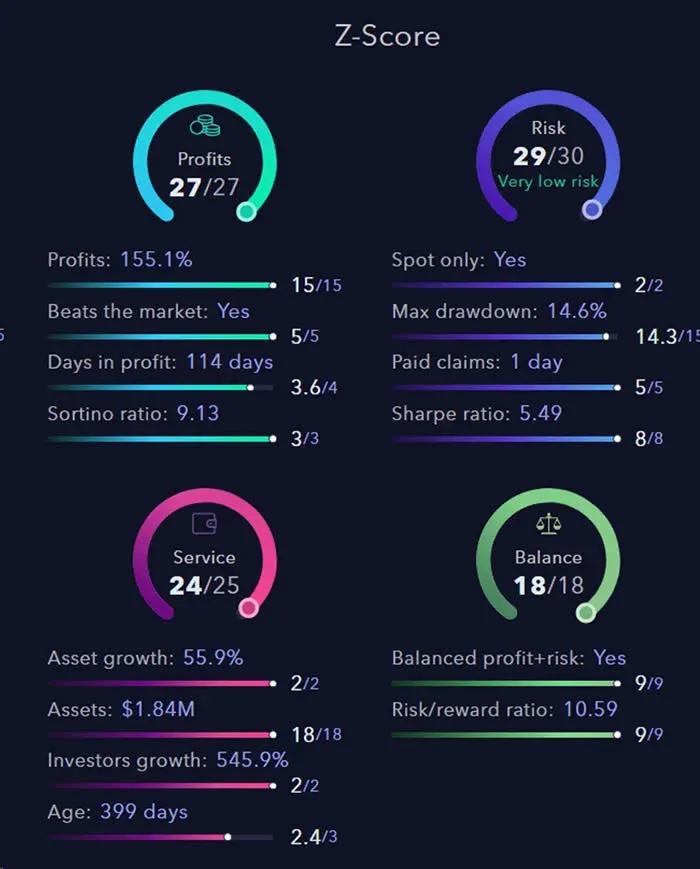
- Zignaly – Since 2018, it has offered copy‑trading services for retail investors, now leveraging machine learning to construct a fund‑manager evaluation framework and has launched its first Z‑Score product.
---
2 AI as a Participant
These applications treat the AI itself as the subject of on‑chain incentive mechanisms, primarily evaluating different AI performances through protocol rewards or penalties. Because the AI does not directly influence human decision‑making, systemic risk is relatively low, making this the most immediately realizable scenario.
2.1 AI Games
In a gaming context, players can train and fine‑tune their own AI characters to match personal preferences or improve competitive performance. The low entry barrier and intuitive appeal make this segment a front‑line for AI’s penetration into real‑world use cases.
- AI Arena – A PvP fighting platform where characters exist as NFTs and core AI models are stored on IPFS. Players employ imitation learning (IL) to iteratively refine their characters’ strategies; after each training session, model parameters are automatically updated. !Concept illustration of AI Arena and Altered State Machine
- Altered State Machine (ASM) – Although not a traditional game, ASM provides NFT‑based ownership and trading standards for AI Agents, already integrated with titles like FIFA and supporting composable elements named Brain, Memories, and Form. !Side‑by‑by‑side logos of ASM and Parallel Colony projects
- Parallel Colony (PRIME) – An LLM‑driven metaverse game developed by Echelon Prime. Players interact with AI avatars that act autonomously based on stored memories and behavioral trajectories. The game recently migrated to Solana, generating fresh community interest.
2.2 Prediction Markets / Competitions
Prediction‑oriented tracks incentivize data scientists to submit models that compete on forecasting accuracy, thereby accelerating AI research.
- Numerai – A hedge‑fund‑backed data‑science competition operating since 2015. Participants train models on historical market data and stake NMR tokens. High‑performing models earn NMR rewards, while poorly performing stakes are burned. As of 7 March 2024, 6,433 models had been staked, attracting roughly $75,760,979 in total incentives.
- Ocean Predictoor (a sub‑project of Ocean Protocol) – Users stake $OCEAN to run Predictoor bots that predict short‑term price movements of assets such as BTC/USDT. Aggregated predictions are offered to traders; accurate forecasts receive rewards, whereas incorrect ones incur penalties. On 2 March 2023, the project announced a “World‑World Model” (WWM) direction targeting real‑world domains like weather and energy. !Chart showing Numerai’s model stake volume and incentive amounts
---
1 Introduction: Four Fusion Paths Between Crypto and AI
On 30 January, Vitalik Buterin published *The promise and challenges of crypto + AI applications*, systematically outlining the trade‑offs and challenges that arise when blockchain and artificial intelligence intersect. He noted that blockchains prioritize decentralization, transparency, and security, whereas conventional AI tends to be centralized, opaque, energy‑intensive, monopolistic, and weakly monetized
Related Reading
- Vitalik Buterin: Ethereum Co‑Founder & Billionaire
- BNB Chain Season 9 MVB Accelerator Announces 16 Projects
- DeFAI Explained: AI Meets DeFi in $1.62B On‑Chain Ecosystem
💡 Register on Binance with referral code B2345 for the maximum trading fee discount. See Binance complete guide.
⚠️ Risk Disclaimer: Crypto prices are highly volatile. This is not investment advice.



