
 Bitaigen Research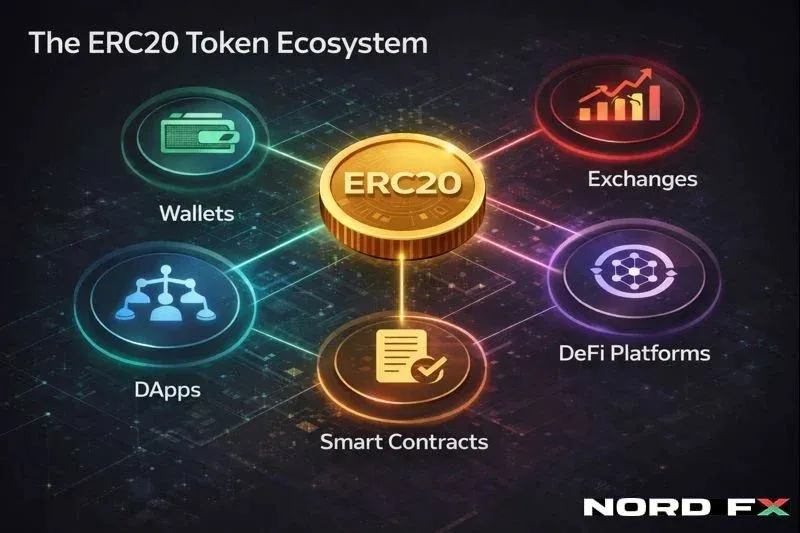
The construction of the cryptocurrency market depends not only on price volatility and trading strategies, but also on the technical standards that govern how digital assets are created, transferred, and stored. One of the most important standards is ERC‑20.
Many market participants trade Ethereum‑based tokens without paying attention to what the ERC‑20 label actually means. However, token standards directly affect liquidity, wallet compatibility, transaction costs, and operational risk.
This article introduces the concept and mechanics of ERC‑20 tokens and explains why they are essential for every cryptocurrency trader.
In this piece we outline the core concepts and technical details of ERC‑20, dissect how it determines a token’s liquidity, wallet compatibility, and transaction costs. Understanding these underlying rules helps traders avoid common pitfalls when selecting, moving, and managing assets, and improves operational efficiency. To master the key tools of crypto trading, keep reading.
What Is ERC‑20?
ERC‑20 is a technical standard for creating and issuing tokens on the Ethereum blockchain. The name comes from Ethereum Request for Comments 20, a proposal that defines a common set of rules for Ethereum‑based tokens.
The standard specifies how a token behaves within the Ethereum ecosystem, including:
- The method for transferring tokens between users
- The method for querying balances
- The method for calculating total supply
- The interface through which smart contracts interact with the token
Because all ERC‑20 tokens follow the same rules, they can be integrated seamlessly into wallets, exchanges, and decentralized applications without needing separate technical adaptations for each token.
How ERC‑20 Tokens Operate
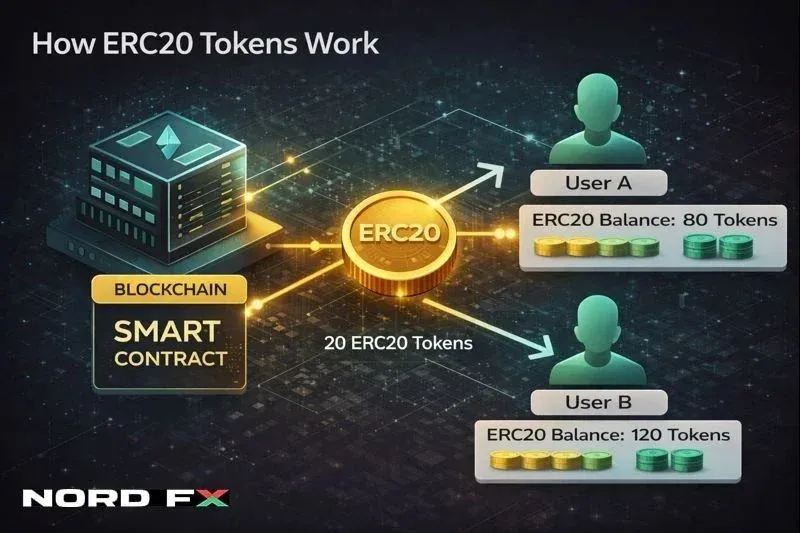
ERC‑20 tokens are implemented via smart contracts deployed on the Ethereum blockchain. A smart contract is a piece of code that automatically executes predefined rules once certain conditions are met.
Each ERC‑20 contract contains a set of standard functions, primarily:
- Transferring tokens between addresses
- Authorizing a third party to spend tokens on behalf of the holder (approve/allowance)
- Querying an account’s balance and the token’s total supply
For traders, this standardization means that different tokens can be handled in the same way across compatible services, reducing technical friction.
Why ERC‑20 Became the Dominant Token Standard
ERC‑20 rose to prominence because of its simplicity, flexibility, and early widespread adoption within the Ethereum ecosystem.
In Ethereum’s early growth phase, ERC‑20 gave projects a practical framework that allowed them to issue tokens without building their own blockchain infrastructure. As the number of users grew, exchanges and wallet providers gravitated toward supporting the standard uniformly, which boosted liquidity and further solidified the ecosystem.
Consequently, ERC‑20 became the foundation for the expansion of the token market and provided crucial support for subsequent decentralized finance (DeFi) applications.
The Importance of ERC‑20 Tokens for Crypto Traders
For traders, ERC‑20 is more than a technical label; it influences trading conditions and operational safety in several ways.
Liquidity and Market Access
The majority of ERC‑20 tokens are supported by both major centralized exchanges and decentralized exchanges. Broad infrastructure coverage usually translates into better liquidity and more stable order execution. (US users should use Binance.US rather than the global Binance platform.)
Liquidity conditions can also be examined further with market micro‑structure tools.
Wallet Compatibility
Mainstream wallets natively support ERC‑20 tokens, reducing the risk of incompatibility between a token and wallet software and simplifying the management of a diversified Ethereum‑based asset portfolio. Nevertheless, if a trader selects the wrong network or misinterprets a token’s standard when sending, operational errors can still occur.
Integration with DeFi
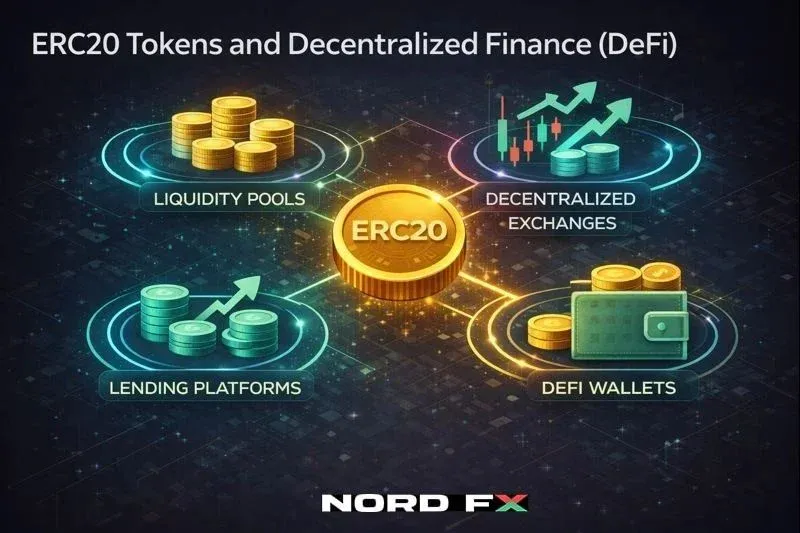
ERC‑20 tokens play a core role in decentralized finance. A multitude of DeFi applications—including decentralized exchanges, lending platforms, and liquidity pools—use ERC‑20 assets as building blocks.
Market Transparency and On‑Chain Behavior
Ethereum’s transaction ledger is publicly accessible, and ERC‑20 transfers are visible on‑chain. This transparency helps traders observe token flows, monitor position distributions, and analyze on‑chain activity during periods of volatility.
ERC‑20 and Trading Risks
While ERC‑20 tokens provide many conveniences, they also carry certain risks that traders should understand.
Network Congestion and Fees
During periods of high market activity, Ethereum transaction fees can rise sharply. For active traders who move funds frequently, high fees can affect strategy execution and compress net profits. When converting to fiat, most platforms accept USD and support SEPA/SWIFT transfers.
Smart‑Contract Vulnerabilities
ERC‑20 tokens are governed by smart‑contract code. If a contract is poorly written or lacks proper auditing, holders may face technical risks such as exploit attacks, unexpected token behavior, or transfer restrictions.
When a token’s technical documentation is limited or its governance unclear, traders should treat it as a high‑risk asset.
Operational Mistakes During Transfers
A common error in the crypto space is using the wrong network or sending a token to an incompatible address. ERC‑20 tokens should be handled as Ethereum assets unless a bridge or cross‑chain mechanism is explicitly supported.
ERC‑20 Compared With Other Token Standards
Although ERC‑20 is the most widely used Ethereum token standard, it is not the only one. Ethereum also supports ERC‑721, ERC‑1155, and others; the former is commonly used for NFTs, while the latter is suitable for multi‑token assets. Other blockchains have their own standards, such as Binance Smart Chain’s BEP‑20.
For traders, the key point is that standards are not interchangeable. Confusing standards when transferring or depositing can lead to lost assets or processing delays.
ERC‑20 Tokens and Exchange Infrastructure
From an exchange’s perspective, ERC‑20’s standardization reduces the technical cost of onboarding new tokens. Because contract structures are predictable, exchanges can list large numbers of tokens with relatively modest development effort.
For traders, this translates into faster market access and more consistent services, but it remains essential to verify the deposit network and token contract details, especially when an exchange supports the same‑named asset on multiple chains.
Using ERC‑20 Tokens in Long‑Term Trading and Investment Strategies
Beyond short‑term trading, ERC‑20 tokens also play a role in long‑term strategies. Many infrastructure projects, decentralized applications, and financial protocols issue ERC‑20 tokens as utility or governance assets. Understanding their issuance models, mechanisms, and ecosystem roles helps traders and investors assess risk more objectively.
Conclusion
ERC‑20 tokens are a core component of the modern cryptocurrency market. They define how a large number of digital assets are created, transferred, and integrated across exchanges, wallets, and decentralized platforms.
For traders, mastering the concept of ERC‑20 does not require learning how to write smart contracts; it equips them to improve decision‑making quality, reduce operational risk, and interpret the trading environment more accurately.
As the crypto market evolves, token standards will continue to shape how trades are executed in practice. ERC‑20 remains a vital standard that every crypto trader should understand.
This concludes the introduction titled “What Is ERC‑20? Why It Is a Core Tool for Crypto Traders.” For more ERC‑20‑related content, you can search Bitaigen’s (比特根) previous articles or continue reading the linked articles below. We look forward to your continued interest and support for Bitaigen (比特根)!
*Note: Gains from cryptocurrency transactions may be taxable in your jurisdiction. Please consult a tax professional regarding local tax obligations.*
💡 Register on Binance with referral code B2345 for the maximum trading fee discount. See Binance complete guide.



