
 Bitaigen Research
 What Is XAUt? Tokenized Gold on the Blockchain
In early 2026, international gold prices repeatedly hit new highs, briefly approaching the $5,200‑$5,300 per troy ounce range. By contrast, the performance of Bitcoin and other crypto assets in January was noticeably weaker, and the strong rally in precious metals prompted many investors to reassess the allocation value of gold.
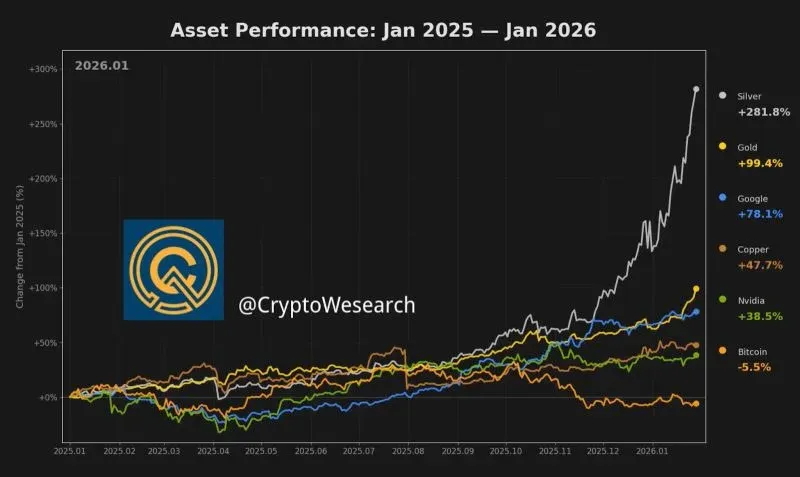
In the crypto community, many people are indifferent to physical gold: they must deal with the logistics of moving and storing gold bars, they do not want to bear the custody fees charged by brokers for gold ETFs, and they certainly wish to avoid the margin and liquidation risks associated with gold futures.
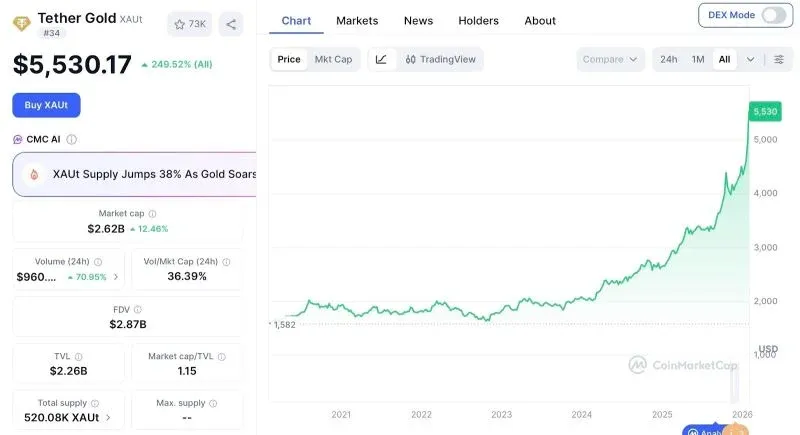
If you are planning to add a modest gold exposure to your portfolio right now while still keeping the habits you have developed on the blockchain, the following content will show you a way to hold gold that also respects your “on‑chain identity.”

This article focuses on the largest‑by‑market‑cap on‑chain gold stablecoin today—XAUt (Tether Gold). We cover its definition, the underlying on‑chain mechanism, how it differs from traditional gold products, the cost of holding it, and the step‑by‑step purchase process, providing a one‑stop reference.
In this piece we dissect the concept of XAUt and its on‑chain operating model, helping you understand how it merges the value of gold with blockchain characteristics, and we give practical guidance on how to acquire it. Want to know how it differs from conventional gold assets and how to get started? Keep reading.
XAUt Explained: Tokenized Gold on the Blockchain
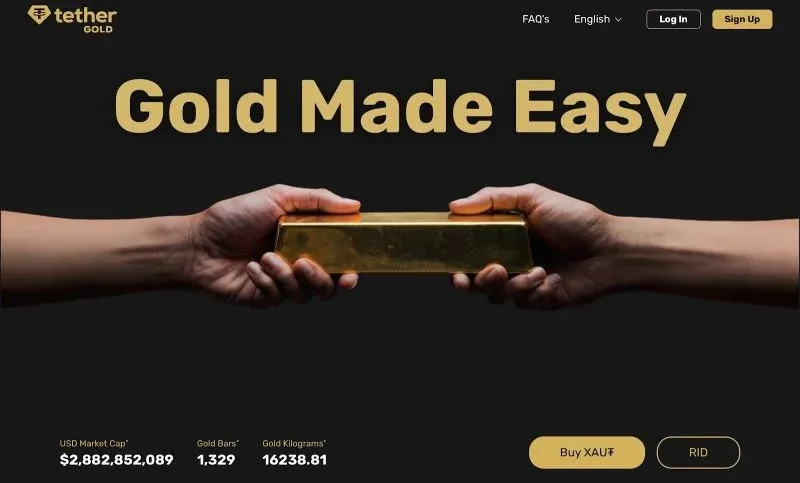
XAUt is issued by Tether, the well‑known issuer of the US‑dollar‑pegged stablecoin USDT. Tether’s official statement says that each token represents one troy ounce of physical gold ownership. Holding XAUt does not mean you will receive a physical gold bar, nor do you need to arrange a vault or insurance yourself; the gold’s value is “sliced” into tokens and embedded directly into your digital asset portfolio.
Think of XAUt as the token version of gold. Its concept mirrors that of USDT: USDT maps the U.S. dollar onto a token, while XAUt maps gold onto a token. The only difference is that XAUt is backed not by fiat currency but by physical precious metal.
Issuance Method and Gold‑Collateral Structure
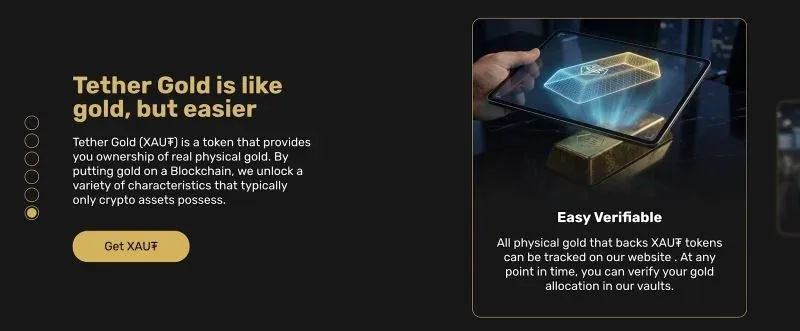
From a security and issuance‑process perspective, XAUt is a centrally managed product. Tether alone mints and burns the tokens. Every minting event corresponds to one ounce of gold that has already been deposited into a vault that meets international precious‑metal standards. As long as those physical bars remain intact and are subject to regulatory oversight, XAUt’s market price can stay tightly aligned with the global spot price of gold.
Therefore, compared with some tokenized gold projects that have complex packaging and opaque value sources, XAUt’s structure is relatively straightforward, and its collateral chain is clear.
How XAUt Differs From Traditional Gold Products
From a user‑experience standpoint, the main distinction between XAUt and physical gold bars, gold ETFs, or gold futures lies in the form of ownership.
- Physical gold bars are tangible and provide a strong sense of security, but you must handle storage, insurance, and the bid‑ask spread yourself, making them suitable for long‑term, hands‑off allocations.
- Gold ETFs are securities that trade conveniently, yet they are bound by exchange hours and still rely on the traditional financial system.
- Gold futures offer leverage and the ability to short, but they come with margin calls and expiry‑related costs, making them appropriate for professional traders.
XAUt, on the other hand, packages gold as a blockchain asset. It can be fractionalized, transferred instantly, and traded in the same way as other cryptocurrencies. Which format you choose depends on your personal preferences for convenience, risk exposure, and asset mobility.
The comparison table below helps you quickly differentiate the various gold‑related tools:
XAUt Fee Structure: Holding Costs vs. Minting / Redemption Costs
Typical gold derivatives often bundle trading fees and custody fees. When first encountering XAUt, many wonder whether similar charges apply.
The official documentation lists several fee categories, but for most retail investors only two scenarios actually generate costs:
1. Simply holding or trading XAUt on an exchange
XAUt itself does not levy a custody fee, meaning that merely holding the token does not incur a time‑based management charge. Your actual outlay comes from the exchange’s trading fees, the spread between bid and ask, and the on‑chain network fee when withdrawing the token—exactly the same cost structure as other crypto assets.
2. Directly minting or redeeming physical gold with the issuer
If you decide to swap the token for physical gold, you must pay roughly 25 basis points (0.25 %) and comply with quantity thresholds, document verification, and other procedural requirements. This route is primarily intended for large‑scale or institutional investors with a genuine need for physical delivery; ordinary small‑scale holders rarely go this far.
In summary, if your goal is simply to give your crypto portfolio a slice of gold exposure, the primary costs you’ll see are exchange fees and network transaction fees, making the overall fee structure fairly transparent.
Where to Obtain XAUt: Centralized Exchanges (CEX) vs. Decentralized Exchanges (DEX)
There are two main avenues for acquiring XAUt:
Purchasing via a Centralized Exchange (CEX)
This path mirrors the process of buying Bitcoin or Ethereum: low entry barrier, suitable for small‑scale or first‑time users. The advantage is ease of use—no need to manage a private wallet yourself. The downside is that your assets sit in the exchange’s custodial wallet, exposing you to platform‑specific security risks and possible withdrawal fees.
Note for U.S. residents: When using a centralized exchange, you must use Binance.US (or another U.S.-compliant platform) rather than the global Binance site.
Swapping on a Decentralized Exchange (DEX) with a Web3 Wallet
Investors can trade directly from a self‑custodied wallet, swapping stablecoins such as USDT for XAUt on a DEX. The token remains under your control at all times, eliminating custodial risk. However, this method requires familiarity with on‑chain operations, careful verification of contract addresses, and vigilance against phishing attacks—best suited for users with some Web3 experience.
If you simply want to quickly add a modest gold exposure, a CEX is the most straightforward entry point. If you already habitually manage assets via a personal wallet, a DEX is a perfectly viable alternative.
Step‑by‑Step Guide: Buying XAUt on OKX
Major exchanges like OKX, Bybit, and others now list XAUt. Below is a complete walkthrough using OKX as an example.
Step 1 – Register and Complete Identity Verification
Visit the official OKX website or download its mobile app. Register with an email address or mobile number. In accordance with regulatory requirements, complete the KYC (Know‑Your‑Customer) verification by uploading a government‑issued ID and a selfie. It is strongly recommended to enable two‑factor authentication (2FA) to improve account security.
Step 2 – Fund Your Account with USDT
XAUt on OKX trades against USDT (the pair is XAUt/USDT), so you need USDT in your account. You can purchase USDT directly on the platform using a bank transfer (SEPA, SWIFT, or local ACH) or a credit/debit card, or you can convert existing BTC/ETH holdings to USDT within the exchange.
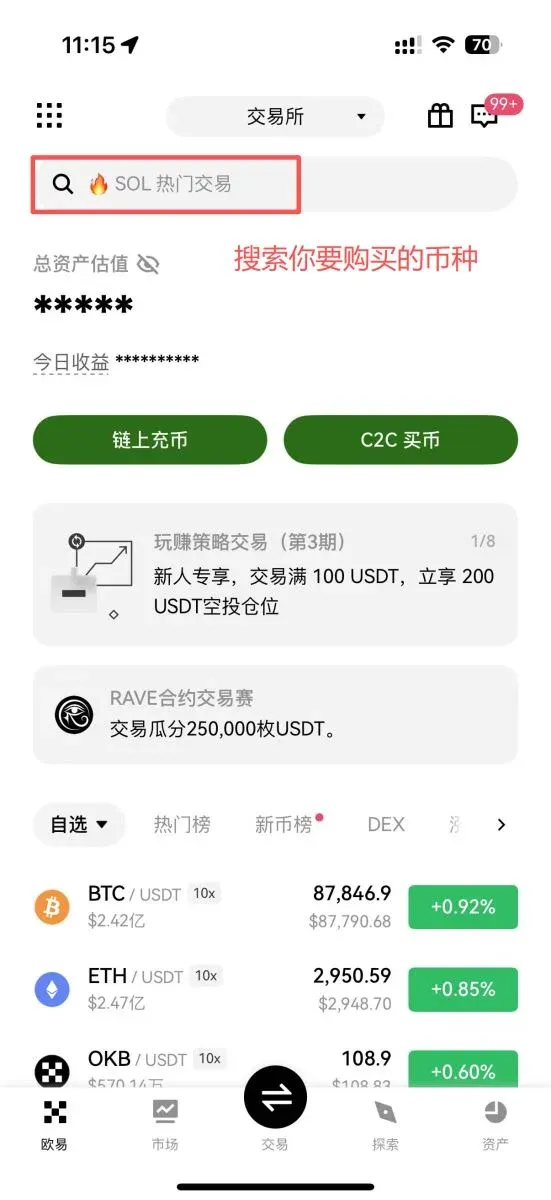
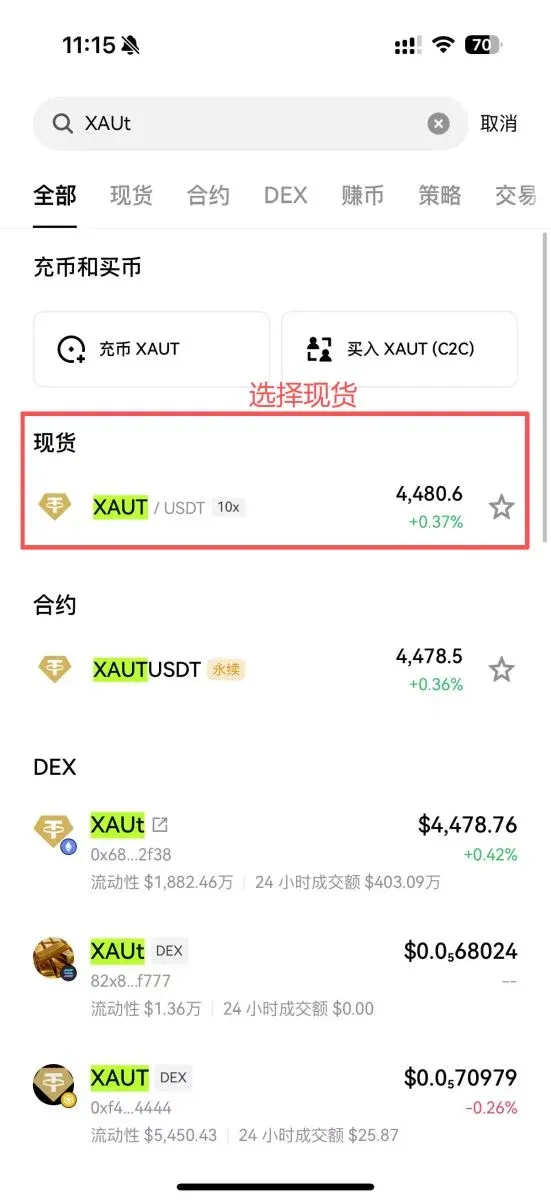
Step 3 – Locate the XAUt Trading Pair
Enter XAUt into OKX’s search bar and select the `XAUt/USDT` spot market.
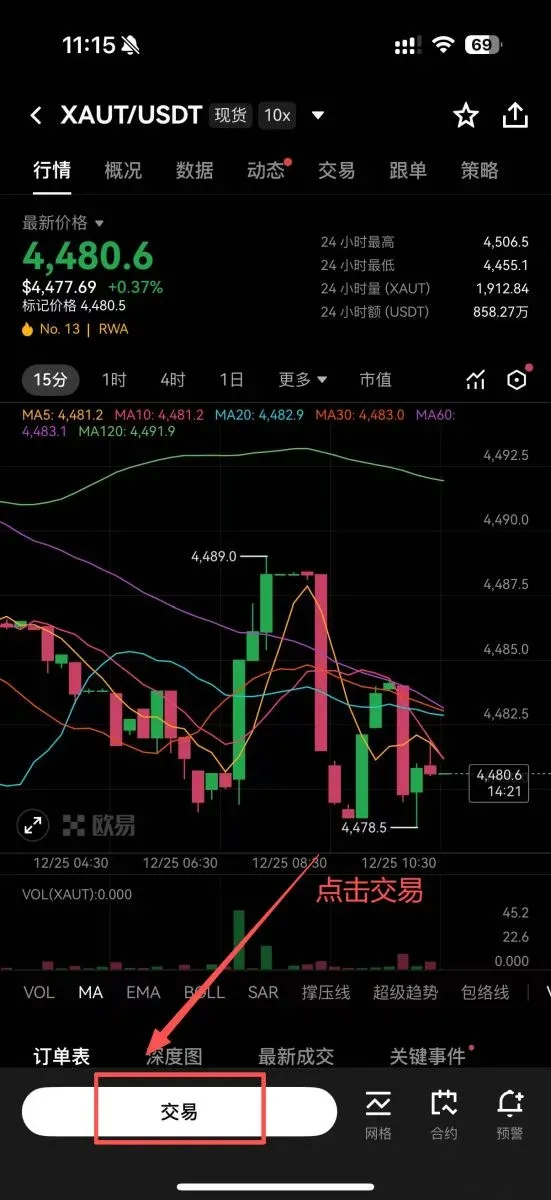
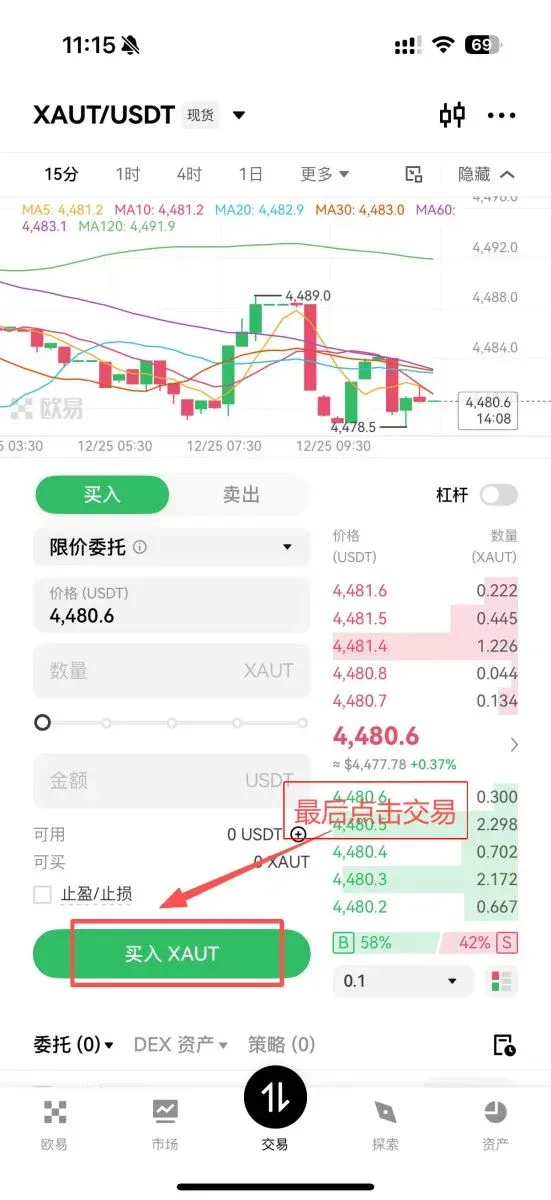
Step 4 – Place Your Order
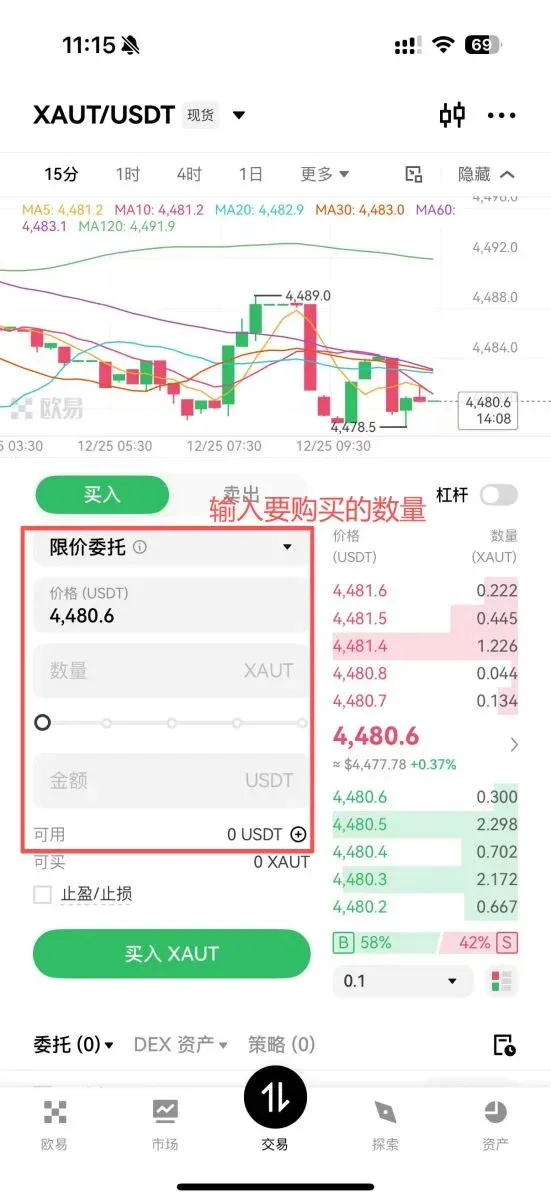
In the trading interface you can choose between:
- Market order – Enter the amount you wish to spend; the system fills the order instantly at the best available price. Ideal for users who want to acquire XAUt quickly.
- Limit order – Set a target price and submit the order; it will execute only when the market reaches that price. Suitable for investors who have a specific entry point in mind.
Step 5 – Store and Manage Your XAUt
After purchase you have two common options for holding the tokens:
- Leave them in your OKX account – The simplest approach, convenient for frequent trading or when the balance is modest.
- Transfer to a personal wallet – Move the tokens to a hardware wallet or a self‑custodied DeFi wallet for higher security, especially for larger holdings or long‑term storage.
If you wish to view the underlying gold bar details, you must first transfer the tokens to a personal wallet, then log into the Tether Gold official website and input your wallet address. Keeping the tokens on the exchange only shows the aggregate balance; you cannot see individual bar identifiers.
---
Through the sections above you should now have a solid grasp of what XAUt is, how it operates on the blockchain, how it compares with other gold‑related instruments, its fee structure, and the practical steps to acquire it. For more updates on tokenized gold and other crypto‑asset topics, stay tuned to Bitaigen’s forthcoming articles.
*Disclaimer: Cryptocurrency transactions may be subject to taxation in your jurisdiction. Please consult a tax professional regarding any potential tax obligations arising from crypto gains.*
💡 Register on Binance with referral code B2345 for the maximum trading fee discount. See Binance complete guide.



