
 Bitaigen Research
 The safest way to store digital currencies is to use a cold wallet for self‑custody, keeping the private keys entirely in your own hands; exchanges are only suitable for holding small amounts or assets needed for short‑term use.
Compared with the traditional financial system, Bitcoin offers a unique advantage: self‑custody, i.e., truly realizing that private assets are sacrosanct and cannot be infringed.
Bitcoin operates on a P2P (peer‑to‑peer) network, not controlled by any company or individual, and it is an anonymous asset, meaning the holder’s identity cannot be queried. Consequently, if Bitcoin is stolen, it can only be recovered by identifying the thief; unlike bank accounts or credit cards, which can be frozen or have transactions reversed.

When asked how to safeguard Bitcoin, the common answers are only two: exchange or wallet. Which method is safer?
In this article we systematically review the ways to store digital assets, focusing on a comparison of the security properties of cold wallets versus exchanges, and we dissect the core advantages of self‑custody. Through case‑by‑case analysis of risk points, we help readers clarify when to use a wallet and when a temporary holding on an exchange is acceptable, enabling more robust decisions in asset management.
Is Storing Coins on an Exchange Safe?
- Protocol layer: Once coins are transferred to an exchange, you lose control over them; the exchange holds and manages the assets on behalf of the user, and the displayed account balance functions as a deposit receipt.
- Industry perception: Exchanges are often seen as the “money printers” of the blockchain industry, leading many to mistakenly believe that keeping coins on an exchange is very safe and that the exchange will compensate in case of theft.
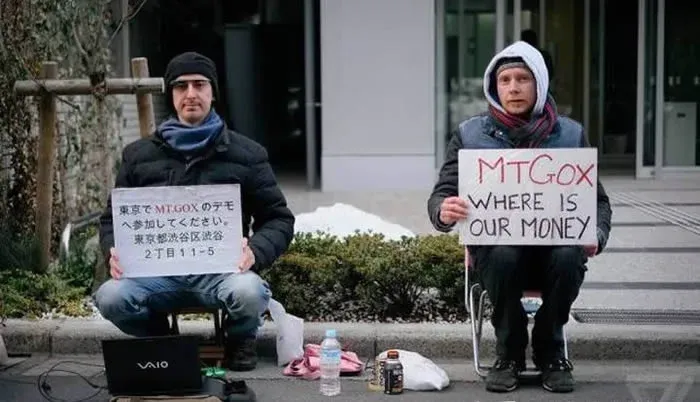
However, historical cases demonstrate that the risk cannot be ignored. In February 2014, the then‑largest Bitcoin exchange Mt.Gox suffered the theft of 850,000 BTC and subsequently declared bankruptcy. Affected users are still fighting for restitution.
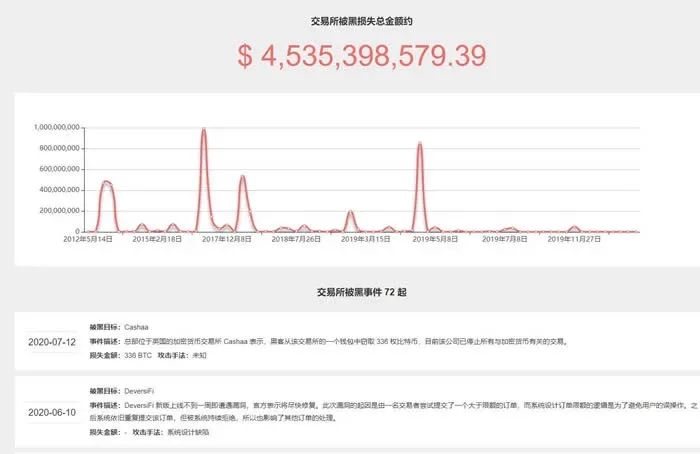
According to SlowMist’s “Hacked Archive” database, the total losses from exchange hacks have exceeded $4.5 billion USD. Consequently, the safety of storing coins on an exchange depends on the exchange’s risk‑management capabilities and values, not on the individual user.
Is Storing Coins in a Wallet Safe?
The term wallet generally refers to software or hardware that manages digital assets, such as imToken (a software wallet) and imKey (a hardware wallet).
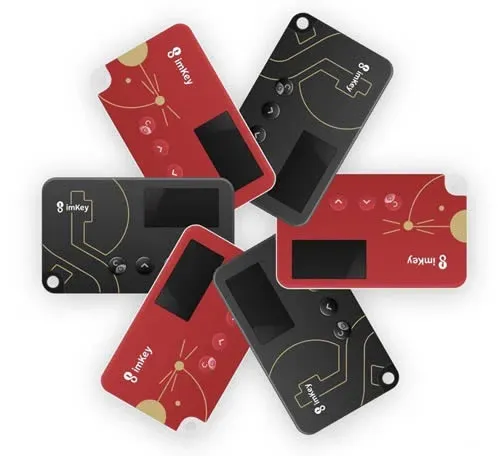
imKey hardware wallet
Definition: The wallet itself does not “store coins”; it is a tool for users to interact with the blockchain.
- Wallet address: Used to receive Bitcoin.
- Private key: Proves ownership of Bitcoin; possessing the private key allows you to transfer the coins from the corresponding address.
If the private key is leaked, an attacker can impersonate the holder and move the assets; if the private key is lost, you lose the proof of ownership. The coins will still be visible on the blockchain, but you will be unable to transfer them.
Compared with exchanges, a wallet provides true inviolability of private property, but it also obliges the user to take responsibility for proper custody.
Other Security Solutions
- Multisignature wallets: Asset transfers require signatures from multiple users, enhancing security.
- Professional custodial services: Bitcoin custody offered by regulated financial institutions, suitable for institutional investors.
Summary & Recommendations
Security is a relative concept; every asset‑management approach has its pros and cons, and the storage method should be chosen based on individual needs. A common practice is:
| Asset Size | Recommended Storage |
|---|---|
| Large holdings | Cold wallet (e.g., imKey, Ledger) |
| Small holdings | Hot wallet (e.g., imToken) or a reputable exchange |
Learning and implementing proper digital‑asset storage practices is a prerequisite for long‑term participation in the blockchain space.
The above provides a detailed analysis of where it is safest to keep digital currency? Should digital currency be stored in a wallet or an exchange? For more information, follow Bitaigen (比特根) for additional articles!
*Please note that cryptocurrency gains may be taxable in your local jurisdiction; consult a tax professional for guidance.*
*U.S. residents should ensure they use a platform that operates within the United States, such as Binance.US, rather than the global Binance platform.*
Related Reading
- Top 7 Common Blockchain Scam Tactics & How to Avoid Them
- Top Blockchain Scams: How to Spot Fake Tokens & Fraudulent Schemes
- Ledger Wallet Review: Security, Cross‑Chain & Usability
💡 Register on Binance with referral code B2345 for the maximum trading fee discount. See Binance complete guide.



