
 Bitaigen Research
 In 2025, decentralized finance (DeFi) has evolved from a fringe experiment in crypto to a mature ecosystem, with Ethereum remaining its core engine.
Ethereum DeFi projects are decentralized finance protocols built on the Ethereum blockchain that leverage smart contracts to offer lending, trading, liquidity and other financial services without a centralized intermediary.
The spot Ethereum ETF launched in 2024 attracted more than $7.9 billion in assets, marking a massive inflow of institutional capital. In July, BlackRock revised its iShares Ethereum Trust (ETHA) to add a staking feature, further highlighting Ethereum’s dual value as both a technology platform and a yield‑bearing asset.
As institutional interest rises, enthusiasm for Ethereum‑based DeFi has surged. Liquid staking has pushed the total value locked (TVL) close to $40 billion, while re‑staking is redefining how capital and security are utilized, and new protocols continuously expand the range of services that DeFi can provide to a broader audience. This article reviews the seven leading projects driving this transformation in 2025 and explains why they merit ongoing attention.
At Bitaigen’s editorial desk we have meticulously distilled the core trends of Ethereum DeFi for 2025, selecting seven projects powered by both technology and capital. The article not only dissects their innovative mechanisms but also explores how the ecosystem is reshaping the underlying financial architecture, helping readers capture the next wave of growth opportunities. Continue reading to discover the key forces worth watching.
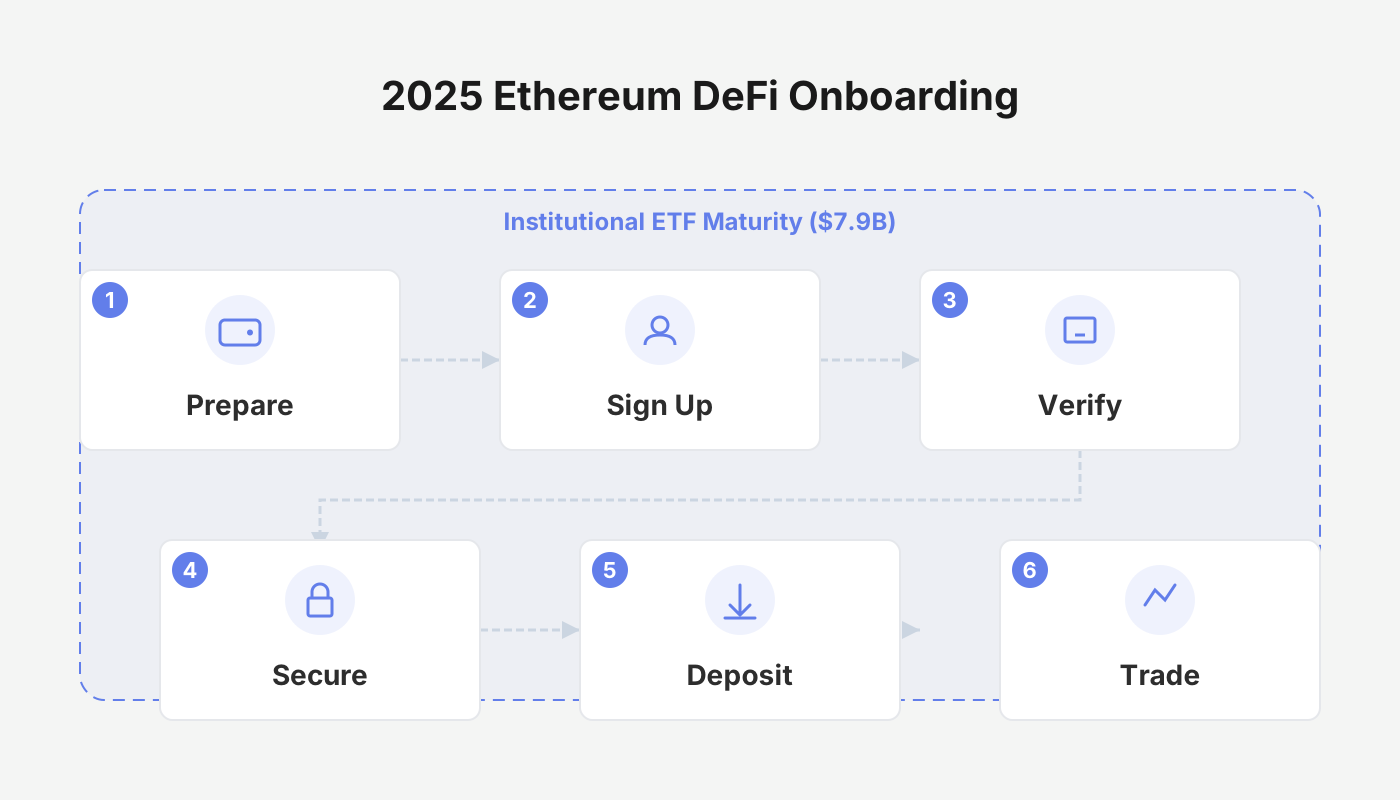
Why Ethereum DeFi Projects Are So Important in 2025
Ethereum’s DeFi ecosystem has become infrastructure recognized by mainstream finance. In 2025, the following factors make Ethereum‑based projects more critical than ever before.
1. Ethereum’s Role as the Pillar of DeFi
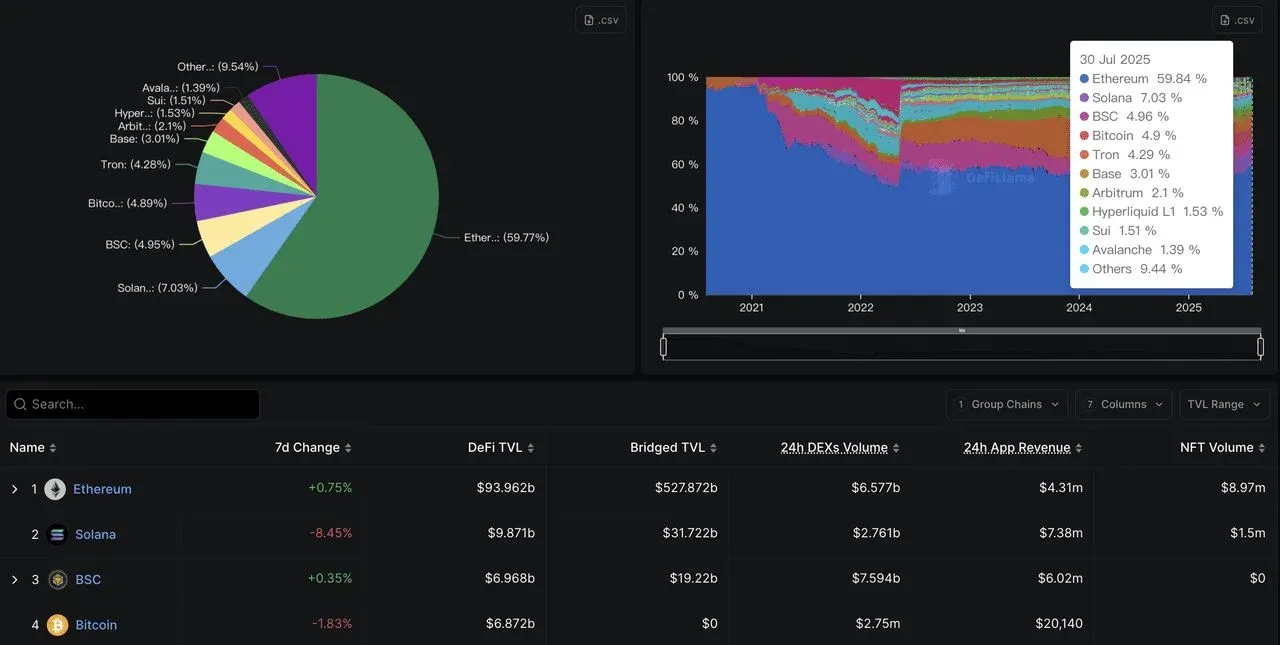
Source: DeFiLlama
- Ethereum’s DeFi TVL still outpaces the combined total of all other blockchains, cementing its dominant position as the backbone of decentralized finance.
- In 2025, Ethereum DeFi TVL grew 71 %, reaching $93.9 billion.
- Among more than 5,000 DeFi protocols tracked across 200 blockchains, Ethereum continues to host the majority of the most mature and liquid platforms.
This advantage stems from a robust smart‑contract infrastructure, an active developer community, and proven security, continuously attracting both retail and institutional participants.
2. Regulatory Clarity Boosts Confidence in Ethereum DeFi
During Crypto Week 2025, the United States passed three landmark bills that provide much‑awaited guidance for digital assets and DeFi protocols:
| Bill | Key Provisions |
|---|---|
| **GENIUS** | Establishes federal standards for stablecoin issuance, requiring full‑backed reserves |
| **CLARITY** | Distinguishes digital commodities from securities, assigning oversight to the SEC and CFTC |
| **Anti‑CBDC** | Bars the Federal Reserve from issuing a digital dollar, reinforcing the advantages of decentralized finance |
Clearer regulation reduces legal risk, offering a safer environment for institutional deployment and positioning Ethereum more favorably for attracting mainstream users, developers, and capital.
3. Institutional and Corporate Adoption Reinforces Ethereum’s Market Position
- The spot Ethereum ETF launched in 2024 amassed $7.9 billion in assets, managing nearly 5 million ETH (about 4 % of total supply).
- BlackRock’s iShares Ethereum Trust (ETHA) added a staking feature in July 2025, opening a new avenue for mainstream investors to earn staking rewards.
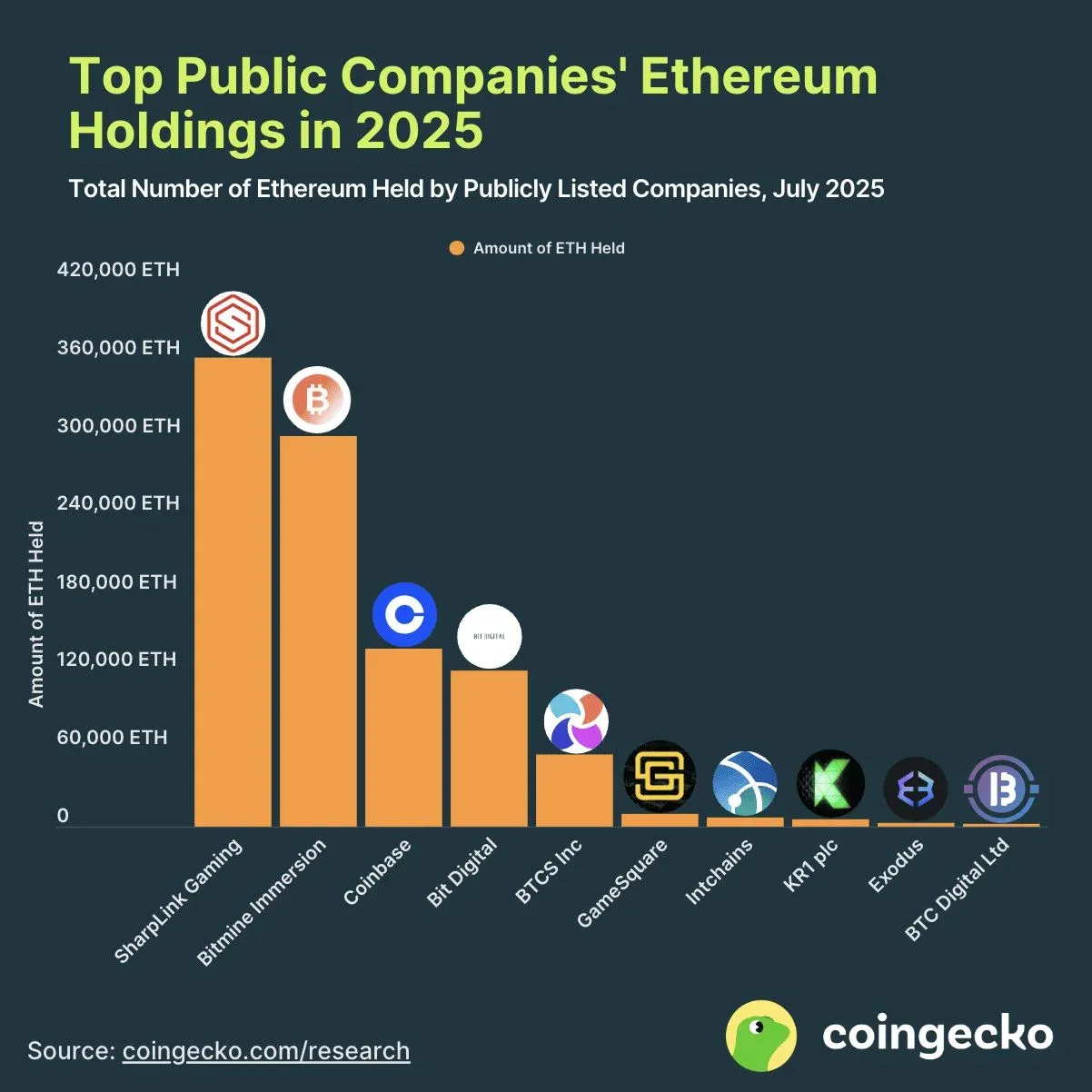
SharpLink’s additional purchase of 200,000 ETH on July 30, 2025 | Source: Coingecko, July 24, 2025
More than 85 publicly listed companies now hold Ethereum in their treasuries, representing roughly 1.9 % of circulating supply—up from 0.7 % in 2023. Unlike Bitcoin treasuries, Ethereum can generate yields through staking, prompting firms such as SharpLink Gaming, Bit Digital, and BitMine to stake sizable portions of their ETH holdings, further solidifying its role as a yield‑bearing financial infrastructure.
Read more: *Ethereum Treasury Analysis – Who Are the Top Corporate ETH Holders in 2025?*
The 7 Ethereum DeFi Projects to Watch in 2025
Ethereum’s DeFi ecosystem continues to innovate. The following seven protocols stand out because of solid fundamentals, active development, and growing importance within the network.
1. Uniswap (UNI)
Project type: Decentralized Exchange (DEX)
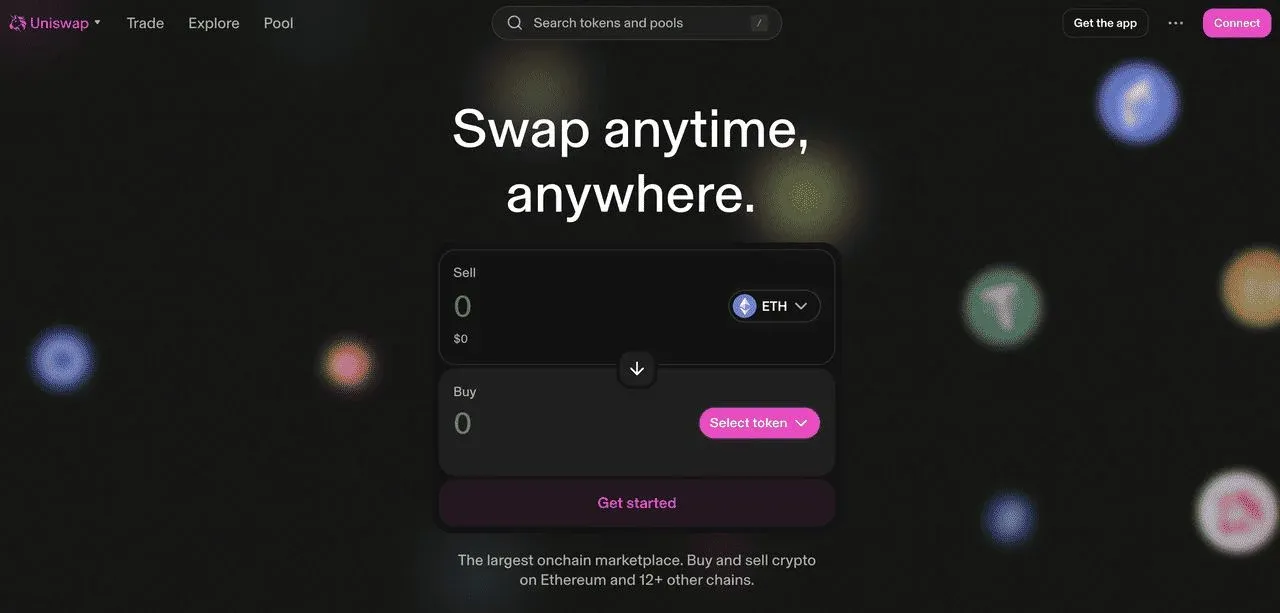
- Processes $2.75 trillion in trading volume, retaining its lead in the DEX market with no major security incidents.
- Deployed on more than 11 networks, it consistently ranks among the highest‑TVL and highest‑volume DEXs.
Uniswap v4 (released January 31, 2025) introduced hooks—modular plug‑ins that let developers customize pool behavior, swap logic, fee structures, and liquidity‑provider (LP) positions. Over 150 hooks are already live on Polygon, Arbitrum, OP Mainnet, Base and other chains, enabling dynamic fees, automated liquidity management and other innovations while markedly reducing transaction costs.
2. Aave (AAVE)
Project type: Lending Protocol
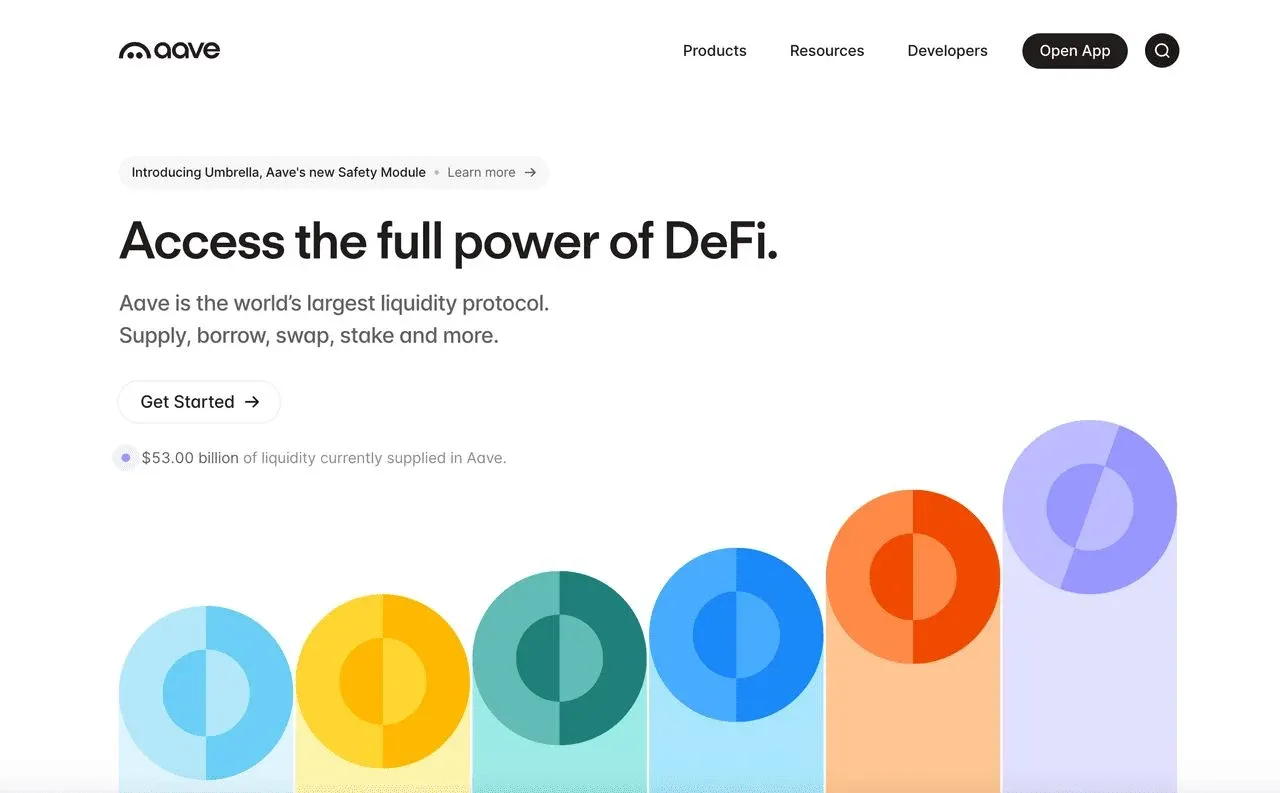
- First to surpass $50 billion in net deposits, accounting for 31 % of DeFi TVL growth since April 2025.
- Treasury reached $125 million, growing at an annual rate of 123 %.
Aave’s decentralized, non‑custodial liquidity pools allow suppliers to earn interest while borrowers obtain liquidity against over‑collateralized positions. Version v3.5 applied mathematical optimizations to the accounting layer; flash‑loan functionality continues to spur novel arbitrage and strategy development. Governance is exercised by AAVE token holders, ensuring community‑driven risk management.
3. Compound (COMP)
Project type: Lending Protocol
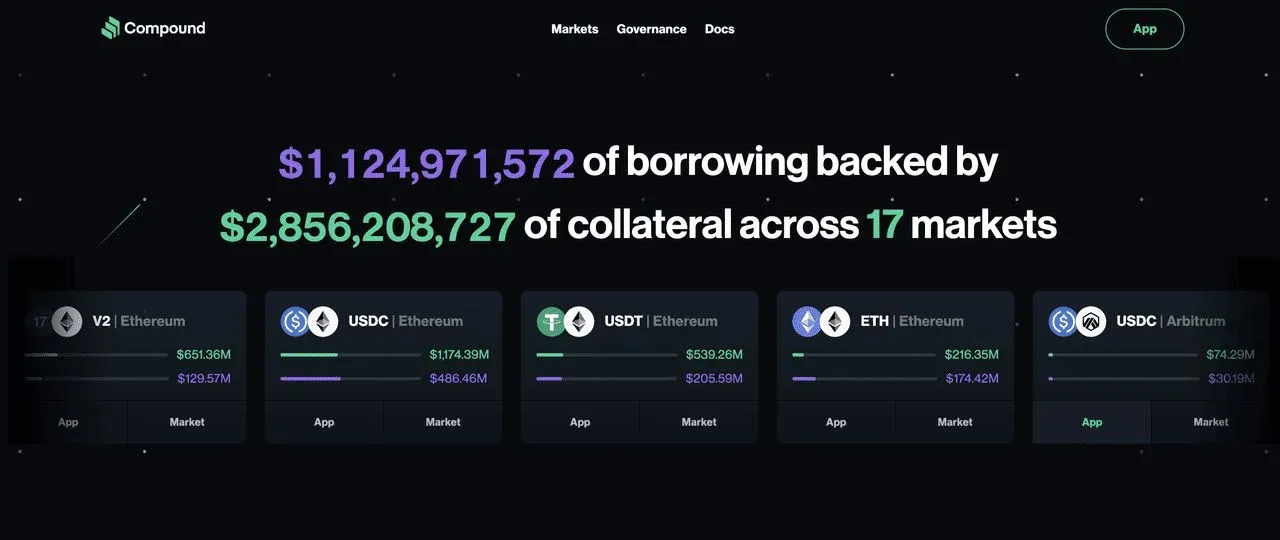
- Generates $59.1 million in fees annually, maintaining its status as a top‑tier lending platform.
- Compound III (Comet) has expanded to Ethereum, Polygon, Base and Arbitrum, with a $5.35 million growth plan projected to add $750 million in net TVL.
The protocol uses an algorithmic, automated interest‑rate model and has transitioned from multi‑collateral to single‑collateral designs, lowering systemic risk and improving capital efficiency. Integration of innovative assets such as sdeUSD demonstrates adaptability to emerging markets. Ongoing security audits and a $500,000 bug‑bounty program further protect user funds.
4. Curve Finance (CRV)
Project type: Stablecoin Decentralized Exchange
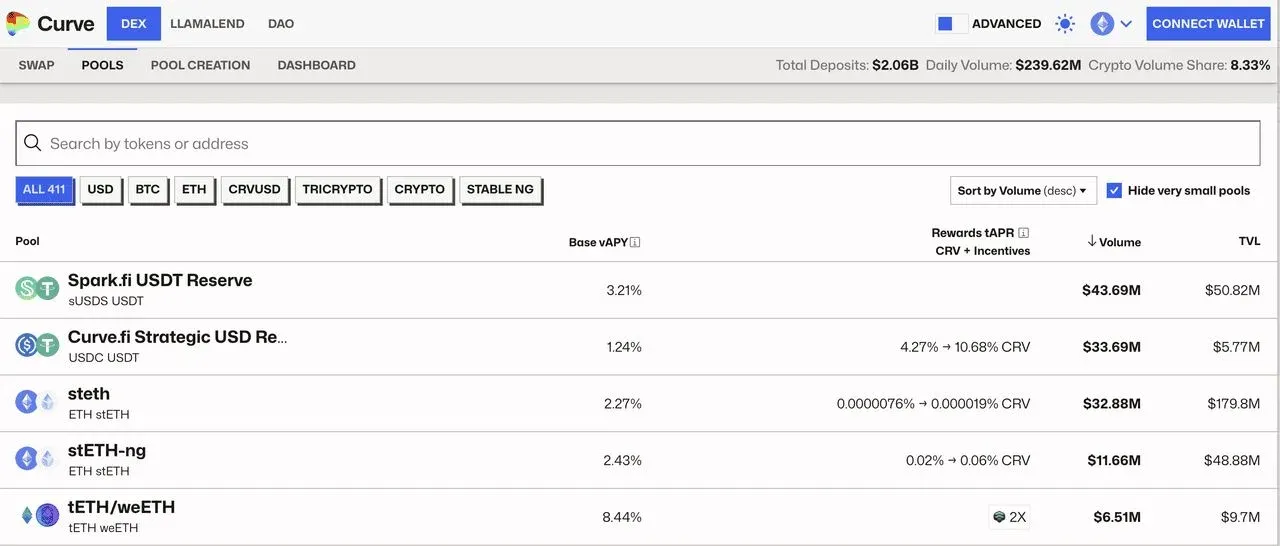
- TVL around $1.55 billion in April 2025, offering ultra‑low slippage for stablecoin trades.
- Deployed on more than 12 blockchains; the crvUSD stablecoin boasts a circulating supply exceeding $120 million, achieving broad adoption.
Curve employs a StableSwap‑enhanced AMM algorithm optimized for assets with near‑identical prices, enabling large‑scale swaps at near‑1:1 rates. The CRV token serves both governance and incentive functions; the veCRV locking mechanism grants higher rewards and voting power to long‑term stakers. Deep integration with numerous DeFi protocols makes Curve a pivotal hub of DeFi infrastructure.
5. Lido Finance (LDO)
Project type: Liquid Staking Platform
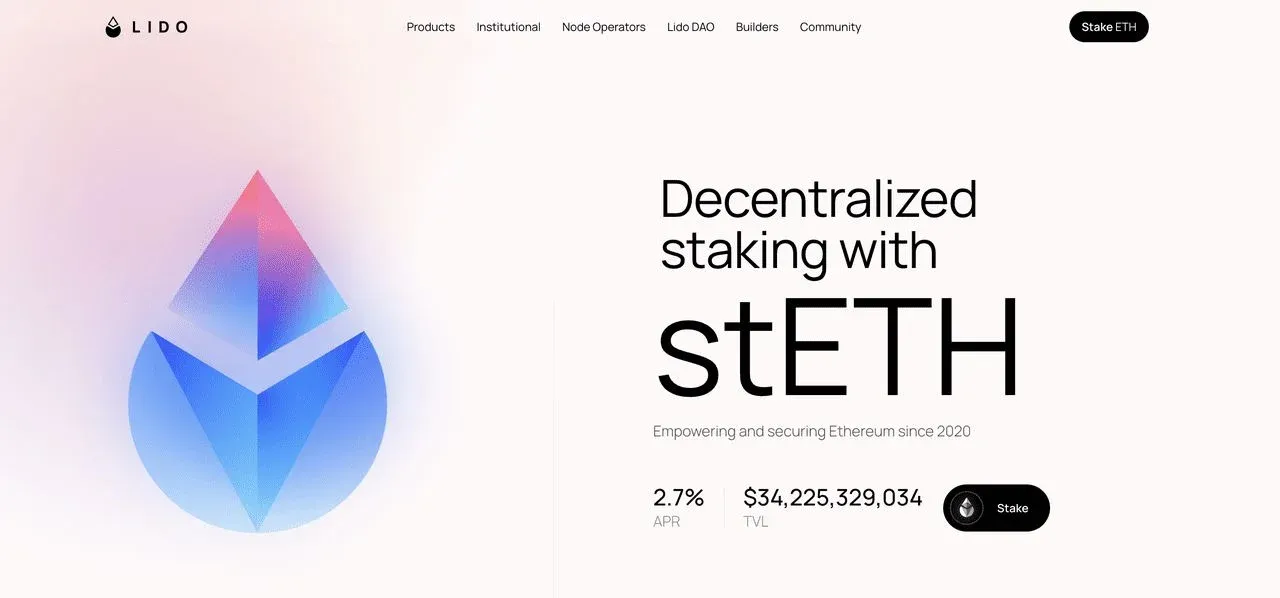
- TVL exceeds $10.2 billion, representing 62 % of the liquid‑staking market; at its peak, roughly one‑third of all ETH was staked through Lido.
- Supports staking of ETH, MATIC, SOL; stETH is now integrated into over 90 DeFi applications.
Lido lets users stake any amount of ETH and receive stETH in return, a token that automatically re‑bases and can be freely used across DeFi. The protocol contracts 36 professional node operators to mitigate staking risk; governance is overseen by the Lido DAO, with 10 % of staking rewards split evenly between operators and the DAO treasury.
6. EigenLayer (EIGEN)
Project type: Re‑staking Protocol
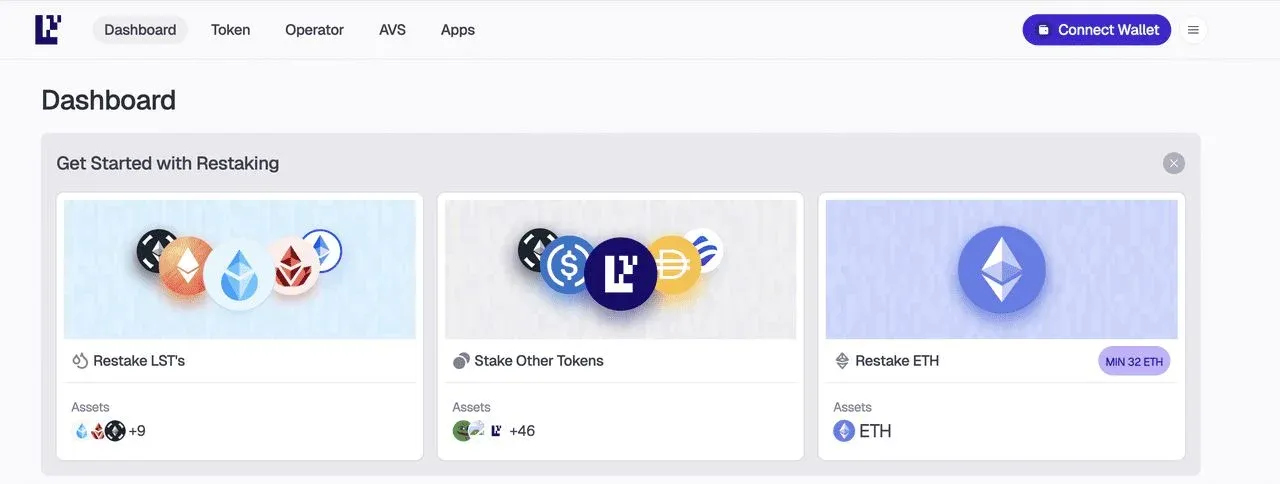
- TVL reaches $13.01 billion, with $116.66 million already distributed in rewards.
- Supports 161 active verification services (AVS), of which 39 are currently live.
EigenLayer enables re‑staking, allowing Ethereum validators who already secure the base layer to also validate additional services such as data availability, cross‑chain bridges, and oracle networks. Its “Active Verification Service” (AVS) model maximizes capital efficiency, while native re‑staking and LST (Liquid Staking Token) re‑staking reduce slashing risk.
7. Treehouse Finance (TREE)
Project type: Fixed‑Income Protocol
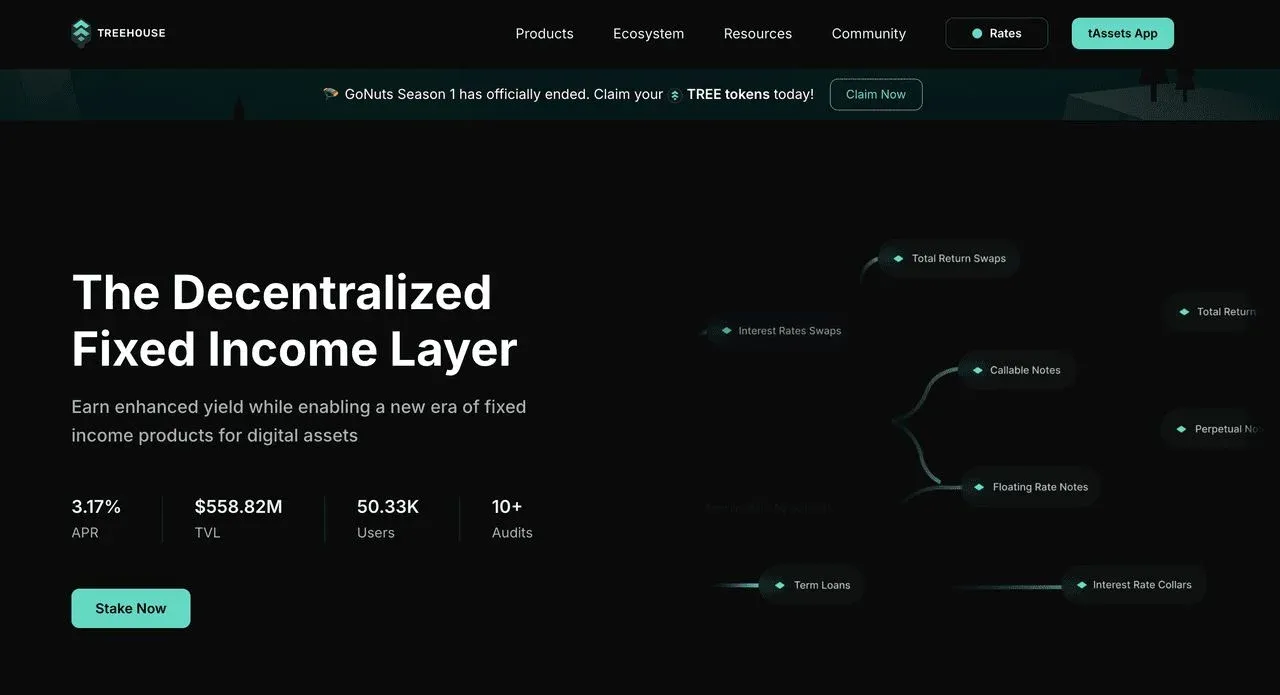
- Secured $20.4 million in financing, valuing the project at $400 million, signaling institutional confidence in DeFi fixed‑income products.
- The TREE token launched in July 2025 and is now listed on major exchanges.
Treehouse operates on Ethereum, Arbitrum and Mantle, targeting the $6 trillion fixed‑income market. Core innovations include:
- tAssets – liquid‑staking tokens (e.g., tETH) that enable automated rate arbitrage.
- DOR (Decentralized Offer Rate) – the first mechanism to achieve consensus on a benchmark rate within crypto markets, using game‑theoretic incentives to reward users who accurately predict rates, thereby addressing fragmented yield information across platforms.
Risks and Challenges of Engaging with DeFi Protocols
- Smart‑contract vulnerabilities – DeFi relies entirely on code security; bugs can lead to fund theft.
- Impermanent loss and liquidity risk – Providing liquidity while asset prices diverge can generate losses; market downturns may also make withdrawals difficult.
- Market volatility – Sharp price swings can trigger liquidations or erode returns.
- Regulatory uncertainty – Policy shifts may restrict protocol operations or impose compliance requirements.
- User‑side security and wallet risk – Private‑key exposure, malicious sites or erroneous transaction signing can result in irreversible loss of assets.
Understanding these risks allows participants to engage with Ethereum DeFi more safely and prudently.
Note: Crypto‑related gains may be taxable in your jurisdiction; consult a tax professional to ensure compliance with local tax laws.
Conclusion
Ethereum continues to lead DeFi into a high‑growth phase in 2025. Institutional attention, corporate treasury adoption, and clearer regulatory frameworks are jointly accelerating ecosystem expansion. Liquid staking, re‑staking, and novel liquidity mechanisms are reshaping the shape of decentralized financial services.
While opportunities are abundant, participants must stay vigilant about smart‑contract bugs, market swings and regulatory developments. By conducting thorough research, adhering to rigorous security practices, and selecting reputable platforms, users can aim for sustainable, secure returns in this new era of Ethereum DeFi.
As the Ethereum network matures, projects that propel its ecosystem will redefine the operation of global finance. For investors, developers and users alike, 2025 is a year to watch—Ethereum DeFi is marching toward a more secure, scalable and widely adopted financial infrastructure.
That concludes the article “What Are Ethereum DeFi Projects? A 2025 Overview of the 7 Ethereum DeFi Projects Worth Watching.” For more potential projects, search Bitaigen’s past articles or continue browsing the related content below. We look forward to your continued interest and support for Bitaigen!
Related Reading
- Solana DeFi 2025: Fast, Low‑Fee Financial Network
- Monad DeFi: TayaSwap, Kintsu, Kuru, aPriori Overview
- DeFAI Explained: AI Meets DeFi in $1.62B On‑Chain Ecosystem
💡 Register on Binance with referral code B2345 for the maximum trading fee discount. See Binance complete guide.



