
 Bitaigen Research
 In this article we systematically review the core mechanisms of smart contracts and deeply analyze the role and applicable scenarios of the ERC series standards, helping readers quickly grasp the basic framework of token interaction on Ethereum. Through case illustrations, you will obtain a clear understanding of a contract’s automatic execution and the distinctions among different ERC standards; subsequent chapters will expand on the details and are worth continuing to read.
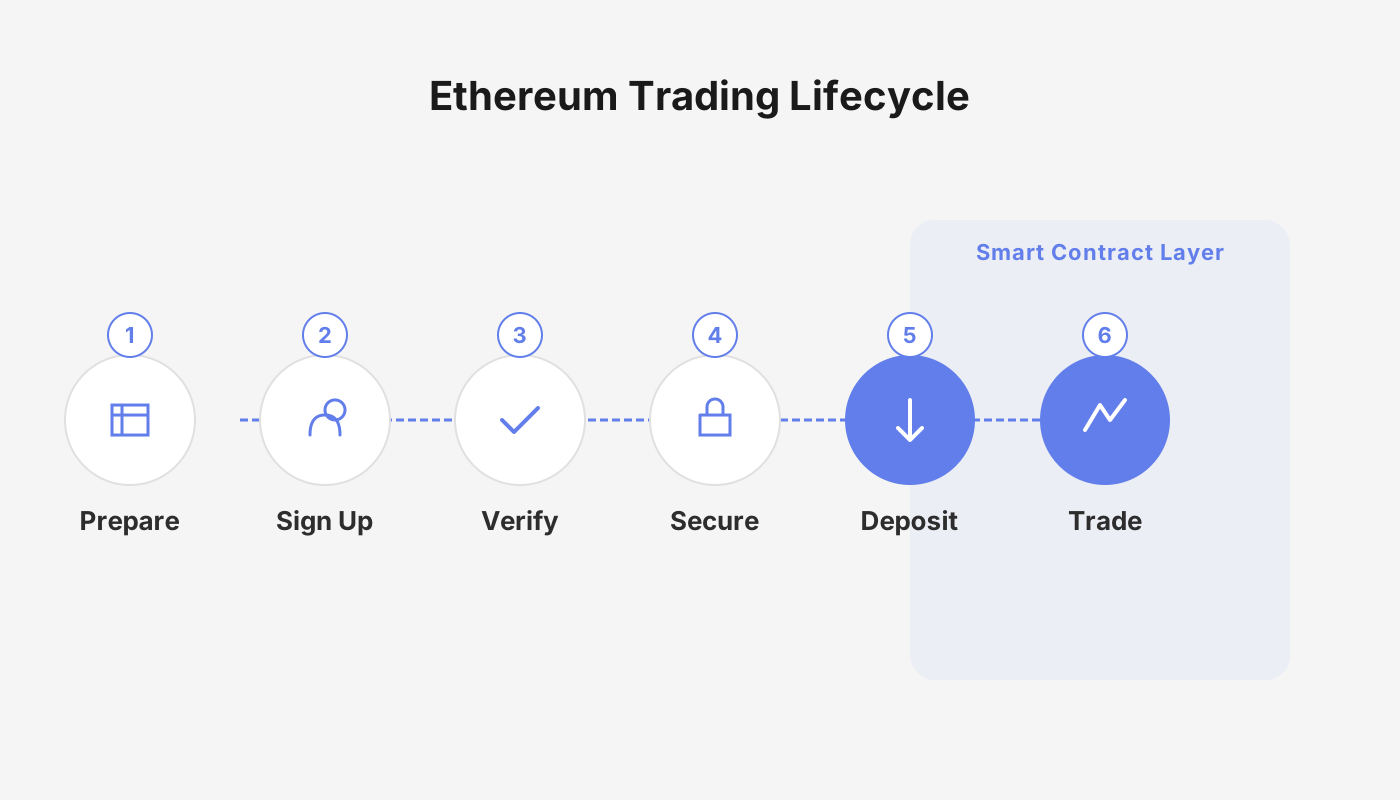
On the Ethereum network, smart contracts are self‑executing program code, and ERC standards define how tokens and other contracts interact. ERC20, ERC721 and similar specifications are the most commonly used token standards.
Smart Contracts
The concept of smart contracts was first introduced by Nick Szabo in 1994, who defined them as “computerized transaction protocols.” In Ethereum, each smart contract possesses an independent account (comparable to a vending‑machine ID); an external account can trigger the contract’s execution after paying a certain amount of gas.
- Immutable: Once a contract is deployed, its code cannot be modified, similar to permanently locking the internal structure of a vending machine.
- Self‑executing: The contract runs automatically according to the pre‑written logic without human intervention, effectively preventing tampering and errors.
For example, one can write a contract on Ethereum that functions like a bank, implementing deposit, withdrawal and balance‑inquiry features. When users interact with the contract, discrepancies caused by human error in accounting do not occur.
It is worth noting that the assets stored in a contract are not necessarily ETH itself. Developers can define custom tokens within a contract, such as USDT, BNB and other Ethereum‑based tokens. Because of the flexibility of smart contracts, many projects choose to issue their own tokens on top of them, but this must follow a unified standard to guarantee compatibility.
ERC Standards
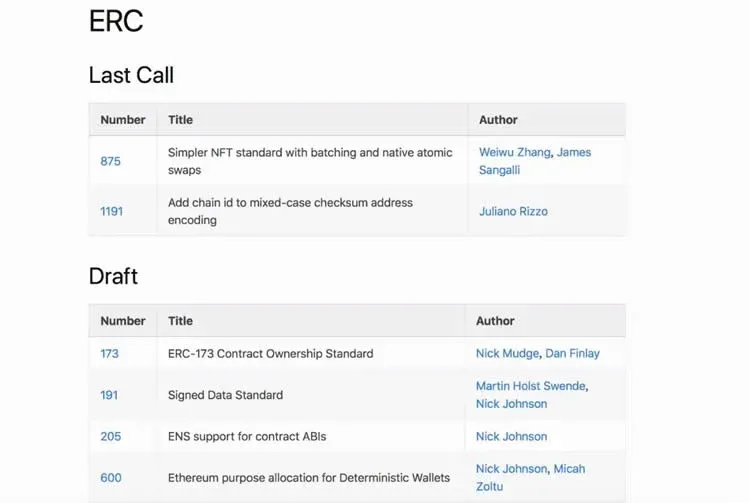
ERC (Ethereum Request for Comment) is a collection of documents used by the Ethereum community to solicit technical and organizational suggestions. In addition to the Ethereum core team, community contributors can also submit ERC proposals, forming a set of industry‑wide consensus specifications.
Using the “bank” contract as an example, the basic requirements include:
- Record each user’s balance;
- Implement transfer functionality (deposits and withdrawals);
- Provide a balance‑query interface.
These requirements also apply to token contracts, which gave rise to token protocol standards such as ERC20, ERC721, and others. Tokens built on ERC20 (e.g., CatCoin, DogCoin) implement a unified set of interface functions, allowing users to query balances and transfer tokens in the same way while the underlying implementation details remain at the developer’s discretion.
Beyond token contracts, ERCs also cover data structures, interface definitions and many other directions. Some originate from the Ethereum core team, others from community contributors. Their goal is to build a more compatible and extensible Ethereum ecosystem.
Participate in proposals: Developers who have improvement ideas for smart contracts or ERC standards can submit an ERC proposal on GitHub, contributing to the Ethereum ecosystem.
The above constitutes the core content of Ethereum smart contracts and the ERC standards adopted by most tokens. To learn more about ERC‑related information, please follow Bitaigen’s upcoming articles.
Related Reading
- Ethereum Block Explorers Chinese UI: Top Transaction Tools
- 2024 Ethereum Solo Stakers: Key Issues & Survey Findings
- Top Earning L1 & L2 Blockchain Networks 2024 Revenue
💡 Register on Binance with referral code B2345 for the maximum trading fee discount. See Binance complete guide.



