
 Bitaigen Research
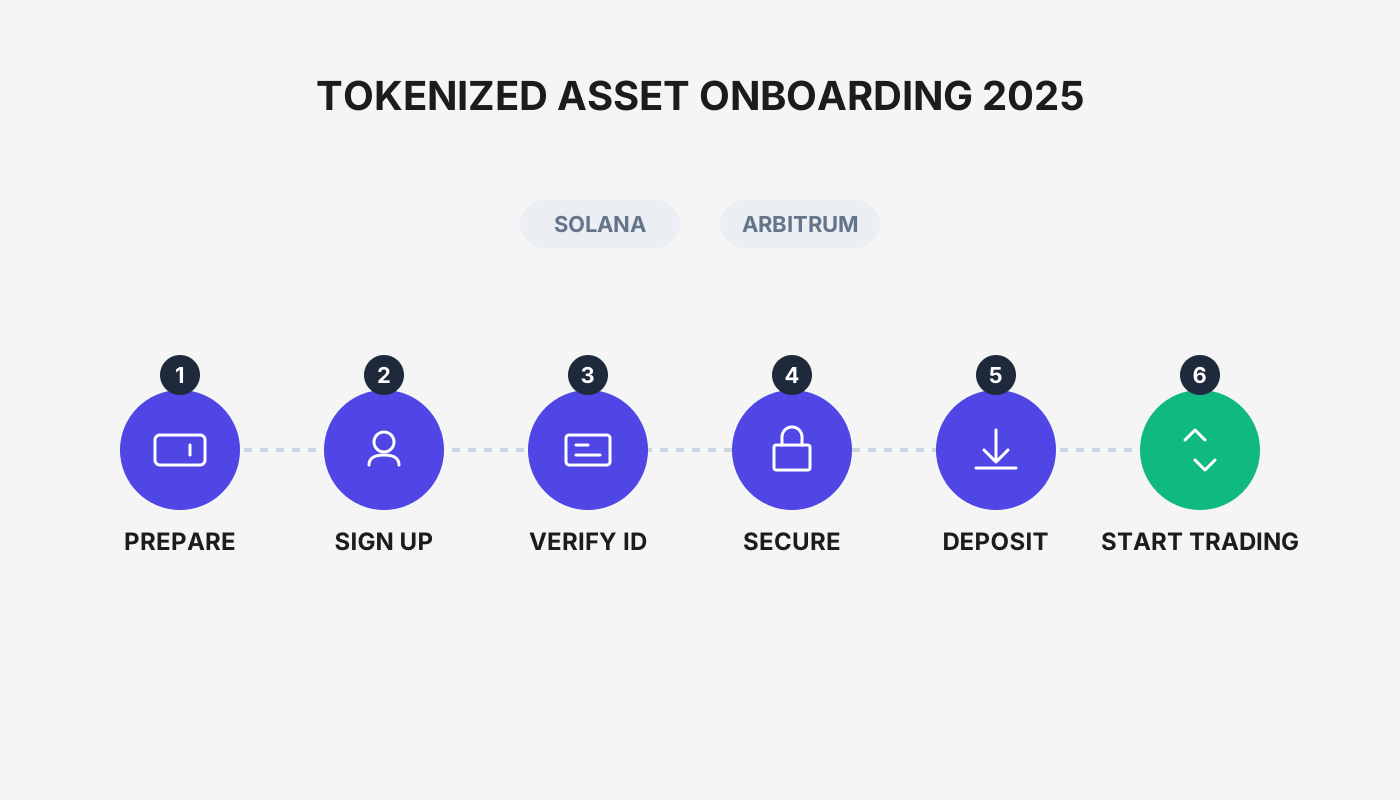
 We compile the latest developments in tokenized stocks in this article, dissect how their deployment on chains such as Solana and Arbitrum injects fresh momentum into the crypto ecosystem, and evaluate the regulatory and operational risks involved. The goal is to help readers clarify the role these assets might play during the 2025 alt‑coin season and decide whether they merit attention.
Summary
- Tokenized stocks—on‑chain tokens that represent real‑world assets (RWA) such as U.S. equities—are gaining traction on public blockchains like Solana and Arbitrum, with platforms such as Xstocks and Robinhood leading the way.
- These tokenized assets allow crypto investors to access traditional equity markets without undergoing KYC, potentially emerging as a new class of alt‑coins.
- The involvement of major custodians like DTCC and the emergence of Ethereum’s ERC‑3643 standard could amplify the impact of stock tokenization and inject a positive narrative into Ethereum.
- While the opportunities are significant, regulatory uncertainty, market volatility, and operational risk still require careful consideration.

Introduction
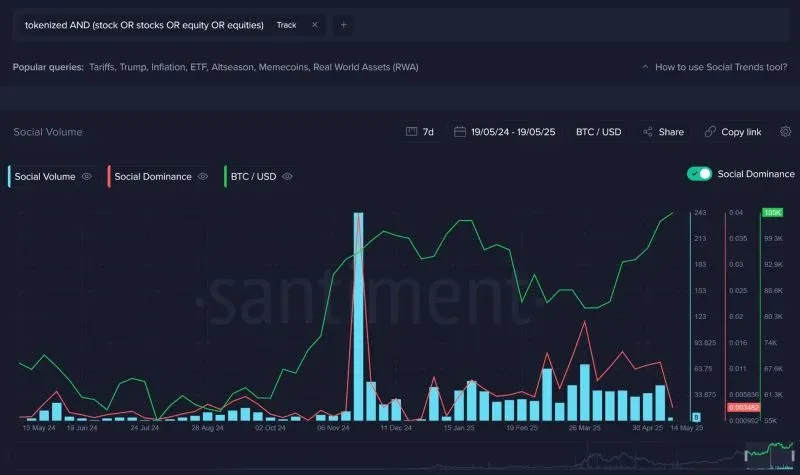
Tokenized U.S. stocks, by lowering entry barriers, offering 24/7 trading, and increasing liquidity, could become a primary catalyst for the 2025 alt‑coin season.
Recently, Xstocks on Solana and Robinhood on Arbitrum launched stock‑tokenization projects, once again bringing real‑world assets (RWA) into the spotlight of the crypto community. At the same time, the U.S. equity market has performed strongly—for example, Circle completed an IPO and posted sizable earnings, further boosting the appeal of traditional assets.
As traditional equities continue to rise, an increasing number of crypto users are focusing on tokenized stocks. Will this wave of tokenization spark a larger‑scale alt‑coin season in 2025? This article will unpack the mechanics of tokenized stocks, their potential impact on the crypto market, and the accompanying opportunities and risks.
Localization note: In global transactions, fiat is typically handled in USD via SEPA or SWIFT channels. U.S. residents should use Binance.US rather than the international Binance platform. Crypto gains may be taxable under local jurisdiction; participants should consult tax professionals.
Tokenized Stocks vs. Traditional Stocks
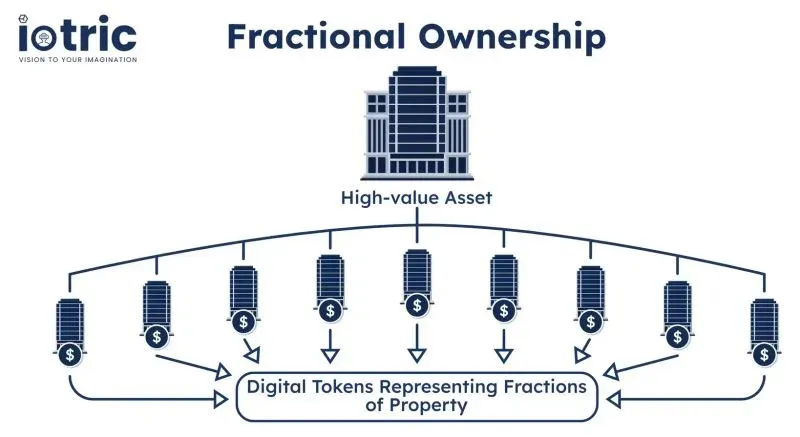
Tokenized stocks are issued and traded on a blockchain, representing the same ownership rights as conventional shares. Compared with stocks listed on centralized exchanges such as the New York Stock Exchange or Nasdaq, tokenized stocks rely on decentralized technology and exhibit the following key differences:
| Dimension | Traditional Stock | Tokenized Stock |
|---|---|---|
| **Accessibility** | Requires a broker, KYC, and compliance with local regulations | Purchased directly on‑chain, usually KYC‑free, open to global users |
| **Trading Hours** | Confined to exchange hours (U.S. Eastern 9:30 – 16:00) | 24/7 continuous trading, synchronized with crypto markets |
| **Custody & Ownership** | Held by brokers or custodians, recorded in centralized databases | Stored in decentralized wallets; ownership is publicly verifiable on‑chain and users manage their own private keys |
Advantages of Tokenized Stocks for the Crypto Market
Tokenized stocks bridge traditional finance and decentralized finance, delivering multiple benefits to investors and the broader ecosystem:
- Portfolio diversification: Crypto holders can obtain exposure to U.S. blue‑chip equities via tokenized stocks without leaving the on‑chain environment, enhancing overall risk distribution.
- Liquidity uplift: Assets that were previously confined to legacy exchanges gain global, on‑chain tradability, potentially attracting fresh capital into the crypto space.
- Lowered entry barriers: By eliminating intermediaries such as brokers, transaction costs drop, enabling retail participants to engage in markets that were once dominated by institutions.
A Fresh Narrative for the Alt‑Coin Season
Since April 2025, Bitcoin has risen from roughly $74,000 to $109,000 (as of July 3, 2025), indicating a marked recovery (CoinMarketCap, 2025). However, most alt‑coins have failed to replicate Bitcoin’s rally, polarizing market sentiment: “The good news is that the alt‑coin season is here; the bad news is that it’s happening in U.S. equities.”
Tokenized stocks blur the line between conventional equities and alt‑coins—they are non‑Bitcoin digital assets traded on a blockchain. As U.S. stocks outperform many cryptocurrencies, tokenized stocks give investors a pathway to capture those gains without navigating the cumbersome processes of traditional markets. Platforms like Xstocks and Robinhood, which enable on‑chain purchases without KYC, are injecting high‑quality assets into the crypto ecosystem and may spark heightened interest in similar alt‑coin‑style instruments.
Early‑Stage Access to Unicorn Companies
Robinhood CEO Vlad Tenev recently disclosed that the platform plans to tokenize private‑equity stakes, allowing retail investors to own shares of unicorns such as OpenAI and SpaceX. Historically, such early‑stage investments have been limited to venture‑capital firms and large institutional players. Through tokenization, retail participants could hold on‑chain tokens that represent equity in these high‑growth companies.
The model resembles the 2017 ICO boom but operates within a more regulated and structured framework. If tokenized private‑equity can deliver high‑potential assets to retail users, demand for blockchain‑based platforms will rise, furnishing a new narrative that could fuel alt‑coin growth.
Could This Provide a Positive Narrative for Ethereum?
Although tokenized stocks are currently being issued primarily on Solana (Xstocks) and Arbitrum (Robinhood), Ethereum remains one of the most advantaged competing chains. Its robust infrastructure and collaborations with custodial and clearing entities such as the Depository Trust & Clearing Corporation (DTCC) position Ethereum to capture significant value from this trend.
DTCC, which oversees securities from more than 170 countries and over 1.44 million issuances, announced in March 2025 its participation in the ERC‑3643 consortium (DTCC, 2025). ERC‑3643 offers a standardized framework for regulated RWA—including tokenized securities—forming the technical backbone for stock tokenization on Ethereum. DTCC’s involvement signals that it is exploring tokenized securities, potentially eclipsing smaller custodial solutions like Backed or Robinhood’s self‑custody model. Should DTCC fully embrace stock tokenization, the following impacts are anticipated:
- Increased network activity: Large‑scale securities tokenization would drive a surge in transaction volume, raising demand for ETH and spurring network development.
- Accelerated institutional adoption: DTCC’s entry could attract additional institutional participants, bolstering Ethereum’s credibility as a regulated‑asset platform.
- Smart‑contract innovation: Tokenized stocks rely on smart contracts for issuance and trading, further cementing Ethereum’s leadership in this niche.
Challenges and Risks of Tokenized Stocks
Despite a bright outlook, tokenized stocks face several risks that platforms and investors must manage prudently:
- Regulatory uncertainty: Tokenized stocks occupy a gray zone of regulation. While platforms strive for compliance, rapid policy shifts could impose additional restrictions or compliance costs.
- Market volatility: The inherent volatility of the crypto market may spill over to tokenized stocks, especially when speculative trading causes token prices to diverge from the underlying equity’s performance.
- Custodial risk: Although blockchain reduces counter‑party risk, reliance on custodians such as Backed, DTCC, or similar entities still introduces the possibility of operational mishaps or insolvency.
Conclusion
Tokenized stocks, as on‑chain representations of real‑world assets (RWA), mark a significant evolution for the crypto market. They give investors a direct route to high‑quality U.S. equities within the blockchain ecosystem, merging the strengths of traditional finance with those of decentralized finance. Platforms like Xstocks and Robinhood, with their KYC‑free, 24/7 trading features, are driving the formation of a new alt‑coin season, and Ethereum stands to solidify its leadership in the tokenized‑securities space thanks to DTCC’s participation and the ERC‑3643 standard.
Nevertheless, regulatory, market, and technical risks remain non‑trivial. Sustainable growth will depend on robust compliance and risk‑management practices. As tokenized stocks gradually attract market traction, they are poised to ignite fresh enthusiasm in the crypto arena and deepen the integration of conventional finance with decentralized finance.
This completes the full analysis of “Catalyst for the 2025 Alt‑Coin Season? An In‑Depth Look at Tokenized Stocks’ Advantages and Risks for the Crypto Market.” For more comprehensive coverage of tokenized stocks, stay tuned to additional articles from Bitaigen.
*Translation by AI.*
Related Reading
- Tokenized Stocks: Digital Wrapper for Real-World Shares
- Ethereum vs Bitcoin ETFs: Regulation, Fees & Liquidity
- Solana Surge & Bitcoin Merchant Adoption: On-Chain Insights vs Ethereum
💡 Register on Binance with referral code B2345 for the maximum trading fee discount. See Binance complete guide.



