
 Bitaigen Research
 Bitcoin (BTC) – A Decade‑Long Price Review and Future Outlook
Bitcoin has undergone multiple bull‑and‑bear cycles over the past ten years, showing an overall long‑term upward trend. Looking ahead, its scarcity, regulatory environment, and mainstream adoption suggest continued upside potential.
Over the past decade, Bitcoin’s price has experienced several bull‑and‑bear cycles, forming a distinctive evolutionary trajectory. This article, compiled by the Bitaigen editorial team, outlines the key milestones, dissects macro‑economic and technical influences, and, based on the current market environment, explores possible future directions. The goal is to help readers form a more comprehensive judgment and provide reference value for investment strategy considerations.
What Is Bitcoin (BTC)?
Bitcoin (BTC) is a decentralized cryptocurrency that operates on a peer‑to‑peer network and a consensus mechanism, with its code released as open source. Its creator, Satoshi Nakamoto, published the whitepaper on October 31 2008, marking Bitcoin’s birth; the first block (the “genesis block”) was mined on January 3 2009.
Bitcoin’s blockchain records transaction data in a decentralized, immutable manner, ensuring security and traceability.
Bitcoin (BTC) Exchange‑Rate Overview (Data Updated to June 16)
| Currency | Symbol | Current Rate | Market‑Cap Rank | Market Cap | All‑Time High | All‑Time Low | 24‑Hour Volume |
|---|---|---|---|---|---|---|---|
| Bitcoin | BTC | US$25,524.22 | 1 | US$495,253,017,875 | US$66,953.34 (‑63.09 %) | US$0.06 (+37,479.23 %) | US$12,953,344,519 |
*As of June 16, Bitcoin has risen about 37,479.23 % since its all‑time low, while it sits 63.09 % below its peak a year ago.*
Note for U.S. readers: When purchasing Bitcoin on a regulated exchange, use Binance.US rather than the global Binance platform.
Tax disclaimer: Cryptocurrency gains may be subject to tax in your local jurisdiction; consult a tax professional for guidance.
How to Read a Bitcoin Price Chart?
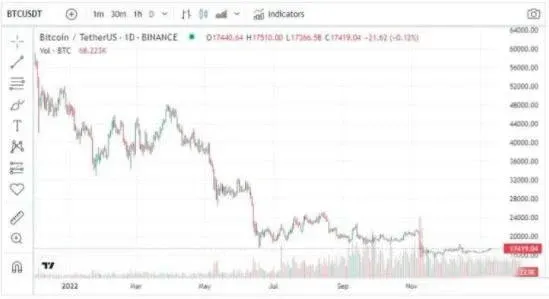
In traditional stock markets, red typically indicates an upward move and green a decline. In cryptocurrency candlestick charts, the convention is flipped: green denotes price increases, while red denotes price decreases. In 2022, Bitcoin’s price fell steadily, breaking below the US $16,000 level several times and now hovering around US $17,000.
A Ten‑Year Review of Bitcoin’s Historical Price Movements
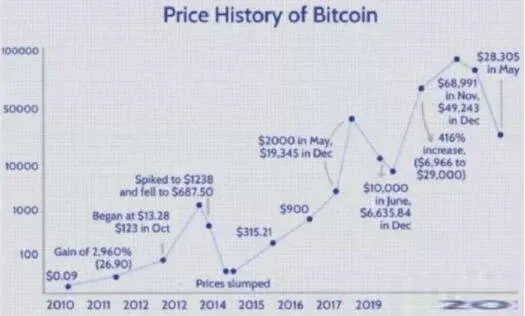
Bitcoin has been alive for more than a decade, during which its price has swung by millions of percent. Below is a chronological breakdown of each major market episode and the forces behind them.
1. Birth and Early Valuation (2008‑2010)
- 2008: The global financial crisis erupts; Satoshi Nakamoto releases the whitepaper *“A Peer‑to‑Peer Electronic Cash System.”*
- January 3 2009: The genesis block is mined, rewarding 50 BTC. Early mining is performed by hobbyists on ordinary computers, and BTC has virtually no market price.
- May 21 2010: A programmer purchases two pizzas for 10,000 BTC, equating to roughly US $0.003 per BTC, marking the first real‑world transaction.
- November 2010: On the then‑largest exchange, Mt.Gox, Bitcoin’s price surpasses US $0.5, a ≈167‑fold increase from the pizza price.
2. First Bull Market and Initial Correction (2011)
- In 2011, BTC begins trading on fiat‑based exchanges in the UK (GBP), Poland (PLN), and elsewhere; China’s first platform, “Bitcoin China,” is launched.
- After coverage by outlets such as *Forbes*, speculative inflows drive the price from US $0.5 in January to a peak of US $32 in June.
- Late June, Mt.Gox suffers its first major hack; the ensuing security crisis forces the price to tumble, and by October‑November it falls twice to about US $2, completing the first bull‑and‑bear cycle.
3. 2012‑2013: Halving and the Emergence of a “Safe‑Haven” Narrative
- Late 2012: The Bitcoin Foundation is established. In November, the first halving occurs, cutting the block reward from 50 BTC to 25 BTC; reduced supply becomes a potential price catalyst.
- January 2013: The Cyprus debt crisis fuels distrust in traditional finance, positioning Bitcoin as a possible hedge.
- The price climbs from US $13 in January to US $260 on April 10 (≈20×), then crashes to US $46 within three days (‑82 %). A subsequent ~180‑day consolidation follows.
- In October, European regulatory guidance becomes clearer; by December, Bitcoin breaks US $1,163, delivering an overall ≈480‑fold annual gain.
4. Mt.Gox Collapse and a Prolonged Downtrend (2014‑2015)
- February 25 2014: Mt.Gox declares bankruptcy, reporting the loss of roughly 100,000 BTC owned by the exchange and 750,000 BTC belonging to users. Market confidence is severely shaken.
- The price enters a long‑term downtrend, sinking to about US $200 in August 2015—a decline of roughly 80 % from its prior highs.
5. Second Halving and the Blockchain Boom (2016‑2017)
- 2016: The second halving reduces the block reward from 25 BTC to 12.5 BTC, further tightening new‑coin supply.
- The same year, Ethereum (ETH) emerges, sparking a broader “blockchain” enthusiasm that lifts the entire digital‑asset market.
- A brief correction in September 2017 trims the price by about 50 %, but by December 18 Bitcoin closes at US $19,666, delivering a cumulative ≈100‑fold gain for the year.
6. 2018 Bear Market and Growing Institutional Interest (2018‑2019)
- After the 2017 peak, negative headlines proliferate, cooling sentiment. Bitcoin bottoms at US $3,122 by the end of 2018.
- In 2019, institutional investors begin to take notice. Traditional financial firms start allocating capital, and anticipation of the 2020 halving fuels a ≈3× price increase throughout the year.
7. 2020‑2021: Pandemic‑Driven Macro Stimulus
- 2020: The COVID‑19 pandemic, global economic uncertainty, and U.S.–China tensions jointly amplify Bitcoin demand. The year records a ≈416 % rise, culminating in an all‑time high of US $68,991 in early 2021.
- 2021: Bitcoin earns the nickname “digital gold,” attracting massive institutional inflows.
8. 2022: Black‑Swan Events and Ecosystem Restructuring
- Projects such as Terra, Three Arrows Capital, and FTX collapse, dealing a heavy blow to the sector.
- Ethereum completes “The Merge,” a landmark technical upgrade.
- Certain jurisdictions, amid high inflation and sanctions, begin to formally recognize crypto assets.
- Although the overall ecosystem suffered setbacks, the turmoil laid groundwork for future institutionalization and regulatory compliance.
Key Drivers Behind Bitcoin’s Price Movements
Since the 2021 peak, Bitcoin’s price has been influenced by a blend of macro‑economic and sector‑specific uncertainties, including global economic slowdown, inflation pressures, geopolitical tensions, and shifts in U.S. dollar policy. The following factors have proven especially impactful:
- Scarcity
- The total supply is capped at 21 million BTC, with roughly 19 million already in circulation. A fixed supply coupled with rising demand tends to push the price upward.
- Mainstream Acceptance
- New retail investors continue to join the market; experts project that by 2030 Bitcoin’s user base could approach 4 billion worldwide.
- Regulatory Landscape
- Nations differ in their approach to crypto assets; forthcoming legislation can cause significant price swings.
- Mining Cycle & Halving
- Approximately every four years, the block reward halves, reducing new‑coin issuance. Historically, each halving has been followed by a price rally.
Bitcoin’s Future Outlook and Price Forecasts
As of the latest data, Bitcoin has retraced to roughly 30 % of its all‑time high, showing signs of bottoming out. If the prevailing trends persist, the following scenarios are plausible:
- 2023‑2025: Bitcoin could outperform many traditional asset classes. The next bull‑run peak may materialize between 2024 and 2025, potentially delivering double‑digit percentage gains overall.
- Supply‑Side: Annual new supply is about 2.5 %, but demand growth is expected to outpace this. Post‑2020 halving supply contraction supports a market‑cap target exceeding US $1 trillion.
- Institutional Viewpoints: Bloomberg Intelligence projects a US $100,000 price for Bitcoin by 2025; PlanB’s Stock‑to‑Flow model points to a similar six‑figure range.
- Contrarian Opinions: Analyst Peter Brandt contends that Bitcoin is still consolidating and may need to dip to around US $13,000 before a new upward leg can begin.
Overall, Bitcoin is gradually permeating the mainstream financial system. As a tool for hedging inflation and navigating market uncertainty, its long‑term prospects remain broadly positive among most experts.
2023 Bitcoin Price Forecast
- Competitive Landscape: While some altcoins demonstrate higher scalability and innovative features, Bitcoin remains the preferred store of value.
- Technological Evolution: Proof‑of‑Stake transitions on chains like Ethereum improve overall industry sustainability.
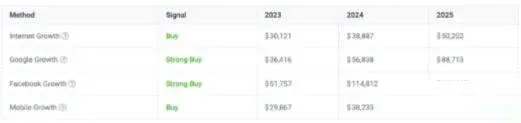
- Market Sentiment: CoinCodex forecasts an end‑2023 Bitcoin price near US $30,121.
- Payment Adoption: Two sovereign nations have declared Bitcoin legal tender, and global Bitcoin ATMs exceed 30,000, enhancing user accessibility.
2024 Bitcoin Price Forecast
- Lightning Network: As Bitcoin’s second‑layer payment protocol, the Lightning Network enables low‑cost, near‑instant transactions, boosting its appeal for everyday payments.
- Policy Support: El Salvador has launched an official wallet compatible with Lightning, further nurturing a domestic Bitcoin payment ecosystem.
- Price Projection: Leveraging technological progress and rising adoption, many analysts anticipate a 2024 price around US $90,000.
Should You Buy Bitcoin Now?
After reviewing Bitcoin’s historical price path and the variables shaping its future, investors often wonder whether the current moment represents an optimal entry point. Some analysts argue that the price is approaching a recent bottom and that the halving‑driven supply dynamics still offer upside potential; others caution that short‑term volatility remains high, urging careful risk assessment.
---
This article provides a comprehensive review of Bitcoin’s ten‑year price trajectory, future outlook, and price forecasts. For further chart analyses and updates, follow Bitaigen’s upcoming publications.
Related Reading
- Bitcoin Stabilizes in Jan 2025, Eyes Feb 2026 Rally
- Will Bitcoin Reach $100? Future Price Prediction & Timeline
- Bitcoin $90,000 Rejection: Is Digital Gold Losing to Bonds?
💡 Register on Binance with referral code B2345 for the maximum trading fee discount. See Binance complete guide.



