
 Bitaigen Research
 In the context of global economic fluctuations and policy shifts, the outlook for Bitcoin in 2026 has attracted considerable attention.
Bitcoin in 2026 will face macro‑level risks, including tightening liquidity, policy uncertainty, and a shift of AI‑related capital expenditures. The price is expected to oscillate below the $100,000 range, and overall market sentiment is likely to remain cautious.
Macro‑Transformation and the Decay of the Four‑Year Cycle
- Historically, Bitcoin’s price has often been explained by the four‑year halving cycle.
- As market capitalization expands and institutional participation rises, a pure supply shock combined with leverage effects is no longer the sole driver.
- The integration of Bitcoin with spot ETFs, institutional custodians, and regulated trading venues is gradually dampening its volatility.
These developments suggest that Bitcoin is moving away from being a purely “reflexive asset” toward becoming a macro‑economically sensitive risk asset, with its price trajectory more closely linked to overall liquidity conditions and the tightening or easing of monetary policy.
In this article we outline the macro environment and risk factors surrounding Bitcoin in 2026, analyze its transition from a simple halving‑driven model to a macro‑sensitive asset, and assess how liquidity, policy, and institutional involvement could potentially influence price movements. By drawing an analogy with gold, we aim to help readers grasp possible future directional trends; a careful read is recommended.
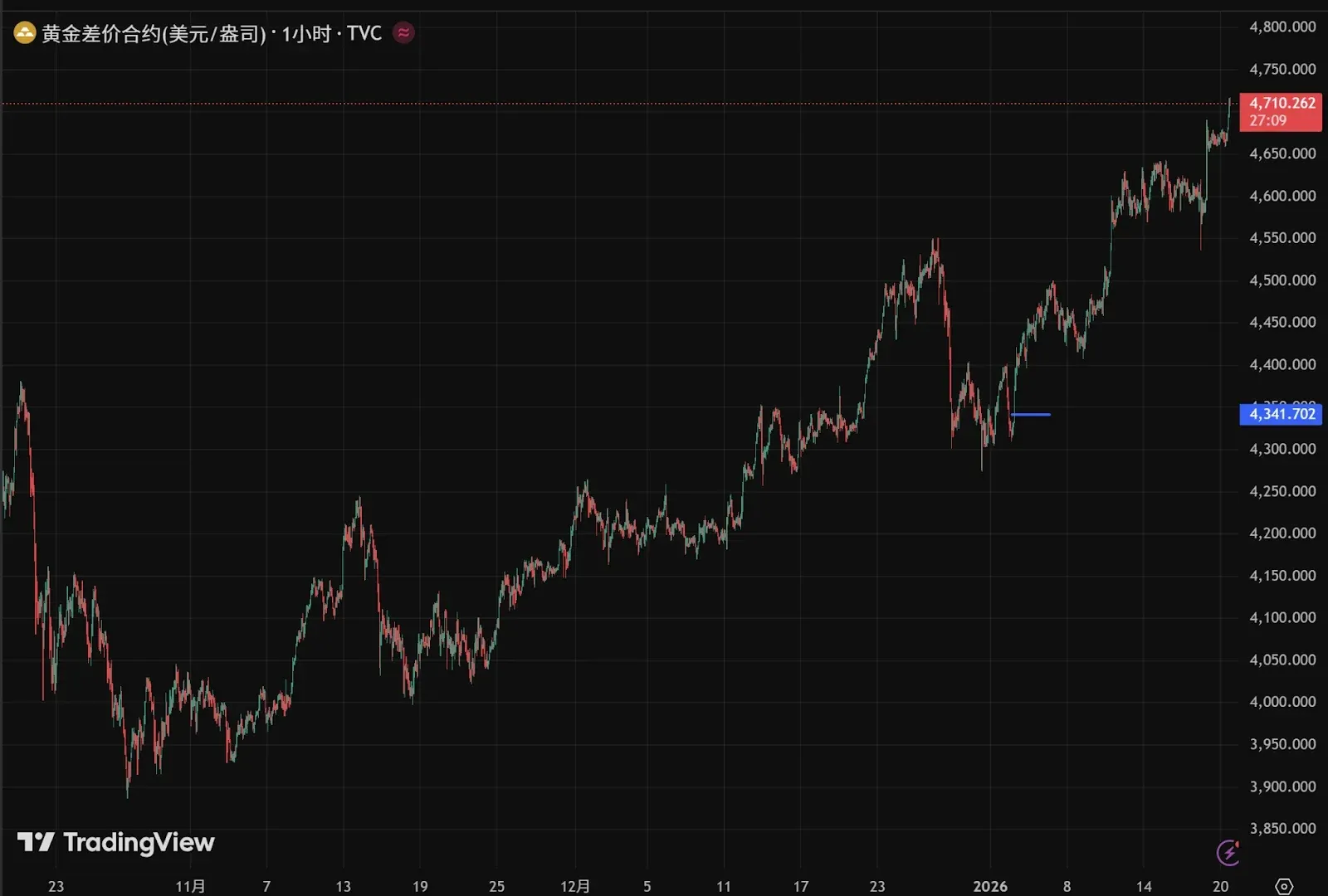
2026 Bitcoin Price Structure: A Gold‑Like Pattern
Definition: During periods of macro‑structural transition—when real interest rates are falling but uncertainty remains high—gold often experiences an initial decline or prolonged consolidation before resuming a long‑term uptrend.
Applying this model to Bitcoin yields several key judgments:
- Short‑term risk remains biased toward the downside or sideways movement.
- Galaxy analysis identifies the $100,000‑$105,000 band as a critical support/resistance zone.
- If Bitcoin cannot sustainably stay above this band, most of 2026 may be spent in a post‑halving adjustment phase.
Characteristics of this phase typically include:
- Highly volatile price swings
- Diminished speculative interest
- Declining leverage ratios
These traits do not imply an abrupt crash; rather, they describe a several‑month period of sentiment recovery.
Political Factors: Potential Impact of the 2026 U.S. Midterm Elections
Key point: The U.S. midterm elections scheduled for November 3, 2026 often influence financial market positioning well in advance.
- In 2025, the regulatory environment is expected to be relatively permissive, boosting industry confidence.
- As the election approaches, the risk of policy reversals or legislative gridlock rises.
- Institutional investors typically reduce exposure to policy‑sensitive assets 3‑6 months before the vote.
If this pattern repeats, speculative assets—including Bitcoin—could experience systematic risk‑off behavior during the 2026 midterm cycle, leading to heightened volatility and an absence of a clear directional trend.
Liquidity and the AI Capital‑Expenditure Cycle
Global capital is shifting from the crypto sector toward artificial‑intelligence infrastructure. Forecasts indicate that AI‑related cap‑ex will peak in 2026.
- Over the past two years, AI has absorbed a large share of venture capital, diverting funds that might otherwise have flowed into Bitcoin.
- When AI infrastructure matures, capital focus will move from sheer scale to monetization and return‑on‑investment considerations.
- The peak in cap‑ex is likely to be accompanied by tighter liquidity; if revenue growth cannot keep pace with spending, valuations may be compressed and capital could flow back into cash and sovereign bonds.
Balance‑Sheet Pressure and Correlation with Risk Assets
The large hardware investments made in 2024‑2025 will generate substantial depreciation in 2026. Even though depreciation is a non‑cash expense, it will affect reported earnings and investor sentiment.
- When balance sheets are under pressure, correlations among risk assets tend to rise.
- Unless Bitcoin is widely perceived as an asset capable of generating cash flow, its price will remain sensitive to overall liquidity tightening.
Market Expectations for Bitcoin’s Price
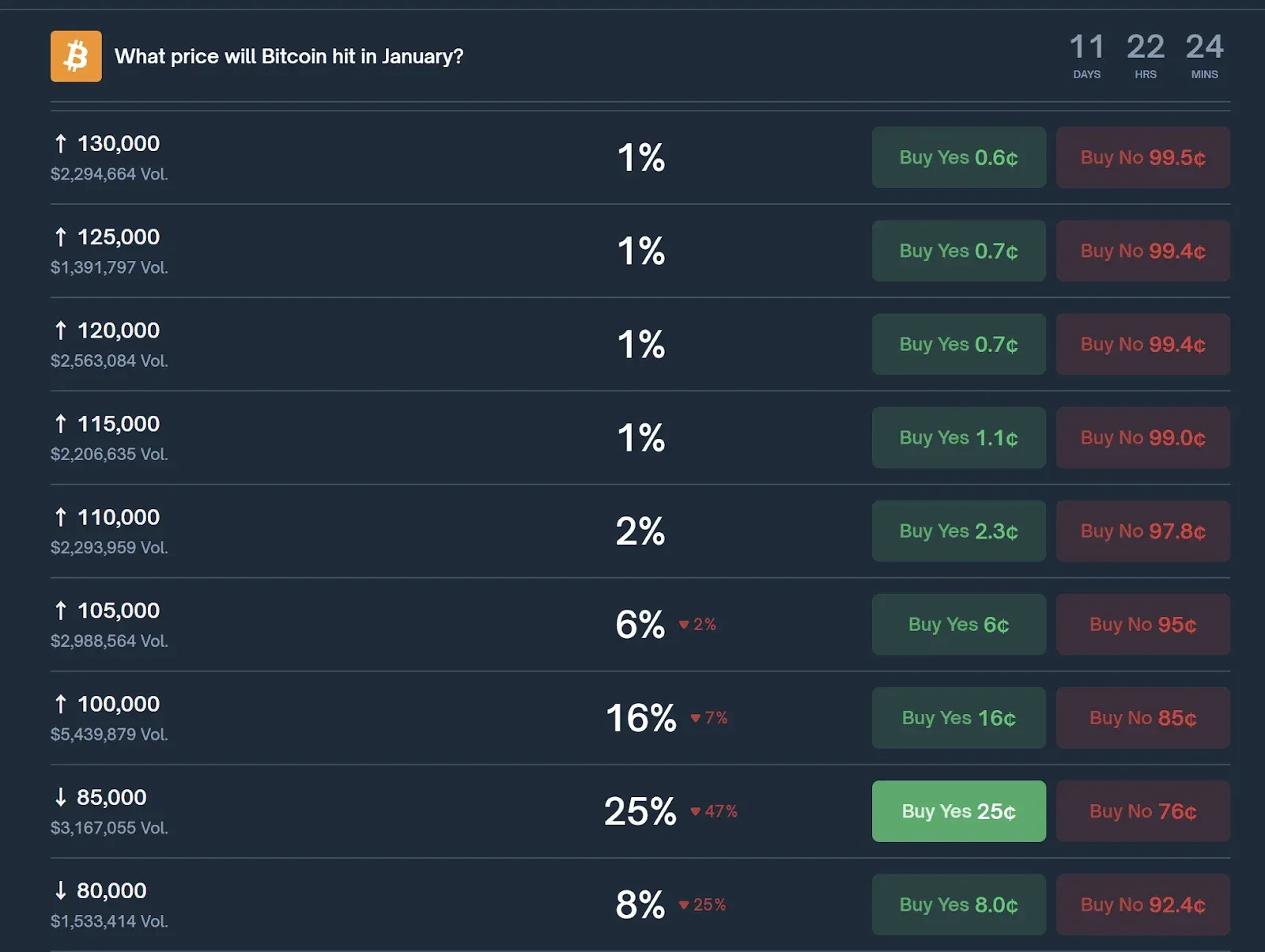
On the Polymarket prediction platform, Bitcoin price contracts for January showed a clear downward bias:
- The probability of the price touching $100,000 is roughly 15 %.
- The chance of reaching the $105,000‑$110,000 band is only in single‑digit percentages.
Prediction markets have the advantage that participants must express their views under strict settlement rules, which tends to produce a more realistic assessment of volatility and liquidity expectations. The current probability distribution suggests traders anticipate Bitcoin to trade within a range with a modest downward tilt. This does not signal a structural bear market, but it does imply that upward movement is likely to be limited to consolidation phases.
From Narrative to Probability: A Composite View of Bitcoin in 2026
- Precious‑metal prices are hitting new highs, reflecting risk‑hedging behavior at the end of a cycle.
- Bitcoin stabilising below $100,000 indicates constrained market risk appetite.
- Quantified expectations from prediction markets further corroborate the view that short‑term upside potential is limited.
Together, these factors paint a convergent picture: Bitcoin is entering a mature phase dominated by patience, balance‑sheet health, and macro‑economic conditions. While the present environment may feel uneasy, structurally it aligns with the long‑term developmental trajectory of Bitcoin as an asset class.
*Note: In jurisdictions where cryptocurrency transactions are taxable, gains may be subject to local tax rules. Users should consult a tax professional for guidance.*
*For U.S. residents, trading on the global Binance platform is not permitted; instead, Binance.US should be used for fiat‑on‑ramp services via SEPA, SWIFT, or other supported methods.*
Bitcoin 2026 Outlook: Macro Risks and Forecasts, Market Sends a Cautious Signal – this completes the full analysis. For further reading, follow Bitaigen (比特根) and its additional articles.
Related Reading
- Bitcoin 2026 Market Analysis: Halving Cycle & Macro Variables
- Litecoin (LTC) Zero Risk? 2026 Technical & Market Review
- Buy Bitcoin 2026: Legal, Card Freeze Risk & Binance Guide
💡 Register on Binance with referral code B2345 for the maximum trading fee discount. See Binance complete guide.



