
 Bitaigen Research
Bitcoin is shifting from its traditional role as “digital gold” toward a growth‑oriented asset that moves in close tandem with technology stocks. As institutional participation deepens—particularly through conventional vehicles such as exchange‑traded funds (ETFs)—Bitcoin’s price dynamics are beginning to mirror those of risk assets.
Bitcoin was once hailed as digital gold—a hedge against currency volatility and market turbulence. Yet recent price action suggests that its characteristics are converging toward those of riskier assets.
Institutional exposure has risen sharply, especially via ETFs and other regulated products. This has amplified Bitcoin’s correlation with growth‑oriented equities. In the latest wave, software stocks slipped amid uncertainty surrounding artificial intelligence, and the same pull‑back rippled through the cryptocurrency market, prompting the industry to revisit Bitcoin’s identity.
This week’s market tone reflects that shift. Grayscale’s newest research paper examines the tightening link between Bitcoin and growth stocks; Ethereum’s reserves have recorded a multi‑billion‑dollar paper loss, while BlackRock expands its tokenisation footprint through a partnership with Uniswap; and Polymarket is appealing a state‑level regulatory action to a federal court.
In this article we outline the latest debate over Bitcoin’s identity, unpack the logic behind its transition from “digital gold” to a tech‑stock‑like asset, and assess how institutional capital is influencing price co‑movement. Our aim is to help readers spot the key signals of this emerging trend.
Grayscale: Bitcoin Trades More Like a Growth Asset Than Digital Gold
- Grayscale’s latest study argues that the narrative of Bitcoin as a store of value has moved to the background, while its short‑term trading profile now resembles that of high‑growth equities.
- Report author Zach Pandell notes that, despite Bitcoin’s fixed supply and independence from central banks, its near‑term performance is highly similar to that of growth‑oriented stocks.
- Over the past two years, Bitcoin’s correlation with software stocks has risen markedly. Concerns that artificial intelligence could disrupt the sector have placed pressure on software companies, and this linkage has become especially evident recently.
- In this environment, a pull‑back in Bitcoin is not surprising, as its price has become tightly coupled to the software industry’s trajectory.
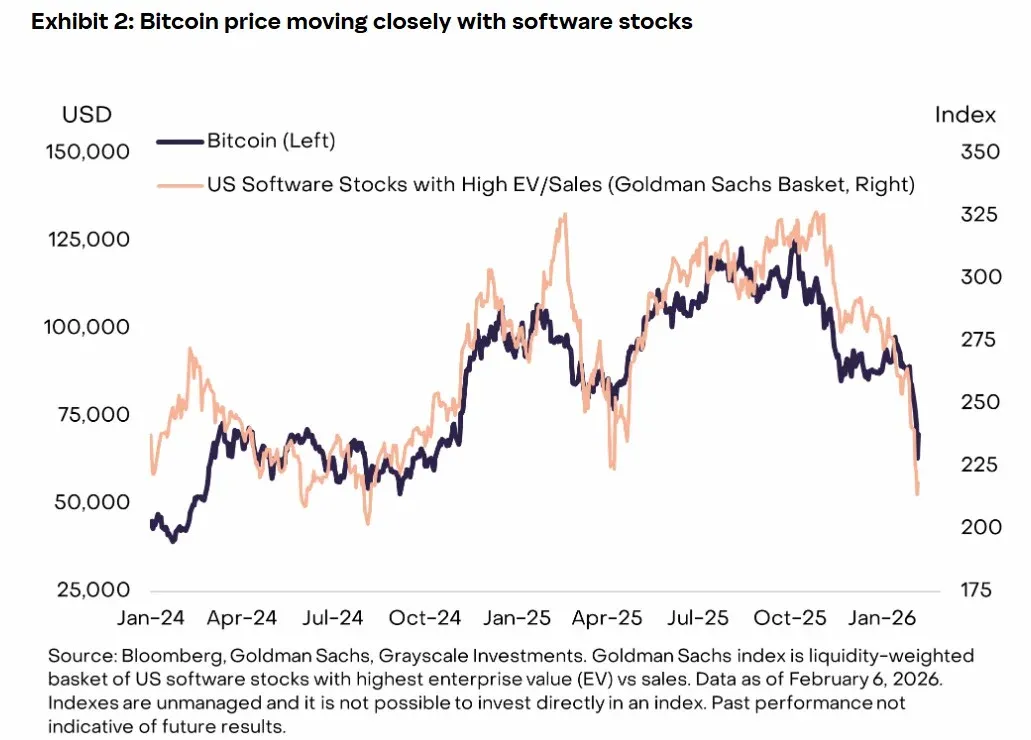
Bitcoin’s recent price movements have tracked software‑stock performance closely. Source: Grayscale
BitMine Adds 40,613 Ethereum During Market Sell‑Off
- BitMine increased its holding by 40,613 Ethereum amid a recent market sell‑off. Even though the price plunged and the on‑paper loss runs into the tens of billions of dollars, the company remains bullish on Ethereum over the long term.
- After the purchase, BitMine’s total Ethereum balance exceeds 4.326 million ETH, valued at roughly $8.8 billion at current market rates.
- DropsTab data indicate that BitMine is sitting on an unrealised loss of about $8.1 billion on its Ethereum position, highlighting a large gap between acquisition cost and prevailing market price.
- Facing pressure from the declining share price, Chairman Tom Lee reiterated that BitMine’s strategy is to follow Ethereum’s long‑term trend and profit from any future recovery.
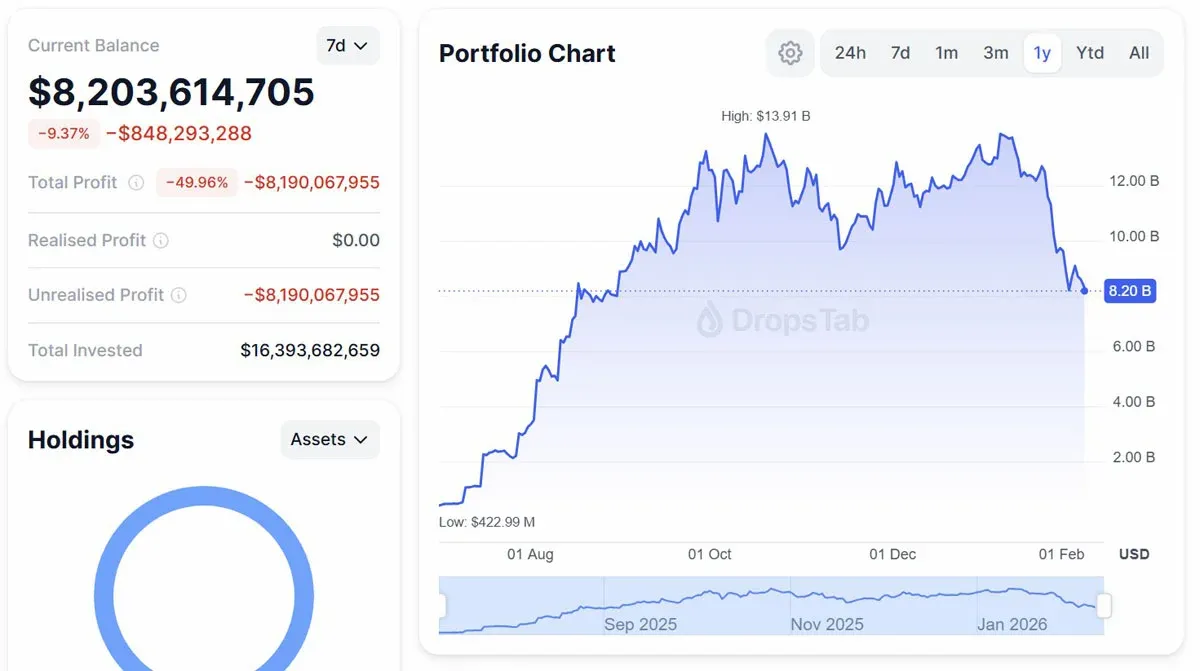
BitMine’s on‑chain paper loss now exceeds $8.1 billion. Source: DropStab
BlackRock Buys UNI and Launches BUIDL on Uniswap
- BlackRock deepens its decentralized finance (DeFi) footprint by launching the tokenised money‑market fund BUIDL on Uniswap, signalling a major institutional commitment to DeFi.
- BUIDL is now listed on the decentralized exchange, allowing whitelist‑approved institutional investors to trade the tokenised sovereign‑bond product on‑chain. As part of the rollout, BlackRock purchased UNI, Uniswap’s governance token.
- BUIDL is the largest tokenised money‑market fund, with assets under management exceeding $2.1 billion and issuance across Ethereum, Solana and Avalanche. In December 2023, the fund distributed over $100 million in yield from its U.S. Treasury holdings.
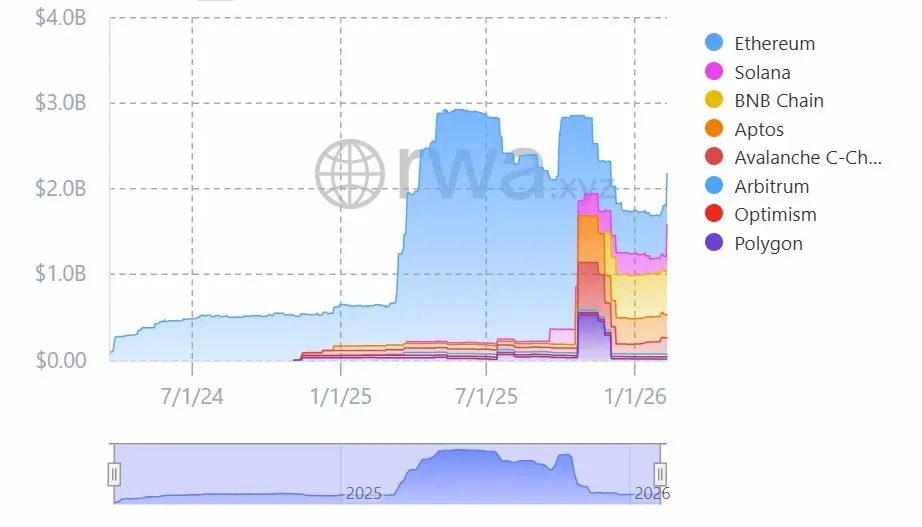
BlackRock’s BUIDL manages assets exceeding $2.1 billion. Source: RWA.xyz
Polymarket Sues Massachusetts, Challenges State Regulation
- Decentralised prediction‑market platform Polymarket has filed a federal lawsuit alleging that the Commonwealth of Massachusetts is attempting to restrict or shut down its event‑based trading products.
- Chief Legal Officer Neil Kumar argues that jurisdictional disputes belong in federal courts, not in state law‑enforcement agencies, and that the suit aims to block possible interference by Attorney General Andrea Campbell.
- Polymarket maintains that the U.S. Commodity Futures Trading Commission (CFTC) holds exclusive jurisdiction over the event contracts on its platform, and that state‑level actions could fracture the national market.

Source: Neil Kumar
*Note:* Crypto‑related gains may be subject to taxation in your local jurisdiction. Be sure to consult a qualified tax professional regarding reporting requirements for any profits or losses realized on digital assets.
---
The analysis above provides a detailed look at the evolving narrative surrounding Bitcoin’s identity crisis: is it still “digital gold,” or is it becoming more akin to a technology‑stock asset? For further discussion on Bitcoin’s positioning, follow additional articles from Bitaigen.
Related Reading
- Nov 2026: Bitcoin Sell‑off, Precious Metal Rally, Stocks
- Bitcoin vs Federal Reserve: Public Audit vs Opaque Banking
- Bitcoin Near $70K: On‑Chain & Institutional Outlook
💡 Register on Binance with referral code B2345 for the maximum trading fee discount. See Binance complete guide.



