
 Bitaigen Research
Ethereum’s ZK Rollups focus on off‑chain computation followed by the submission of zero‑knowledge proofs to boost TPS, while Solana’s ZK Compression reduces on‑chain data costs by compressing storage. Their emphases differ, making a direct “which is stronger” judgment difficult.
For a long time, the need for blockchain scalability has been the centerpiece of debate. As networks grow, transactions per second (TPS) become a critical metric. Bitcoin handles roughly 7 TPS, Ethereum about 15 TPS—both far below Visa’s average capacity of 1,700 TPS. Without effective scaling solutions, blockchains struggle to compete with traditional finance and to achieve mass adoption.
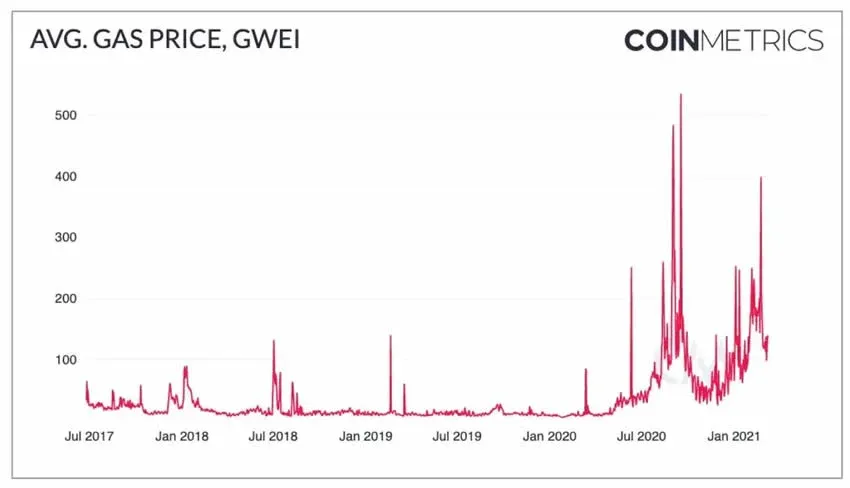
The practical cost of transacting is equally daunting. A surge in user numbers drives transaction fees sky‑high, especially during peak periods, rendering micro‑transactions virtually impossible. During the 2020‑2021 DeFi boom, Ethereum’s gas fees exploded, making even tiny transfers prohibitively expensive.
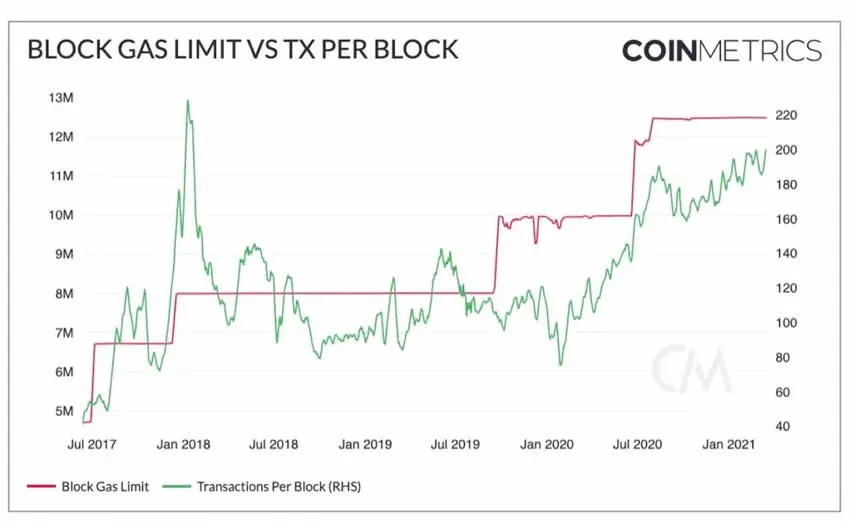
To address these challenges, scaling solutions have emerged. Their goal is to increase network throughput (TPS) while preserving or enhancing security, decentralization, and cost‑effectiveness. Effective scaling not only lowers transaction fees but also improves user experience, attracts new participants, and expands the usability of DApps.
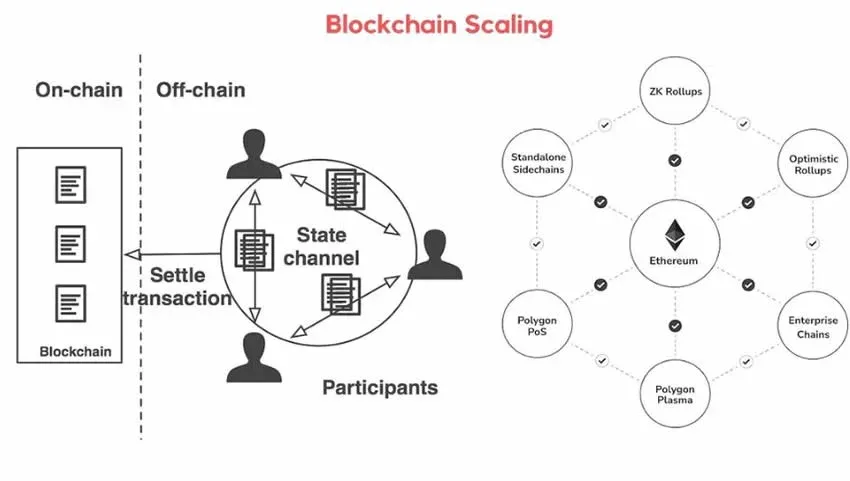
Today we will compare the zero‑knowledge technologies of two major ecosystems—Ethereum’s ZK Rollups and Solana’s ZK Compression. Both aim to improve scalability, yet they follow completely different implementation paths, reflecting distinct design philosophies and priorities.
We compare Ethereum’s zero‑knowledge rollups and Solana’s zero‑knowledge compression across three dimensions—technical implementation, ecosystem positioning, and future evolution—to help readers clarify each solution’s strengths and limitations, and to uncover the real value of zero‑knowledge tech in scaling. Subsequent sections will dive deeper into the analysis.
1. What are ZK Rollups?
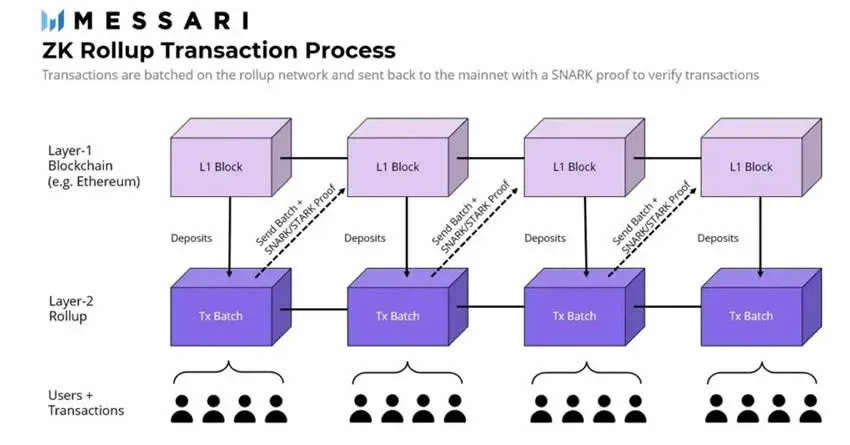
ZK Rollups are a Layer‑2 (L2) scaling approach that performs computation and state transitions off‑chain, batches a large number of transactions, and submits only a zero‑knowledge proof and a succinct data summary to the base chain, achieving efficient scaling.
- How it works
- A Sequencer collects and batches transactions off‑chain.
- It generates a zk‑SNARK (succinct non‑interactive zero‑knowledge proof) that validates the entire batch without revealing individual details.
- The proof and a minimized data summary are posted to the Ethereum mainnet, where anyone can verify them on‑chain.
- If a dispute arises, the original transaction data can be forced on‑chain for settlement, leveraging Ethereum’s security for the final decision.
- Advantages
- The main chain only needs to verify a single proof, dramatically reducing computational load.
- Transactions settle quickly and cheaply on the side chain.
- Security and decentralization are retained.
2. What is ZK Compression?
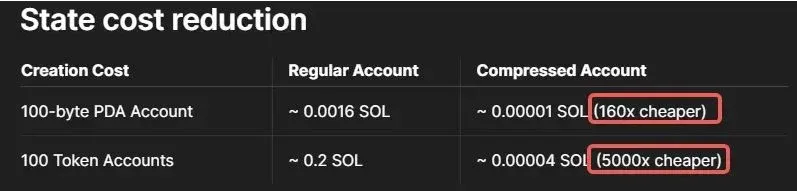
ZK Compression is a technique on Solana designed to lower data‑storage costs. It stores only a “fingerprint” (hash) of the compressed data on‑chain and uses zero‑knowledge proofs to guarantee data integrity and privacy.
- Core concept
- Each account’s data is compressed into a unique hash that simultaneously records the account information and its position in the state tree.
- This hash is stored as a leaf in a Merkle‑structured state tree; the root of the tree (state root) is kept on‑chain as the overall state fingerprint.
- Detailed account data lives in Solana’s ledger space, which is cheaper to store, and is verified via a ZK‑proof only when needed.
- Workflow
- Account information is compressed into a hash and written into the state tree.
- A zero‑knowledge proof is generated to attest that the pre‑compression and post‑compression data match.
- Only the hash and the proof are submitted on‑chain, dramatically cutting storage requirements.
- Key distinction
- ZK Compression is not an L2 solution; it is an upgrade to Solana’s L1 storage layer.
- Transaction execution and state management remain fully on Solana’s main chain, with no auxiliary chain involved.
3. Main Differences Between ZK Rollups and ZK Compression
| Dimension | **ZK Rollups** (Ethereum) | **ZK Compression** (Solana) |
|---|---|---|
| **Execution location** | Transactions are executed on a secondary chain (L2); results are submitted to L1 via a zero‑knowledge proof. | Transactions and state updates occur directly on L1 (Solana). |
| **On‑chain data** | Only the zero‑knowledge proof and a data summary are posted, minimizing main‑net computational load. | Only the hash fingerprint of compressed data and its ZK‑proof are stored, cutting storage costs. |
| **Privacy & integrity** | zk‑SNARK ensures transaction validity without exposing details. | Zero‑knowledge proof validates that compressed data matches the original, preserving integrity while keeping data private. |
| **Solution nature** | Classified as a Layer‑2 scaling approach. | An L1 upgrade; not a separate execution layer. |
4. Conclusion
Both ZK Rollups and ZK Compression strive to enable sustainable network growth while preserving blockchain’s core properties. Ethereum boosts transaction throughput by performing off‑chain computation coupled with zero‑knowledge proofs, whereas Solana reduces on‑chain data costs through compression and ZK‑proofs. Their technical emphases differ, making a simple “stronger vs. weaker” comparison inappropriate; the critical factor is how each ecosystem’s scaling needs are addressed.
Solana’s progress with ZK Compression marks a significant step toward lowering storage fees and enhancing on‑chain efficiency, offering a fresh perspective for broader blockchain adoption and innovation.
Note for global users: When converting fiat to crypto, USD transactions typically use SEPA or SWIFT channels. Residents of the United States should access Binance via the Binance.US platform rather than the global Binance site. Crypto gains may be taxable under the regulations of your local jurisdiction.
Related Reading
- Seeker Season Review: Is the $450‑$500 Web3 Phone Worth It?
- Solana Seeker Web3 Phone: Specs, On‑Chain Features & Value
- FG Nexus vs Ethereum: Institutional Capital & Edge
💡 Register on Binance with referral code B2345 for the maximum trading fee discount. See Binance complete guide.



