
 Bitaigen Research
 The Concept and Function of Polkadot Parachain Slots
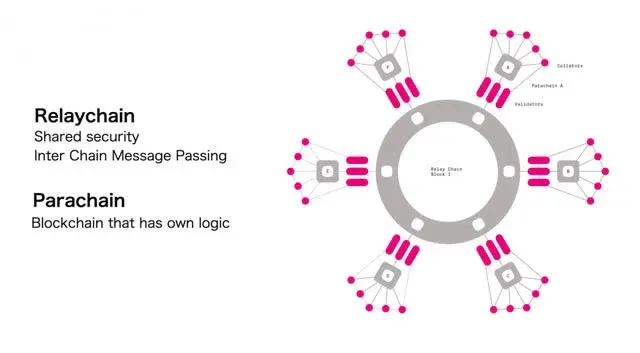
The Polkadot network consists of three major modules: the Relay Chain, parachains, and cross‑chain bridges, all designed to achieve multi‑chain interoperability. The Relay Chain, built on Substrate, handles information verification, network security, and coordination among parachains. Parachains connect to the Relay Chain through “slots” and focus on their specific business scenarios, executing transaction processing and application‑level logic.
Parachain slots are essentially the interface between the Relay Chain and a parachain. Only a parachain that secures a slot can share Polkadot’s security guarantees and interact with other chains. Slots are divided into two categories: community beta slots and commercial slots. Twenty percent of the total slots are reserved for the Web3 Foundation to support community testing projects, while the remaining eighty percent are opened to commercial projects via an auction process.
---
This article examines Polkadot parachain slots and their auction mechanism from both a technical and an ecosystem perspective, helping readers understand their pivotal role in network security, cross‑chain connectivity, and project deployment. By unpacking the underlying design logic and potential future impact, the analysis enables a quick assessment of whether a project possesses a competitive edge in obtaining a slot and outlines the basic steps to participate in the auction. The following sections provide a detailed breakdown.
The Value of Parachain Slot Auctions
For the Polkadot Network
Parachain slot auctions are a key milestone on Polkadot’s roadmap and are regarded as a flagship event for the year. A successful launch of the auction signals that Polkadot’s cross‑chain vision is moving from theory to concrete implementation. As Gavin Wood has emphasized, one of Polkadot’s long‑term goals is to construct bridges that link major chains such as Ethereum and Bitcoin, thereby breaking the current “data silos” that separate blockchains. When this vision is realized, assets and information can flow freely across chains, a development that could have profound implications for the broader blockchain ecosystem.
From the perspective of the native DOT token, the auction creates a fresh utility. Bidding for slots requires staking DOT, which raises the overall locked‑up ratio of the token (including both validator staking and auction‑locked DOT). As more parachains go live, the total DOT lock‑up rate is expected to increase, potentially exerting a positive influence on secondary‑market dynamics—though actual effects will depend on prevailing market conditions. The same reasoning applies to KSM on the Kusama network.
For Project Teams
Projects that secure a slot and launch on Polkadot gain direct access to the network’s shared security, allowing them to achieve business collaboration and cross‑chain interaction within a single ecosystem. Early entrants that obtain the first batch of slots can also enjoy a temporal advantage, accelerating development timelines and boosting the efficiency of subsequent ecosystem building. Moreover, the high visibility of Polkadot provides an additional promotional platform.
Before a project is fully deployed, many teams that plan to operate within the Polkadot ecosystem first test the waters by participating in slot auctions. For lightweight applications that do not need to process transactions on every block, the “pay‑as‑you‑go” parachain model offers a cost‑effective alternative.
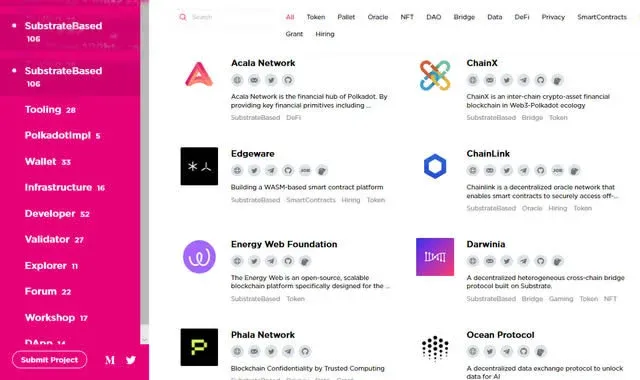
According to data from PolkaProject, the Polkadot ecosystem currently hosts 333 projects, of which 106 are built on Substrate. Although the slot auction has not yet formally commenced, several well‑known projects have announced their intention to bid, including Acala, Phala, ChainX, Darwinia, Bifrost, Stafi, and Litentry.
For Investors
The auction utilizes the PLO (Parachain Lease Offer) mechanism, giving investors a pathway to participate in the Polkadot ecosystem. Investors can stake DOT on the bidding page to support projects they favor, and may receive project tokens or other incentives in return. This reward structure offers a broader range of possibilities compared with the traditional NPoS (Nominated Proof‑of‑Stake) staking model.
At present, exchanges, institutional investors, and active secondary‑market participants are closely monitoring Polkadot’s progress and treating ecosystem development as a potential opportunity. Several major trading platforms have positioned Polkadot as a focus of their strategic investments, establishing Polkadot‑focused funds to lower entry barriers for investors. For example, on December 30, OKX announced a DOT staking‑mining service where users can stake DOT with a single click on the “Earn” page, with an estimated annualized return of 12.8 % (returns are denominated in USD and payouts are typically processed via SEPA or SWIFT for fiat withdrawals). OKX also created a $100 million Block Dream Fund dedicated to blockchain infrastructure, Polkadot ecosystem projects, DeFi, and related areas.
U.S. residents should note that participation through Binance must be conducted on Binance.US, as the global Binance platform is not available to U.S. customers. Additionally, crypto‑related gains may be taxable in the investor’s local jurisdiction, so participants should consult a tax professional regarding their individual circumstances.
It is evident that the active involvement of exchanges and institutions will provide substantial support for the flourishing of the Polkadot ecosystem.
---
Basic Rules of Slot Bidding
Parachain slots can only be obtained through an auction; they are not sold outright. Bidders must lock DOT for a fixed period. Once the lease expires, the locked DOT is returned to the bidder, with the primary opportunity cost being potential dilution from token inflation. Each slot lease lasts six months, and all slots share the same start and end dates. A full auction cycle comprises four lease periods, totaling two years. Projects may submit separate bids for each of the four periods, and the system optimizes the total DOT stake based on a two‑year benchmark.
The foregoing sections provide a systematic explanation of what parachain slots are and why their auctions matter for the network, project teams, and investors. For deeper analysis of Polkadot parachain slots, stay tuned to future reports from Bitaigen.
Related Reading
- How to Buy Polkadot (DOT): Step‑by‑Step Guide for Beginners
- Beginner's PolkaWallet Guide: Download, Setup & DOT Staking
- Polkadot Review: Gavin Wood’s Cross‑Chain Vision, DOT Growth
💡 Register on Binance with referral code B2345 for the maximum trading fee discount. See Binance complete guide.



