
 Bitaigen Research
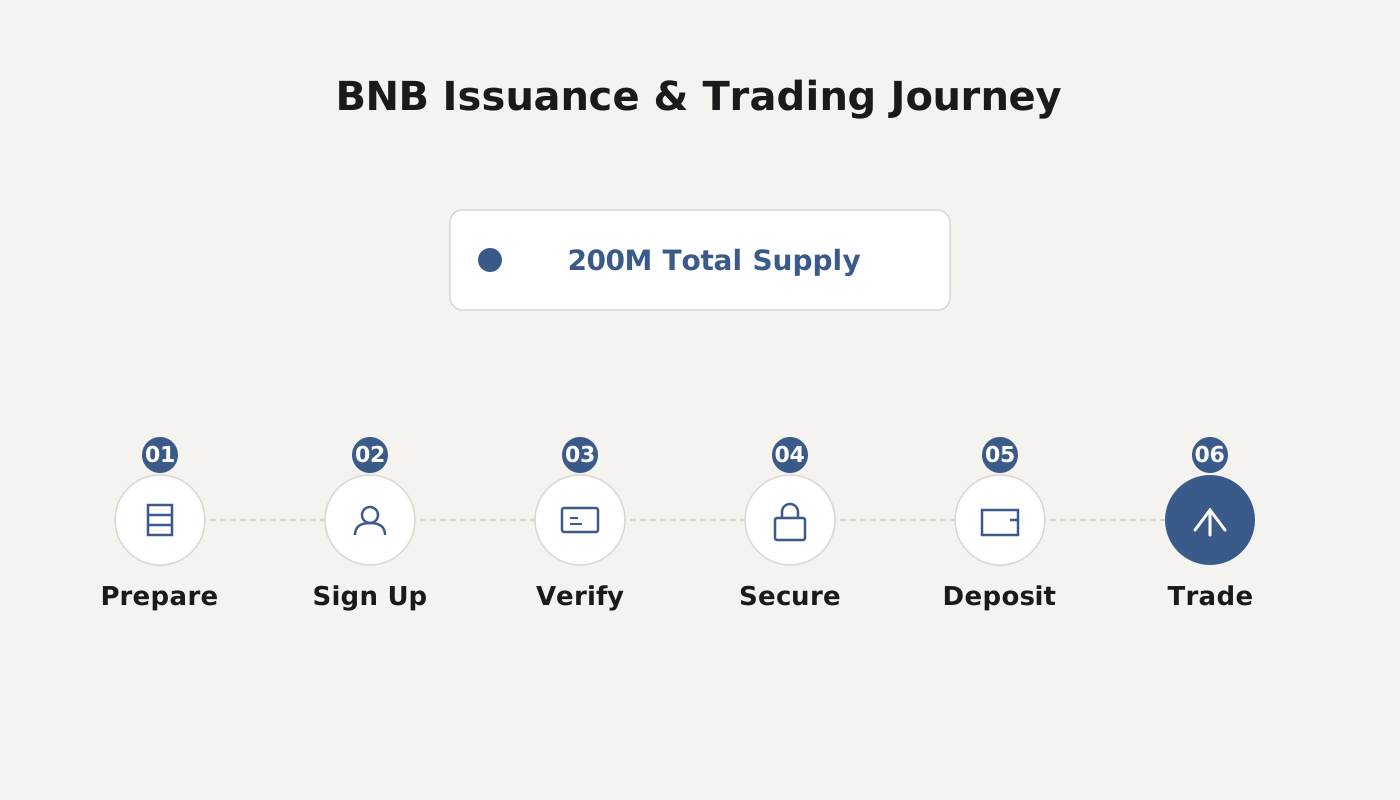
 Binance is a globally leading digital asset trading platform. The issuance price of BNB was set at 1 ETH ≈ 2,700 BNB or 1 BTC ≈ 20,000 BNB, with a total supply of 200 million tokens.
We break down Binance’s history, BNB’s issuance mechanism, and its role in the ecosystem from multiple angles to help readers quickly understand the positioning, supply structure, and holder benefits of this platform token. The article will also evaluate Binance’s core strengths, giving you a more comprehensive view—please continue reading.
How many BNB tokens were issued in total?
BNB was first offered to the public on the Binance exchange (ICO) from June 26 to July 3 2017. The issuance rules were:
- 1 ETH could be exchanged for 2,700 BNB
- 1 BTC could be exchanged for 20,000 BNB
The token was launched on the Ethereum network following the ERC‑20 standard, with a total supply of 200 million. Of this, US$100 million worth was allocated for the ICO sale. The publicly offered amount was 100 million BNB, while the remaining tokens are intended to be reclaimed later through a burn mechanism and will never be minted again.
BNB serves as the Binance platform token. Since its listing in July 2017, Binance’s rapid expansion has pushed BNB’s market capitalization to a level comparable with the combined market caps of Huobi and OKEx, making it a key pillar of the platform’s ecosystem.
Note for U.S. users: Access to Binance’s global services is available through Binance.US, which operates under separate regulatory constraints.
Tax reminder: Crypto gains may be taxable in your jurisdiction; consult a tax professional for guidance.
How does Binance fare?
1. Trading‑fee discounts
Users holding a sufficient amount of BNB enjoy the following fee discounts when paying transaction fees (discounts are expressed in the equivalent amount of BNB based on the market value at the time of payment):
| Holding period | Fee discount |
|---|---|
| Year 1 | 50% |
| Year 2 | 25% |
| Year 3 | 12.5% |
| Year 4 | 6.75% |
| Year 5 and beyond | 0% (no further discount) |
2. Buy‑back and burn mechanism
Each quarter, Binance allocates 20% of its net profit to repurchase BNB on the open market. The repurchased tokens are immediately burned. The burn progress is publicly transparent and can be tracked via blockchain explorers until the circulating supply reaches 100 million tokens.
3. Decentralized‑exchange fuel
On the Binance Decentralized Exchange (Binance DEX), BNB functions as the “fuel” for trades. Users must use BNB to pay transaction fees and to execute on‑chain operations when trading on the DEX.
4. Investment risk disclaimer
Digital assets are highly volatile. Investors should set profit‑taking and stop‑loss levels according to their own risk tolerance and avoid unnecessary losses driven by emotional swings. Proper use of stop‑loss and take‑profit tools can help achieve more rational trading decisions.
The above information addresses the questions “How does Binance perform? What was the issuance price of Binance Coin? What is the total supply of Binance BNB?” For more details about BNB, follow Bitaigen (比特根) and its upcoming articles.
Related Reading
- Step-by-Step Guide to Binance RMB Withdrawal Process
- Invest in Digital Assets on Binance: Step‑by‑Step Guide
- Binance Maintains Industry Leader Edge with $4.6B Net Inflow
💡 Register on Binance with referral code B2345 for the maximum trading fee discount. See Binance complete guide.



