
 Bitaigen Research
 In the current market, the most secure and user‑friendly combination for a USDT wallet is: a hardware wallet (such as Ledger or Trezor) for large‑amount, long‑term storage, the OKX Web3 wallet for everyday receipts and payments, and, if additional flexibility is needed, pairing it with TronLink.
When evaluating a USDT wallet, you should take into account cryptographic security, private‑key management method, safety features, user reputation, and the concrete use case. Below is a list of several verified mainstream wallets together with their strengths and the types of users they suit.
In this article we systematically sort out the security and usability fundamentals of USDT wallets, focusing on a comparative analysis of hardware wallets, OKX Web3, and TronLink in different scenarios, to help newcomers quickly identify the storage solution that fits them best. For detailed reviews and hands‑on recommendations, keep reading.
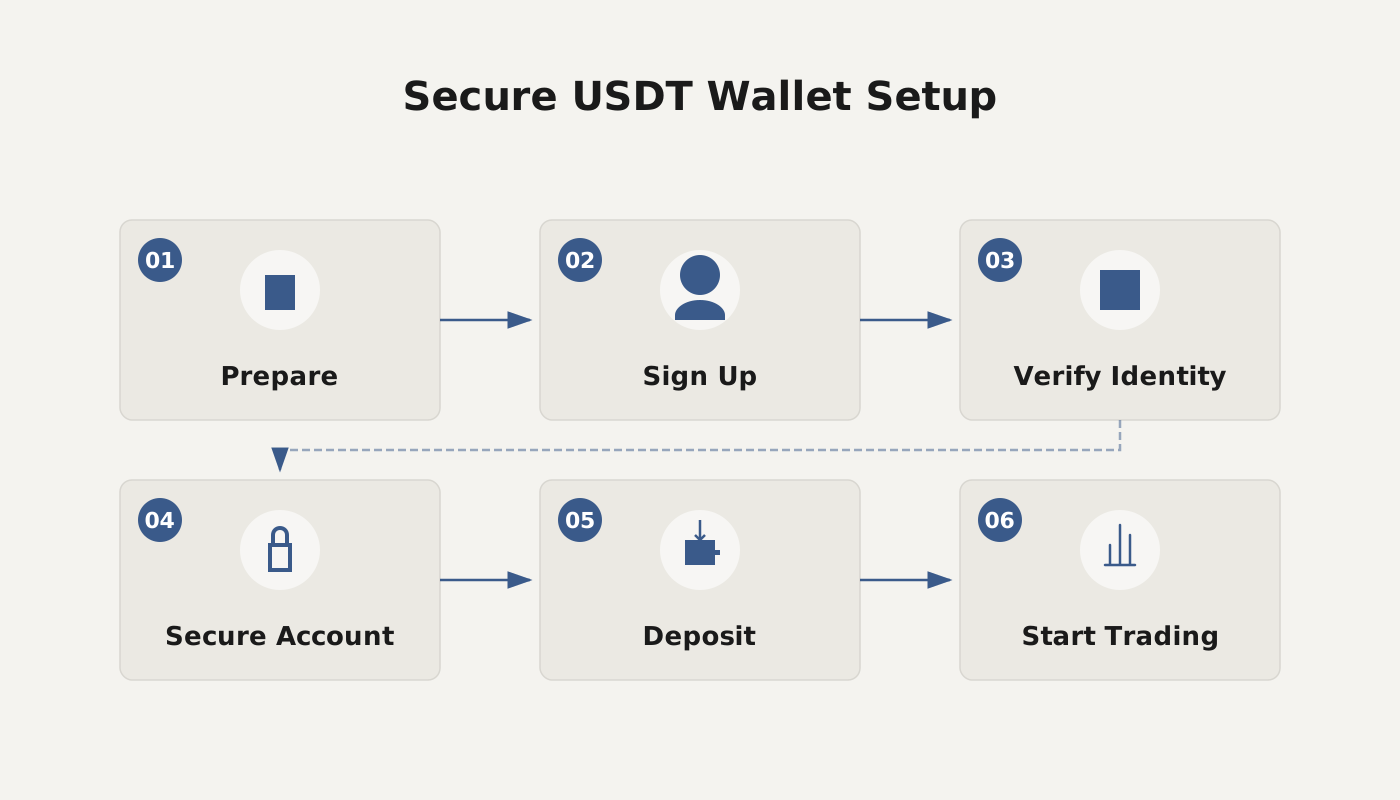
Recommendations for Exchange‑Based Wallets
- For small‑value or daily transactions, keeping USDT on a reputable exchange (e.g., Binance, OKX) is generally safer than storing it on an unknown platform.
- When the total holdings exceed USD 1 million, we recommend using the Web3 wallet offered by Binance or OKX, because these wallets are tightly integrated with the exchange, support airdrop campaigns, and are easy to manage. *(U.S. users should use Binance.US instead of the global Binance platform.)*
- If you only need to receive payments, the OKX Web3 wallet is more suitable for beginners thanks to its straightforward operation and support for a 12‑word mnemonic. If you also want to capture small yields, the Binance wallet is an acceptable alternative.
- Users who require additional on‑chain functionalities can add TronLink on top of the above setup to enable fast TRC20 asset transfers.
Why Many Users Prefer TRC20
- TRC20 transactions typically confirm in about 2 minutes, fees are low and the network is stable, making it the go‑to choice for most users.
- Different chains (e.g., BSC, ERC‑20) can be thought of as different modes of transportation; they only become useful when both parties support the same chain.
- Once you pick the appropriate chain, transfer speed and security are essentially guaranteed.
What Is TRC20
- TRC20 is the token standard on the TRON network, distinct from TRC10.
- The standard mirrors the functionality of Ethereum’s ERC20, facilitating token issuance on TRON.
- “TRC20‑USDT” refers to USDT issued under the TRC20 specification and circulating exclusively on the TRON network.
- Each TRC20 transfer consumes roughly 31 900 energy; if the wallet lacks sufficient energy, the system deducts about 14 TRX as a fee.
Wallet Categories
Hardware Wallets
- Ledger Nano S/X: Industry‑leading hardware wallets that store private keys offline with military‑grade security and support multiple blockchains, including USDT.
- Trezor One/Model T: Also renowned for high security, they support USDT and many other cryptocurrencies and offer a user‑friendly experience.
Note: These hardware wallets have limited domestic (Chinese) distribution channels and must be obtained through official overseas sellers or reputable resellers.
Software Wallets
| Wallet Name | Main Advantages | Suitable Scenarios |
|---|---|---|
| **OKX Web3 Wallet** | Balances security and ease of use; smooth receipt‑and‑payment flow | Daily receipts, transfers |
| **Binance Wallet** | Deeply linked to Binance exchange; frequent airdrop events | Combined trading and asset management *(U.S. users should use Binance.US.)* |
| imToken | Multi‑chain support, price‑alert features | Users needing cross‑chain management |
| Trust Wallet | Open‑source, multi‑currency, strong privacy protection | Privacy‑conscious users |
| MetaMask (mobile) | Clean interface, ideal for beginners | First‑time crypto asset owners |
Not recommended: Any software wallet not listed above, because its security and compatibility have not been sufficiently validated.
Web Wallets
- MetaMask (browser extension): Supports Ethereum and ERC‑20 tokens (including USDT), is convenient for trading directly from a browser. Keep in mind that web wallets rely on cloud‑based services, so their security is generally lower than that of hardware or local software wallets.
Practical Principles for Choosing a Wallet
- Asset Size: For large, long‑term holdings, prioritize a hardware wallet; for everyday small‑value transactions, a software or web wallet is sufficient.
- Usage Frequency: Users who send and receive funds frequently should opt for a mobile or Web3 wallet with an intuitive UI and easy mnemonic management.
- Security Measures: Regardless of wallet type, regularly update the client software, use strong passwords, enable two‑factor authentication (2FA), and back up your mnemonic phrase securely.
Conclusion
No wallet can claim absolute security. When selecting a USDT wallet, users must weigh their personal needs, the size of their holdings, and their technical comfort level, evaluating both safety and convenience while staying vigilant against phishing sites, malware, and other risks. By thoughtfully combining hardware, software, and web wallets, you can achieve an optimal balance between protection and user experience.
*Please note that cryptocurrency gains may be taxable in your jurisdiction; consult a local tax professional for guidance.*
Related Reading
- imKey Wallet: EAL6+ Military-Grade Security & Offline Keys
- Top Tips to Secure Your Cryptocurrency Wallet in 2024
- Top 10 Crypto Wallets 2024: Multi‑Chain & Custodial
💡 Register on Binance with referral code B2345 for the maximum trading fee discount. See Binance complete guide.



