
 Bitaigen Research
 EVM wallets do not refer to a single specific product; they encompass any wallet capable of operating on the Ethereum Virtual Machine (EVM). As long as a wallet supports the creation, invocation, and management of Ethereum contracts, it can be called an EVM wallet. Several widely‑used products that implement this functionality include:
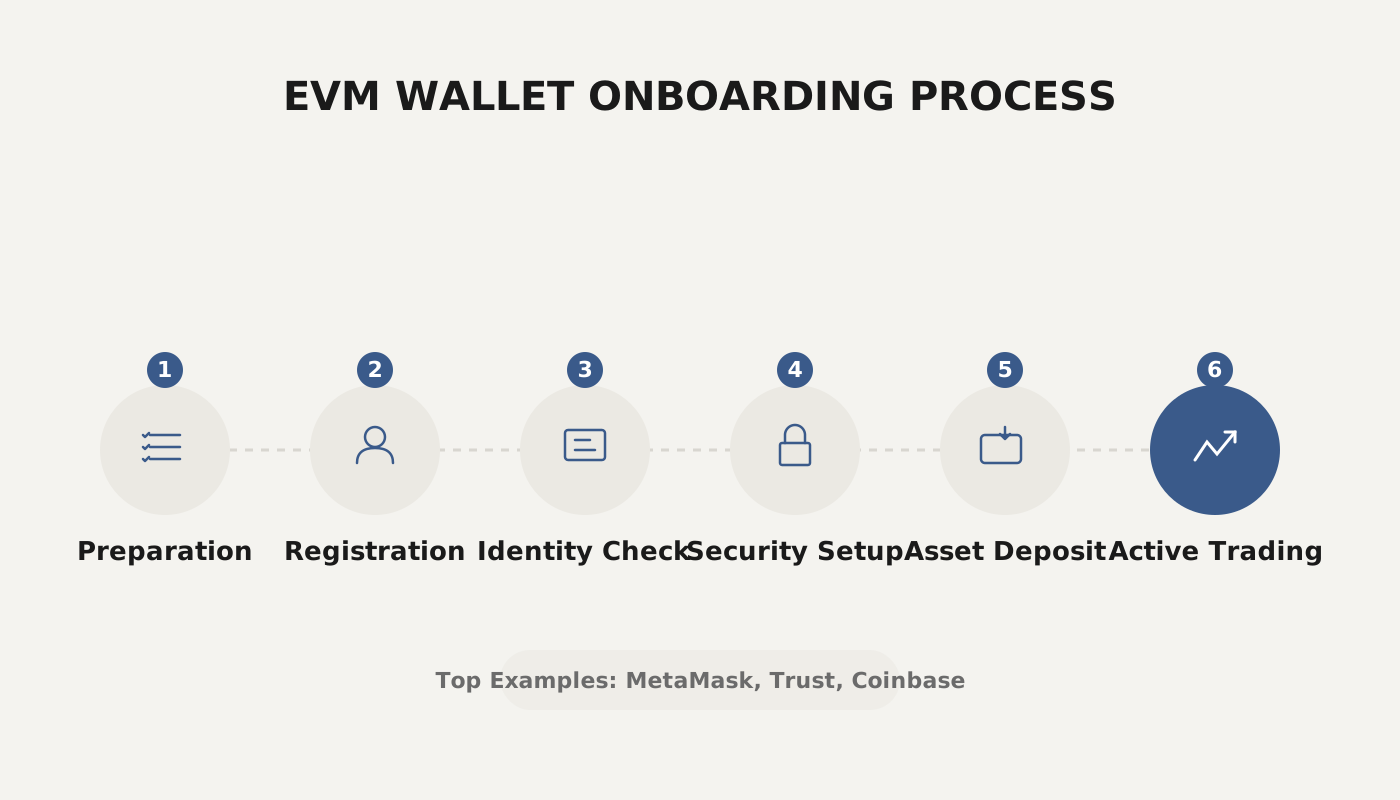
- MetaMask: Runs as a browser extension, requiring no additional download, and supports major browsers such as Chrome, Firefox, and 360. It is convenient to use and consumes very little system resources.
- Trust Wallet: A mobile‑first multi‑chain wallet that includes built‑in price tracking and cross‑chain asset management, allowing users to view and trade a variety of tokens at any time.
- Ledger: An offline hardware wallet built around a secure chip; the private key is stored inside the device and must be paired with the appropriate software to sign and broadcast transactions, offering a very high level of security.
Although these wallets differ in specific features, they share the ability to generate and use addresses that conform to Ethereum standards, enabling asset transfers, smart‑contract interactions, and other operations within an EVM environment.
In this article we outline the concept and core functions of EVM wallets, compare mainstream products such as MetaMask, Trust Wallet, and Ledger, and help you quickly identify which wallets truly support Ethereum contract operations. We also explain how addresses are generated and what use‑cases they serve. For a deeper dive into securely managing your assets, keep reading.
What Is an EVM Wallet Address?
On the Ethereum network each account is identified by a unique identifier—the EVM wallet address. The address consists of 42 characters, typically beginning with 0x followed by 40 hexadecimal characters, for example `0x1a5FdBc891c5D4E6aD68064Ae45D43146D4F9f3a`. It functions like a bank account number in the blockchain world, used to receive and send Ether as well as any token built on ERC standards.
The address is not entered manually; it is derived automatically through a series of cryptographic operations: the user first obtains a random private key, then uses the elliptic‑curve algorithm to derive the public key, applies a Keccak‑256 hash to the public key, and finally takes the last 20 bytes of that hash to form the network‑recognizable address. The entire process can be completed offline, which enhances private‑key security and protects user privacy.
EVM wallet addresses play several critical roles within the Ethereum ecosystem:
- Asset Reception – All ERC‑20, ERC‑721 and similar tokens can be sent directly to the address.
- Smart‑Contract Interaction – By specifying a contract’s address in a transaction, a user can call contract functions or trigger on‑chain business logic.
- Participation in DeFi and DApps – The address enables users to deposit, borrow, trade, and perform other activities on decentralized finance platforms.
- Digital Identity – Some applications treat the address as the user’s on‑chain identity for login or permission verification.
- Querying and Auditing – Entering the address into a block explorer reveals the current balance, transaction history, and any interactions with contracts.
Note: Crypto gains may be subject to taxation in many jurisdictions. Users should consult local tax regulations and consider reporting any realized profits in accordance with applicable laws.
Summary
An EVM wallet address is an automatically generated, uniquely identifying string that is tightly bound to a private key on the Ethereum network. Whether created through MetaMask, Trust Wallet, Ledger, or any other compatible tool, the address format remains consistent across Ethereum and its derivative chains. Users must safeguard their private keys, because possession of the key equates to full control over all assets associated with the address. By using a block explorer or the corresponding wallet application, one can constantly monitor the address’s asset balance and trace its transaction history, thereby supporting transparent and secure on‑chain operations.
Related Reading
- MimbleWimble Privacy Coins: Beam Technical Review & Ecosystem
- Hive Token: Fast, Fee‑Free Blockchain & Future Outlook
- NFTs Explained: Core Concepts, Tech, and Real-World Value
💡 Register on Binance with referral code B2345 for the maximum trading fee discount. See Binance complete guide.



