
 Bitaigen Research
 As Hong Kong officially opens applications for virtual‑asset trading platform licences, the market now hosts both licensed and unlicensed cryptocurrency exchanges targeting Hong Kong users. This article focuses on the HashKey Exchange, systematically outlining its corporate profile, regulatory status, security measures, fee structure, geographic coverage, and the platform’s strengths and weaknesses, helping readers form a comprehensive understanding.
We dissect HashKey from regulation and asset custody to trading functionality, giving you a quick assessment of its safety and fee model. By objectively evaluating the platform’s core highlights and potential drawbacks, you can make a more rational choice when selecting a Hong Kong‑licensed exchange. Read on for the details.
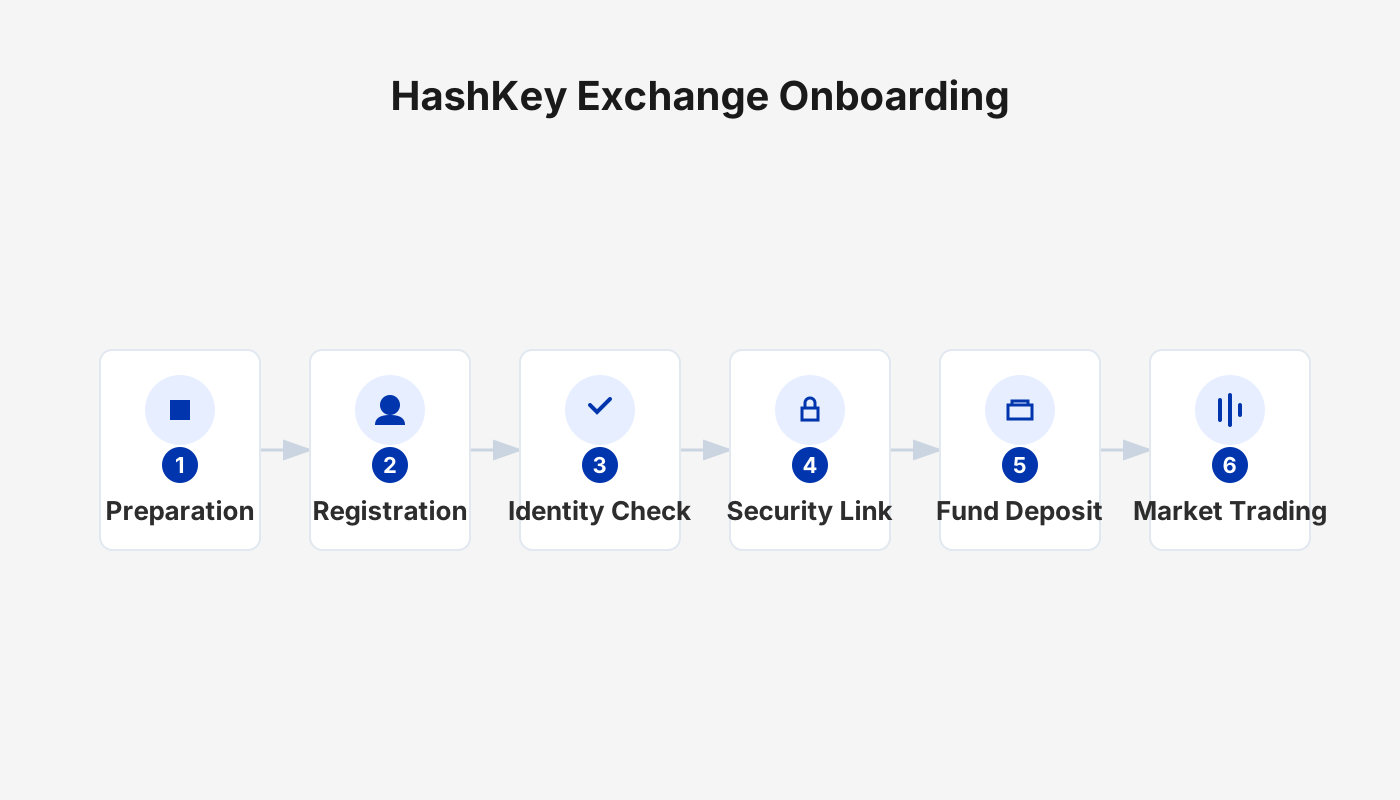
2. Core Features and Fee Overview
1. Key Functional Highlights
- Fiat Corridors: HashKey partners with local commercial banks (including Standard Chartered) to open USD and HKD deposit/withdrawal channels, supporting bank transfers from 16 countries worldwide via SEPA/SWIFT.
- Licensed Custody & Asset Insurance: Holds the Hong Kong Securities and Futures Commission (SFC) Class 1 (securities trading) and Class 7 (automated trading services) licences, uses an independent licensed custody system, and has introduced ON Insurance (AIA) to cover assets held in cold and hot wallets. The initial coverage amount is roughly USD 500 million.
- Authoritative Audits: The platform undergoes regular audits by Big‑Four accounting firms (KPMG, PwC, EY, etc.), meeting international best‑practice standards for compliance and security.
These characteristics enable HashKey to operate 24 hours a day while satisfying stringent KYC and AML requirements imposed by regulators.
2. Fee Structure
| Item | Fee Details |
|---|---|
| Spot‑trade maker fee | 0 % |
| Spot‑trade taker fee | 0 % (waived during promotional periods) |
| Custody fee (per USD million) | 0–250 k: free; above 250 k: free / to be announced |
| Fiat deposit | Free (wire transfers via SEPA/SWIFT may incur ~ 30 USD intermediary bank fee) |
| Fiat withdrawal | Free (wire transfers via SEPA/SWIFT may incur ~ 30 USD intermediary bank fee) |
| Crypto deposit | Free (only on‑chain network fee applies) |
| Crypto withdrawal | 0.00010 BTC / 0.008 ETH / 13.1 USDT (ERC‑20) |
Note: Fee policies are subject to change through official announcements; users are encouraged to monitor the platform’s updates regularly.
3. Geographic Availability
Countries/Regions where account opening is supported
Hong Kong, Macau, Taiwan, Australia, United Arab Emirates, Austria, Belgium, Canada, Ireland, Israel, Italy, Norway, Portugal, Singapore, Spain, Sweden, Switzerland, United Kingdom, United States (only U.S. bank cards are accepted; U.S. government‑issued ID is not accepted).
Users who hold a Hong Kong ID card, can provide proof of a fixed residence, and have a Hong Kong bank account can complete the onboarding process smoothly.
Countries/Regions where account opening is restricted
Russia, Afghanistan, Angola, Burundi, Belarus, Republic of Congo, Central African Republic, Côte d’Ivoire, Cuba, Eritrea, Ethiopia, Guinea, Guinea‑Bissau, Haiti, Iraq, Iran, North Korea, Lebanon, Liberia, Libya, Mali, Myanmar, Nicaragua, Rwanda, Sudan, Sierra Leone, Somalia, Syria, Ukraine, Venezuela, Yemen, South Africa, Zimbabwe, South Sudan, and others are not accepted for identity verification.
In addition, phone numbers from the following territories cannot be used for registration: Mainland China, Chinese Taiwan, American Samoa, Bangladesh, Algeria, Egypt, Guam, Morocco, Malaysia, Puerto Rico, Northern Mariana Islands.
Important for U.S. users: If you are a U.S. resident, you must use Binance.US (the U.S.‑specific platform) for fiat on‑ramps; the global Binance service is not available to U.S. customers.
3. Regulatory Licences and Compliance
HashKey was among the first institutions in Hong Kong to obtain a retail virtual‑asset exchange licence, holding a TCSP licence (certificate No. TC006486) and subject to periodic SFC inspections. On 3 August 2023, the SFC approved an upgrade of its existing Class 1 and Class 7 licences to enable retail crypto‑asset trading, and the platform was simultaneously rebranded as HashKey Exchange (formerly HashKey Pro).
Securing this licence obliges the platform to meet rigorous standards for fund segregation, transaction transparency, and client protection, thereby enhancing overall credibility.
4. Security Architecture
1. Cold‑ and Hot‑Wallet Segregation
HashKey publicly states that 98 % of user assets are stored in offline cold wallets, with only 2 % allocated to hot wallets for day‑to‑day trading, substantially reducing exposure to hacking attempts.
2. Licensed Custody & Asset Insurance
User funds are placed in separate, independent accounts, ensuring a clear split between client assets and the exchange’s operating capital. The licensed custody system undergoes routine SFC inspections, and ON Insurance provides coverage of 50 % for cold‑wallet assets and 100 % for hot‑wallet assets, with an initial insured amount of roughly USD 500 million.
3. Authoritative Audits
Each year the platform is audited by one of the Big‑Four firms, covering custody practices, compliance procedures, and financial statements, guaranteeing that operations align with international best practices.
4. Security Recommendations (User‑Side)
- Enable Google Two‑Factor Authentication (2FA) to block the vast majority of attacks.
- Set a withdrawal whitelist, allowing transfers only to pre‑registered addresses.
- Verify the official website domain to avoid phishing sites (e.g., “binance‑co.com” masquerading as Binance).
- Never disclose login credentials to anyone, including platform support staff.
5. Corporate Background and Development Timeline
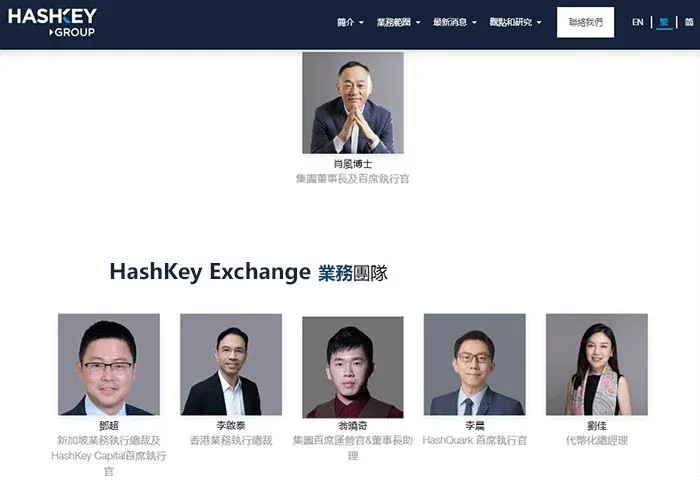
HashKey Digital Asset Group Limited was founded in 2018, headquartered in Hong Kong with branches in Singapore and Japan. The group’s activities span crypto trading, blockchain technology, and Web 3.0 ecosystems, primarily serving institutional investors and qualified individuals.
- Founder / CEO: Dr. Xiao Feng, currently Vice Chairman of Wanxiang Holdings and Chairman of its blockchain business, former co‑founder and Vice Chairman of Bosera Funds, with over 25 years of experience in securities and asset management.
- HashKey Capital CEO: Deng Chao (邓超) disclosed that the team is distributed across Hong Kong, Singapore, and the San Francisco Bay Area, managing assets exceeding USD 1 billion and investing in roughly 300 projects.
On 28 August 2023, the platform opened four spot‑trading pairs to retail users: BTC/USDT, ETH/USDT, BTC/USD, and ETH/USD.
6. Account Creation and Deposit Process
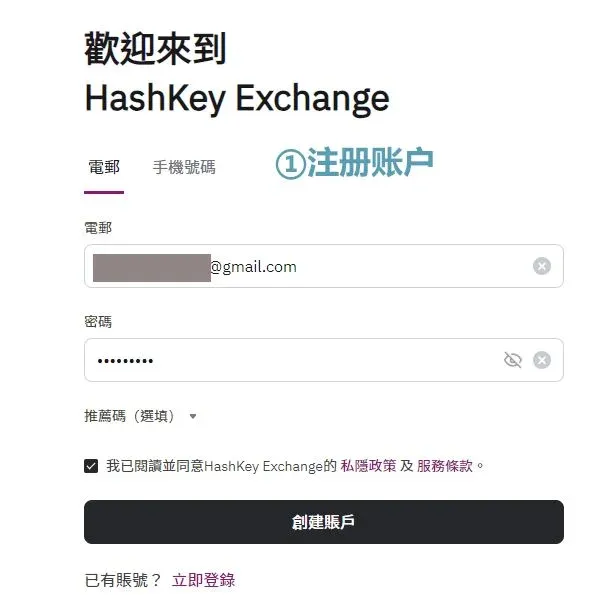
1. Register an Account
- Visit the official HashKey Exchange website and complete the initial sign‑up using an email address or mobile number.
- The system sends a six‑digit verification code to the registered email; entering it completes email verification and grants access to the dashboard.
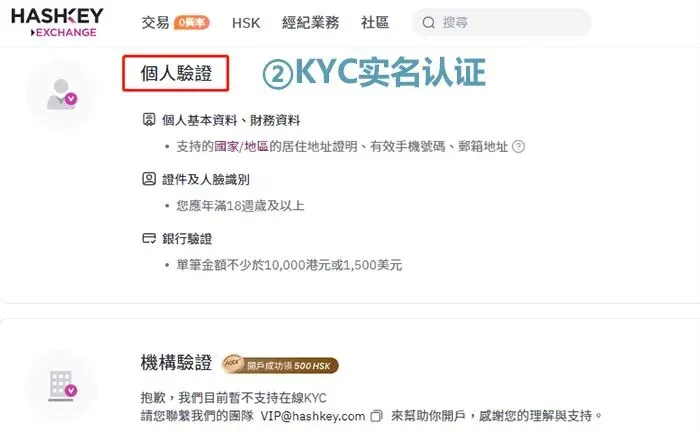
2. KYC (Know‑Your‑Customer) Real‑Name Verification
The platform checks whether the user’s jurisdiction is supported and requires the following documents:
- Identity document (passport or national ID)
- Proof of residential address
- Facial‑recognition photograph
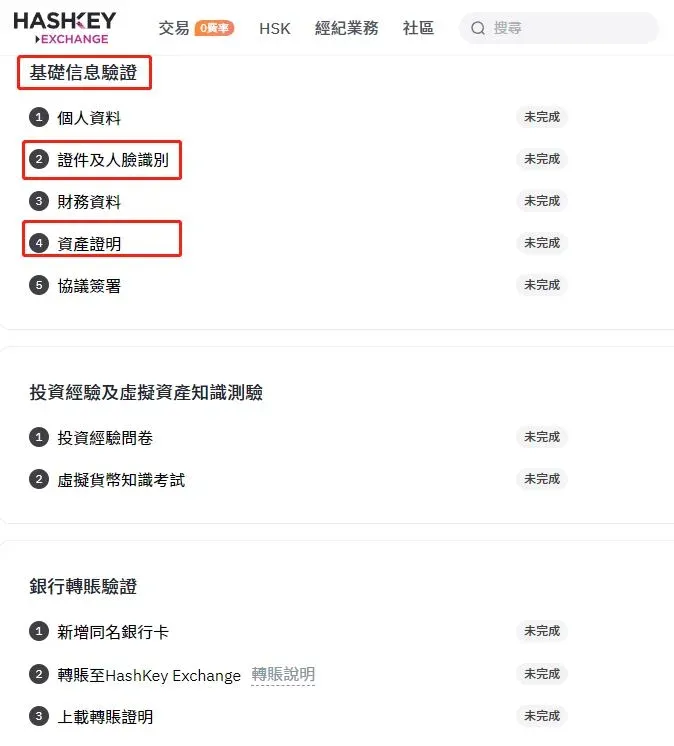
The verification process is divided into three parts: basic information validation, investment‑experience and crypto‑knowledge assessment, and bank‑transfer verification. Completing the first two steps unlocks basic platform functionality; full fiat deposit capability requires the bank‑transfer verification to be finished.
Basic Information Validation includes
- Personal details
- Document upload and facial‑recognition match
- Financial information
- Income or asset proof
- Signing of compliance agreements
3. Fiat Deposit / Withdrawal
Deposit: The minimum first‑time deposit is USD 1,500 or HKD 10,000. Users must first link a bank account that matches the account holder’s name, complete the wire transfer, and upload the transfer receipt for verification.
Withdrawal: Submit a withdrawal request through the dashboard. Individual daily withdrawal limits range from USD 100,000 to USD 300,000, while corporate accounts enjoy limits between USD 500,000 and USD 900,000.
Tax reminder: Crypto‑related gains may be taxable in your local jurisdiction; consult a tax professional to understand your obligations.
7. Comprehensive Assessment: Strengths and Weaknesses
| Strengths | Weaknesses |
|---|---|
| ✅ Holds Hong Kong regulatory licences, strong compliance | ❌ KYC process is lengthy and document‑heavy |
| ✅ Supports USD and HKD fiat deposits/withdrawals | ❌ Spot market limited to only BTC and ETH |
| ✅ Licensed custody plus insurance, high security rating | ❌ Users from several countries cannot register |
| ✅ Zero trading fees during promotional periods |
Quick Takeaway
HashKey’s core competitive edge lies in regulatory licensing and asset protection. Operating under a supervised framework, it offers fiat corridors and insurance coverage, making it suitable for investors who prioritize fund safety and plan to hold Bitcoin or Ethereum over the long term. Conversely, the platform’s limited range of tradable assets and relatively cumbersome onboarding may steer users seeking multi‑coin trading, staking, lending, or leveraged products toward more feature‑rich exchanges (e.g., OKX).
---
The above provides a systematic overview of HashKey Exchange’s background, regulatory standing, technical security, fee schedule, regional coverage, and user workflow for interested readers.
Related Reading
- HashKey Exchange Guide: Register, Fund & Withdraw
- BTCC vs Pionex: Which Crypto Exchange Is Better?
- Safest Ways to Buy USDT: Private Key, Fees & Risks
💡 Register on Binance with referral code B2345 for the maximum trading fee discount. See Binance complete guide.



