
 Bitaigen Research
 When selecting a cryptocurrency trading platform, users usually weigh liquidity, product depth, ecosystem development against security and compliance. OKX and Binance are both among the world’s top‑ranked exchanges, but each emphasizes different strengths. The multi‑angle assessment below helps you decide which platform aligns better with your own trading needs.
We compare OKX and Binance across four major dimensions—liquidity, product depth, ecosystem layout, and security/compliance—to give you a quick way to identify which exchange better fits your personal requirements. The following sections break down the key differences in detail, so keep reading.
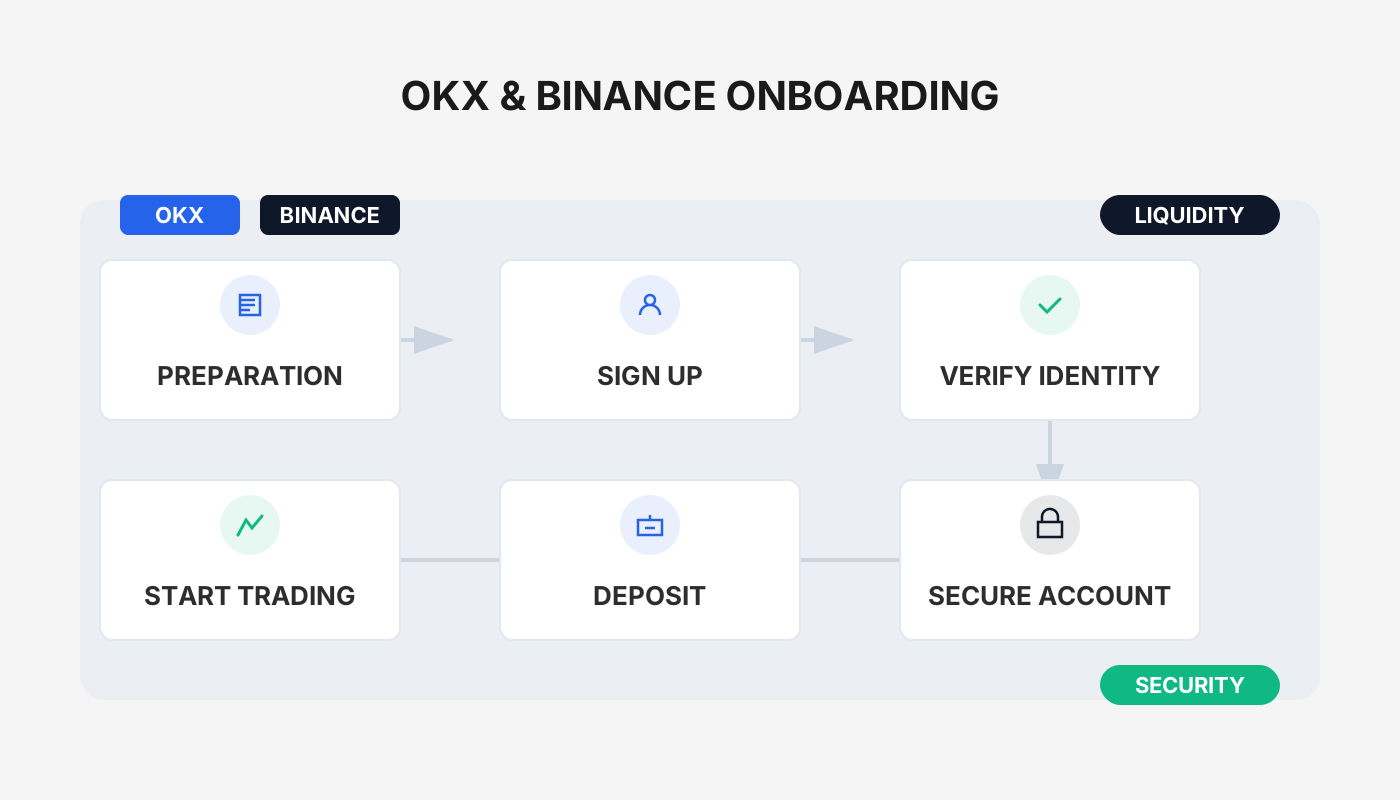
1. Basic Overview Comparison: OKX vs Binance
| Comparison Item | OKX | Binance |
|---|---|---|
| Founded | 2017 (originally OKEx) | 2017 |
| Headquarters | Seychelles, Malta (globally distributed operations) | Operates in many regions worldwide |
| Global Trading‑Volume Rank | Consistently in the top 5 | #1 globally (about twice the volume of the second‑largest) |
| Active Users | Tens of millions | Over 300 million (2025 data) |
| Native Token | OKB | BNB |
| Core Positioning | Derivatives‑trading specialist, Web3 ecosystem gateway | All‑category trading giant, global payments network |
2. Core Feature Depth Comparison
1. Spot Trading
- Binance: Offers more than 1,000 digital assets and over 2,000 trading pairs, backed by the world’s deepest liquidity and very low slippage.
- OKX: Supports over 500 assets and 1,000+ pairs; liquidity also ranks within the top 5, though depth for some niche coins can be more limited.
- Common Ground: Both platforms provide crypto‑to‑crypto, fiat‑on‑ramp (OTC), and up‑to‑10× leveraged spot trading, with basic order types such as limit, market and stop‑loss.
2. Derivatives Trading (Key Differentiator)
| Feature | OKX | Binance |
|---|---|---|
| Perpetual Contracts | Supports USD‑margin and coin‑margin, up to 125× leverage, uses an ADL (Adaptive Liquidation) mechanism that preserves hedging opportunities during liquidation | Also supports USD‑margin and coin‑margin, up to 125× leverage, equipped with a “smart liquidation” feature that does **not** allow hedging during liquidation |
| Futures (Delivery) Contracts | Weekly, monthly, quarterly and bi‑quarterly contracts covering a broader set of niche tokens | Focuses mainly on mainstream tokens; fewer contract varieties |
| Options | Standard options + short‑dated options, geared toward institutions and advanced users | Standard options + a simplified short‑dated version that is more beginner‑friendly, though transparency is somewhat limited |
| Specialty Products | Leveraged tokens, volatility contracts, mixed‑margin products | Leveraged tokens, prediction markets, Binance Earn (formerly “Binance Gold”) |
| Advanced Order Types | Iceberg, TWAP (Time‑Weighted Average Price), other professional‑grade orders | Primarily basic orders; advanced functions are fewer |
OKX offers a richer toolbox and more flexible liquidation logic for contract traders, making it attractive for strategy‑driven users. Binance, on the other hand, emphasizes ease of use and a lower barrier to entry.
3. Web3 Ecosystem Development
- OKX: Launched the OKX Wallet, which bundles DeFi, NFT and DApp interactions into a single interface, delivering a one‑stop entry to Web3 and a strong DEX experience.
- Binance: Built the Binance Smart Chain (BSC), now a massive DeFi ecosystem; Binance Pay boasts over 41.7 million users (2024) and supports a wide variety of payment scenarios.
- Common Ground: Both platforms provide staking, lending, “Earn”‑style yield products, and support NFT marketplace trading.
4. Other Signature Features
- Binance: Binance Pay (global payments), Binance Card (crypto‑linked debit card), Binance Launchpad (project token sales), Binance Labs (investment and incubation).
- OKX: OKX Ventures (investment arm), OKX Protect (nine‑layer security framework), more comprehensive API suite that appeals to quantitative traders.
Extended Tutorials
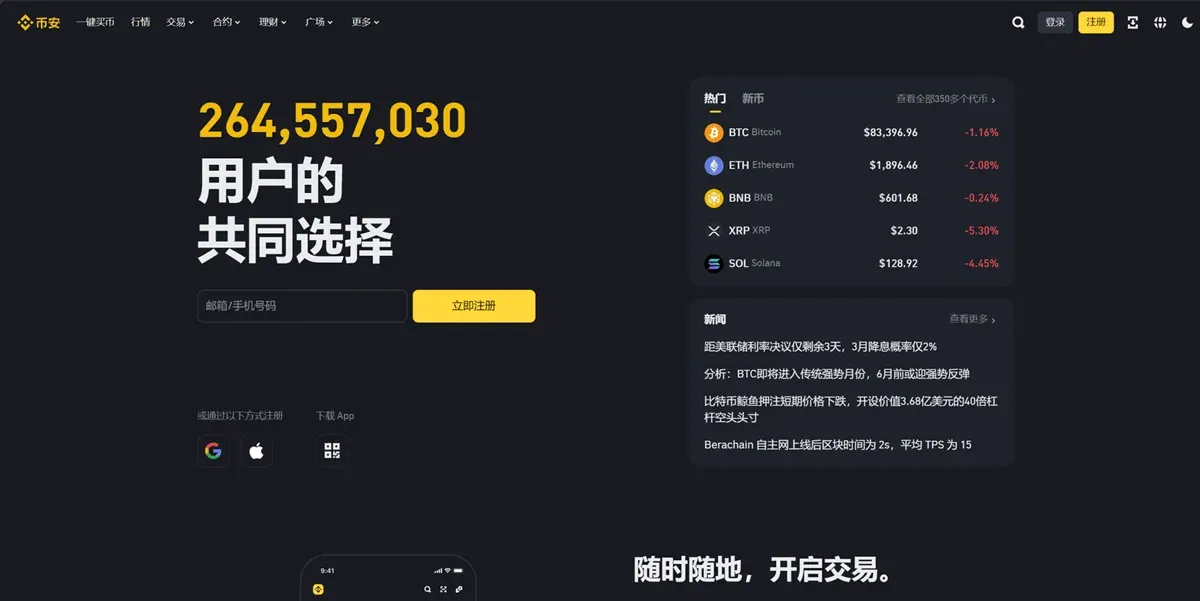
- 2025 Complete OKX Account Registration + KYC Illustrated Guide
- OKX iOS App Download & Installation Walk‑through
- Step‑by‑step Guide to Funding OKX via WeChat
- Full Bitcoin Purchase Process (using OKX as an example)
- How to Withdraw USDT from OKX to a bank card (practical demo)
3. Fee Structure Comparison (2026 Update)
1. Spot Trading Fees
| User Tier | OKX (OKB Discount) | Binance (BNB Discount) |
|---|---|---|
| Regular | Maker 0.16 %, Taker 0.18 % | Maker 0.10 %, Taker 0.10 % |
| VIP 1 | Maker 0.15 %, Taker 0.17 % | Maker 0.09 %, Taker 0.09 % |
| Highest VIP | Maker 0.02 %, Taker 0.05 % | Maker 0.015 %, Taker 0.015 % |
2. Futures/Derivatives Fees
- OKX: Maker 0.02 %–0.05 %, Taker 0.05 %–0.07 %; funding rates are relatively stable.
- Binance: Maker 0.02 %–0.04 %, Taker 0.04 %–0.06 %; funding rates show slightly larger fluctuations.
- Common Ground: Both platforms allow native token (OKB/BNB) discounts up to 50 %; the larger your 30‑day trading volume, the lower the fee tier.
3. Other Costs
- Withdrawal Fees: Both charge a fixed network fee per coin; for major assets like BTC and ETH the fees are essentially identical.
- Fiat Deposit: OTC trades are fee‑free; using third‑party payment processors (e.g., credit cards, SEPA, SWIFT) may incur additional charges.
- Leverage Interest: OKX’s daily borrowing rate sits around 0.01 %–0.02 %, a touch lower than Binance’s.
Extended Tutorials
- 2026 Guide for Domestic Users to Register on Binance
- Binance App Download & Installation (Android / iOS)
- Practical Walk‑through for Selling USDT on Binance
- Detailed Steps to Deposit USDT into the Binance App
4. Security and Risk‑Control Comparison
1. Major Security Incidents – A Brief History
- Binance: In 2019 the exchange lost 7,000 BTC (≈ US $40 million) to a hack; the SAFU (Secure Asset Fund for Users) covered the full loss. In 2025 a ransomware attempt was reported but caused no actual financial damage.
- OKX: In 2020 withdrawals were temporarily paused due to an investigation of the founder—*not* a security breach. No major hacks have been reported; the platform introduced “OKX Protect”, publicly outlining nine security mechanisms.
2. Risk‑Control Framework
- OKX: Maintains a minimum margin requirement of just 0.5 %, employing a more scientific liquidation model that triggers early liquidation at roughly 10 % of a position under extreme market stress. Offers a suite of advanced risk‑control parameters.
- Binance: Uses higher margin thresholds; early liquidation can affect up to 50 % of a position in extreme conditions, but the exchange backs its risk engine with a $1 billion risk‑reserve fund.
- Common Ground: Both keep over 95 % of user assets in cold storage, employ multi‑signature wallets, and enforce two‑factor authentication (2FA) among other industry‑standard safeguards.
5. User Experience and Customer Support
1. Interface & Interaction
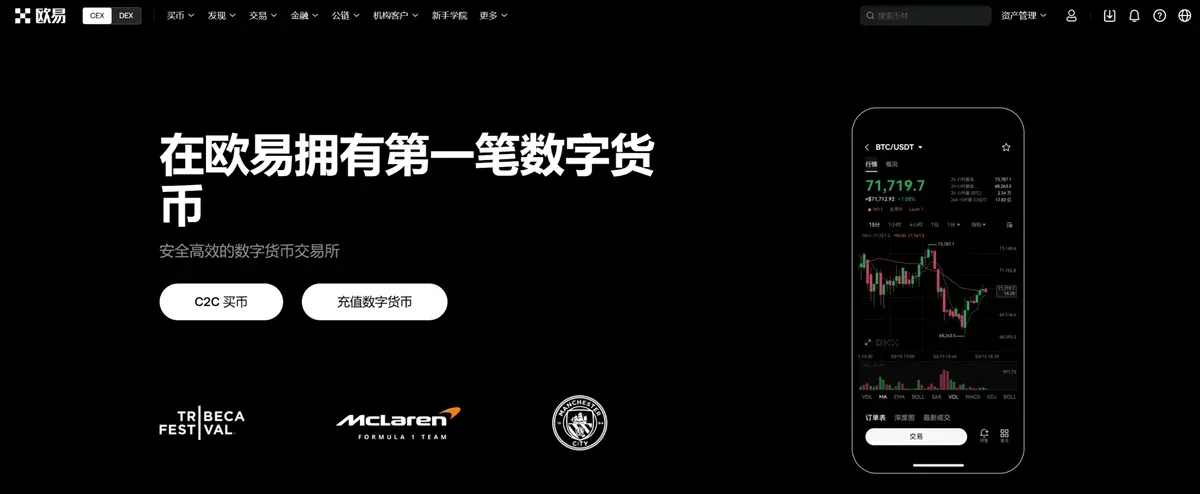
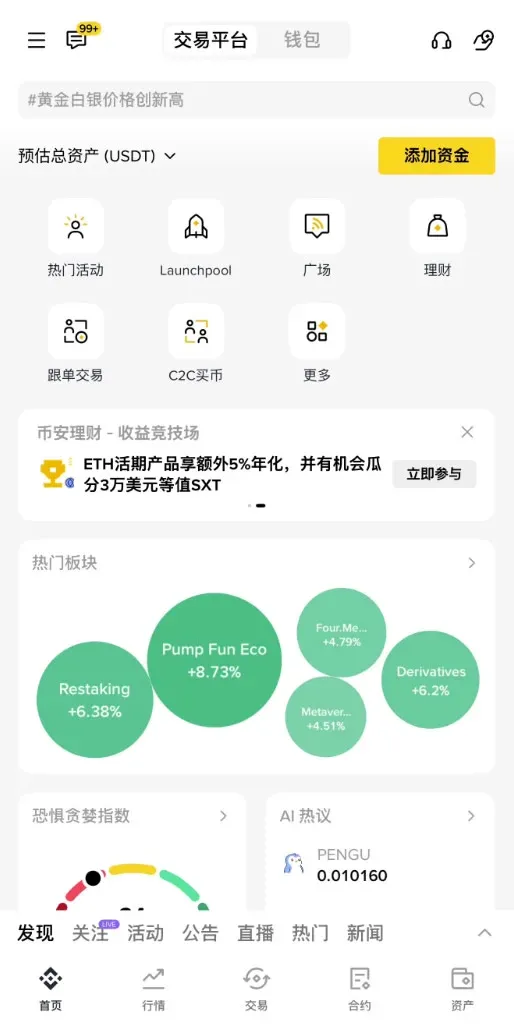
- Binance: Clean layout, intuitive navigation, and a smooth mobile‑app experience that is especially welcoming to newcomers.
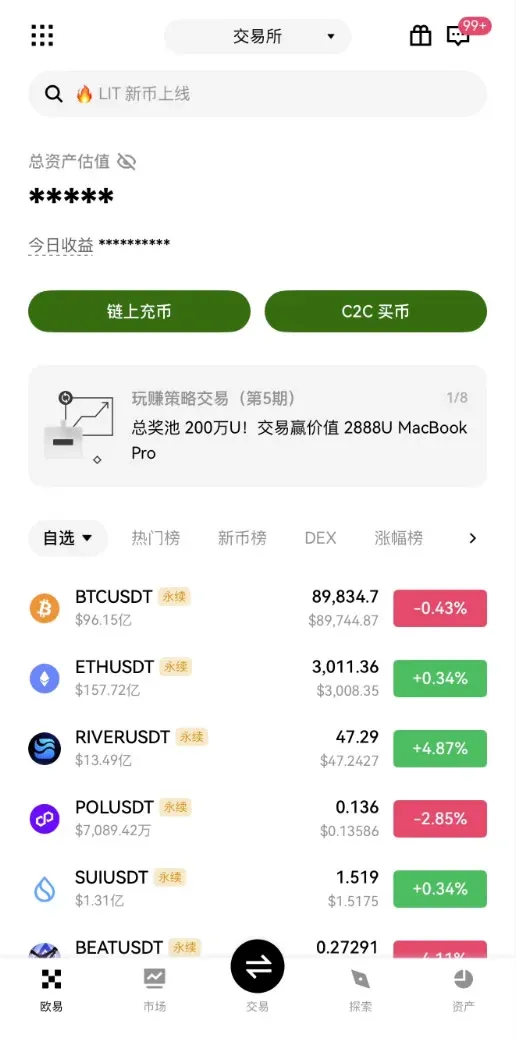
- OKX: More feature‑dense pages that cater to users with existing trading knowledge; beginners may need to invest extra time to become familiar with the interface.
2. Customer Service & Support
- Binance: 24/7 multilingual support, average response time around 15 minutes, extensive knowledge‑base articles.
- OKX: Also offers 24/7 Chinese‑language support, average response time about 30 minutes, with technical staff focusing more on complex trading‑related queries.
3. Deposit & Withdrawal Experience
- Binance: Wide fiat‑on‑ramp coverage; Binance Pay supports over 200 countries, delivering fast deposit/withdrawal speeds.
- OKX: Deep OTC liquidity, supports nine major cryptocurrencies and six stablecoins; employs 13 distinct risk‑control models, emphasizing deposit safety.
Comprehensive guide for withdrawing from OKX to WeChat, Alipay or a bank card
Step‑by‑step tutorial for funding the Binance App with USDT
6. Compliance & Regulatory Landscape
1. Licensing Footprint
- Binance: Holds compliance licences in more than 30 countries and jurisdictions (e.g., United Arab Emirates, Bahrain, France). In the United States the platform operates only through Binance.US, a separate entity that complies with U.S. regulations.
- OKX: Possesses licences in over 20 countries, but does not provide services to U.S. or mainland Chinese residents. In 2025 OKX partnered with a domestically licensed financial institution to launch digital‑RMB‑related services.
2. Compliance Measures
Both exchanges enforce rigorous KYC (Know‑Your‑Customer) procedures, maintain robust AML (Anti‑Money‑Laundering) systems, and adhere to the FATF Travel Rule.
Tax Note: Cryptocurrency gains may be taxable in your local jurisdiction. Consult a qualified tax professional to understand your reporting obligations.
7. Target Audiences & Selection Guidance
1. Scenarios Where Binance May Be the Better Fit
- ✅ Beginners – Friendly UI and low learning curve.
- ✅ Spot‑focused traders – World‑leading liquidity and minimal slippage.
- ✅ Cross‑border payments – Binance Pay’s extensive global coverage.
- ✅ Broad token selection – Access to a larger array of long‑tail and newly listed assets.
2. Scenarios Where OKX May Be the Better Fit
- ✅ Professional derivatives traders – Full‑range contracts and flexible ADL liquidation.
- ✅ Deep Web3 users – Integrated wallet, seamless DeFi/NFT/DApp access.
- ✅ Institutions or quant traders – Rich API, support for iceberg, TWAP and other advanced order types.
- ✅ High‑risk‑control requirements – Low margin rates and a more scientific liquidation engine.
3. General Reference Points
- Open accounts on both platforms, run a small‑scale test with modest funds, and then decide which one becomes your primary venue.
- For large holdings, consider diversification; avoid keeping more than 50 % of your total crypto portfolio on a single exchange.
- Long‑term holders might keep a portion of their assets in the native token (OKB or BNB) to enjoy fee discounts and potential token appreciation.
- Keep an eye on the latest regulatory updates; prioritize services that hold a local licence in your country or region.
8. Conclusion
Both OKX and Binance rank among the world’s premier crypto exchanges, each with its own emphasis. Binance leverages sheer scale, liquidity, and user‑friendliness, making it a solid choice for the majority of retail investors. OKX distinguishes itself with deeper derivatives tools, a more granular risk‑control framework, and a comprehensive Web3 ecosystem, appealing to advanced traders and institutional participants.
When choosing a platform, weigh your own trading style, risk tolerance and the specific use‑cases you need (spot vs. derivatives, leverage, Web3 integration, etc.). In many cases, operating on both exchanges can let you capture the strengths of each.
If you share your trading preferences (spot vs. derivatives ratio, trading frequency, leverage usage, interest in Web3), I can help you fine‑tune a personalized exchange‑selection and fee‑optimization plan.
That completes the full article “OKX vs Binance Comprehensive Review: How to Choose the Exchange That Suits You Best.” For more comparative analysis, follow Bitaigen and its related columns.
Related Reading
- OKX On‑Chain Deposit & Withdrawal Guide (Assets Page)
- 2026 Binance Registration Guide for Mainland China Traders
- Claim Up to $50 USDT on OKX: Download, Register & KYC
💡 Register on Binance with referral code B2345 for the maximum trading fee discount. See Binance complete guide.



