 Bitaigen Research
In this article we outline the origin, technical evolution, and core role of BNB within the Binance ecosystem, and we break down the most common acquisition channels and future price trends. By deeply analysing the burn mechanism and on‑chain functionalities, we help you comprehensively assess BNB’s value potential. Subsequent sections will provide more detailed operational guidance and forecast outlooks.
Binance Coin (BNB) Overview
BNB was initially issued as an ERC‑20 token by the Binance exchange through an ICO on July 26 2017. At launch the total supply was 200 million tokens, with the project team holding 40 %, angel investors 10 %, and the remaining 50 % sold to the public at a price of 0.15 USDT each. In April 2019 Binance launched its own blockchain, Binance Chain (BC). The original ERC‑20 BNB was then migrated on a 1:1 basis to the BEP‑2 standard, becoming the native token of Binance Chain and the later Binance Smart Chain (BSC). It is also used to pay transaction fees on those chains.
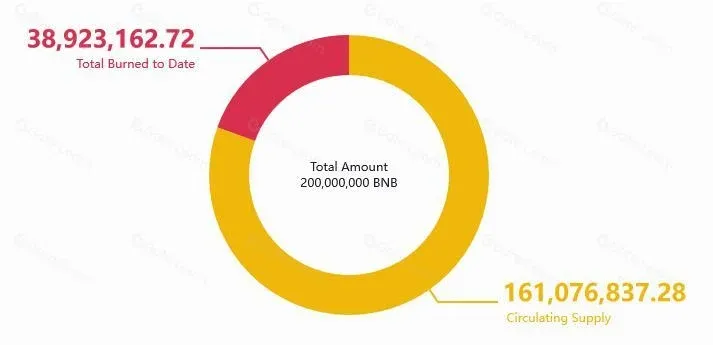
BNB follows a quarterly burn mechanism: each quarter a portion of tokens is repurchased and destroyed based on the token’s market price and BSC block production, until the circulating supply reaches 100 million. This process is fully transparent and can be verified on the official website or a block explorer. The current circulating supply is approximately 161 million tokens.
Core Functions and Use Cases of BNB
- Exchange Platform Token: On the Binance platform, BNB can be used to exchange for other assets, purchase wealth‑management products, participate in token sales, and collateralise loans. Spot and margin trading fees paid with BNB receive up to a 25 % discount, while futures fees are reduced by 10 %.
- Binance Smart Chain Ecosystem Token: Decentralised applications (DApps) and games on BSC require BNB to pay gas fees or execute contracts.
- Crypto Payments: Payment services such as Pundi X, Monetha, HTC EXODUS, Coin Payments, Coin Gate, Coinfy, and NOWPayments already support BNB.
- Travel Booking: Platforms like Travala, Trip.io, and TravelbyBit accept BNB for airline tickets, hotel reservations, and other travel services.
- Entertainment & Gaming: In virtual‑land auctions on Decentraland, games such as Zombie Battleground, VIBE, Axie, Splinterlands, and the Machi X platform, BNB can be used to purchase in‑game items, assets, or music‑rights tokens.
- Cloud Services & Bandwidth: Providers including DENT, BitTorrent, Storm, PureVPN, and CenterServ accept BNB as payment.
- Financial Services: Lending platforms such as ETHLend, LNDR, Nexo, NAGA, and Moeda allow users to obtain loans or buy financial products using BNB.
Market Situation and Investor Interest
Since 2023, BNB’s trading volume has shown a consistent upward trend, attracting short‑term speculators, institutional capital, and everyday users alike. Data from CoinMarketCap and Binance’s own statistics indicate that BNB has evolved from a pure exchange token into a key asset underpinning DeFi, NFT, and smart‑contract infrastructure. Improved market liquidity has broadened the participant base, providing a solid foundation for future price movements.
Why Consider Entering the BNB Market Now
As BNB’s role in fee discounts, DeFi projects, and the NFT market becomes increasingly prominent, more traders are allocating capital to it. Short‑term participants seek to profit from price swings, while hedgers and investors driven by the broader Binance narrative focus on the exchange’s overall development and regulatory clarity. Strengthened liquidity also makes it easier for funds with different strategies to participate.
Steps to Prepare for Your First Trade
The following workflow is designed for beginners, helping you gradually become familiar with the market in a live environment:
- Register and Complete Identity Verification: Visit the Binance website (or download the official app) and create an account. Users located in the United States must use Binance.US rather than the global platform. Complete the KYC process using your government‑issued ID.
- Observe Market Conditions: Review BNB’s price chart, trading volume, and liquidity metrics to understand the current environment.
- Allocate Your Initial Capital: A starting amount of USD 200 is recommended for a live‑trading trial; it keeps risk manageable while allowing you to experience the full trading workflow.
- Develop Entry and Exit Rules: Record your trade performance and, based on experience, iteratively refine timing and position‑size management.
After setting up your account and depositing USD 200, you can begin trading BNB in real time, gaining practical risk‑control experience and laying the groundwork for larger future allocations.
BNB Price Forecast
| Forecast Year | Price Range (USD) | Main Drivers |
|---------------|-------------------|--------------|
| 2026 | 450 – 600 | Binance ecosystem expansion, growth of DeFi and NFT applications |
| 2027 | 650 – 850 | Cross‑chain technology roll‑out, institutional inflows, ecosystem maturity |
| 2030 | > 1,200 | Staking and governance mechanisms, enhanced interoperability, long‑term adoption |
Outlook for 2026
The consensus is that BNB will trade between USD 450‑600 throughout 2026, buoyed by continued ecosystem expansion and deeper DeFi/NFT use cases. Technical analysis shows relatively strong support levels, making it a reasonable period to start building a position. Newcomers can use the suggested USD 200 initial trade to learn market rhythm while accumulating exposure.
Outlook for 2027
By 2027, the deployment of cross‑chain projects, heightened interest from institutional investors, and overall ecosystem maturation could push BNB into the USD 650‑850 band. Short‑term volatility will still present trading opportunities, while long‑term holders should retain confidence in the fundamental value of the ecosystem. A USD 200 starting capital remains sufficient for practicing risk management and observing market dynamics.
Outlook for 2030
Looking ahead to 2030, further applications of BNB in on‑chain governance, staking rewards, and blockchain interoperability are expected to lift the price above USD 1,200. Long‑term investors can follow a structured entry process, deepen their understanding of narrative‑driven and strategic trading, and potentially benefit from higher price tiers.
How to Purchase BNB
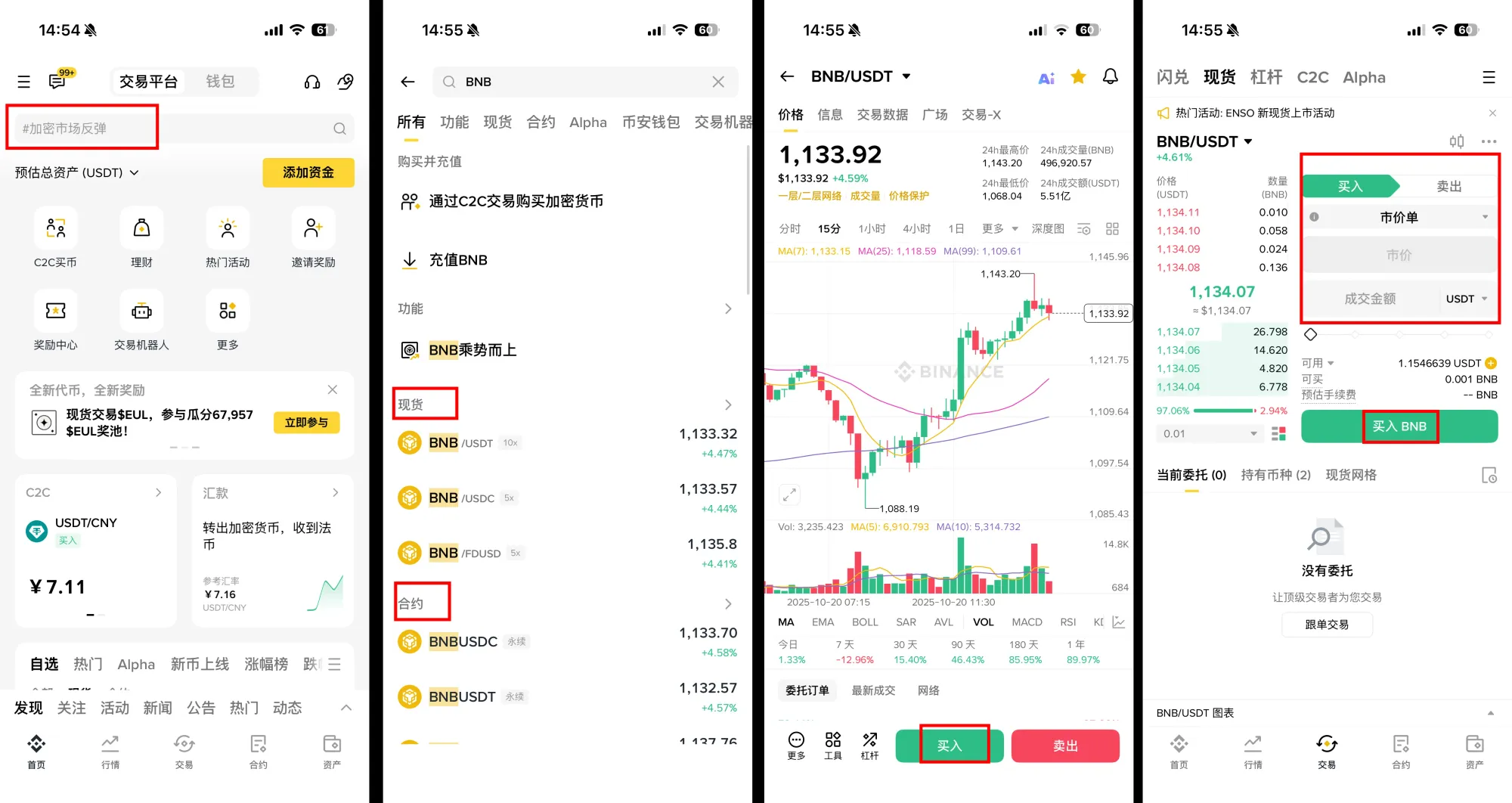
BNB can be obtained on most centralized exchanges and on a handful of decentralized platforms. Below is a step‑by‑step guide using Binance (or Binance.US for U.S. residents) as an example:
- Open the Binance (or Binance.US) app and type “BNB” into the search bar at the top.
- Select the desired trading mode (Spot or Futures) from the results.
- Tap “Buy” – a market order is recommended for immediate execution.
- Enter the amount you wish to purchase, verify the details, and submit the order to complete the trade.
Conclusion
BNB offers both the flexibility of short‑term trading and the value proposition of a longer‑term asset. Current market attention centers on user adoption, liquidity, and further ecosystem development. If beginners follow the “register → learn → small‑scale live trading → iterative optimisation” approach and start with USD 200, they can accumulate practical experience and confidence in a live setting. Forecasts suggest BNB could reach USD 450‑600 in 2026, USD 650‑850 in 2027, and exceed USD 1,200 by 2030. By continuously studying technical trends, monitoring market developments, and applying disciplined trading strategies, investors can better navigate volatility and potentially improve overall returns.
Frequently Asked Questions
What factors will influence BNB’s price in 2026?
Key drivers include market acceptance, the scale of DeFi/NFT usage, Binance ecosystem expansion, and the level of institutional participation.
Is BNB likely to break the USD 1,000 mark by 2030?
Analysts believe that if adoption and ecosystem utilization continue to rise, surpassing USD 1,000 is a realistic expectation.
Is now a good time to acquire BNB?
Current market liquidity is ample, the user base is growing, and short‑term price swings provide capture opportunities, making the environment relatively attractive for new entrants.
---
Tax Note: Cryptocurrency gains may be subject to taxation in your jurisdiction. Please consult a qualified tax professional to understand your local reporting obligations.
💡 Register on Binance with referral code B2345 for the maximum trading fee discount. See Binance complete guide.



