
 Bitaigen Research
 In this article we outline BlackRock’s latest investment positioning, analyze why it places a Bitcoin ETF alongside U.S. Treasury securities and technology giants as core themes, and discuss the potential industry impact. If you want to understand the new Bitcoin trends from an institutional perspective, please continue reading.

BlackRock has recently highlighted its iShares Bitcoin Trust ETF (ticker IBIT) on the corporate website, listing it as one of the three core investment directions for 2025, on equal footing with U.S. Treasury bills and the United States’ largest technology equities.
Since its launch, the fund has accumulated roughly USD 62.5 billion in net inflows, with about USD 37 billion arriving in 2024 alone. Data from Farside Investors shows that IBIT’s asset base is more than five times that of its nearest competitor – the Fidelity Wise Origin Bitcoin Fund (FBTC).
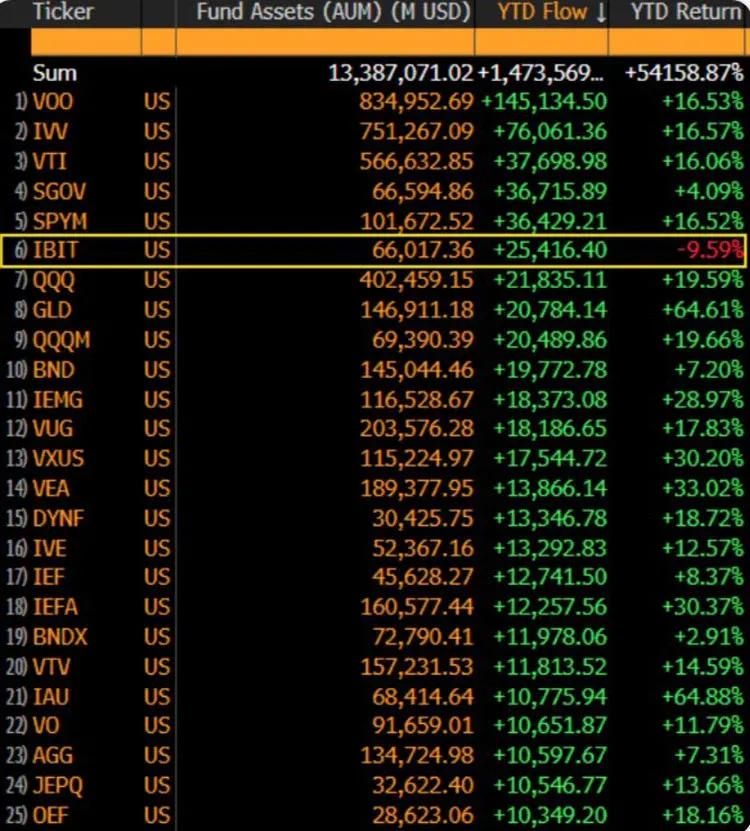
To date, IBIT ranks sixth in net inflows among all ETFs, trailing only broad‑based index funds, even though its projected return through 2025 is negative. By the end of 2023, IBIT had already recorded more than USD 25 billion of net inflows. Nate Geraci, President of NovaDius Wealth Management, noted that this figure demonstrates BlackRock’s continued commitment despite Bitcoin’s 30 % pull‑back from its October peak. Bloomberg ETF analyst Eric Barchunas added that attracting such a volume in a relatively flat year suggests an even greater capacity to draw capital in future strong‑performance years.
Beyond Bitcoin products, BlackRock is also making headway in the Ethereum space. The iShares Ethereum Trust ETF (ticker ETHA) has attracted roughly USD 9.1 billion of inflows this year, bringing its total assets under management close to USD 12.7 billion. In November, BlackRock submitted a registration statement for an iShares Staked Ethereum ETF, which would add a staking component on top of the ETHA structure. Previously, BlackRock opted not to offer staking within ETHA, but with the U.S. Securities and Exchange Commission easing regulatory standards for crypto‑asset ETFs, asset managers can now experiment with more innovative products.
It is worth noting that BlackRock has not followed the recent wave of alt‑coin ETFs launched by other institutions. While ETFs linked to Litecoin, Solana, XRP and other alt‑coins have appeared, BlackRock remains focused on the two dominant digital assets: Bitcoin and Ethereum.
In addition, BlackRock filed a registration statement in September for a Bitcoin Premium Yield ETF. The proposed product would generate additional income by selling covered call options on Bitcoin futures, collecting premiums as an extra revenue stream.
The above summary captures the background and latest developments behind BlackRock’s decision to place a Bitcoin ETF alongside U.S. Treasury securities and leading technology stocks as a primary investment theme. For more detailed coverage, stay tuned to Bitaigen’s future reports.
Related Reading
- BlackRock $523M Outflow as Bitcoin ETFs Shed $3B in Nov
- BlackRock Bitcoin ETF Gains Edge as SEC Raises Options Limit
- BlackRock Covered Call ETF: IBIT Strategy for Crypto
💡 Register on Binance with referral code B2345 for the maximum trading fee discount. See Binance complete guide.
⚠️ Risk Disclaimer: Crypto prices are highly volatile. This is not investment advice.



