
 Bitaigen Research
 We have organized this article to walk through the core mechanisms of a blockchain wallet, covering the full chain from mnemonic phrase to address generation and explaining the security roles of public and private keys. By using easy‑to‑understand analogies, newcomers can quickly grasp the essence of a wallet and the key points for its use. Subsequent sections will dive deeper into storage options and risk‑mitigation strategies, so a careful read is recommended.
Technical Principles of a Blockchain Wallet
The heart of a blockchain wallet is a mnemonic phrase (often called a seed phrase). The mnemonic is first transformed into a seed, which then derives a private key. The private key is used to compute a public key, and a specific segment of that public key, after being hashed, becomes the wallet address. At the same time, the wallet creates an encrypted KeyStore file that works together with the user‑chosen login password to enable secure storage and retrieval of the private key.
Public key: In an asymmetric cryptographic system, the public key is the portion that can be shared openly. Anyone can obtain it and use it to verify that a transaction is authentic.
Private key: The private key is a unique credential that is never disclosed publicly. Possession of the private key grants the holder full control over the digital assets associated with the corresponding address.
Wallet address: Similar to a bank card number, it is an identifier produced by processing a pair of keys (private + public). One address maps to exactly one private key, but a single private key can generate many public keys, thereby creating multiple receiving addresses.
Mnemonic phrases exist to solve the difficulty of memorizing raw private keys. By remembering a short list of English words and restoring them in the correct order within a wallet application, a user can recover all private keys linked to that phrase.
---
What Is a Blockchain Wallet?
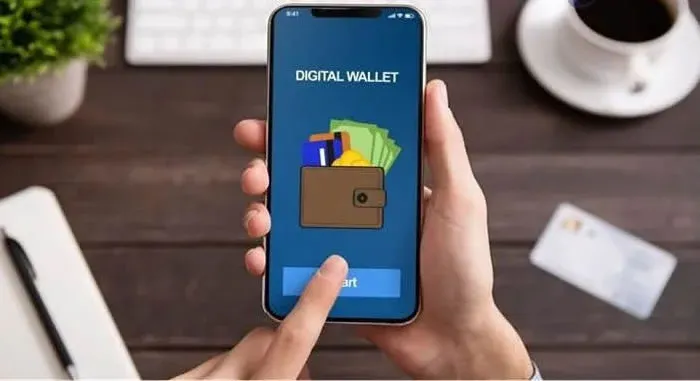
A blockchain wallet is fundamentally a tool for storing, managing, and transferring crypto assets. Internally it holds the private key, public key, address, and the metadata required for interacting with the blockchain. Holding the private key is equivalent to holding the control rights over all digital currencies tied to the associated address; if the private key is lost, the assets become unrecoverable.
You can think of a wallet address as analogous to a bank account number: after creating a wallet, the system automatically generates a unique address, and the user sends and receives crypto using that address. The public key functions like a bank card PIN, while the private key is more akin to an immutable ID number—unique, unchangeable, and used to prove ownership and unlock the wallet.
It’s important to note that each wallet is linked to a single private key, and once that private key is lost there is no central authority that can re‑issue it; recovery depends solely on the mnemonic phrase.
---
How a Blockchain Wallet Works
Using a blockchain wallet does not require any account‑opening fee. You simply complete the following steps on the official website or mobile app:
- Enter an email address and set a password of your own choosing; after submission, the system sends a verification email.
- Verify the email link, which grants you a wallet ID comparable to a traditional bank account number.
- Once logged in, you can view balances of various crypto assets, recent transaction history, and other relevant information.
Inside the wallet, cryptographic algorithms generate a matching pair of public and private keys.
- When you share your wallet address (the hashed form of the public key) with another party, they can send coins to that address.
- When you initiate a send, the wallet uses your private key to create a digital signature for the transaction, then broadcasts the signed transaction to the blockchain network. Network nodes employ the corresponding public key to verify the signature’s validity; once validated, the transfer is considered complete.
The recipient must also use their own private key to unlock the received assets; only the holder of the matching private key can spend those funds.
---
Blockchain Wallet Fees
While the wallet software itself is free to use, every transaction incurs two categories of fees:
- Trading fee: A commission charged by the platform when buying or selling crypto, typically ranging from 0 % to 1.5 %, depending on the direction of the trade.
- Network fee: A payment made to the blockchain’s validator nodes to cover the costs of transaction packaging and verification. Fee levels differ across various chains.
When creating a transaction, users can select a priority fee (higher cost, faster processing) or a standard fee (lower cost, potentially slower confirmation). Many interfaces also allow you to manually set a custom fee if you prefer fine‑grained control.
---
Why Use a Blockchain Wallet?
As crypto assets become an increasingly common store of value and means of transferring wealth, having a secure and convenient management solution is critical. Blockchain wallets provide:
- Self‑custody of private keys, reducing reliance on third‑party custodians.
- Instant cross‑border transfers without the paperwork and delays typical of traditional banks.
- Relatively low transaction costs, especially noticeable when moving large sums.
Consequently, creating and responsibly managing a wallet is the first priority for anyone holding crypto assets.
---
Relationship Between Public and Private Keys
The core of a crypto wallet is the private key—a random string of alphanumeric characters that can also be represented as a QR code or a mnemonic phrase. Using a one‑way cryptographic algorithm, the private key generates a corresponding public key. Because the process is irreversible, the public key cannot be used to derive the private key, ensuring that even if the public key is widely known, the assets remain safe. The public key is then hashed to produce a receiving address; users simply give this address to payers to receive funds.
---
Characteristics of Blockchain Wallets
- Ease of use: Friendly interfaces that feel like ordinary software applications.
- High security: Private keys are stored locally or kept offline, protecting them from online attacks.
- Global instantaneous transactions: No intermediaries, enabling near‑real‑time cross‑border transfers.
- Low fees: Transfer costs are generally more competitive than those of traditional financial systems.
- Multi‑currency support: A single wallet can manage Bitcoin, Ethereum, and many other assets; some products even offer one‑click on‑chain swaps.
---
Difference Between a Blockchain and a Wallet
| Blockchain | Wallet |
|------------|--------|
| Public ledger that records every transaction on the network | Tool that stores private keys and links them to specific addresses |
| Consists of cryptographically linked blocks | Contains encrypted private/public key pairs |
| Functions like the underlying infrastructure of the entire financial system | Functions like an individual’s personal bank account |
---
Various Types of Blockchain Wallets
Hot Storage
Any wallet that can stay connected to the internet in real time falls under this category. Hot wallets are convenient for everyday use but carry higher security risks. Common forms include:
- Online (cloud) wallets: Private keys are stored on third‑party servers. This offers maximum convenience but also makes the keys most vulnerable to hacking; such wallets should only hold small, short‑term balances.
- Desktop wallets: Installed on a personal computer, with private keys kept on the local machine. Security is better than cloud storage but still subject to malware or system compromise.
- Mobile wallets: Apps on smartphones that provide on‑the‑go access. Security sits between desktop and cloud solutions; loss or damage of the phone can jeopardize the assets.
Cold Storage
Cold wallets are completely offline, offering superior security and are suited for long‑term holding. Main variants are:
- Hardware wallets: Dedicated physical devices that store private keys offline. Interaction requires connecting via USB or Bluetooth to a computer or phone. Purchase only from reputable manufacturers and avoid second‑hand units.
- Paper wallets: Private keys or mnemonic phrases printed on paper and stored securely. This eliminates online attack vectors but introduces risks of physical damage, loss, or environmental degradation.
Multisignature Wallets
These wallets require multiple private keys to authorize a transaction (e.g., 2‑of‑3 or 3‑of‑5 schemes). Benefits include:
- Protection against a single point of failure or key leakage.
- Enabling shared control within organizations, improving transparency of fund management.
Multi‑Currency Wallets
Allow users to manage several different crypto assets from a single interface, eliminating the need to juggle multiple applications. Some products also embed exchange functionality, enabling one‑click on‑chain token swaps.
Hierarchical Deterministic (HD) Wallets
Derived from a single mnemonic (or seed), all private keys are generated through the same algorithm. HD wallets follow the BIP‑32 standard and can create child wallets for varied purposes, simplifying fee tracking and permission delegation.
Non‑Deterministic Wallets
Each private key is generated independently, making it impossible to restore the whole set from a single seed phrase. Managing multiple independent keys becomes cumbersome because each must be backed up separately.
---
How to Choose a Blockchain Wallet
When selecting a wallet, you must strike a balance between convenience and security:
- If you trade frequently, a hot wallet offers quick access.
- If you plan to hold a large amount for an extended period, a cold wallet’s offline nature provides greater peace of mind.
Prioritize solutions that let you self‑manage your private keys, support local or offline storage, and offer features such as multi‑platform compatibility, mnemonic backup, password protection, or two‑factor authentication.
---
Steps to Create a Blockchain Wallet
- Learn the basics: Understand blockchain fundamentals, how cryptocurrencies work, and the security concepts involved.
- Pick an open‑source library: Tools like BitcoinJ or the Coinbase SDK can accelerate wallet development on Android/iOS.
- Call relevant APIs: Services such as Bitcore, Factom, or Coinbase provide distributed ledger interfaces that simplify core functionality.
- Consider cloud services: For a web‑based wallet, platforms like Azure, AWS, or Microsoft offer Blockchain‑as‑a‑Service (BaaS) modules.
- Define your tech stack: Choose programming languages and frameworks that align with your target platform (e.g., React Native for cross‑platform mobile apps).
- Prioritize security: Implement multi‑factor authentication, regular security patches, and an incident‑response plan.
- Build and iterate: Study the architecture of established wallets, fill any functional gaps you identify, and begin coding your solution.
---
Benefits of Using a Blockchain Wallet
- Cross‑border payments without foreign‑exchange fees or additional charges.
- Fully on‑chain transactions that bypass intermediaries.
- Low cost for large transfers, delivering high efficiency.
- Cryptographic privacy and security, enhancing user anonymity.
- Streamlined onboarding compared with traditional banks—no lengthy paperwork.
- Low entry barrier; virtually anyone can create and manage crypto assets.
---
Challenges of Using a Blockchain Wallet
- Global adoption is still uneven, limiting network effects in some regions.
- Older hardware or low‑bandwidth internet connections may struggle with certain wallet clients.
- Crypto price volatility introduces financial risk.
- In areas lacking robust banking infrastructure, acquiring reliable hardware or software wallets can be difficult.
---
Tips for Using a Blockchain Wallet
- Choose a wallet that lets you control the private key and supports offline backups.
- Store your mnemonic phrase in a fire‑ and water‑proof physical medium.
- Opt for wallets backed by active open‑source communities and regular updates.
- Leverage HD wallets to auto‑generate sub‑addresses, reducing the backup burden.
- If anonymity is a priority, consider non‑KYC (Know‑Your‑Customer) wallets.
- Align the wallet type with your personal strategy—daily transactions, long‑term holding, or short‑term speculation.
---
Security of Blockchain Wallets
Mnemonic Seed
A mnemonic is a random collection of English words that functions like a password, enabling asset recovery if the wallet app is lost. No centralized entity stores this seed; it follows industry standards, ensuring that even if a service provider ceases operations, users can restore their funds independently.
Optional Security Measures
Many wallets offer additional safeguards such as two‑factor authentication, IP whitelisting, or restrictions on Tor network access to mitigate phishing and brute‑force attacks.
Password Protection
Access to the wallet typically requires a user‑chosen password. The platform does not retain this password; forgetting it means you must rely on the mnemonic seed for recovery, further protecting against internal data breaches.
---
Final Reflections on Blockchain Wallets and Their Mechanics
A blockchain wallet is the key that opens the door to the crypto universe. Mastering and securely storing the private key is the cornerstone of protecting your digital wealth. Whether you use the wallet for everyday payments, portfolio management, or long‑term storage, its core functions remain the same: receive funds, query balances, and initiate transfers. By understanding the underlying technology, selecting the appropriate wallet type, and adhering to best‑practice security habits, you can navigate the expansive world of decentralized finance with confidence.
The above constitutes a comprehensive explanation of “What is a blockchain wallet? Technical analysis of blockchain wallet principles.” For more beginner‑friendly blockchain wallet resources, stay tuned to Bitaigen’s upcoming publications.
💡 Register on Binance with referral code B2345 for the maximum trading fee discount. See Binance complete guide.



