
 Bitaigen Research
 Ethereum Is Expected to Outperform Bitcoin in 2026, Driven by Its Dominance in Stablecoins, Deep DeFi Ecosystem, Ongoing Technical Upgrades, and Growing Ecosystem Value
We examine Ethereum’s prospects for surpassing Bitcoin in 2026 from three angles: market landscape, regulatory trends, and technical roadmap. By reviewing Ethereum’s continued positioning in stablecoins, DeFi, and Layer‑2 solutions, we discuss whether it has the potential to outpace Bitcoin and help readers grasp the key drivers. We combine the latest regulations, on‑chain data, and industry trends to provide a multi‑dimensional perspective for assessing risks and opportunities. Keep reading for the full analysis.
Ethereum’s Market Position and Trend Analysis
Before debating whether Ethereum can outpace Bitcoin in 2026, it is useful to outline the two networks’ market positions and differences.
Current Crypto‑Market Landscape
- Bitcoin still accounts for more than 60 % of total crypto market capitalization, continuing to serve as “digital gold.” Its price trajectory is closely tied to macro‑economic risk factors.
- Ethereum represents roughly 40 % of market cap, but its ecosystem activity is the more decisive factor. Following the passage of the GENIUS Act at the end of 2025, the stablecoin market received about USD 48 billion of new liquidity, the vast majority of which settled on Ethereum and its Layer‑2 networks, providing a steady fuel source for DeFi.

Crypto‑Market Capitalization Trend Over the Past Year
| Asset | Market‑Cap Share (%) | Key Drivers |
|---|---|---|
| **Bitcoin** | 60+ | Macro narrative, digital‑gold narrative |
| **Ethereum** | ~40 | **Stablecoins**, **DeFi**, technical iteration |
The table shows that Bitcoin’s dominance remains closely coupled with macro‑risk sentiment, whereas Ethereum is attracting real‑world assets and stablecoins, creating a distinct capital flow and underlying narrative.
Historical Performance Comparison
In December 2025, Bitcoin peaked at USD 125,000, after which profit‑taking at the end of a four‑year cycle and adjustments in institutional holdings triggered a pull‑back. By contrast, Ethereum displayed greater resilience. At the start of Q1 2026, its MACD crossed above the zero line forming a “golden cross,” a technical signal often interpreted as the beginning of a medium‑term uptrend.
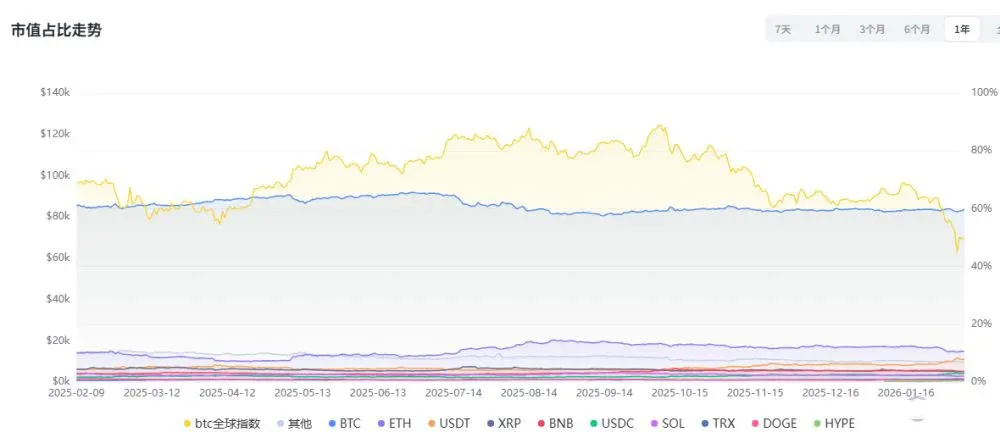
On February 9, 2026, Ethereum’s price chart showed that Bitcoin continues to be driven largely by macro narratives and cyclical trading, while Ethereum receives support from underlying ecosystem holdings. This fundamental difference is cited as the primary reason why Ethereum may have the upside potential to outperform Bitcoin in 2026.
Key Drivers for Ethereum’s Potential to Outperform Bitcoin
Stablecoins and DeFi as a Moat
- Stablecoins: More than USD 8 billion of stablecoin market value is issued on Ethereum, making the network the principal settlement layer for these assets.
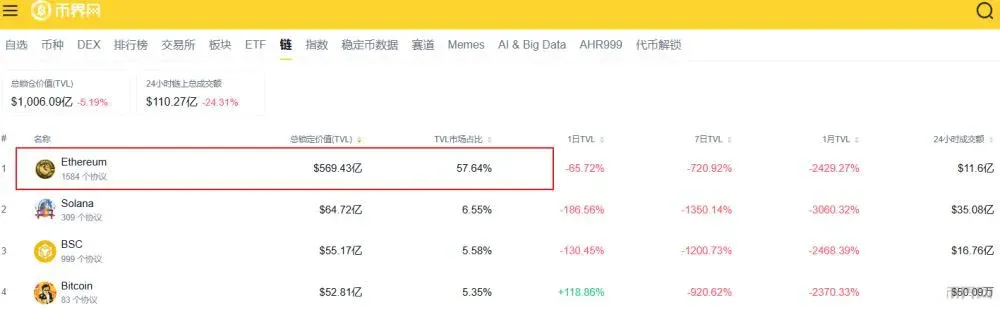
- DeFi: Top‑tier protocols such as Uniswap and Aave have been operating on Ethereum for several years, locking up massive value. Total Value Locked (TVL) across the entire DeFi sector has breached USD 160 billion, with Ethereum accounting for roughly 59 % of that amount, generating a strong network effect.
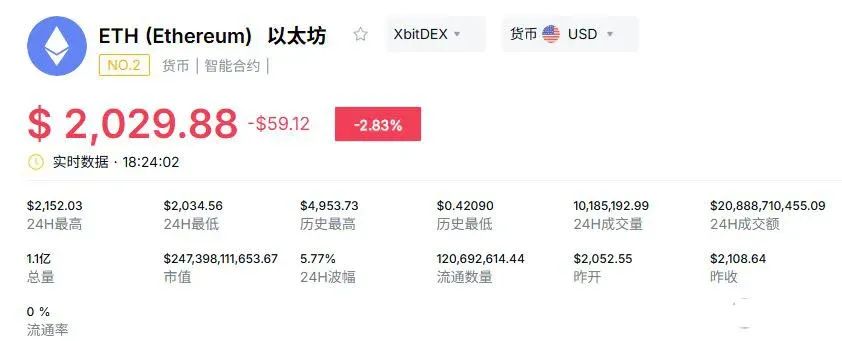
These elements constitute a deep moat for the Ethereum ecosystem that is unlikely to be eroded in the short term.
Technical Upgrades and Institutional Endorsement
- Technical upgrades: Continuous improvements in throughput translate into higher market‑cap potential. Layer‑2 solutions such as Arbitrum and Optimism have reduced gas fees by more than 90 %, dramatically enhancing network usability.
- Institutional endorsement: Firms like Galaxy Digital have increased their ETH exposure, and a recent large holder accumulated 4,556 ETH (approximately USD 12.4 million). The average cost basis for most institutional players sits around USD 1,240, creating a psychologically important support level.
Technical progress injects vitality into Ethereum, while institutional participation supplies price support; together they underpin a long‑term bullish case.
Potential Risks and Uncertainties
- Macro risk: Similar to Bitcoin, Ethereum is highly sensitive to global liquidity conditions. A shift toward a more hawkish stance by the U.S. Federal Reserve or a burst in AI‑related equity bubbles (e.g., NVIDIA) could dampen risk appetite and limit upside.
- Internal challenges: Divergent views on Ethereum’s asset classification (“digital oil” versus cash‑flow‑generating asset) and insufficient interoperability among Layer‑2 solutions could fragment liquidity.
Conclusion
Can Ethereum outpace Bitcoin in 2026? Its dominance in the stablecoin arena, the deep moat created by the DeFi ecosystem, and ongoing technical iteration provide fundamental advantages that are hard to replicate. While Bitcoin remains heavily influenced by macro‑level factors, Ethereum’s clear utility‑driven value capture may enable a re‑valuation from “digital oil” to a “productive asset.”
For more in‑depth analysis on whether Ethereum can beat Bitcoin in 2026, follow Bitaigen (比特根).
Related Reading
- Beginner's Guide: Bitcoin, Ethereum & Dogecoin Explained
- Lombard Finance Unveils LBTC & BARD to Power Bitcoin DeFi
- Chainlink (LINK) Overview: Decentralized Oracles Powering Web3
💡 Register on Binance with referral code B2345 for the maximum trading fee discount. See Binance complete guide.
⚠️ Risk Disclaimer: Crypto prices are highly volatile. This is not investment advice.



