
 Bitaigen Research
 Summary: Hyperliquid and Aster are both decentralized trading platforms that offer on‑chain perpetual contracts, spot trading, yield tools, and audited security and fee models. Hyperliquid focuses on an on‑chain order book, permission‑less listings, HLP liquidity and fee rebates; Aster’s core selling points are multi‑chain perpetuals, high leverage and privacy protection.
In this article we systematically outline the features and fee structures of the two decentralized exchanges, concentrating on the differences in perpetual contracts, spot trading, and VIP/token discounts. The side‑by‑side comparison helps readers quickly decide which platform better fits their needs; we will also discuss security and cross‑chain characteristics later, so keep reading.
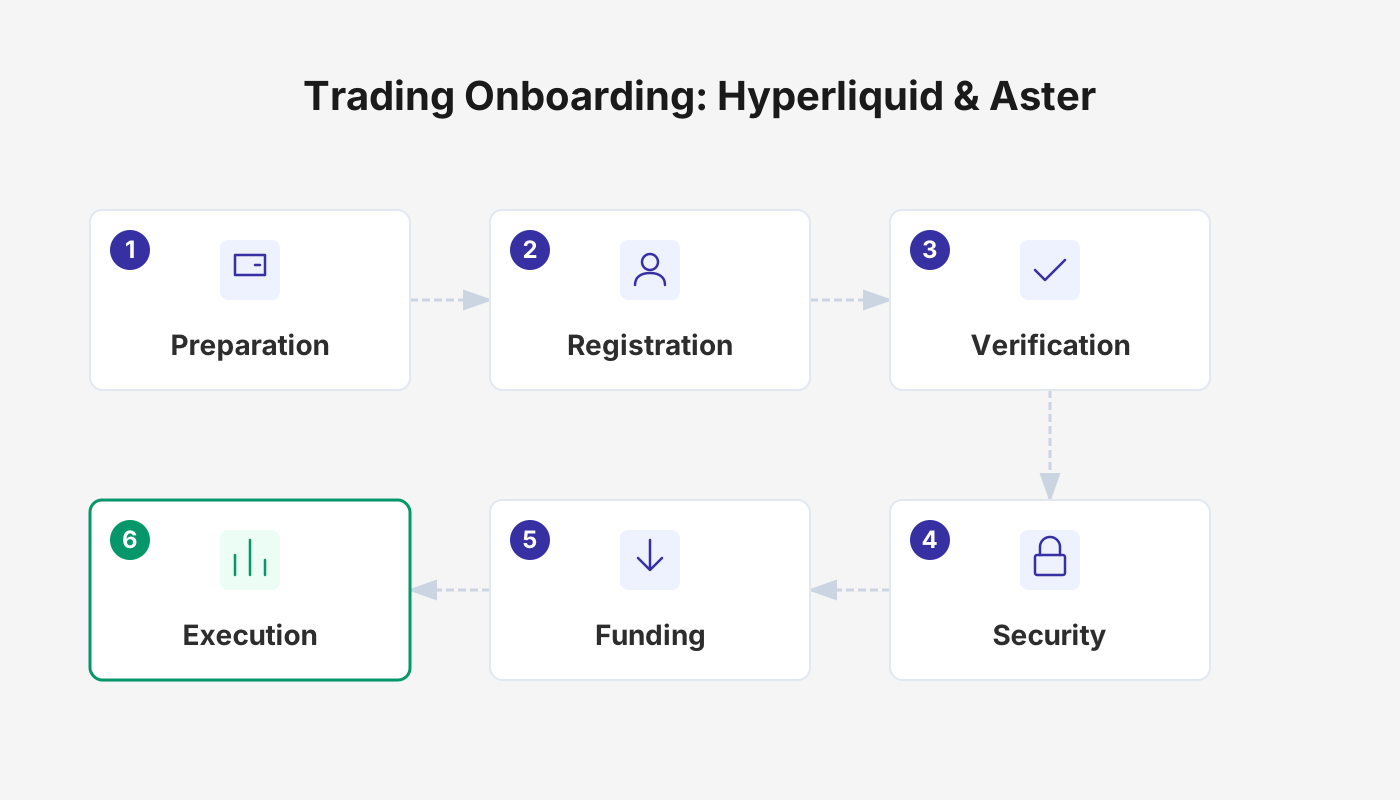
Fee‑Structure Comparison
Both platforms use a market‑maker/market‑taker tiered model, augmented by token‑based discounts and VIP incentives.
- Spot fees: Hyperliquid charges a 0.07 % taker fee and a 0.04 % maker fee; Aster’s baseline fees are 0.04 % (taker) and 0.005 % (maker), before any VIP discount.
- Perpetual fees: Hyperliquid takes 0.045 % (taker) and 0.015 % (maker); Aster Pro’s rates are 0.04 % (maker) and 0.005 % (taker).
- Funding rates: Hyperliquid applies a 0.01 % interest component plus a premium; Aster combines a premium index with a 0.03 % interest component.
- Tiered fees: Hyperliquid offers volume‑based ladder discounts; the perpetual taker fee can fall to 0.024 % and the spot taker fee to 0.025 % for high‑volume traders.
- VIP system: Aster’s VIP program is based on the past 14 days of trading volume and ASTER holdings, with six tiers of decreasing fees.
- Token discounts: Staking HYPE on Hyperliquid grants a 5 %–40 % fee rebate; Aster allows fee payment with ASTER, which can be stacked with a further 5 % discount.
- Other fees: Opening a HyperCore account on Hyperliquid requires a one‑time quote‑token activation fee; Aster places more emphasis on on‑chain gas costs and high withdrawal caps.
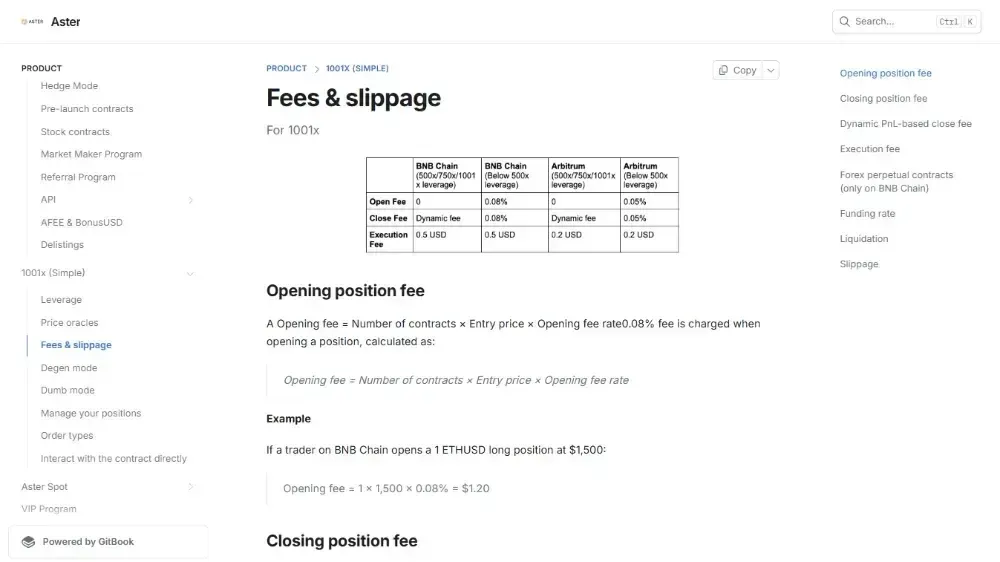
- Simple‑Mode fees (Aster): When trading on BNB Chain with 1,001× leverage, closing positions below 500× leverage costs 0.08 %; on Arbitrum under the same conditions the fee is only 0.05 %.
Security and Compliance Overview
- Hyperliquid: Utilises a non‑custodial, open‑source L1 architecture where all trading logic runs on‑chain. The platform maintains a validator‑approved assistance fund that can cover shortfalls in the insurance fund during extreme volatility. Multiple audit rounds have been completed, and the cross‑chain bridge is also audit‑certified. In 2025 there were attempts to manipulate the HLP vault, a hack on the JELLY platform, and a few cases of user‑key exposure, but overall uptime remained at 100 %.
- Aster: Relies on audit reports from PeckShield and BlockSec and employs a multi‑signature security suite. Its zero‑knowledge proof (ZKP) order‑hiding mechanism mitigates front‑running and copy‑trading risks. The platform, however, suffered a technical pricing anomaly that resulted in roughly USD 16.6 million of losses, which had to be compensated to affected users. Its multi‑chain footprint makes it more susceptible to AML/KYC scrutiny across different jurisdictions, especially given the 1,001× leverage option and the lack of mandatory KYC, exposing it to potential compliance pressure from the EU’s MiCA framework and the United States’ CLARITY Act.
Core Products and Features
Hyperliquid Ecosystem
- Perpetuals & Spot: On‑chain CLOB perpetual contracts and permission‑less spot markets comprise more than 200 perpetual pairs and 60 spot pairs.
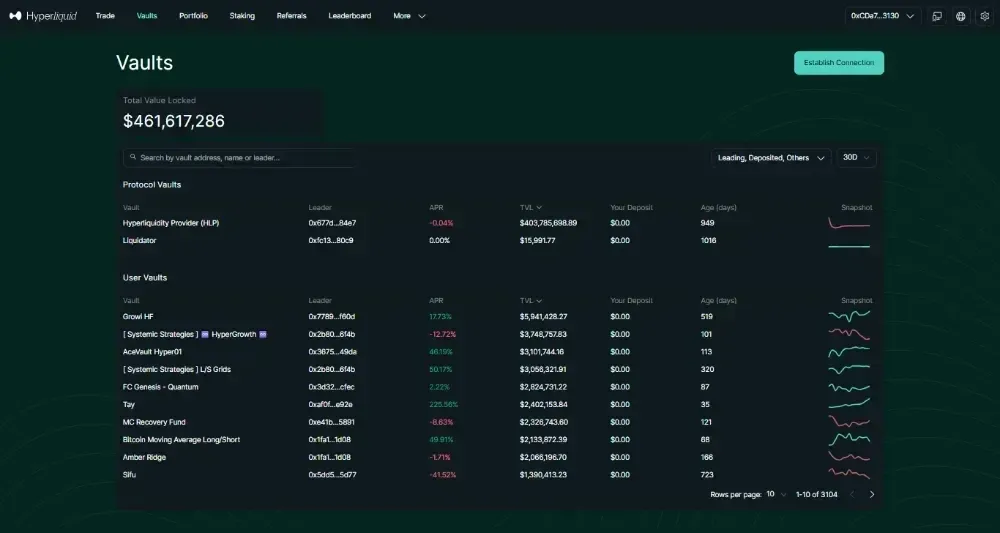
- HLP Vault: A protocol‑level market‑making vault where community liquidity is settled and fee revenue is shared.
- Insurance Vault & Portfolio Dashboard: A unified interface for depositing assets, tracking performance and extracting strategies.
- HyperEVM: An EVM‑compatible smart‑contract layer built on HyperCore, enabling the deployment of DeFi protocols, strategy vaults and custom assets.
- HIP‑1 Assets: A native token standard that allows anyone to list an asset via a Dutch auction and collect fees.
- HIP‑3 Perpetuals: By staking 500,000 HYPE, users can launch permission‑less perpetual markets (including non‑crypto underlying) and earn 50 % of the generated fees.
- Hypurr NFT Series: A collection of 4,600 digital collectibles with a floor price of roughly USD 13,000; future utility may grant holders ecosystem rights.
Aster Ecosystem
- Aster Spot: A dedicated spot‑trading gateway offering deeper liquidity and lower fees for mainstream cryptocurrencies.
- Dual‑Mode Perpetuals: A professional CLOB mode for advanced traders and a “Simple” mode that provides up to 1,001× leverage with a single click.
- Multi‑Chain Deployment: Operates on BNB Chain, Ethereum, Solana and Arbitrum, using aggregated liquidity to enable cross‑chain, bridge‑free swaps.
- Privacy Orders: ZKP‑based hidden orders that conceal large order sizes and intent from the public order book, preventing front‑running.
- Multi‑Asset Collateral: The professional mode accepts interest‑bearing assets such as asBNB as margin.
- Tokenised Stocks & Index Perpetuals: 24/7 on‑chain trading of U.S. equities and global indices, with leverage up to 50×.
- Aster Earn: A blend of DeFi and CeDeFi strategies that auto‑compound into an insured vault, with on‑demand withdrawals.
- asBNB Liquidity‑Staking Derivatives: Earn yield while using the full token amount as collateral in trades.
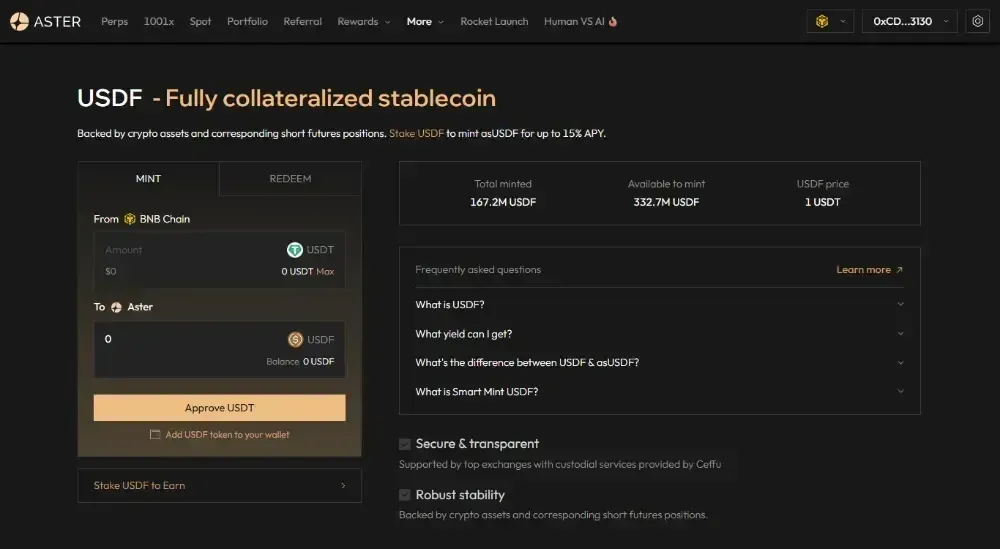
- USDF Stablecoin: A yield‑bearing stablecoin minted against USDT, allowing holders to retain a USD exposure while earning protocol incentives.
- Trade‑Collateral Earn Model: Enables users to stake asBNB or USDF, earn points and generate additional yield.
Platform Overview
| Item | Hyperliquid | Aster |
|---|---|---|
| Launch year | 2022 (protocol) / 2023 (exchange) | 2024 (post‑merge) |
| User base | 800 k+ addresses | 3 M+ addresses |
| Supported assets | 100+ assets (≈ 220 pairs) | 60+ pairs |
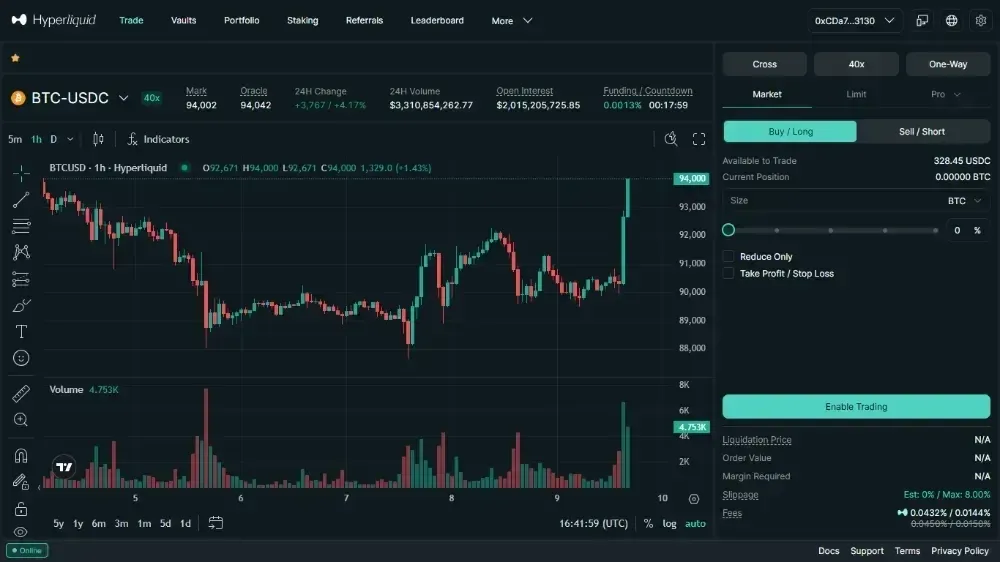
| Max leverage | 40× (BTC) | 1,001× (Simple mode) |
| Core selling point | Fully on‑chain CLOB perpetual + spot | Multi‑chain perpetual + privacy + high leverage |
| Key tools | Order book, HyperEVM, HLP vault, OI risk controls | Hidden orders, stock perpetuals, yield collateral |
| Native token | HYPE (fee discounts, staking) | ASTER (VIP, discounts, buy‑back) |
| Standard futures commission | 0.015 % (maker) / 0.045 % (taker) | 0.005 % (maker) / 0.04 % (taker) |
| Asset protection | Audited L1, OI caps, oracle safeguards | Audited insurance vault, multi‑sig, Ceffu custody |
Technical and Performance Comparison
- Hyperliquid: Built on the proprietary HyperCore engine, it can process over 200 k orders per second, achieving finality within 1 second. Core contracts (e.g., BTC, ETH) often have spreads as low as 0.001 %. Funding rates settle hourly, offering a finer granularity than the industry‑standard 8‑hour cycle. An automatic deleveraging (ADL) mechanism is baked in to protect profitable positions when the insurance fund is depleted.
- Aster: In Simple mode, it leverages managed on‑chain liquidity pools to execute large, high‑frequency trades with zero MEV impact and minimal price slippage. Its ZKP‑based order‑hiding boosts privacy, while cross‑chain aggregated liquidity enables bridge‑free swaps across supported networks.
Market Positioning and Regulatory Risk
- Hyperliquid: Holds no traditional financial licences; it employs IP‑based geoblocking to restrict access for U.S. residents and enforces strict KYC for partnered trust entities. As global regulators tighten scrutiny of DeFi services, the platform could encounter increasing compliance pressure.
- Aster: The multi‑chain nature subjects it to AML/KYC regimes in multiple jurisdictions. The combination of extremely high leverage (1,001×) and optional KYC has raised questions about regulatory compliance; the project was temporarily delisted by DeFiLlama after a dispute over alleged fake trades.
Overall Assessment
- Strengths comparison: Hyperliquid’s mature on‑chain order book and high‑throughput engine provide low‑latency, deep‑liquidity trading suitable for professional traders. Aster excels in feature breadth, attracting users who seek ultra‑high leverage, cross‑chain flexibility and ZKP‑based privacy.
- Long‑term stability: Hyperliquid’s tiered fee architecture and robust underlying infrastructure suggest higher systemic resilience. Aster’s innovative tools are appealing but its high‑leverage product line and regulatory uncertainty could translate into greater operational risk.
Closing Remarks
When choosing a decentralized perpetual‑contract platform, users must balance Hyperliquid’s high‑performance on‑chain design against Aster’s multi‑chain flexibility and extreme leverage. Whether you prefer Hyperliquid’s native spot order book or Aster’s privacy‑enhanced orders and yield‑generating stablecoin, the decision should align with your personal risk tolerance, tax considerations (crypto gains may be taxable in your jurisdiction), and compliance requirements.
For more comparative insight on Hyperliquid and Aster, follow the upcoming专题报道by Bitaigen (比特根).
Related Reading
- Aster Upgrades: Multi‑Chain Margin, Hedging & Grid‑Trading
- Trade XAU & XAG on Binance: Spot vs Perpetual Contracts
- United Stables (U) Coin: Stablecoin with AI Payments & Yield
💡 Register on Binance with referral code B2345 for the maximum trading fee discount. See Binance complete guide.



