
 Bitaigen Research
 In this article we outline the conceptual framework of InfoFi, dissect its core mechanism for quantifying abstract information such as attention and reputation on‑chain, and categorize its primary use‑cases—including prediction markets and reputation incentives. By deeply analyzing the technical pathways and ecosystem layout, we help readers grasp the potential value and future development direction of InfoFi, making it worth a careful read.
What Is InfoFi?
InfoFi is a system that turns information into tradable financial assets, leveraging blockchain, tokens and AI to quantify, incentivize and allocate value for abstract data such as attention and reputation. Its goal is to let information producers and disseminators share in the economic returns.
InfoFi (Information + Finance) centers on converting hard‑to‑measure abstract information into dynamic, quantifiable value carriers. It encompasses not only traditional prediction markets, but also the distribution, speculation and trading of attention, reputation, on‑chain data, personal insights, narrative activity, and similar information streams.
Core Advantages
- Value Re‑allocation: Smart contracts and incentive mechanisms channel the value that traditional attention economies monopolize on platforms back to genuine contributors.
- Information Monetization: Abstract assets such as attention, insights and reputation become tradable digital tokens, creating an open market for information value.
- Low Entry Barrier: Users can participate and earn simply by linking a social‑media account to create content.
- Innovative Incentives: Rewards cover multiple stages—creation, distribution, interaction, verification—so niche content and long‑tail users can also earn.
- Cross‑Domain Potential: AI supplies the technical backbone for content‑quality assessment, prediction‑market optimization, and related functions.
InfoFi Categories
InfoFi spans a variety of application scenarios, which can be grouped into the following categories.
1. Prediction Markets
Prediction markets are a cornerstone of InfoFi, pricing future events through collective wisdom. Participants buy and sell “shares” tied to specific outcomes; the market price reflects the aggregated expectation. Representative projects include:
| Project | Key Features | Main Assets |
|---|---|---|
| **Polymarket** | Decentralized, built on Polygon, trades using USDC | Politics, economics, entertainment, product launches, etc. |
| **Kalshi** | Fully regulated by the U.S. CFTC, supports both crypto and fiat settlement (USD via SEPA/SWIFT) | Event contracts (political, economic, financial) |
In his November 2024 essay *From Prediction Markets to Information Finance*, Vitalik Buterin notes that prediction markets could generate better applications across social media, science, news and governance, dubbing the broader concept information finance.
2. Yap‑to‑Earn (口播型 InfoFi)
“Yap‑to‑Earn” is a tongue‑in‑cheek term used in Chinese communities to describe earning rewards by posting opinions and sharing content. The core mechanism employs AI algorithms to assess volume, quality, engagement and depth of each contribution, then distributes points or tokens accordingly.
Representative Projects
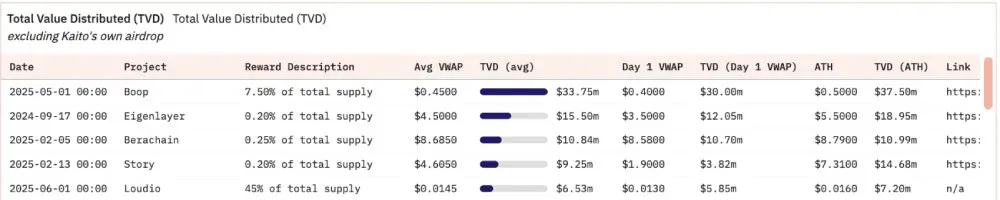
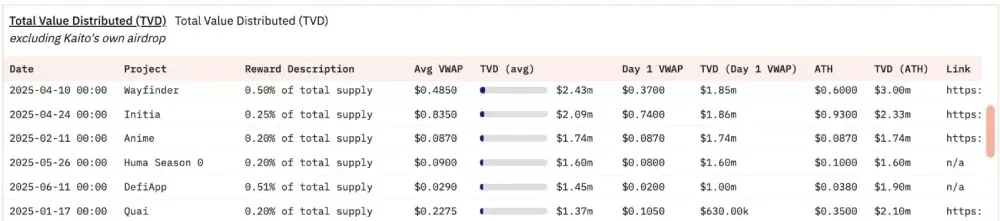
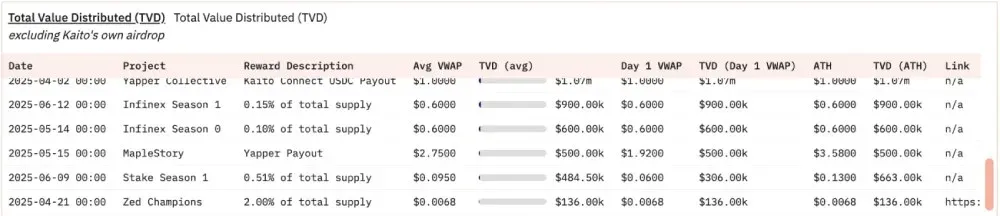
- Kaito AI: Uses AI to evaluate users’ crypto‑related posts on X (formerly Twitter), awarding “Yap” points that can be ranked on leaderboards and redeemed for token airdrops. To date it has distributed tokens worth over USD 90 million to the community, with more than 200 k active Yappers per month.
- Cookie.fun: Tracks AI agents’ mind‑share, engagement and on‑chain metrics to produce market overviews. Its “Snaps” campaigns have partnered with Spark, Sapien and OpenLedger, attracting 16 k, 7 930 and 6 810 participants respectively.
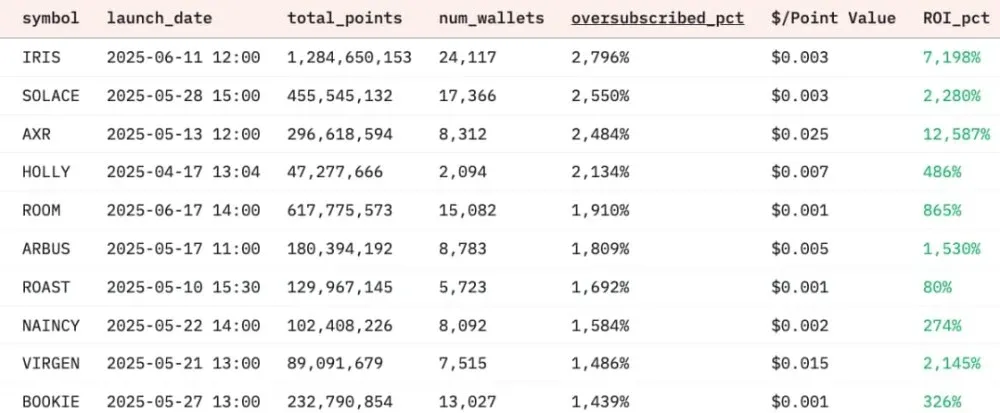
- Virtuals: Although primarily an AI‑agent launchpad, its Genesis Launch on Base incorporates a Yap‑to‑Earn component (supported by Kaito) as one way to earn points.
Key Characteristics
- No on‑chain transactions or large capital outlay are required; a simple social‑media login suffices.
- AI automatically filters bots and low‑quality posts, improving transparency of reward distribution.
- Earned points can be swapped for token airdrops or ecosystem privileges; early participants often enjoy higher yields.
Note: Crypto gains may be taxable in your local jurisdiction; consult a tax professional for guidance.
3. Multidimensional Contribution Valuation (Yap + On‑Chain Activity)
Some projects combine content contributions with on‑chain actions (trading, staking, NFT minting) or task completion, evaluating users’ overall value across several dimensions.
- Galxe Starboard: Web3 growth platform Galxe’s Starboard rewards both off‑chain and on‑chain activities—including tweet engagement, sentiment, viral spread, dApp interaction, token holding and NFT minting—with real‑world value.
- Mirra: A decentralized AI model trained on community‑curated data. Creators who publish high‑quality content on X provide verification data for the AI; the “Scout” function tags valuable posts via `@MirraTerminal`, helping the model learn.
4. Reputation‑Based InfoFi
- Ethos: An on‑chain reputation protocol that blends open standards with Social Proof‑of‑Stake (Social PoS) to generate a Credibility Score. Scores are derived from accumulated comment utility, Ethereum staking endorsements and other on‑chain signals, and a reputation market lets users buy and sell “trust tickets.”
- GiveRep: Built on Sui, it converts a user’s influence on X into on‑chain reputation points. Mentioning the official GiveRep Twitter account in a comment earns points (up to three mentions per day), while creators can receive unlimited points daily.
5. Attention Markets / Prediction
| Project | Main Function |
|---|---|
| **Noise** | Built on MegaETH, it discovers trends and enables long/short positions on project attention (invite‑only). |
| **Upside** | A social prediction market that rewards discovery, sharing and forecasting of valuable content, using a diminishing‑weight like system to deter manipulation. |
| **YAPYO** | Attention‑market infrastructure for the Arbitrum ecosystem, emphasizing rewards for lasting impact. |
| **Trends** | Tokenizes X posts as “Trends”; creators earn 20 % of the associated trading fees. |
6. Token‑Gated Content Access (Noise Filtering)
- Backroom: Creators can launch token‑gated spaces offering Alpha, analysis and other premium material. Users unlock access by purchasing an on‑chain “Key,” turning high‑value information into a tradable asset.
- Xeet: A new protocol on the Abstract network planning to integrate Ethos scores for noise filtering and signal amplification; it has already launched a KOL‑recommendation program.
7. Data‑Insight InfoFi
- Arkham Intel Exchange: An on‑chain intelligence marketplace where investigators earn rewards by completing bounty tasks and selling insights.
Challenges Facing InfoFi
Prediction Markets
- Regulatory Compliance: Many jurisdictions view them as binary options or gambling. Polymarket was fined USD 1.4 million for operating without CFTC clearance and subsequently blocked U.S. users. Ongoing investigations by the DOJ and FBI in 2024 underscore regulatory pressure.
- Insider Trading & Fairness: Large capital can temporarily distort prices; mechanisms are needed to curb information asymmetry.
- Liquidity Shortfalls: Niche topics often lack sufficient participants, leading to unreliable signals. AI agents may help but further optimization is required.
- Oracle Security: Polymarket suffered oracle attacks in the past; in 2025 UMA, Polymarket and EigenLayer began co‑developing a multi‑token, dynamically‑bound, AI‑integrated oracle resistant to bribery attacks.
Yap‑to‑Earn
- Noise Flood: AI‑generated spam accounts can overwhelm the system, obscuring genuine signals and eroding community trust.
- Algorithmic Opacity: The formulas that score content quality and interaction depth are not publicly disclosed, raising fairness concerns.
- Matthew Effect: Top KOLs capture most rewards, leaving long‑tail creators with modest earnings. Kaito’s data shows that only 3 % of its roughly 1 million registered users have ever earned Yaps.
- Attention Decay: After initial reward distribution, user engagement often drops sharply, making sustained activity difficult.
Reputation‑Based InfoFi
- High Barriers to Entry: Ethos’s invitation‑only model restricts new users, hindering network effects.
- Malicious Manipulation: Reputation scores can be vulnerable to Sybil attacks or artificial boosting.
- Cross‑Platform Interoperability: Different protocols lack a unified reputation standard, creating information silos.
Future Trends for InfoFi
Prediction Markets
- AI‑Market Fusion: AI can ingest massive datasets to improve forecast accuracy and address long‑tail liquidity gaps.
- Deep Social‑Media Integration: X and Polymarket announced a partnership that will use Grok to analyze real‑time insights, delivering contextual, data‑driven predictions to users.
- Decentralized Governance (Futarchy): Markets will be employed for DAO, corporate and even societal governance, allowing market signals to replace conventional voting.
- Mass‑Market News Tools: Prediction markets may evolve into foundational infrastructure for web‑wide information retrieval and verification.
Yap‑to‑Earn + Reputation‑Based InfoFi
- Social Graph & Semantic Understanding: Enhanced AI comprehension of content value will better reward high‑quality, long‑tail creators.
- Penalty & Decay Mechanisms: Systems to curb spam and low‑quality output will become standard.
- Web3‑Specific LLMs: Dedicated large language models for InfoFi will refine multidimensional contribution assessment.
- Reputation‑DeFi Convergence: Credibility scores could serve as credit factors for lending, staking and other DeFi primitives.
- Cross‑Platform Expansion: Beyond X, future integrations will encompass other social networks and news outlets, building universal tools for attention and alpha discovery.
Data‑Insight InfoFi
- Visualization + Creator Incentives: Merging data‑visual dashboards with reward structures to encourage high‑quality intelligence production.
- Deeper AI Analysis: Machine‑learning models will generate tradable insight assets by deeply interrogating on‑chain data.
Summary
The core tension of the digital age lies between attention creators and the entities that capture the resulting value. This split fuels the Web3 InfoFi revolution. If a balance between information value and participation incentives cannot be achieved, InfoFi may repeat the “high‑fly‑low‑fall” pattern observed in SocialFi. Implementing a three‑pronged mechanism—information extraction + user participation + value redistribution—is essential for building a fair, efficient attention economy.
InfoFi’s future will require both top‑down protocol governance and bottom‑up community co‑building. Only through this dual approach can the value of attention become widely accessible, avoiding pyramid‑like reward structures, and establishing information finance as a reliable infrastructure for knowledge sharing and collective decision‑making.
---
That concludes the section “What Is InfoFi? InfoFi Project Categories and Future Development Analysis.” For further reading on InfoFi, please search for previous Bitaigen (比特根) articles or continue with the links below. Thank you for supporting Bitaigen (比特根)!

Related Reading
- InfoFi: Tokenizing Data & Attention on Blockchain
- Liquidity Mining: Steps, Strategies, Risks & DeFi Platforms
- Web3 Robotics: 9 Key Blockchain Projects Shaping Hardware
💡 Register on Binance with referral code B2345 for the maximum trading fee discount. See Binance complete guide.
⚠️ Risk Disclaimer: Crypto prices are highly volatile. This is not investment advice.



