
 Bitaigen Research
 We examine Katana (KAT) from the three perspectives of technology, governance, and incentives, systematically outlining its operating principles and token‑economic model while also providing a step‑by‑step onboarding guide. This article aims to help readers quickly assess the project’s positioning within the DeFi public‑chain ecosystem and to identify its potential risks, thereby enabling investors to make more reasoned decisions.
Quick Overview
- Project positioning: KAT is the native token of the Katana network, designed to synchronize incentives and governance on a DeFi‑centric public chain.
- Core functionality: Holding KAT allows users to lock it into vKAT, participate in incentive‑distribution voting, and share protocol fees.
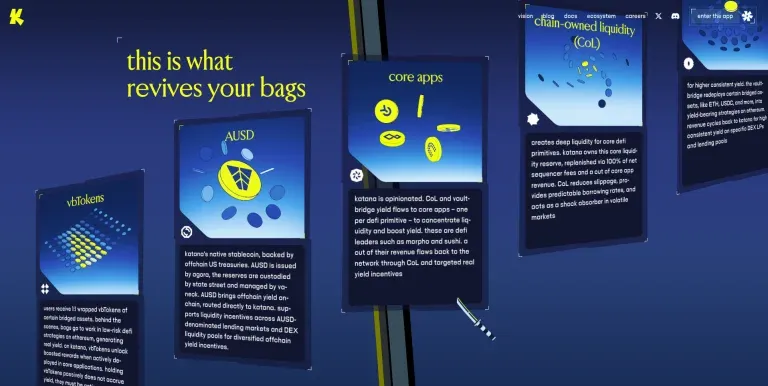
- Unique mechanism: Katana concentrates liquidity through a handful of core applications, combines on‑chain native liquidity (CoL) with VaultBridge yields, and creates a closed‑loop incentive flywheel.
- User participation flow: After bridging assets across chains, users can earn KAT in dApps such as Sushi, Morpho, and Kensei, then lock the tokens as vKAT to obtain governance power and fee sharing.
- Primary risks: The incentive‑flywheel architecture is fairly intricate; its long‑term sustainability hinges on genuine usage, the security of the underlying strategies, and the pace of token unlocks.
Key Announcement
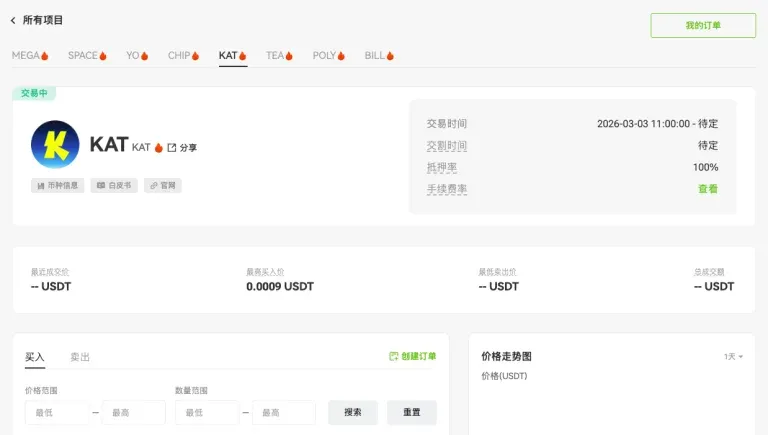
The team has disclosed that Binance plans to list Katana (KAT) on its platform on March 18 2026 at 21:00 UTC+8, simultaneously opening spot‑trading pairs KAT/USDT, KAT/USDC, and KAT/TRY.
Deposit channels will become active within one hour of the listing, and the withdrawal function is expected to launch on March 19 2026 at 21:00 UTC+8. An additional 150 million KAT will be earmarked for future marketing campaigns; the precise schedule will be announced separately.
Please note that KAT will initially appear only in Binance’s Alpha program. Once spot trading begins, the asset will be removed from the Alpha page, and any trading volume generated there will not count toward Alpha points.
*For users residing in the United States, access to KAT on Binance must be through Binance.US, as the global Binance platform is not available to U.S. residents.*
*When converting fiat to crypto, the platform supports USD via standard SEPA/SWIFT transfers, as well as other major fiat corridors.*
What Is KAT?
KAT serves as both the governance and incentive token of the Katana network and operates on a vote‑escrow (ve) mechanism that converts it into vKAT. Holders who lock KAT to receive vKAT can vote on incentive allocations each epoch and claim a share of the protocol fees generated by the liquidity pools they support, thereby enabling unified management of DeFi liquidity and rewards.
Why Do DeFi Public Chains Still Experience Liquidity Fragmentation?
In today’s DeFi landscape, a substantial amount of capital is split across numerous protocols and individual pools, which leads to:
- Higher transaction slippage
- Diminished yield percentages
- Incentive structures that often resemble short‑lived “liquidity‑mining” loops
When macro‑environmental conditions shift, capital that depends heavily on large, temporary incentives can exit rapidly, compressing the remaining profitability. Katana attempts to mitigate this fragmentation by focusing on a small set of core applications and reinjecting chain‑level revenue back into the liquidity system.
KAT Operating Model
Token Attributes and Governance
KAT itself does not pay gas fees; the Katana network continues to rely on ETH for transaction costs. Its value derives primarily from the vKAT governance layer. After KAT becomes transferable, users may lock it into vKAT, thereby obtaining voting rights that determine how incentives are allocated each period. For example, a vote can direct higher rewards to specific liquidity pools, aligning incentives with genuinely active markets.
Ecosystem Participation and Incentive Acquisition
A typical user journey looks like this:
- Cross‑chain bridging: Transfer assets capable of generating yield into the Katana ecosystem.
- Core‑application interaction: Trade or provide liquidity on Sushi, borrow/lend on Morpho, or take part in token launches on Kensei.
- Earn KAT: After completing the above actions, the protocol mints KAT as a reward.
- Lock into vKAT (once KAT is transferable): Holders may choose to lock their KAT, thereby participating in governance votes and receiving a portion of the associated pool’s protocol fees.
As exchange liquidity deepens, KAT will also emerge as a tradable asset on secondary markets.
KAT Token‑Economics Overview
KAT follows a fixed‑supply model of 10 billion tokens, with allocations heavily weighted toward community incentives, ecosystem development, and long‑term sustainability. The publicly disclosed distribution percentages are as follows:
| Category | Token Amount | Share |
|----------|--------------|-------|
| Liquidity Mining & Ecosystem Incentives | 2,000,000,000 KAT | 20 % |
| Community Airdrops (including POL staking) | 1,500,000,000 KAT | 15 % |
| Ecosystem & Community Treasury | 4,935,000,000 KAT | 49.35 % |
| Other Ecosystem Incentives & Growth Plans* | 1,565,000,000 KAT | 15.65 % |
| Total | 10,000,000,000 KAT | 100 % |
\* “Other” encompasses broader growth initiatives, developer rewards, and Katana’s extended token‑economic design.
Detailed Uses (15.65 % of Total Supply)
- Ecosystem Development Programme – roughly 7 %, earmarked for integration work, partnership building, and DeFi expansion.
- Developer Incentives – about 5 %, intended to fund tooling, application, and infrastructure projects.
- Strategic Ecosystem Programme – approximately 3.65 %, covering liquidity‑bootstrapping plans, research grants, and core infrastructure investment.
Functions and Demand Drivers
| Function | Operation | Demand Source |
|----------|-----------|---------------|
| Governance (vKAT) | Lock KAT → generate vKAT → vote on incentive distribution | Users who want to influence liquidity‑reward direction |
| Fee Sharing | vKAT holders receive a slice of protocol fees from supported pools | DeFi participants seeking real‑revenue exposure |
| Liquidity‑Incentive Coordination | vKAT votes decide each round’s incentive flow | Liquidity providers looking for higher yields |
| Market Liquidity | As exchange depth grows, KAT becomes a tradable asset | Traders wanting exposure to the Katana ecosystem |
Core Applications in the Katana Ecosystem
User Interaction Workflow
- Bridge assets into Katana.
- Conduct trades, lend/borrow, or participate in token launches on Sushi, Morpho, and Kensei.
- Earn KAT as an incentive.
- If you wish to engage in governance or share fees, lock KAT into vKAT.
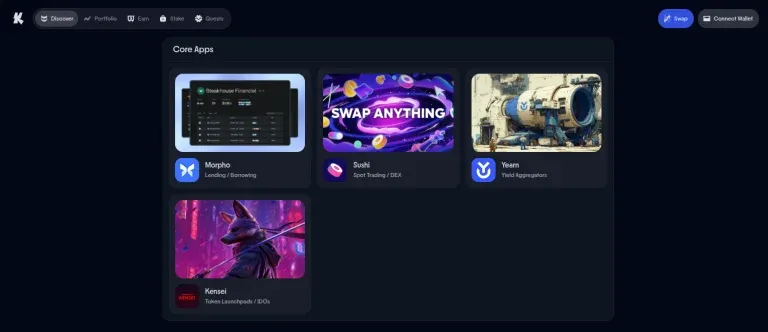
Key dApps and Use‑Cases
- Sushi – The primary layer for spot trading and liquidity provisioning, aggregating cross‑chain assets and stablecoins.
- Morpho – A lending infrastructure that supports collateralized borrowing and composable strategies.
- Kensei – A launchpad that links token issuance, community participation, and incentive distribution.
- VaultBridge and CoL – Provide native on‑chain liquidity by channeling yield from protocol fees and validator/ordering‑service rewards, completing the incentive flywheel.
How to Acquire and Participate in the KAT Ecosystem
There are two main avenues for obtaining KAT:
- In‑protocol incentives – Earn KAT by actively using Sushi, Morpho, Kensei, and other core dApps.
- Secondary‑market trading – Once exchange liquidity is established, KAT can be bought or sold like any other token.
Before executing any on‑chain transaction, always verify the official contract address and ensure you are interacting with the correct network to avoid mis‑routing funds. It is important to stress that using Katana’s DeFi services does not require holding KAT; the token only becomes essential if you wish to participate in governance or share protocol fees.
A typical participation path looks like this: earn KAT through core‑app activity → after KAT becomes transferable, lock it as vKAT → vote on incentive allocation and collect fee shares.
Competitive Landscape Snapshot
| Project | Core Positioning | Differences from Katana |
|---------|------------------|--------------------------|
| Blast | Ethereum L2 with native ETH and stable‑coin yields | Focuses on automated yield; Katana emphasizes vKAT governance and on‑chain native liquidity |
| Berachain | Proof‑of‑Liquidity where liquidity underpins consensus | Katana uses vKAT voting and revenue‑recycling to allocate incentives |
| Hyperliquid | On‑chain derivatives trading platform | Katana builds a broader DeFi stack (lending, liquidity, capital cycles) |
| Mantle | Modular L2 backed by a sizable ecosystem fund | Katana concentrates on a few core apps and governance‑driven incentives |
| Base | General‑purpose OP‑Stack L2 supporting diverse dApps | Katana is DeFi‑specific, with token‑governed incentive scheduling |
Overall, Katana competes in the “Liquidity Chain” niche. Unlike generic L2 solutions that chase sheer transaction volume, Katana adopts a low‑app‑count, high‑liquidity‑concentration strategy and uses governance to steer incentives toward genuine demand.
Risks and Key Considerations
Technical Risks
Katana’s architecture blends cross‑chain bridges, yield strategies, AMM modules, lending contracts, and governance‑driven incentives. Each layer introduces dependencies and possible vulnerabilities, especially the VaultBridge yield strategy and the underlying smart‑contract code. A failure in any core protocol could cascade throughout the ecosystem.
Token‑Economic Risks
KAT’s market price is influenced by token‑unlock schedules, demand for governance participation, and the magnitude of incentive distributions. Early‑stage incentives can attract users quickly, but a large volume of unlocked tokens entering the market may create selling pressure. If the vKAT lock‑up rate remains low, incentive distribution could drift away from actual usage patterns, yielding a “distribution‑driven” rather than a “usage‑driven” economy.
Market Narrative and Adoption Risks
Katana assumes that users will adopt it as a primary DeFi liquidity hub. In a highly competitive environment of specialized DeFi chains, capital may become fragmented across multiple ecosystems. The project’s ability to retain users, generate steady protocol fees, and differentiate itself from larger L2s will be decisive for long‑term success.
Note: Crypto‑related gains may be taxable in many jurisdictions. Participants should consult local tax professionals to understand their obligations.
Key Metrics to Monitor Going Forward
- Depth and stability of core liquidity pools – including slippage metrics and liquidity persistence during volatile periods.
- Utilization of core applications – trading volume on Sushi, borrowing/lending utilization on Morpho, participation rates on Kensei, all of which directly feed protocol‑fee revenue.
3 vKAT lock‑up ratio – a rising lock‑up rate signals stronger governance engagement and longer‑term incentive commitment.
- On‑chain native liquidity (CoL) size – growth driven by ordering‑service fees and ecosystem revenue reduces reliance on pure token‑based incentives.
- Asset and stable‑coin integration depth – smoother, more secure fund‑deployment pathways lower entry barriers and boost ecosystem adoption.
Frequently Asked Questions (FAQ)
1. What is KAT?
KAT is the native token of the Katana network, primarily used for governance and incentive coordination. By locking KAT into vKAT, holders can vote on incentive distribution and claim a share of protocol fees. Using Katana’s basic services does not require holding KAT.
2. What are the main functions of KAT?
- Lock into vKAT to obtain voting rights.
- Receive a portion of protocol fees from pools that the vKAT holder has voted to support.
- Serve as a tradable asset on secondary markets for holding or speculation.
3. On which blockchain does KAT reside?
KAT operates on the Katana network, an Ethereum L2 that places DeFi at its core while still relying on ETH for gas payments.
4. Is KAT inflationary or deflationary?
KAT has a fixed maximum supply of 10 billion tokens. While the total supply does not increase, the circulating supply grows over time as tokens unlock. Whether the token becomes deflationary depends on future burn mechanisms or fee‑recycling policies.
5. How does KAT differ from similar tokens?
KAT employs a ve (vote‑escrow) governance model, using locked tokens to steer incentive allocation and share protocol revenue. Katana concentrates liquidity in core apps and couples it with on‑chain native liquidity (CoL) and ordering‑service income, forming a closed incentive loop rather than relying solely on PoL or native yield.
6. What are the primary risks facing KAT?
- Security vulnerabilities in cross‑chain bridges, yield strategies, lending contracts, and AMM logic.
- Potential price pressure from token unlocks.
- Insufficient liquidity concentration, which could slow ecosystem adoption.
7. Which type of user is best suited to hold KAT?
Users who want to participate in governance, influence incentive distribution, and earn protocol‑fee revenue are the ideal audience. Liquidity providers actively engaged in Katana’s DeFi suite also benefit. Casual traders with no intention of governance participation have limited demand for KAT.
8. Where can I find official Katana information?
Official channels include the Katana website, the project blog, X (formerly Twitter), Discord, and Telegram. These platforms publish the contract address, token transfer timelines, ecosystem roadmaps, and the latest rule updates.
This concludes an in‑depth analysis of the Katana (KAT) token, covering its operating mechanics, tokenomics, participation guide, and risk considerations. For further updates, stay tuned to Bitaigen’s forthcoming reports.
💡 Register on Binance with referral code B2345 for the maximum trading fee discount. See Binance complete guide.



