
 Bitaigen Research
The Bitaigen editorial team notes that this article systematically outlines Katana’s token mechanics, economic model, and the latest airdrop and TGE arrangements, helping readers quickly understand acquisition routes and governance participation methods—ideal for users looking to capture opportunities in new projects.
Katana Airdrop, TGE and Paths to Obtain KAT (March 2026)
Katana’s token generation event (TGE) is scheduled to be completed by the end of March 2026. The originally planned automatic unlock on 2026‑02‑20 was cancelled via a smart‑contract upgrade to accommodate the upcoming CEX Earn feature. When the upgrade takes effect, all accumulated KAT will be unlocked and can be locked in the vKAT Armory to participate in governance and share network revenue.
- Airdrop schedule: From 2026‑03‑03 to 2026‑03‑17, 50 million KAT will be distributed to users through the vbUSDC pool.
- Liquidity incentives: 10 % (i.e., 100 million KAT) will be directly allocated to users who provide liquidity on core applications such as Sushi and Morpho; rewards increase with the size and duration of the stake.
- Acquisition steps
- Prepare a Web3 wallet: Use MetaMask or any WalletConnect‑compatible wallet. On Ethereum, have ETH, USDC, USDT or WBTC ready. (U.S. residents should use Binance.US or other regulated platforms to acquire stablecoins.)
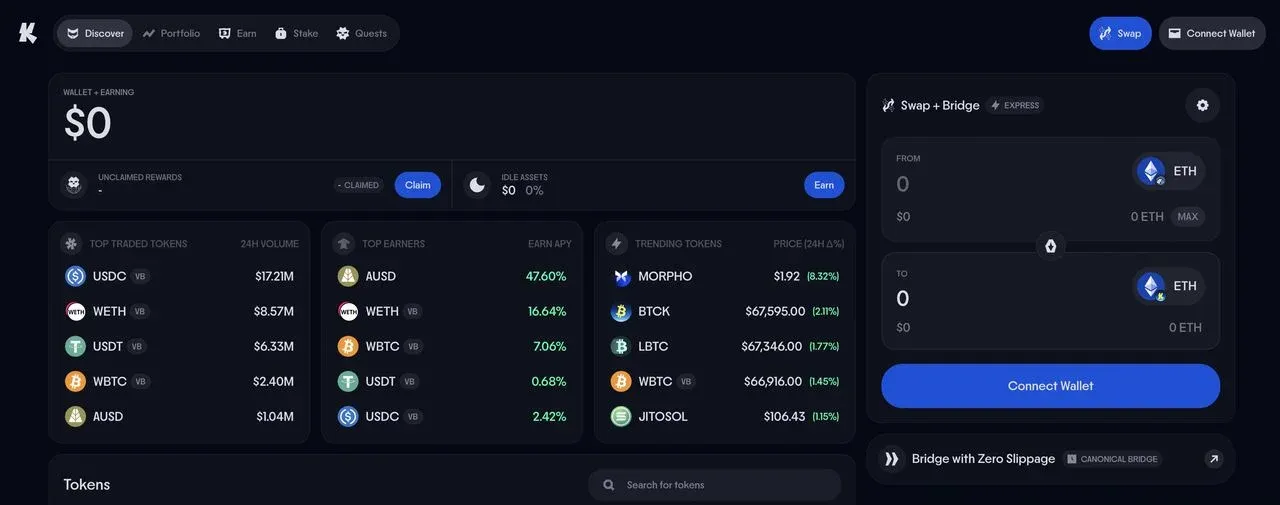
- Cross‑chain bridging: Visit the Katana App and bridge assets to the AggLayer. The system will automatically generate vbTokens (e.g., vbETH, vbUSDC) and allocate them to low‑risk strategies such as Yearn or Morpho to earn yield.
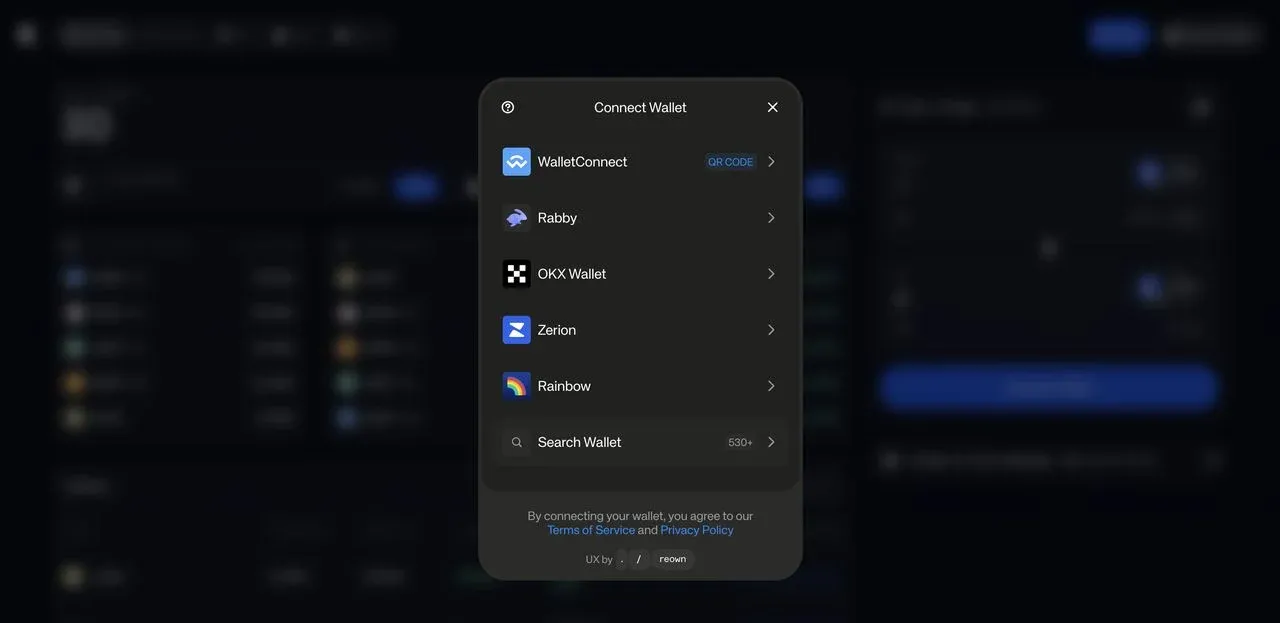
- Deploy to core applications: Provide liquidity on Sushi or deposit assets into Morpho to trigger higher‑ratio KAT issuance. Rewards are displayed in real time on the Katana dashboard.
- Post‑TGE lock‑up: After the TGE, claim your KAT and lock it in the vKAT Armory to obtain voting power and a share of protocol fees.
Users who hold Polygon POL and stake on Ethereum are also eligible to receive up to 15 % of the total supply over the four years following the TGE. Once transferability is active, eligibility can be verified directly within the Katana app.
Core Design and Operational Mechanics of the Katana Network
Katana is a Layer‑2 execution layer built specifically for DeFi, eliminating the liquidity fragmentation typical of generic rollups. It is deployed on Polygon’s AggLayer, leveraging the Polygon CDK and op‑geth stack, making it the first OP Stack rollup on this layer. The network revolves around three “core” protocols that create a liquidity flywheel:
- Sushi v3 – spot trading
- Morpho – lending & borrowing
- Vertex – perpetual contracts
Fees collected from sequencers, bridge revenue, stable‑coin interest, and DApp usage are all reclaimed and injected into the network’s liquidity reserve, creating a self‑reinforcing capital loop.
The Four Pillars
Functions and Governance Model of the $KAT Token
KAT is not used to pay gas; transaction fees remain payable in ETH. Its core value lies in the vKAT mechanism, which ties token holders’ interests to the network’s liquidity growth.
- vKAT staking and voting: Holders lock KAT 1:1 to mint vKAT. Weekly votes determine how newly minted KAT is directed to specific liquidity pools on Sushi, Morpho or Vertex, establishing chain‑level capital‑flow governance (similar to ve(3,3)).
- Revenue distribution: vKAT stakers share multiple streams of network income, including trading fees, lending spreads, treasury yields, and returns from AUSD. Rewards are linked to actual usage rather than pure token inflation.
- Incentive amplification: As liquidity depth and activity increase, vKAT‑directed rewards further strengthen efficient markets, creating a positive feedback loop.
- Future sequencer alignment: Sequencer fees and bridge revenues will gradually flow directly to vKAT stakers, shifting incentives from issuance‑driven to usage‑driven sustainability.
Tokenomics of $KAT
- Total supply: Fixed at 10 000 000 000 (10 billion) tokens. There is no pre‑sale or VC allocation; the sole institutional holder is the Katana Foundation.
- Lock‑up and release: KAT issued on mainnet is initially locked for nine months, originally slated for automatic release on 2026‑02‑20. That trigger was removed to accommodate CEX Earn integration, and the new transferable window is set for the end of March 2026.
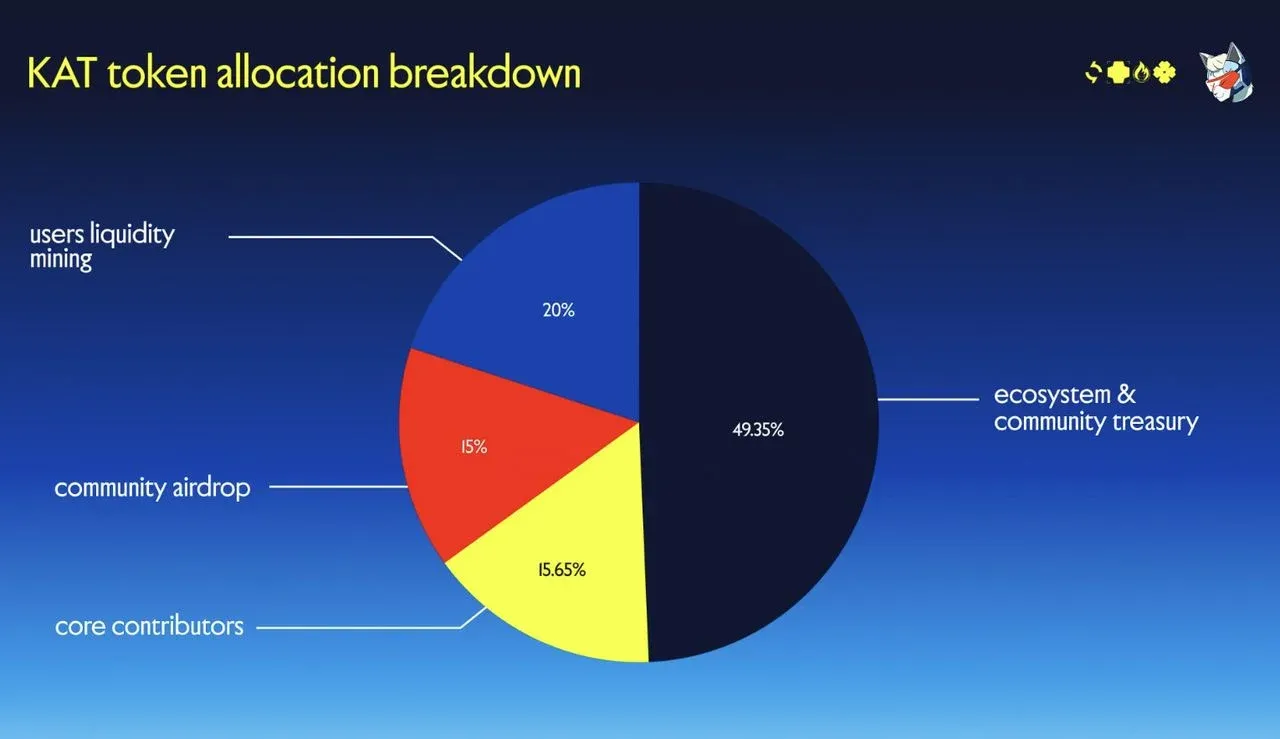
- Allocation overview (percentage of total supply):
- Ecosystem & community treasury: 49.35 % (3 % unlocked at launch for liquidity, 2 % for ecosystem grants, the remainder linearly unlocked over four years)
- POL staker airdrop: 15 % (7 % instantly unlocked as vKAT, the remaining 8 % linearly unlocked over four years)
- Krates & TVL incentive program: 10 % (unlocked when transferable; any unused portion reverts to the treasury)
- Core‑application incentives: 10 % (half distributed before mainnet launch, the rest reserved for post‑launch liquidity incentives)
- Core contributors: 15.65 % (team and foundation members, vested over multiple years under the same schedule as the treasury)
- Supply growth model: KAT has no burn mechanism; new supply arises solely from the four‑year staged unlock schedule described above. Protocol revenue is reinvested into chain‑owned liquidity or distributed to vKAT stakers under the real‑world yield framework, helping to balance supply and demand.
Comparison with Other Layer‑2s and DeFi‑Native Chains
General‑purpose L2s such as Arbitrum, Base and zkSync aim for broad application coverage, trying to host as many protocols as possible. However, competition among many protocols for the same pooled capital often leads to fragmented liquidity and shallow depth. By contrast, vertical chains like Berachain or Hyperliquid focus on a single financial primitive; they achieve depth but are limited in scope.
Katana follows a “full‑stack concentration” approach: only Sushi, Morpho and Vertex reside on the same chain, and all network revenue is funneled back into chain‑owned liquidity. This design avoids cross‑protocol capital dilution while not restricting the ecosystem to a single product, yielding a shared liquidity pool driven by actual usage.
Four Key Risk Notices Before Using Katana
- Token unlock schedule – KAT’s transferability is tightly linked to the TGE; the subsequent four‑year staggered releases will continuously affect market supply.
- TVL and revenue dependence – The real‑world yield model depends on sustained growth in trading, lending and bridging activity. A stagnating TVL could diminish returns for vKAT holders.
- Multi‑layer protocol risk – From the low‑risk strategies employed by VaultBridge to the smart contracts of Sushi, Morpho and Vertex, each layer carries its own smart‑contract or operational risk.
- Active participation requirement – Simply holding assets does not unlock the full incentive suite; users must actively engage with vbTokens, provide liquidity, and stake vKAT to maximize potential earnings.
Tax reminder: Crypto gains may be taxable in your jurisdiction. Users should consult local tax professionals and consider reporting obligations when receiving or trading KAT.
Founders and Partners of the Katana Network
Katana is operated by the Katana Foundation. Polygon Labs provides the AggLayer and CDK‑op‑geth stack, while institutional liquidity and market‑making expertise come from GSR. The network completed a private mainnet test in May 2025, attracting over USD 240 million in pre‑deposits, and opened to the public in June 2025. Core partners include:
- Conduit – sequencing services
- Chainlink – oracle network
- Fireblocks – custodial solutions
- Succinct – ZK validity proofs
- Sushi, Morpho, Vertex – on‑chain core DeFi applications
Frequently Asked Questions
1. Which wallets are supported?
Any Web3 wallet compatible with Ethereum and WalletConnect can be used, including MetaMask, Rainbow, Trust Wallet, etc. Users complete asset bridging through the official Katana interface.
2. On which chain is Katana deployed?
Katana is built on the Polygon CDK and deployed as an OP Stack rollup on Polygon’s AggLayer, using ZK validity proofs for security. Cross‑chain bridges originate from the Ethereum mainnet, and gas fees are still paid in ETH.
3. What is the exact timing of the TGE?
The target is to finish the TGE before the end of March 2026. The previously scheduled automatic unlock on 2026‑02‑20 has been cancelled. The definitive launch date will be announced on official channels ahead of time.
4. Who can claim KAT at the TGE?
All users meeting any of the following conditions can claim their allocated KAT after the TGE:
- Participants who received allocations through the Krates rewards or TVL commitment programs
- Users who took part in the vbUSDC airdrop between 2026‑03‑03 and 2026‑03‑17
- Users who satisfy Polygon POL staking requirements on Ethereum
Once transferability becomes active, the tokens can be withdrawn directly within the Katana application.
---
This article provides a comprehensive analysis of the Katana (KAT) token, covering its operational mechanics, token economics, airdrop and TGE specifics, as well as key considerations before use. For further details, consult previous Bitaigen (比特根) articles or follow the links below. Enjoy your experience within the Katana ecosystem!
💡 Register on Binance with referral code B2345 for the maximum trading fee discount. See Binance complete guide.



