
 Bitaigen Research
 Key Takeaways
- The progress of a Solana ETF signals a growing regulatory acknowledgement of altcoins, opening the door for similar approvals for other mainstream tokens.
- XRP, which enjoys legal certainty, robust liquidity, and existing institutional participation, is viewed as the leading candidate for the next alt‑coin ETF.
- Although its user base and ecosystem still have room to grow, Cardano’s decentralized governance and academic rigor attract long‑term, value‑oriented investors.
- Avalanche’s enterprise‑grade design and active DApp ecosystem give it potential value within multi‑asset ETF structures.
- Without futures contracts that fall under CFTC oversight, the review of alt‑coin ETFs may be delayed; multi‑asset ETFs could serve as a bridge to satisfy regulatory requirements.
We believe that the approval of a Solana ETF marks a shift in regulators’ attitude toward altcoins, and subsequent ETF filings for XRP, Cardano, Avalanche and other leading tokens are beginning to surface. This article dissects the SEC’s review focus points to help investors understand the potential opportunities.
SEC’s Review Focus for Alt‑Coin ETFs
When the U.S. Securities and Exchange Commission evaluates cryptocurrency ETFs, its core concerns include:
- Sufficient trading volume on a regulated U.S. exchange;
- Demonstrable decentralization and security of the underlying network;
- A clear legal classification of the token (i.e., not deemed a security);
- Cross‑platform price discovery mechanisms and arbitrage opportunities.
At present, the altcoins discussed above do not have futures contracts traded on markets overseen by the CFTC, a factor that proved pivotal for the approval of Bitcoin and Ethereum ETFs and now represents a primary hurdle. Should the Solana ETF receive clearance, it could prompt the SEC to adjust its assessment criteria, especially for products that involve staking, on‑chain rewards, or DeFi interactions.
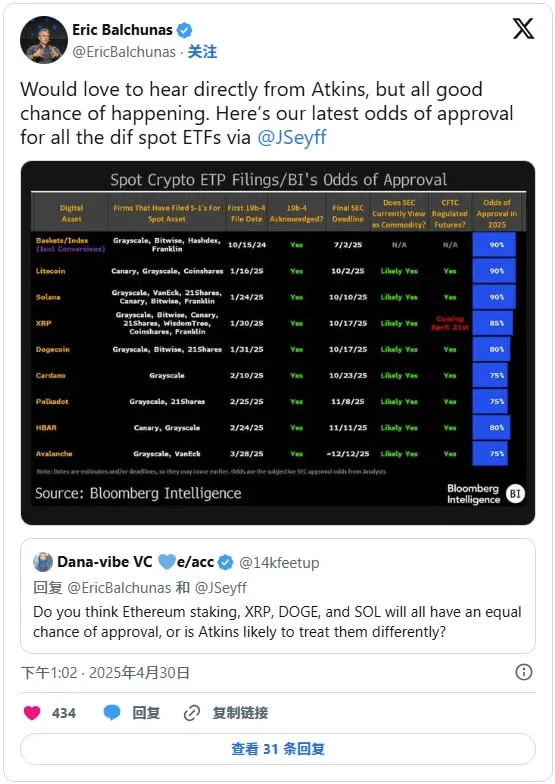
Bloomberg Intelligence estimates that the probability of a Solana ETF being approved before the end of 2025 exceeds 90 %. If that milestone is reached, issuers and regulators are likely to revisit ETF proposals for XRP, ADA and AVAX.
Potential Role of Multi‑Asset Crypto ETFs
While single‑asset ETFs are still in a nascent stage, multi‑coin index products have already entered the discussion. Institutions such as Fidelity and Bitwise have proposed funds that weight several altcoins by market cap or ecosystem contribution, aiming to reduce the volatility inherent in a single‑asset exposure and to meet the SEC’s investor‑protection standards. For tokens that have not yet satisfied the criteria for an independent ETF, this structure offers an alternative compliance pathway and reflects the growing market demand for “basket” crypto exposure.
Industry Impact of the Solana ETF
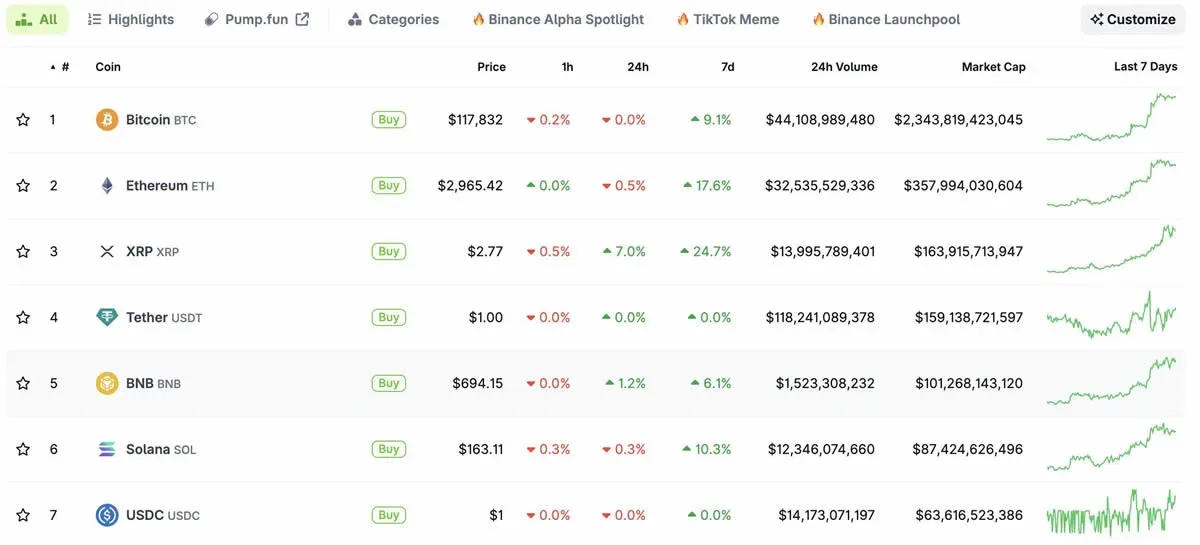
The Solana ETF launched by REX‑Osprey has successfully listed, and the SEC has asked the issuer to revise the S‑1 filing for the spot Solana ETF by July 31. This indicates that the regulatory window is widening. Solana currently ranks sixth by market capitalization, exceeding $67 billion, with an average daily trading volume of roughly $2.5 billion, over 2,400 active validators, and an officially advertised throughput of up to 65,000 TPS. These metrics have generated strong interest from institutional investors and provide a reference template for future alt‑coin ETF considerations.
Alt‑Coin ETF Candidates Likely to Follow
1. XRP (Ripple)
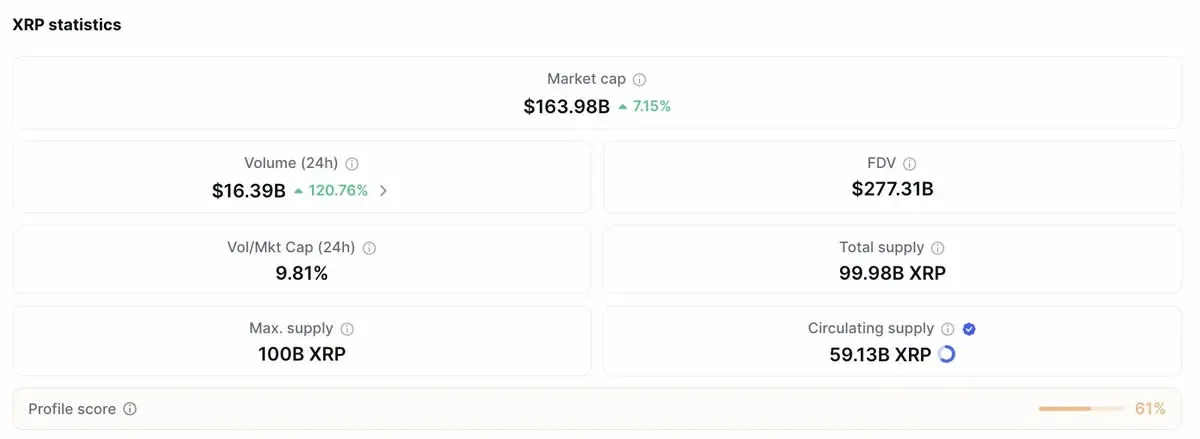
Among alt‑coin ETF discussions, XRP enjoys the clearest legal standing. In July 2023, a U.S. federal court ruled that secondary‑market trading of XRP does not constitute a securities transaction. While the decision did not completely absolve Ripple Labs from regulatory scrutiny, it removed the biggest legal barrier to institutional product launches.
By the second quarter of 2025, XRP’s daily trading volume had surpassed $1.2 billion, and the token is listed on more than 100 exchanges worldwide. Its real‑world usage in cross‑border payments continues to expand: RippleNet processes over $15 billion in remittances each year across Asia, Latin America and other regions. With a transparent regulatory posture, ample liquidity and existing institutional participation, XRP stands out as one of the most feasible alt‑coin ETF candidates—provided the SEC shifts its broader stance on altcoins after the Solana precedent.
2. Cardano (ADA)
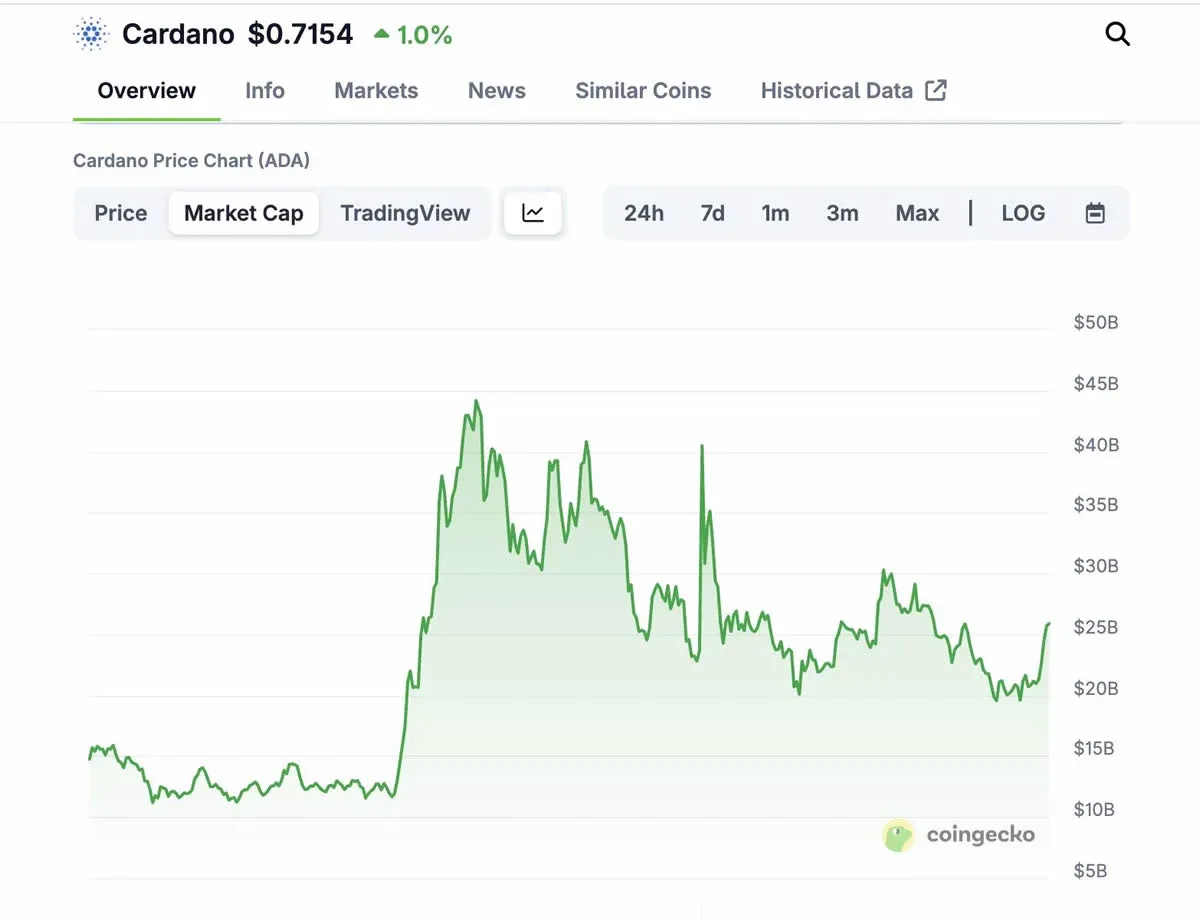
Cardano is renowned for its academically driven development model; every protocol upgrade is based on peer‑reviewed papers and formal verification, which makes it attractive to institutions that value technical rigor. Its current market cap is roughly $25 billion, placing it within the top 20 cryptocurrencies, and it boasts more than 3,200 stake pools, reflecting a high degree of decentralization.
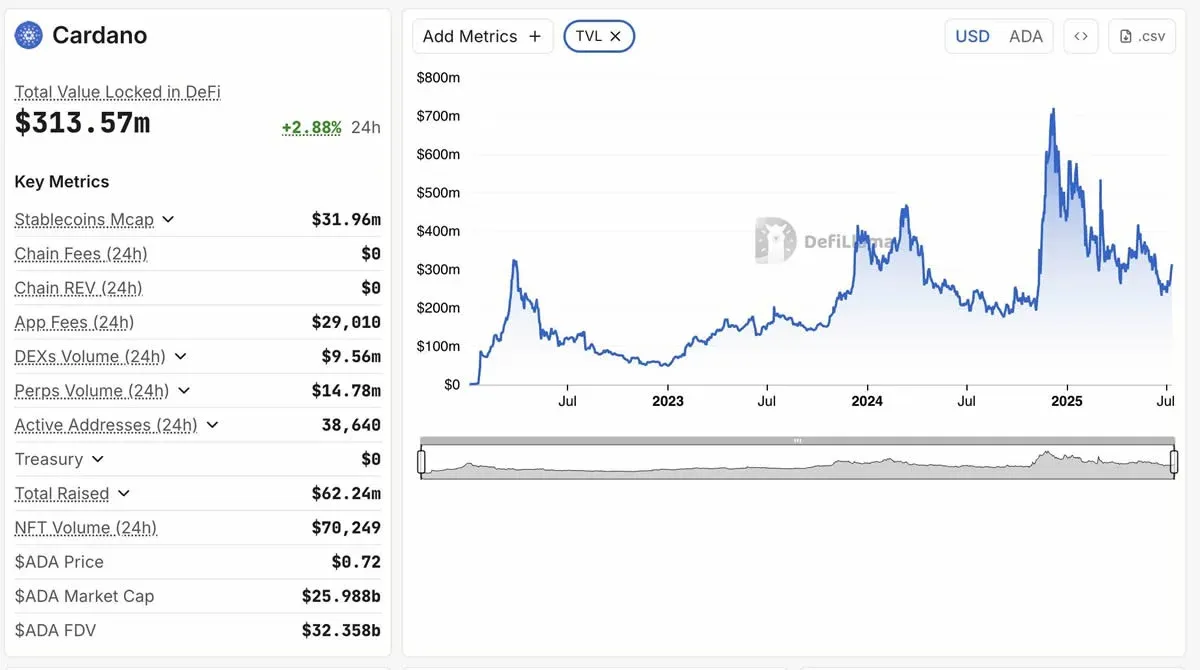
Nevertheless, Cardano’s on‑chain activity trails behind Solana and Ethereum. In June 2025, ADA’s average daily trading volume was about $2.6 billion, comparable to Solana’s, while its total value locked (TVL) in DeFi protocols hovered just above $400 million, a middle‑range figure that suggests limited real‑world financial use cases at present.
From a long‑term perspective, ADA’s governance framework, scalability roadmap via the Hydra protocol, and cross‑chain interoperability plans provide theoretical support for eventual ETF inclusion, especially as the overall regulatory environment matures.
3. Avalanche (AVAX)
Avalanche’s modular subnet architecture offers enterprises customizable, permissioned blockchain solutions—a feature that gains particular relevance as compliance demands increase. As of July 2025, Avalanche had launched more than 120 subnets and collaborated with institutions such as AWS and JPMorgan on blockchain pilots.
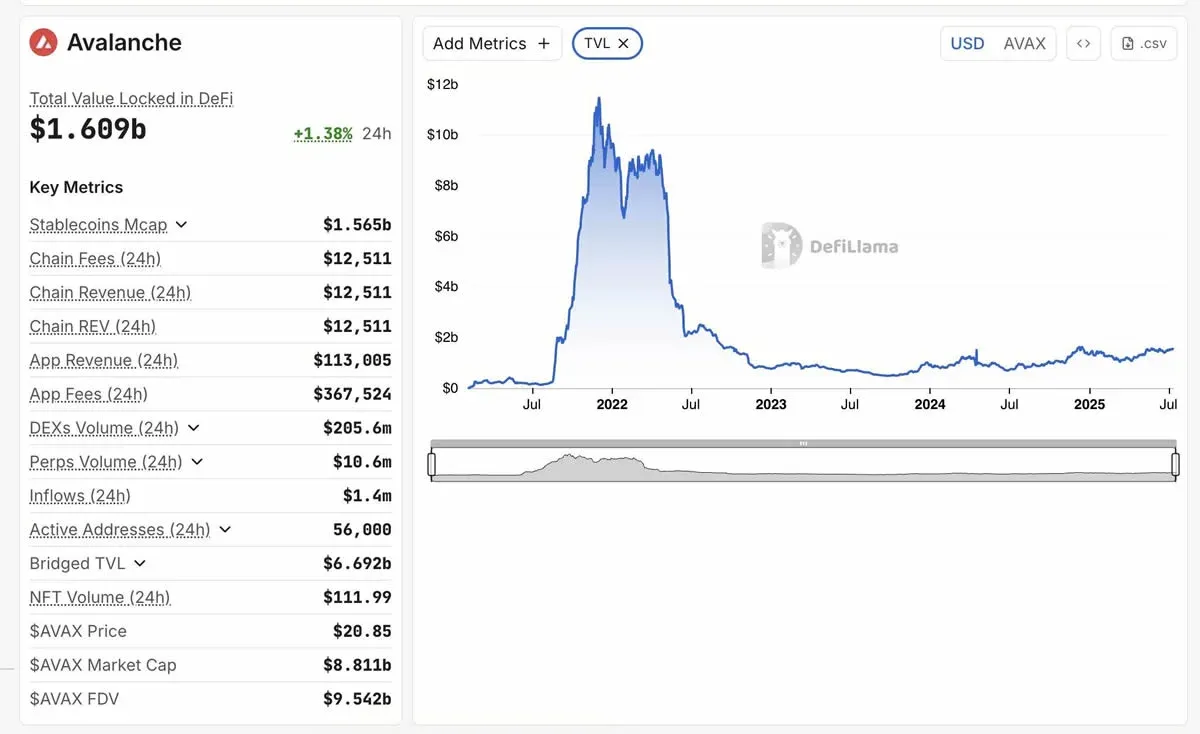
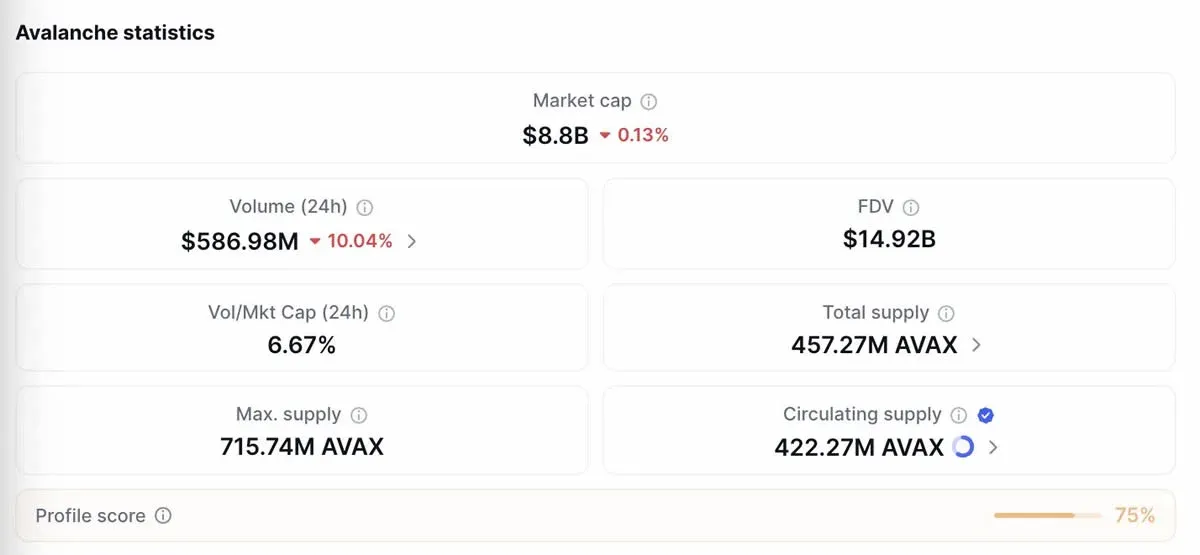
On the data side, AVAX’s market cap sits at approximately $8.8 billion, its DeFi TVL reaches $1.6 billion, ranking it among the top six DeFi platforms, and the C‑Chain’s average daily trading volume is around $600 million. The network’s focus on tokenizing real‑world assets, together with projects involving Intain, JPMorgan and others, has heightened institutional interest. While it lacks the explicit legal clarity that XRP enjoys and does not yet have the retail hype of Solana, Avalanche’s enterprise‑centric attributes make it a strong contender for inclusion in multi‑asset or thematic ETFs.
ETF Feasibility Ranking (Mid‑2025)
| Rank | Alt‑Coin | Primary Strengths | Primary Constraints |
|---|---|---|---|
| 1 | **XRP** | High legal clarity, strong liquidity, mature institutional footprint | Requires the SEC to adjust its overall stance on altcoins |
| 2 | **AVAX** | Broad enterprise adoption, modular architecture, sizable DeFi presence | Lacks the same level of legal certainty as XRP |
| 3 | **ADA** | High decentralization, academic rigor, clear governance vision | Trading volume and DeFi activity are comparatively modest |
Overall, XRP appears the most likely to secure ETF approval in the short term because of its regulatory advantage and established ecosystem. Avalanche’s enterprise use cases and innovative subnet design give it appeal for multi‑asset or thematic ETF structures. Cardano, while strong on governance and technical foundations, still needs to boost transaction activity and practical financial usage before it becomes a focal point for regulators.
Conclusion
The successful launch of the Solana ETF not only injects confidence into its own ecosystem but also sets a regulatory precedent that altcoins can be incorporated into compliant investment vehicles. XRP, ADA and AVAX each showcase distinct competitive advantages and challenges, and they may vie for the next round of approvals—whether as single‑asset ETFs or as components of broader “basket” products. Although regulatory and structural obstacles remain, the growing maturity of the market suggests that both institutions and retail participants could soon enjoy wider, regulated pathways to invest in altcoins.
Note for U.S. investors: When accessing cryptocurrency markets, use Binance.US rather than the global Binance platform to remain compliant with U.S. regulations.
Tax reminder: Gains from cryptocurrency transactions may be taxable in your local jurisdiction. Investors should consult a qualified tax professional to understand their obligations under applicable laws.
For more information on alt‑coin ETFs that may receive approval in the future, follow Bitaigen and its related coverage.
Related Reading
- XRP ETF 2025: Boosting Altcoin Liquidity & Demand
- Ethereum Layer 2 Explained: Mechanisms, Risks & Future
- EVM Public Blockchains: Technical Review & Ecosystem
💡 Register on Binance with referral code B2345 for the maximum trading fee discount. See Binance complete guide.
⚠️ Risk Disclaimer: Crypto prices are highly volatile. This is not investment advice.



