
 Bitaigen Research
 This article was carefully compiled by the Bitaigen editorial team, providing a systematic review of Solana’s technical strengths, ecosystem development, and, based on historical data and industry trends, an in‑depth analysis of price trajectories for 2026, 2027, 2030 and beyond. If you want to understand possible market directions for SOL and gather reference information, please continue reading.
Solana (SOL) remains one of the focal points in the cryptocurrency industry. This piece, grounded in existing data, systematically outlines SOL’s historical performance, recent trends, and price outlook for 2026, 2027, 2030 and the longer term, helping readers grasp its potential market dynamics.
Core Technology and Network Advantages
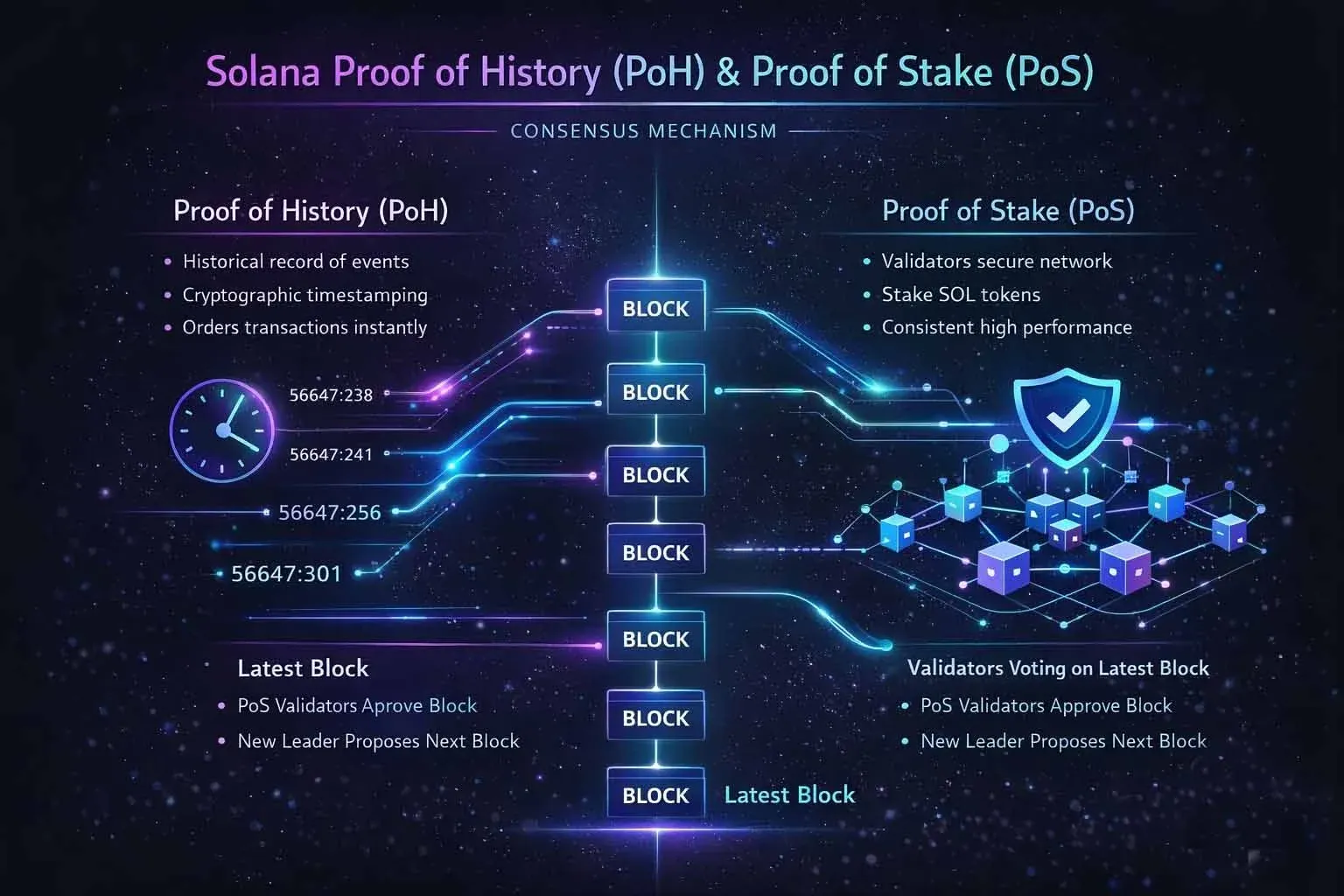
Solana employs a hybrid consensus mechanism that combines Proof‑of‑History (PoH) + Proof‑of‑Stake (PoS). This combination improves synchronization efficiency among validators and dramatically shortens transaction confirmation times. Since the mainnet launch in 2020, Solana’s capacity to process massive numbers of transactions per second has made it one of the fastest‑scaling Layer‑1 blockchains in operation today.
- High throughput: While maintaining a decentralized security model, the network can handle large batches of transactions with extremely low latency.
- No need for Layer‑2: Unlike Ethereum and other chains that require additional scaling layers, Solana achieves efficient expansion directly through its base‑layer design, which is a significant advantage in the scalability race.
Ecosystem Expansion and Use Cases
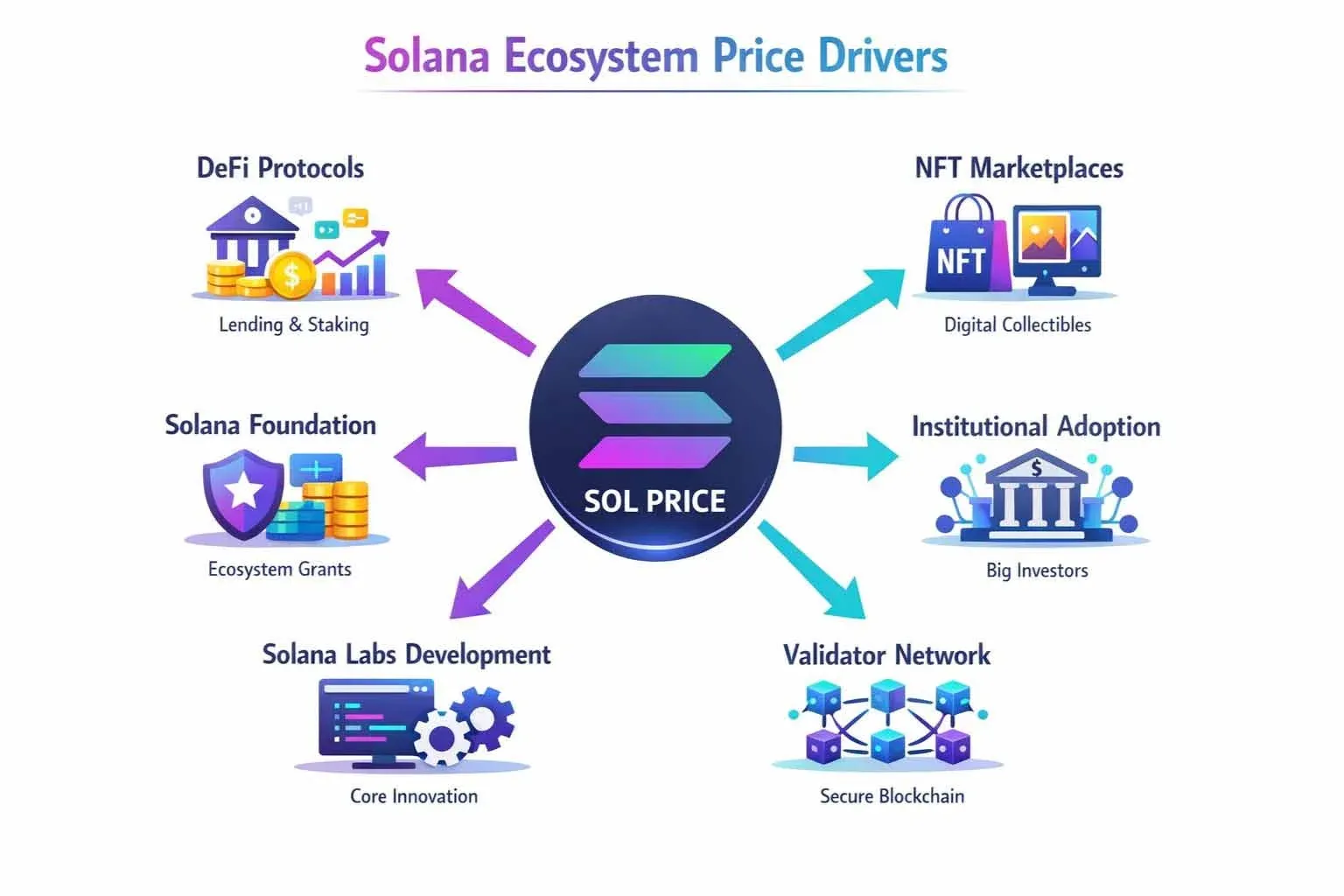
The Solana ecosystem spans DeFi protocols, NFT marketplaces, blockchain games, and real‑world asset tokenization platforms. The native token SOL is deeply embedded in staking pools, liquidity provision, and core functions of decentralized exchanges.
- Foundation and Labs: The Solana Foundation continuously provides grants to developers, while Solana Labs keeps refining the underlying protocol and infrastructure tooling.
- Wallets and Security: Wallet products are increasingly compatible with hardware security modules and enterprise custodial solutions, laying groundwork for broader adoption of crypto assets.
Historical Price Performance and Recent Trends
SOL’s price volatility is closely tied to the liquidity cycles of the broader crypto market. Historical peaks typically occur during bull markets and are followed by corrections when macro‑economic conditions tighten. The network has experienced several brief outages, but validator upgrades and stability improvements have markedly reduced downtime frequency. At the beginning of 2026, after the fluctuations of 2025, SOL entered a relatively stable consolidation phase; analytical models indicate that the average price in February is expected to hover in the low three‑digit range.
Major exchanges (e.g., Binance) still offer highly liquid SOL/USD pairs. Real‑time pricing is influenced by both liquidity inflows and trading demand. U.S. users should access these pairs via Binance.US rather than the global Binance platform.
2026 Price Forecast Outlook
Combining technical indicators, macro‑economic data, and on‑chain activity levels, multiple models project that SOL’s price in 2026 will fluctuate within USD 80–140. The exact range depends on liquidity expansion and institutional capital allocation. If a new bull cycle ignites toward year‑end, the price could trend higher.
2026 Scenario Table
| Scenario | Low | Average | Bull Range |
|---|---|---|---|
| Bear market | USD 70 | USD 85 | USD 95 |
| Neutral | USD 90 | USD 110 | USD 130 |
| Bull market | USD 120 | USD 140 | USD 180 |
Price potential is primarily driven by DeFi liquidity, NFT trading recovery, and the degree of institutional adoption.
2027 Forecast and Key Variables
Models for 2027 focus on network upgrades, cross‑chain interoperability, and enterprise‑level adoption. If global crypto usage accelerates, SOL could capture a larger share of the smart‑contract market. Forecasts under different scenarios are as follows:
| Scenario | Conservative | Moderate | Aggressive |
|---|---|---|---|
| 2027 price | USD 150 | USD 220 | USD 350 |
2030 and Longer‑Term Outlook
By 2030, SOL’s valuation will be heavily influenced by the worldwide layout of blockchain infrastructure. Should corporate tokenization accelerate, SOL may experience exponential growth, becoming a key network for payments, decentralized identity, and cross‑border settlement. Clarified regulatory environments and sustained inflows of institutional capital will also be decisive factors.
Long‑Term Model Highlights
- If network adoption continues to rise, SOL’s valuation could progress through several critical tiers.
- Forecasts out to 2050 remain uncertain, but if blockchain gradually replaces traditional financial settlement layers, SOL’s market cap could see a substantial uplift.
Main Drivers of Price
- Scale of institutional adoption of crypto assets
- Growth of total value locked (TVL) in DeFi
- Revival of demand in NFT and gaming ecosystems
- Enterprise‑grade smart‑contract integration
- Enhancements in validator hardware scalability
Risks and Challenges
- Network reliability: Despite multiple rounds of improvement, sustained high availability remains essential for maintaining trust.
- Regulatory uncertainty: Tightening policies or re‑classification of digital assets in various jurisdictions could trigger short‑term price swings.
- Competitive pressure: Upgrades to Ethereum and breakthroughs from emerging blockchains may erode SOL’s market share.
Investment Perspective: Is 2026 a Good Entry Point?
Before deciding whether to purchase SOL, consider the following:
- Comprehensive analysis of price charts and technical indicators.
- Real‑time liquidity conditions and the macro trend of the overall crypto market.
- Personal risk tolerance and asset‑allocation objectives.
SOL continues to offer an attractive high‑speed DeFi infrastructure, yet investors should stay alert to macro liquidity cycles and institutional fund flows.
Technical Infrastructure and Network Resilience
Solana persistently optimizes its validator ecosystem, improves hardware efficiency, and expands throughput. A developer‑friendly environment and ongoing interest from enterprises experimenting with payments enable efficient scaling without reliance on Layer‑2 solutions—this remains a core technological advantage.
Market Positioning and Competitive Landscape
In areas such as payment systems, DeFi lending, and NFT gaming, Solana remains a top choice for developers. Its low‑cost, high‑speed execution environment attracts numerous fintech experiments and institutional pilots, preserving its competitiveness among leading public blockchains.
Price Drivers and Market Sentiment
Future price movements will closely follow global capital allocation toward digital assets. If developer numbers keep rising and blockchain penetration deepens within traditional finance, SOL is well‑positioned to maintain a leading role.
Conclusion
Solana, as one of the most forward‑looking blockchain infrastructures today, presents a moderately bullish long‑term price outlook, though short‑term volatility is still possible. Whether it is suitable for long‑term holding depends on ecosystem adoption, network stability, and regulatory clarity. As high‑speed decentralized networks continue to be built, SOL is likely to retain an important digital‑asset status over the coming decades.
The price ranges mentioned in this article are based on publicly available models and current market information; actual market behavior remains subject to multiple influences, and any investment decisions should be made cautiously.
For deeper analysis of SOL’s price trajectory, you can search past articles on Bitaigen (Bitgen) or continue reading the related content below. Wishing you successful outcomes on your crypto investment journey!
*Note: Cryptocurrency gains may be subject to taxation in your local jurisdiction; consult a tax professional for guidance.*
💡 Register on Binance with referral code B2345 for the maximum trading fee discount. See Binance complete guide.
⚠️ Risk Disclaimer: Crypto prices are highly volatile. This is not investment advice.



