 Bitaigen Research
 In January 2026, escalating geopolitical tension—most notably the ongoing dispute between the United States and Venezuela—triggered severe volatility in the global oil market, causing oil prices to swing dramatically and sparking concerns over supply security. Investors and traders began looking for hedging instruments beyond traditional oil futures, ETFs, or commodity equities. The US Oil Reserve (USOR) token attracted attention in this environment as a Solana‑based crypto asset. The project claims to provide transparency for the concept of U.S. oil reserves by verifying token‑supply changes and a so‑called “reserve pointer” on‑chain.
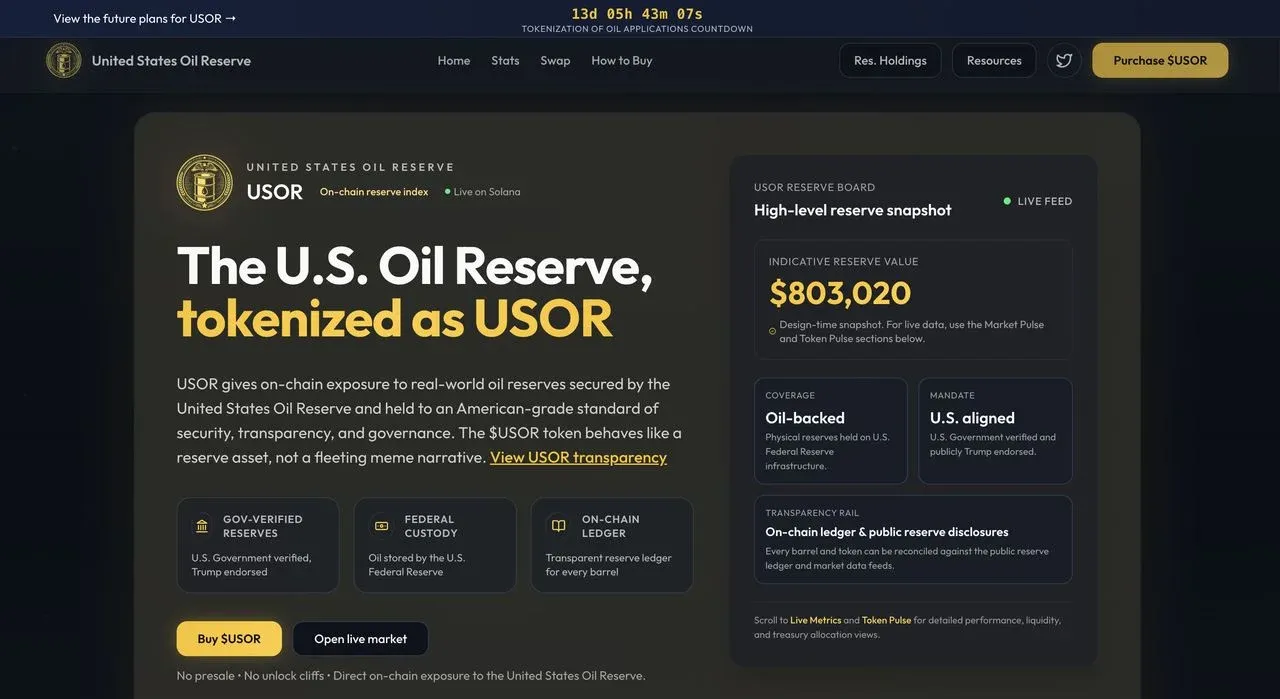
Source: USOR
It should be clarified that USOR has no official affiliation with the U.S. government, the Department of Energy, or the Strategic Petroleum Reserve (SPR). The SPR remains a critical national emergency stockpile of crude oil, with a maximum authorized capacity of 714 million barrels and a historical peak of roughly 726.6 million barrels reached at the end of 2009. Reported inventory levels from the Energy Department fluctuate with policy directives, sales, drawdowns, and replenishment plans; the current governmental focus continues to be on replenishment.
This guide combines on‑chain data, reputable market trackers, public resources, and fact‑checking to present an objective overview of USOR. The article intends to portray the token as a high‑risk, narrative‑driven digital asset rather than a regulated commodity, stock, or government‑backed investment vehicle.
In this article we outline the origin, technical implementation, and connection of the USOR token to the U.S. oil‑reserve concept. We focus on dissecting its economic model and purchase avenues, and we provide an unbiased on‑chain data assessment to help readers make rational judgments about the token’s risk and opportunity in a highly volatile environment. Please continue reading for a complete perspective.
What Is the US Oil Reserve (USOR) Token?
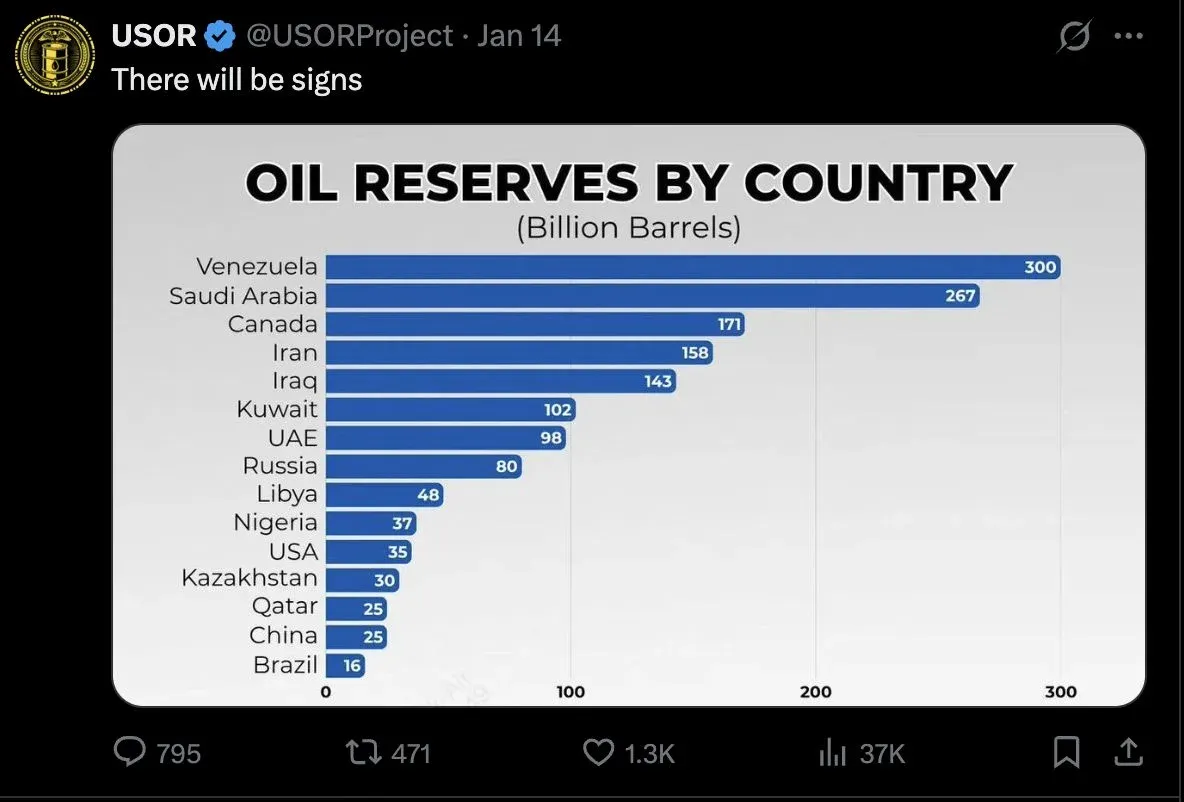
Source: USOR on X
USOR is an SPL‑standard token on the Solana blockchain that aims to tokenize the concept of the United States oil reserve. Users can buy, sell, and trade the token on decentralized exchanges (DEXs) while publicly viewing token issuance, wallet balances, and transaction history.
Project marketing often hints at a link to verified government oil reserves, even claiming verification by the U.S. government and storage by a federal entity. However, the Department of Energy and related agencies have issued no official statement confirming any authorization, endorsement, or connection to physical reserves.
USOR primarily appears as a narrative‑focused cryptocurrency, part of the broader “real‑world asset (RWA) tokenization” trend. Market analysts are more likely to classify it as a “meme token” that leverages energy‑security, political, and geopolitical storylines. Its value is driven mainly by community speculation, social‑media momentum, and overall market sentiment rather than any redeemable physical oil or regulated commodity exposure.
Who Created the US Oil (USOR) Token?
Information about USOR’s origins and development is extremely limited. Publicly available material only points to an anonymous “USOR team” or an undisclosed private initiative. The token launched on Solana in early January 2026, coinciding with a surge in projects that tokenize real‑world assets, adopt political branding, and focus on energy‑themed concepts.
To date, there are no credible independent sources, on‑chain attribution tools, or mainstream reports that can verify the specific individuals, organization, or developers behind the project. The official website, promotional materials, and social channels heavily emphasize themes such as U.S. energy independence, reserve transparency, and digital proof of reserves, yet they never provide a team roster, founder biographies, or verifiable contact information.
What Are the Main Features of the USOR Cryptocurrency?
Source: BingX
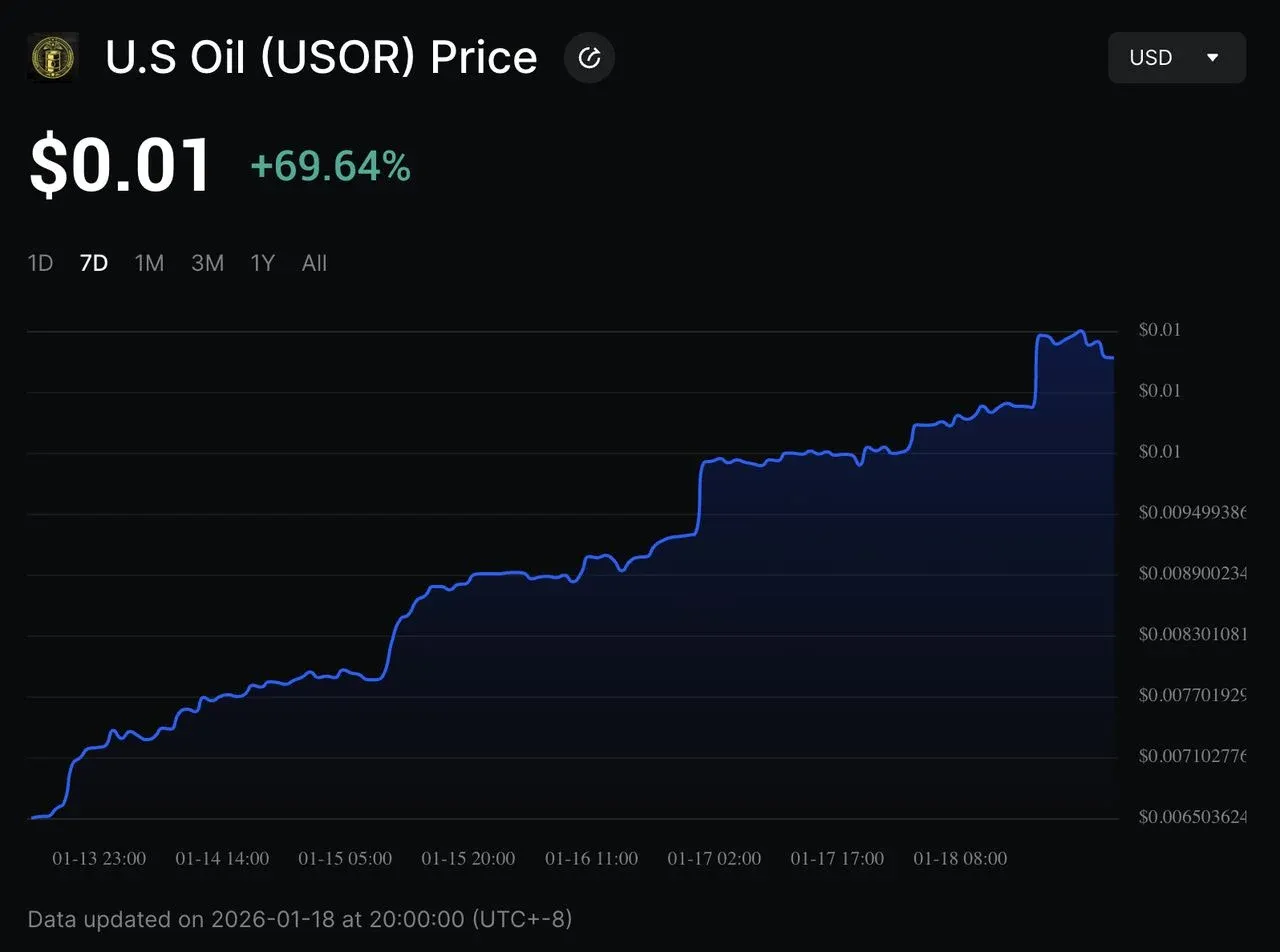
USOR leverages Solana’s high throughput and low‑fee characteristics to deliver near‑instant transaction finality, an advantage over many higher‑cost, slower networks. The token adopts a fixed‑supply model: 1 billion units were minted in a single creation event, with no subsequent issuance or inflation mechanism, intended to create intrinsic scarcity.
On‑chain transparency allows anyone to audit token flow, holder distribution, wallet balances, and historical trades via public explorers such as Solscan. Dedicated dashboards and trackers aggregate real‑time ecosystem metrics, including active holders, trading volume, and liquidity‑pool depth.
As of mid‑to‑late January 2026, aggregated data from major trackers—including CoinGecko, DEX Screener, Phantom, and Birdeye—showed a market capitalization fluctuating between $7.8 million and $10.22 million, with token prices ranging from $0.0078 to $0.01035. During peak trading periods, 24‑hour volume reached as high as $3.17 million, and liquidity was concentrated primarily in Meteora’s USOR/SOL pool.
Cross‑checked figures indicate roughly 3,340 distinct addresses holding the token. While these technical attributes appeal to users seeking speed, efficiency, and decentralization, all claims regarding oil‑reserve backing, transparency, or digital proof rely solely on data and dashboards supplied by the project itself. No independent third‑party audit or verification exists to directly link the token to actual physical oil assets or government stockpiles.
How Are BlackRock and Trump Connected to USOR?
Source: CCN
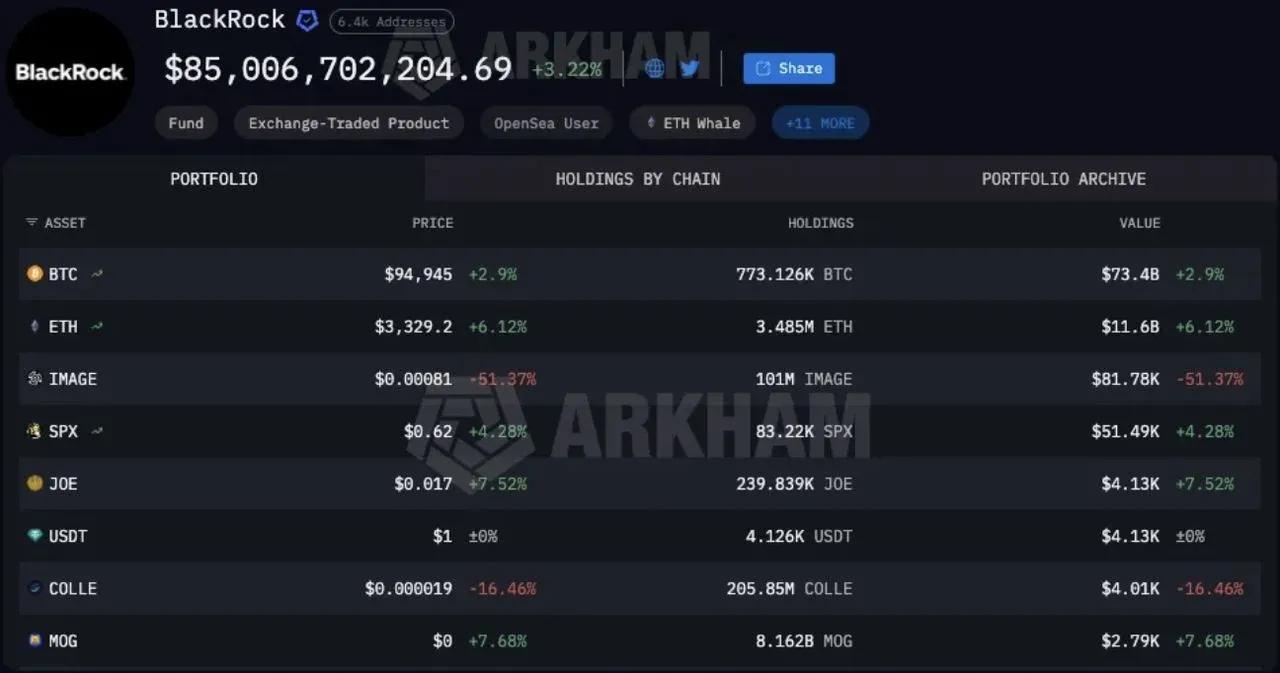
Speculative discussions on social media, crypto forums, and trading communities often attempt to associate USOR with asset‑management giant BlackRock and former President Donald Trump, citing wallet tags, community‑marked addresses, narrative alignment, and alleged on‑chain interactions. BlackRock’s chief operating officer, Larry Fink, has publicly advocated for the future of asset tokenization, but the firm has not issued any official statement, press release, or filing confirming participation, holding, investment, endorsement, or partnership with USOR.
On‑chain analytics platforms and institutional trackers have never displayed holdings or activity from wallets linked to BlackRock; alleged connections stem from speculative tagging rather than verified ownership records. Similarly, Trump‑related claims arise from unverified community wallet labels that have previously been attached to politically themed tokens, with no official support announcement or clear linkage.
Fact‑checking reports from outlets such as CCN, along with market analyses and cautionary articles, describe these purported associations as unsubstantiated hype driven mainly by retail speculation, social‑media amplification, and marketing narratives, not by genuine collaboration or institutional verification.
Although the project’s marketing materials may hint at or emphasize these ties, there is no credible press release, regulatory filing, government statement, or corporate disclosure that can confirm them. For readers interested in other politically themed or meme‑style tokens, the official Trump meme‑coin overview can be consulted.
Source: Bloomberg
How Does the USOR Cryptocurrency Operate?
USOR functions as a standard SPL token on the Solana network, with the entire supply minted at launch. Afterwards, the token trades through decentralized liquidity pools within the Solana ecosystem. The project publicly shares key data—such as token allocation, reserve‑wallet holdings, and transaction records—on the immutable Solana ledger, promoting a so‑called “reserve proof” framework.
Typical users swap SOL, USDT, or other compatible assets for USOR on popular DEXs (e.g., Meteora, Jupiter) or via aggregation routers, enabling 24/7, border‑less trading without traditional intermediaries. While the project heavily markets the token as a digital representation of the U.S. oil reserve, the blockchain can only verify on‑chain token activity; it lacks trustworthy external audits that could confirm off‑chain physical commodity ownership, storage, or title.
Market monitoring tools show consistently active trading, with 24‑hour volumes often reaching several million dollars, but these figures are highly sensitive to sentiment swings, hype cycles, and large‑holder movements. Overall performance aligns more closely with narrative momentum, community participation, and broader Solana ecosystem trends than with oil fundamentals, geopolitical events, or verifiable reserve indicators.
Aggregators like CoinGecko, CoinStats, and DEX Screener provide visualizations of circulating supply, holder distribution, trading patterns, and liquidity health. Nevertheless, an independent external audit or third‑party verification that could substantiate any claim of physical‑reserve backing remains absent.
What Is the Tokenomics of the US Oil (USOR) Token?
USOR’s tokenomics revolve around a strictly limited total supply of 1 billion tokens, all minted at inception. There is no inflation, additional issuance, burn, or re‑mint mechanism. Circulating supply closely mirrors the total supply, yielding a market‑cap structure that approximates a fully diluted valuation.
As of mid‑to‑late January 2026, aggregators such as CoinGecko reported a market cap hovering between $7.8 million and $10.22 million, corresponding to a token price range of $0.0078–$0.01035. The token’s primary use cases are speculative trading, exposure to energy‑themed narratives, potential DeFi integrations, or community‑driven applications. Governance, staking, yield‑farming, or revenue‑share features have not been launched to date.
Liquidity is heavily concentrated on Solana DEXs, with the USOR/SOL pair consistently delivering the highest trading volume. Daily turnover often exceeds $1 million and can spike to $3.17 million during periods of heightened enthusiasm. Wallet distribution shows a moderately high concentration of holdings, a typical risk factor for low‑market‑cap tokens—large‑holder actions can materially influence price. The overall design emphasizes simplicity, scarcity, and on‑chain auditability to facilitate emotion‑driven price discovery, without any mechanism for redeeming physical oil, converting to a commodity, or linking directly to real‑world inventory.
How to Purchase the US Oil Reserve (USOR): Step‑by‑Step Guide
You can acquire USOR on any decentralized exchange that lists it using a Web3 wallet. The steps below do not require KYC.
1. Set Up a Web3 Wallet
Create a compatible wallet such as Trust Wallet, MetaMask (switch to the Solana network), or Phantom. Fund the wallet with base assets like USDC, USDT, or SOL. Ensure the wallet supports the Solana network; Phantom and Solflare are the leading non‑custodial wallets in the Solana ecosystem.
2. Connect to a Compatible DEX
Link your wallet to a Solana DEX such as Jupiter, Raydium, or others to enable KYC‑free USOR purchases.
3. Locate USOR
Select the USOR/SOL (or USOR/USDC) trading pair on the exchange, input the amount of USDC, USDT, or SOL you wish to swap. If you need the base assets first, you can acquire them on platforms like BingX.
4. Execute the Swap
Set an appropriate slippage tolerance, review on‑chain fees (gas), and confirm the transaction. Once the swap is finalized on‑chain, USOR will appear in your wallet.
Conclusion: Should You Purchase the US Oil Reserve (USOR)?
The US Oil Reserve (USOR) token is a relatively well‑known yet highly speculative project within the 2026 Solana‑based tokenization landscape. It blends geopolitical energy narratives with low‑friction blockchain trading, featuring a fixed 1 billion supply, roughly 3,340 holders, a market cap of about $8 million–$10 million, and daily trading volumes that can reach several million dollars during active periods. Consequently, it retains a degree of buzz among traders interested in thematic memes, RWAs, and political influence.
However, the project lacks any governmental endorsement, verifiable linkage to actual U.S. oil reserves, independent audits, or confirmed participation from institutions such as BlackRock. As a result, it behaves more like an emotion‑driven speculative cryptocurrency and is frequently classified by market reports as a meme token. Prospective participants should conduct thorough due diligence, use reputable blockchain explorers and aggregators for real‑time on‑chain verification, apply strict risk‑management practices, and remain vigilant to the extreme volatility inherent to early‑stage narrative assets in the rapidly evolving 2026 crypto environment.
This article ends here. For deeper coverage of USOR, you may search for previous Bitaigen (比特根) articles or continue reading the related links below. Thank you for supporting Bitaigen (比特根)!
💡 Register on Binance with referral code B2345 for the maximum trading fee discount. See Binance complete guide.



