
 Bitaigen Research
 Bitcoin wallets serve as the bridge between users and the blockchain, storing the keys needed to control Bitcoin and providing send‑receive functionality. The wallet does not actually hold Bitcoin itself; instead, by managing private and public keys, it enables the holder to transact safely, check balances, and track transaction history.
From both technical and security perspectives, we systematically outline the core concepts of Bitcoin wallets, address generation rules, and private‑key management essentials, helping newcomers quickly master the usage flow and avoid common pitfalls. Subsequent sections will dive deeper into the pros and cons of different wallet types, so stay tuned.
What Is a Bitcoin Wallet Address?
Each wallet derives a unique string of characters used to receive Bitcoin—this is the wallet address. Its main characteristics are:
- Length and Prefix: Addresses are typically 26 to 35 alphanumeric characters long, most commonly beginning with “1”, “3”, or “bc1”.
- Sharing Method: To receive a payment, simply give the address or its QR code to the sender; any mistake in copying makes the transfer irreversible.
- Publicly Visible: While the address and its transaction history are public on the blockchain, the real identity behind the address remains anonymous unless additional information is disclosed.
How a Bitcoin Wallet Works
The wallet’s core duties revolve around cryptographic key management and the following processes:
- Private‑Key Custody: The private key is the sole proof of ownership of Bitcoin; the wallet is responsible for storing it securely.
- Public‑Key and Address Generation: A public key is derived from the private key, and subsequently an address is generated for receiving funds.
- Transaction Creation and Signing: When initiating a transfer, the wallet uses the private key to digitally sign the transaction data, guaranteeing its legitimacy.
- Broadcast to the Network: The signed transaction is sent to the Bitcoin network, where miners package it into a block.
- Balance and Record Display: The wallet interface shows the current Bitcoin balance and a full history of past transactions in real time.
How to Use a Bitcoin Wallet
Once you understand the basics, you can perform a variety of common tasks with your wallet:
- Send Bitcoin: Enter the recipient’s address or scan their QR code to complete the transfer.
- Receive Bitcoin: Share your own address or QR code with the payer and wait for network confirmations.
- Secure Storage: Leverage the wallet’s encryption, backup, and private‑key management features to reduce the risk of theft.
- Transaction Tracking: Use the wallet or a blockchain explorer to monitor transaction status and balance changes instantly.
- Currency Exchange: Some wallets embed exchange services, allowing you to swap Bitcoin for other crypto assets or conduct internal trades.
Overall, a wallet is not only a tool for holding Bitcoin but also a multifunctional payment and management platform within the digital‑currency ecosystem.

Steps to Create a Bitcoin Wallet
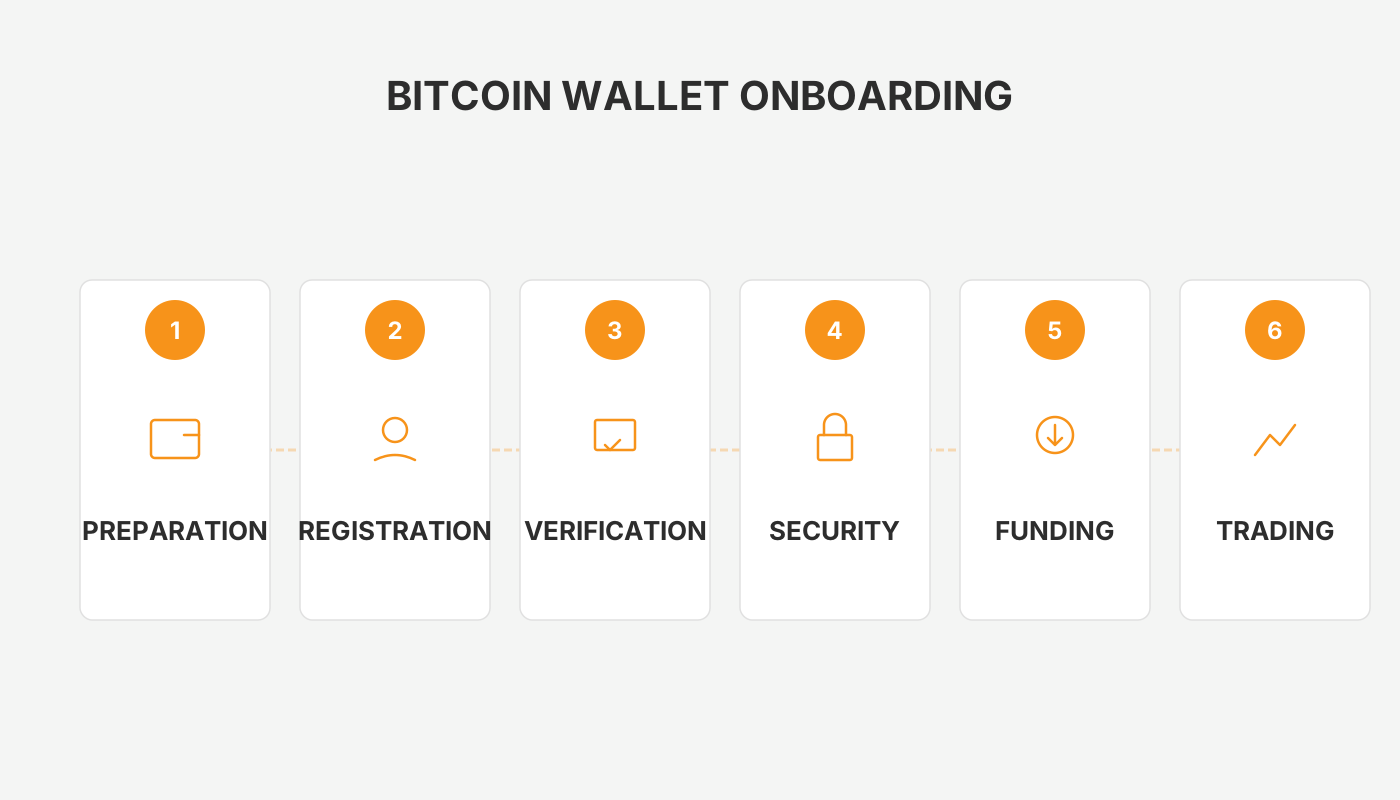
To obtain your own wallet, follow these sequential steps:
- Choose the Wallet Form Factor
- *Software wallet*: Installable on a smartphone, computer, or web browser; convenient for everyday use, but security depends on the device and platform protections.
- *Hardware wallet*: A physical device that stores private keys offline, offering the highest level of protection; suited for long‑term, large‑value holdings, though it costs more and isn’t ideal for frequent trading.
- Acquire the Software or Device: Download the appropriate app or access an online service, or purchase a hardware device and initialize it.
- Complete the Initialization: Follow the on‑screen instructions to generate a new wallet; if required, perform identity verification (e.g., KYC) and enable two‑factor authentication (2FA) to add an extra security layer.
- Start Using It: Once set up, you can immediately use the wallet’s send/receive, balance‑checking, and other features.
Main Types of Bitcoin Wallets
Depending on the use case, wallets can be broadly categorized as follows:
- Software Wallets
Includes mobile apps, desktop clients, and browser‑based online wallets. They are flexible and suitable for frequent transactions, but security is limited by the device and network environment.
- Hardware Wallets
Store private keys on dedicated hardware, effectively isolating them from hackers and malware. While offering superior security, they are more expensive and not intended for high‑frequency use.
- Paper Wallets
Print the public and private keys on paper for offline storage. When kept safely, they provide extreme offline security, but the paper medium is vulnerable to physical damage or loss.
Criteria for Choosing a Bitcoin Wallet Provider
When deciding which wallet service to adopt, evaluate it across these dimensions:
- Security Measures: Does it employ strong encryption, support 2FA, and offer reliable backup options?
- Industry Reputation: Are the provider’s track record and user reviews trustworthy?
- Usability: Is the interface intuitive and are the workflows straightforward?
- Device Compatibility: Does it support your operating system and the crypto assets you need?
- Fee Structure: Are transaction and withdrawal fees transparent, with no hidden costs?
- Customer Support: Can you obtain timely, professional assistance when issues arise?
Summary
A Bitcoin wallet is an essential tool for anyone who wants a convenient and secure way to manage Bitcoin. Understanding its mechanics, mastering basic operations, and selecting a reputable provider can markedly improve your digital‑asset experience.
This article concludes here. For deeper coverage of Bitcoin wallets, search for past Bitaigen (比特根) articles or continue browsing the related links below. Thank you for following and supporting Bitaigen (比特根)!
Related Reading
- Bitcoin Crash 2026: Geopolitical Risks, Fed Liquidity Tightening & ETF Outflows
- Bitcoin Address Generation: Formats, Security & Tips
- Bitcoin Address Types Explained: A Guide to All 4 Formats
💡 Register on Binance with referral code B2345 for the maximum trading fee discount. See Binance complete guide.



