
 Bitaigen Research
 We systematically outline the core concepts and operational mechanisms of cold wallets in this article, dissecting their offline private keys, offline signing, and recovery phrases, to help users understand why they are the preferred solution for securing digital assets. For practical tips on safe storage, keep reading.
Overview of Cold Wallets
A cold wallet is an offline storage solution designed specifically for digital assets, completely isolating the private keys that control ownership from any network environment. By keeping the private key away from computers, smartphones, or exchange servers, the risk of theft by hackers, malware, or phishing attacks is dramatically reduced. Whether you are an individual long‑term holder or an institution managing a sizable portfolio, a cold wallet is the primary tool for achieving asset security.
What Is a Cold Wallet?
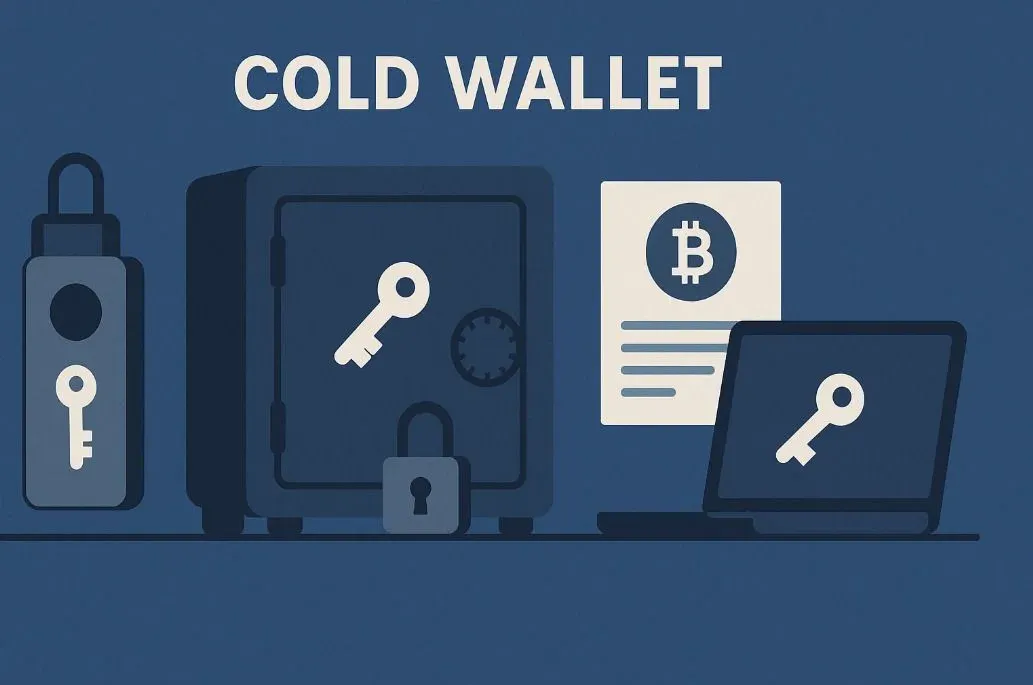
The core principle of a cold wallet is “never online.” When the wallet is created, the system generates a key pair inside the device: a public key for receiving funds and a private key for signing transfers. The private key remains stored on the offline medium permanently; it is only used to sign a transaction after the user deliberately imports the unsigned transaction data into the device. The device signs locally, returns the signed transaction, and a connected online device then broadcasts it to the blockchain network.
Key Concepts
- Offline Private Key: Once generated, the private key is permanently stored inside the cold wallet and never transmitted over a network.
- Offline Signing: The signing process occurs entirely within the device, ensuring that even if the connected computer is compromised, the private key never leaks.
- Recovery Phrase: Most cold wallets provide a set of mnemonic words on first use, which can be used to recover assets if the device is lost or damaged.
Common Types
| Type | Typical Form | Use Cases |
|---------------------|--------------------------------------------|-----------------------------------------------|
| Hardware wallet | USB‑like dedicated device (e.g., Ledger, Trezor, Keystone) | Users who need high security and occasional transfers |
| Paper wallet | Printed private/public keys and mnemonic | Extreme offline generation, suited for one‑time storage |
| Physically isolated device | Completely air‑gapped computer or phone used only for offline signing | Institutions or advanced users with very high security requirements |
Regardless of form, the shared goal is to keep the private key away from the internet, fundamentally cutting off online attack vectors.
Cold Wallet Workflow
- Key Generation – The device creates a public‑private key pair internally; the private key stays local.
- Transaction Creation – The user assembles transaction details (recipient address, amount, etc.) on an online computer or phone, but does not sign it.
- Offline Signing – The unsigned transaction is transferred to the cold wallet via USB, QR code, or micro‑SD card; the wallet uses its internal private key to sign it.
- Broadcast Transaction – After signing, the device returns the signed transaction to the online device, which then submits it to the blockchain network.
The entire process keeps the critical signing step offline, so even a malware‑infected computer cannot steal the private key.
Internal Design and Security Highlights
A cold wallet is not just a single piece of hardware; it is a comprehensive security system built around the premise “the private key never touches the internet.”
- Tamper‑Resistant Chip – Hardware wallets often include dedicated secure elements that resist physical attacks and data tampering.
- Encryption & PIN Protection – A PIN or passphrase must be entered before the device powers up, adding an extra protection layer.
- Manual Confirmation – Every outgoing transaction requires the user to physically confirm on the device, preventing remote command execution.
Secure‑Operation Recommendations
- Multiple Backups – Write the recovery phrase on fire‑, water‑, and tamper‑resistant paper or metal, and store copies in separate secure locations.
- Secure Storage – Treat the hardware and its backups like valuable physical assets: keep them in a fire‑proof safe or a bank deposit box.
- Official Firmware – Always download and update firmware directly from the manufacturer’s website to avoid third‑party malicious code.
- Small‑Amount Test – Before moving large sums into a cold wallet, perform a low‑value transfer first to verify the workflow.
Following these practices can minimize both physical and network‑related risks.
Cold Wallet vs. Hot Wallet: How to Choose?
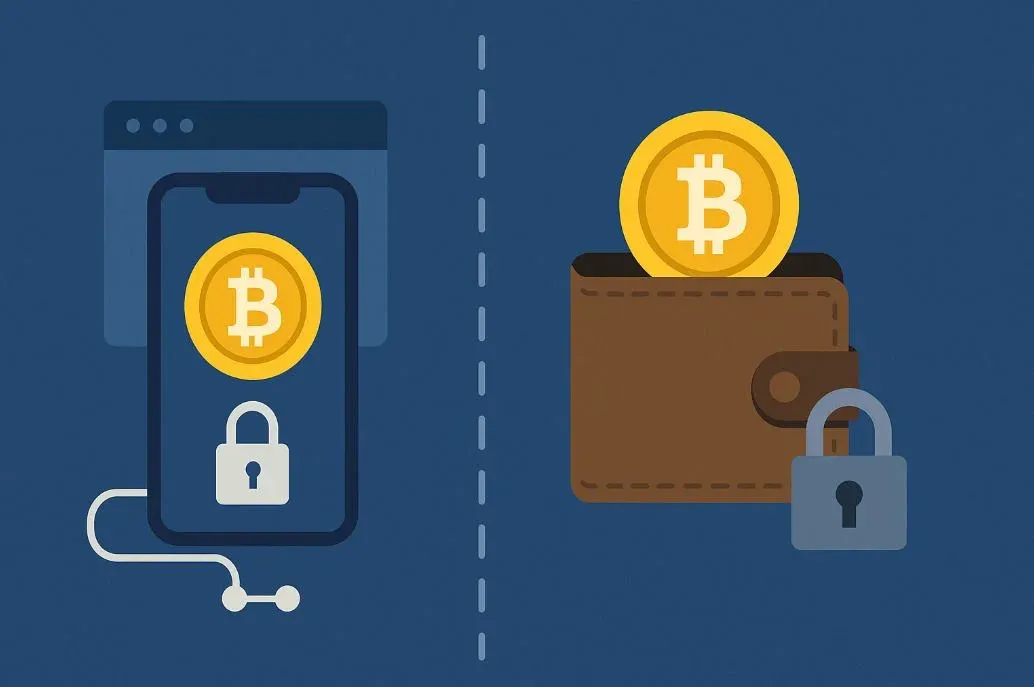
In practice, cold wallets and hot wallets each have strengths, and they are often used together to balance security with convenience.
Characteristics of Hot Wallets
- Instant Availability – Constantly online, enabling rapid transfers, DeFi interactions, or payments.
- Suitable for Small Amounts – Ideal for daily transactions or frequently used modest balances.
- Higher Relative Risk – Continuous connectivity makes them more vulnerable to network attacks.
Typical forms include mobile apps, web‑based wallets, and exchange‑hosted accounts.
Characteristics of Cold Wallets
- Offline Storage – Private keys never contact the internet, rendering remote attacks virtually impossible.
- Fit for Long‑Term Holding – Especially appropriate for large or institutional‑scale holdings.
- Restricted Access – Each transfer requires an offline signing step, making the process more cumbersome.
Typical forms include hardware wallets, paper wallets, and dedicated air‑gapped devices.
Balanced Usage Strategy
- Everyday Transactions – Use a hot wallet for small transfers, staking, or DeFi participation.
- Core Assets – Store the bulk of holdings in a cold wallet, treating it as a “digital vault.”
- Periodic Consolidation – Regularly move earnings from the hot wallet back into the cold wallet to lock in profits.
This tiered approach meets liquidity needs while maximizing security.
Advantages and Limitations of Cold Wallets
Main Advantages
- Extremely Low Online Attack Surface – Private keys never interact with a network, essentially eliminating hacks, malware, and phishing threats.
- Full Self‑Custody – Assets remain under the user’s control; only those possessing the recovery phrase can regain access.
- Multi‑Chain Support – Most modern hardware wallets are compatible with a wide range of major cryptocurrencies and tokens, simplifying unified management.
Challenges to Consider
- Operational Overhead – Each transfer requires offline signing, device connection, and manual verification, making it slower than hot wallets.
- Physical Risks – Loss or damage of the device or mnemonic without a backup results in permanent loss of assets.
- User‑Full Responsibility – Unlike custodial services, security relies entirely on the user’s backup and storage practices.
Position of Cold Wallets Within an Overall Security Strategy
In a layered defense framework, cold wallets typically serve as the “bottom‑line insurance.” Most investors keep a modest amount of liquid funds in a hot wallet for daily use, while locking the remaining large balance in a cold wallet for the highest level of protection. Institutions, miners, and long‑term holders widely adopt this “dual‑wallet” model to achieve an optimal balance between accessibility and safety.
Professional Tip: Generate your mnemonic in an offline environment and record it on metal plates or fire‑proof paper; never photograph it or upload it to the cloud.
Closing Thoughts
Because private keys are stored completely offline, cold wallets remain the most reliable method for protecting crypto assets today. They can virtually eliminate the risk of loss due to network attacks and support unified management of multi‑chain holdings. While they demand some operational effort and diligent backup procedures, pairing them with a hot wallet for everyday transactions gives you a robust security shield for long‑term ownership.
Note on Fiat Conversion: When converting cryptocurrency to fiat, most global platforms accept USD and facilitate transfers via SEPA or SWIFT. Users residing in the United States should use Binance.US or another regulated U.S. exchange rather than the global Binance platform.
Tax Disclaimer: Crypto gains may be taxable in your jurisdiction. Consult a qualified tax professional to understand your reporting obligations.
---
Frequently Asked Questions
What is the core function of a cold wallet?
A cold wallet stores private keys offline, preventing unauthorized online access, making it especially suitable for long‑term storage and protection of large balances.
Are hardware wallets considered cold wallets?
Yes. The vast majority of hardware wallets fall under the cold‑wallet category because their private keys are always kept in an internet‑disconnected device.
Can I send and receive coins with a cold wallet?
Absolutely. Receiving uses the public address; sending requires the transaction to be signed offline inside the device, after which the signed transaction is broadcast by an online device.
What should I do if I lose my recovery phrase?
Without a backup, the assets become unrecoverable. Therefore, create multiple offline backups and store them securely in separate locations.
💡 Register on Binance with referral code B2345 for the maximum trading fee discount. See Binance complete guide.



