
 Bitaigen Research
 Block.io – A Web‑Based Multi‑Chain Digital Wallet
Block.io is a browser‑based multi‑chain digital wallet that supports Bitcoin (BTC), Litecoin (LTC) and Dogecoin (DOGE). It offers security features such as multi‑signature and two‑factor authentication (2FA).
Block.io Wallet is a web‑only wallet for BTC, LTC and DOGE. Compared with traditional desktop or mobile wallets, it runs directly inside a browser, does not (yet) support a DApp browser, but does provide multi‑signature and multi‑chain management capabilities. The private keys are custodial (held by a third party) and the service includes 2FA two‑factor authentication.
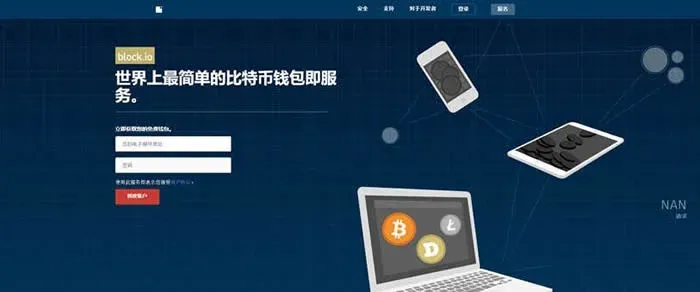
In this article we will dissect Block.io, the web‑based multi‑chain wallet, with a focus on its 2FA two‑factor authentication, multi‑signature scheme and third‑party custodial security model. The goal is to help you quickly decide whether it meets your day‑to‑day asset‑management needs. Continue reading for practical usage tips and risk considerations.
What Kind of Wallet Is Block.io?
Block.io Wallet supports BTC, LTC and DOGE and provides the following core features:
- Third‑Party security with low anonymity
- Two‑Factor Authentication (2FA)
- Hierarchical Deterministic (HD) architecture
- Multi‑Signature support
- Web‑based user interface
The wallet relies on a centralized verification process, making operations straightforward. On‑chain transactions themselves do not incur fees from Block.io, but you must still pay the network (miner) fee, which is set by the underlying blockchain. Block.io neither pre‑pays nor absorbs these fees.
Is the Block.io Wallet Secure?
1. Distributed Trust (dTrust) – Customizable Security Policies
- Custom signature configuration: In addition to the keys stored on the platform, you can attach up to four external keys.
- Flexible signing thresholds: You decide how many keys must co‑sign a transaction before it is considered valid.
- Geographically dispersed storage: Keys can be kept on separate computers, USB flash drives, paper backups, or handed to trusted friends or family members, and they can even be distributed across data centers around the world.
- Independent usage: dTrust addresses can be used without relying on Block.io’s infrastructure.
2. Basic Multi‑Signature – Dual‑Key Protection
- Default addresses use 2‑of‑2 multi‑signature: you hold one private key, Block.io holds the other.
- Multi‑signature offers stronger protection than single‑signature, guarding against a single point of failure or key leakage.
- Users are advised to back up both keys to avoid loss.
3. Data‑Protection Measures
| Protection Layer | Implementation Details |
|---|---|
| **Strong Encryption** | 256‑bit AES encryption combined with 25,000 PBKDF2 hash iterations; cracking a single PIN would require more than one million days of compute time. |
| **Zero‑Knowledge** | The platform never stores your PIN, and the PIN is never transmitted over the network. |
| **Minimal Secrets** | Built on an **HD wallet (BIP‑0032)** multi‑signature structure, new addresses can be generated without accessing previous private keys. |
| **Security Best Practices** | Utilises the latest standards such as BIP‑0062 and RFC‑6979 to keep the API and website secure. |
4. Continuity, Integrity and Transparency
- Backups: Encrypted account data are backed up every hour to cloud servers distributed across four continents.
- Security Audits: Collaboration with thousands of security researchers ensures continuous discovery and remediation of potential vulnerabilities.
- On‑Chain Audits: All addresses are publicly visible on their respective blockchains; anyone can verify balances and transaction history using any block explorer.
- High‑Availability Infrastructure: End‑to‑end redundancy aims for 99.999 % system uptime, eliminating single‑point‑of‑failure risks.
Usage Recommendations
- Enable 2FA two‑factor authentication to strengthen account protection.
- Store private keys and seed phrases offline; paper or hardware storage is recommended, and uploading them to any online service should be strictly avoided.
- Perform regular key backups so you can recover assets if a device fails or is lost.
The above constitutes a complete overview of the Block.io wallet. For deeper technical details and future updates, stay tuned to Bitaigen (比特根) and its forthcoming articles.
Note: Cryptocurrency gains may be subject to tax in your jurisdiction. Consult a tax professional to understand your local obligations.
---
*All fiat references in this translation use USD, and cross‑border transfers are assumed to be handled via SEPA or SWIFT where applicable. Users residing in the United States should use Binance.US for any related exchange activities, not the global Binance platform.*
Related Reading
- Cold vs Hot Wallets: Private/Public Keys & Mobile Setup
- Coinbase Wallet Review: Secure Crypto & NFT Management
- Create and Secure an Ethereum Cold Wallet – Complete Guide
💡 Register on Binance with referral code B2345 for the maximum trading fee discount. See Binance complete guide.



