
 Bitaigen Research
 Liquidity mining is an incentive mechanism used within the DeFi ecosystem to boost the flow of capital. The two are interdependent, jointly driving the operation of decentralized finance, and they attract users to provide liquidity by rewarding them with tokens, thereby improving trading efficiency.

In this article we outline how liquidity mining has become the bloodstream of the DeFi ecosystem, dissect its incentive mechanisms, governance connections, and its role in jump‑starting projects. By combining case studies with underlying principles, we help readers clarify the collaborative logic between the two and grasp the key points of future financial innovation.
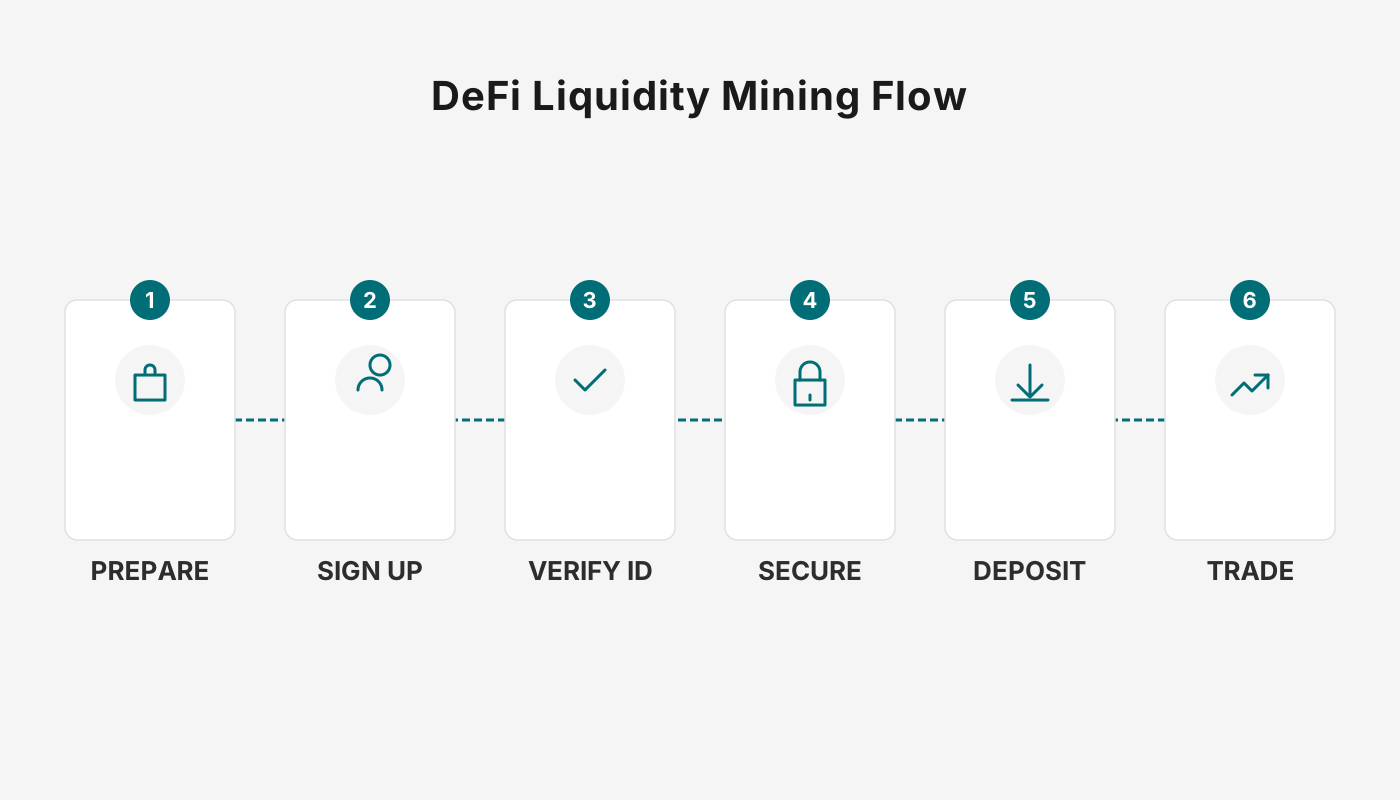
What exactly is the relationship between liquidity mining and decentralized finance?
The link between liquidity mining and decentralized finance (DeFi) is extremely tight; together they form the core elements of an open‑finance ecosystem.
- Incentive mechanism: DeFi platforms continuously inject capital by distributing platform tokens to users who supply liquidity.
- Liquidity pools: Users deposit digital assets into smart‑contract‑managed pools (such as lending pools or trading pools), and the platform leverages those assets to support decentralized services.
- Sources of return: Liquidity providers earn trading fees and token rewards, both of which increase the depth and efficiency of the pool.
- Governance rights allocation: Some platforms tie token rewards to governance power, allowing token holders to participate in protocol upgrades and parameter adjustments.
- Project launch: In a project's early stage, liquidity mining helps attract capital quickly, building a user base that lays the foundation for subsequent ecosystem expansion.
What is liquidity mining in decentralized finance?
Within a DeFi environment, liquidity mining is a method of locking digital assets to earn rewards. The core workflow is as follows:
- Provide liquidity: Users (known as liquidity providers, LPs) deposit assets into a liquidity pool governed by a smart contract.
- Earn rewards: Fees generated by the pool or platform‑specified incentive tokens are distributed to LPs proportionally.
- Re‑invest loop: The earned reward tokens can be deposited into other liquidity pools, creating a compound‑interest effect on earnings.
Liquidity pools are essentially smart contracts that hold assets, and rewards are usually paid in ERC‑20 tokens, primarily within the Ethereum ecosystem. As cross‑chain bridges and multi‑chain smart‑contract technologies mature, similar mechanisms are gradually migrating to other smart‑contract‑compatible blockchains.
Operational characteristics of liquidity mining
- Multi‑token incentives: Some pools dispense several different tokens simultaneously, enhancing the LP’s reward mix.
- Cross‑protocol arbitrage: Liquidity miners often shift assets between protocols to chase higher annualized yields.
- Capital scale requirement: Because rewards are typically calculated based on the amount of capital supplied, users with larger capital (“whales”) enjoy a relative advantage in earnings.
- Risk and complexity: High‑yield strategies often come with smart‑contract risk, price volatility, and regulatory uncertainty, making them suitable for participants with a solid technical background and risk‑identification skills.
Conclusion
Liquidity mining is a key tool for enhancing capital flow within the DeFi ecosystem. By offering token rewards, it incentivizes users to inject capital into platforms, thereby supporting a variety of decentralized services such as trading, lending, and insurance. Although the relationship between liquidity mining and DeFi is close, liquidity mining focuses specifically on incentivizing liquidity provision, whereas decentralized finance encompasses a broader spectrum of financial functions. Understanding its operational principles helps stakeholders navigate the evolving landscape of global digital finance.
Related Reading
- 5 DeFi Trends & 14 Projects to Watch in 2024
- BNB Chain Season 9 MVB Accelerator Announces 16 Projects
- BNB Chain Daily Tx Volume Jumps to 7M – Low Gas, High Speed
💡 Register on Binance with referral code B2345 for the maximum trading fee discount. See Binance complete guide.



