
 Bitaigen Research
 Intent‑based trading is gradually becoming the core entry point of the DeFi ecosystem. Users only need to state the desired outcome, and the system handles all technical details behind the scenes, abstracting complex on‑chain operations into an experience comparable to a conventional banking app.
This article provides a panoramic analysis from concept and operating mechanism to actual yields, emphasizing how intent‑based trading leverages solvers that front‑pay gas and aggregate liquidity to achieve better pricing, while naturally resisting MEV attacks during the matching process. At the same time, we objectively evaluate the risks and technical challenges it faces, helping readers assess the potential value of this technology for the future of DeFi.
Main Advantages of Intent‑Based Trading
- No need to monitor gas fees: Solvers pre‑pay gas and deduct it only after a successful execution, shielding users from sudden fee volatility.
- Better execution price: Because multiple solvers compete for the execution path, they can aggregate liquidity across chains and sources, and even tap into their own inventory, delivering tighter pricing.
- Full MEV protection: During the auction or batch‑matching phase among solvers, front‑running, sandwich attacks, and other MEV tactics are systematically blocked.
- Atomic cross‑chain transfers: Through chain abstraction, users can complete cross‑chain swaps without knowing the specific chain on which the assets reside, dramatically improving capital efficiency.
These advantages bring the overall DeFi user experience close to that of traditional finance applications, lowering technical barriers while enhancing transaction safety.
What Is Intent‑Based Trading?
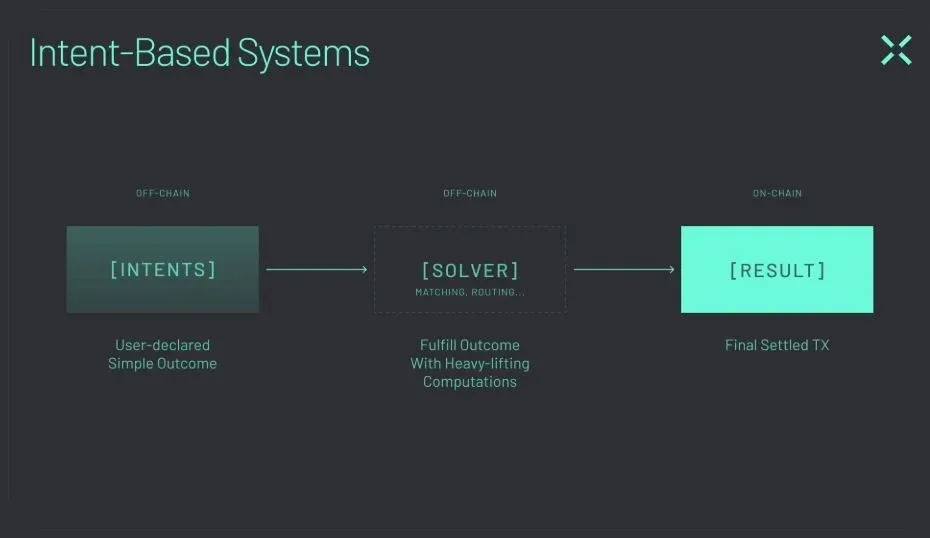
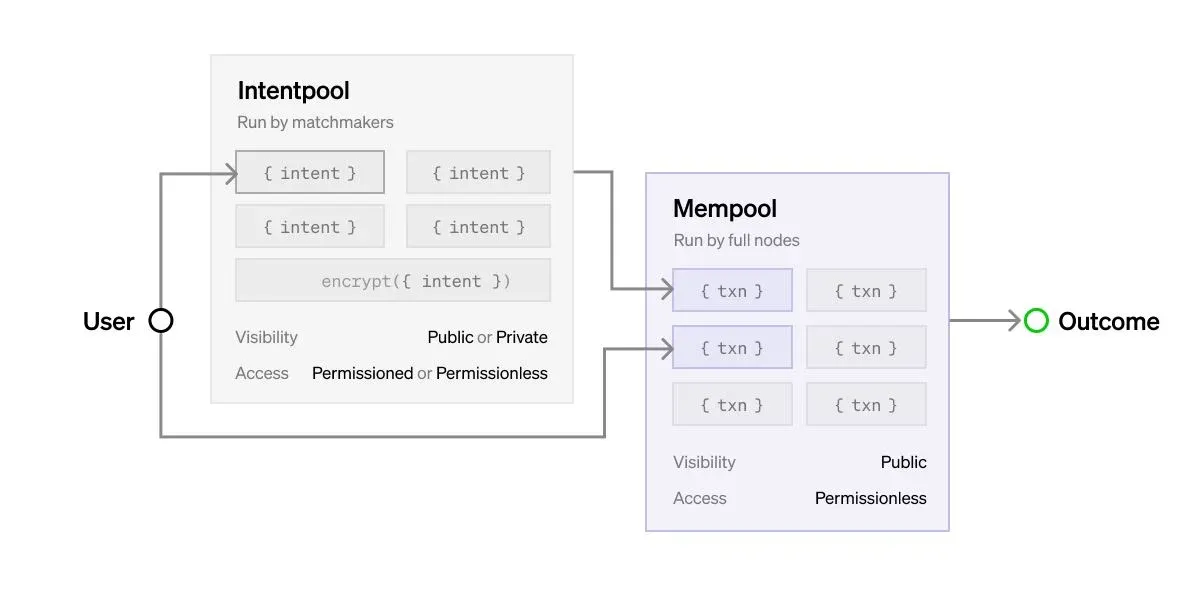
In this model, the user submits a single off‑chain signed message that clearly states the goal, for example “Swap 1 ETH for at least 3,000 USDC with a maximum slippage of 0.5 %.” The system no longer requires the user to manually select liquidity pools, calculate gas, or design routing paths. The intent is then broadcast to a dedicated solver network (also known as fillers or searchers), which are responsible for finding the optimal execution plan and carrying out the transaction on‑chain.
How Intent‑Based Trading Works
- Intent declaration: The user signs and sends an off‑chain message containing the desired outcome.
- Broadcast to solvers: The message circulates within the solver network, where any solver can receive it.
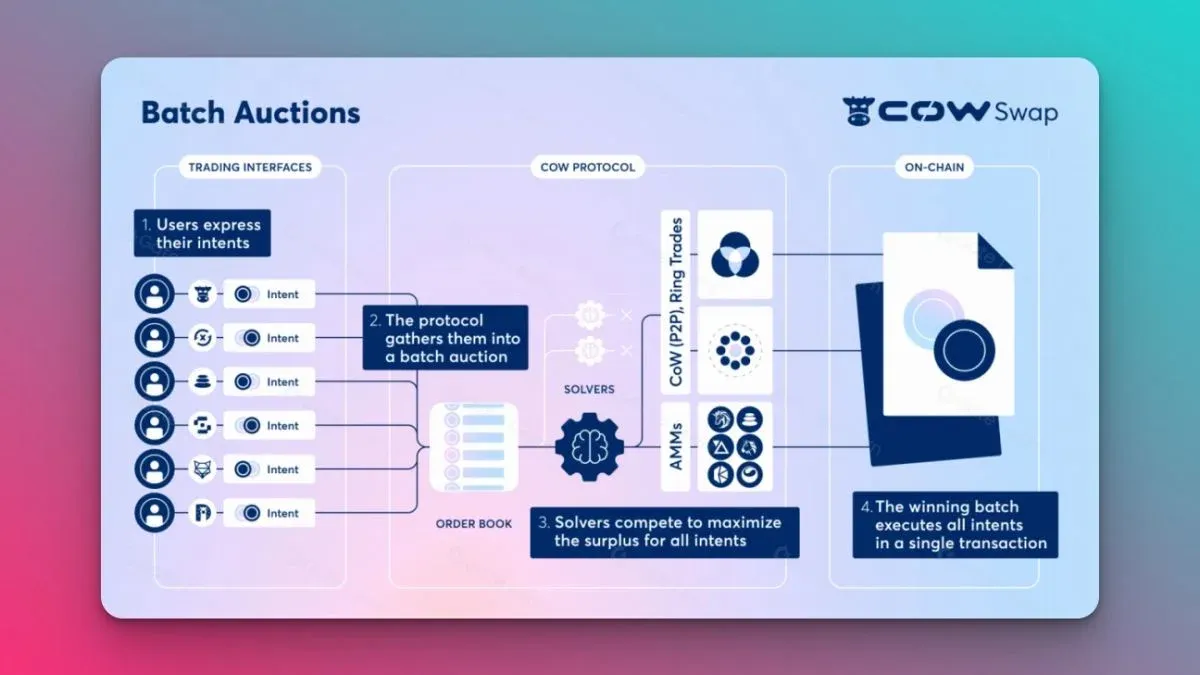
- Path competition: Solvers vie for execution rights through mechanisms such as Dutch auctions or batch auctions, aggregating multi‑source liquidity, batching orders, or using their own reserves.
- On‑chain settlement: The winning solver front‑pays gas and executes the transaction on‑chain; the fee is subsequently deducted from the trade amount.
By 2025, this workflow had achieved breakthroughs in gas‑free transactions, private execution with MEV resistance, and seamless cross‑chain support. Leading protocols such as UniswapX, CoW Protocol, 1inch Fusion, and Across Protocol process tens of billions of USD worth of trades each month, with CoW Protocol alone surpassing $10 billion in monthly volume.
Leading Platforms and Real‑World Use Cases in 2026
- UniswapX: Employs Dutch auctions to provide a gas‑free entry point and is tightly integrated with the Uniswap ecosystem, delivering strong MEV protection.
- CoW Protocol: Leads in batch auctions and complementary order matching, having achieved high‑throughput scaling across multiple chains.
- 1inch Fusion: Enables atomic cross‑chain transfers through solver competition and continuously expands its partner network to improve execution quality.
- Across Protocol: Focuses on rapid asset movement across networks and has already handled several billions of USD in cross‑chain transactions.
All of these platforms share a common pattern: they use solver networks for efficient aggregation, cost reduction, and chain abstraction, allowing everything from simple token swaps to complex lend‑swap strategies to be completed within a single intent. Deep integration with layer‑2 solutions such as Base, Arbitrum, and Starknet further fuels overall transaction growth. Meanwhile, projects like Anoma (privacy‑focused) and SUAVE (decentralized electric‑vehicle marketplace) are experimenting with dedicated intent layers, offering new avenues for decentralization.
Risks and Challenges to Consider
- Centralization tendency: The execution layer requires substantial capital and technical expertise; by 2025 a handful of professional entities controlled the majority of order flow, raising concerns about collusion or censorship.
- Reduced transparency: Off‑chain execution lowers visibility compared with traditional public mempools, making users’ trust in the solver network a critical factor.
- Ambiguous intents: If an intent lacks clear constraints, a solver might follow a path that does not align with the user’s expectations.
- Hidden fees: Solvers that are insufficiently competitive may charge extra fees, eroding user returns.
- Regulatory pressure: Because of limited transparency, regulators are demanding higher compliance standards for off‑chain matching.
Debates over solver centralization intensified throughout 2025, and SUAVE along with other permissionless networks are attempting to mitigate these issues through technical and governance innovations.
Outlook for Intent‑Based Trading in 2026
Since 2025, intent‑based trading has emerged as one of the most influential innovations in DeFi, offering users of all experience levels a simpler, more efficient, and safer way to interact with blockchain assets. While centralization and transparency remain open challenges, the inherent advantages of blockchain technology and the rapid rollout of major platforms are fundamentally reshaping how users engage with on‑chain assets.
The coming year is expected to bring a true breakthrough: full‑scale chain abstraction, AI agents capable of automatically parsing and executing complex intents, and a further expansion of permissionless solver networks that significantly reduce centralization. This evolution should attract more traditional financial institutions, potentially pushing DeFi settlement volumes toward the multi‑trillion‑USD threshold.
Privacy‑oriented and decentralized MEV‑market projects are poised to lead the “invisible infrastructure” era—an era where transactions are highly abstracted and users only need to focus on the financial goal itself. This trend not only increases the accessibility of financial services but also lays a solid foundation for building a genuinely decentralized financial system.
Conclusion
The core idea of intent‑based trading is to let users think only about “what they want” rather than “how to achieve it.” Once the technical details are abstracted away, the barrier to entry for DeFi drops further, transaction costs decline, and security improves. As the ecosystem continues to evolve, users at every level will benefit from a smoother, more economical, and more reliable trading experience.
This concludes the article. For more information on intent‑based trading, please search for previous Bitaigen (比特根) articles or follow the related links below. We look forward to your continued interest and support for Bitaigen (比特根)!
Related Reading
- Ethereum Staking Guide: How PoS Works, Earnings & Risks
- Solana Token Launchpad Comparison 2024: Features, Fees & Launch Dates
- Cross-Chain Bridge: Enhancing DeFi Liquidity
💡 Register on Binance with referral code B2345 for the maximum trading fee discount. See Binance complete guide.



