 Bitaigen Research
 In digital‑currency exchanges, users are typically required to complete a KYC verification.
KYC verification is the identity‑authentication process carried out by the exchange to confirm a user’s real identity and to prevent money‑laundering. Individuals must provide a government‑issued ID and proof of address, while businesses need to submit a business licence, the passport of the primary responsible person, and other relevant documents.

From a regulatory perspective, we outline the core role of KYC on digital‑asset platforms and list the typical documents that individuals and enterprises must provide when completing identity verification. By reading this article you can quickly grasp the compliance requirements and avoid delays in account opening caused by insufficient documentation. The following sections will also dissect the key steps of the review process, so a careful read is worthwhile.
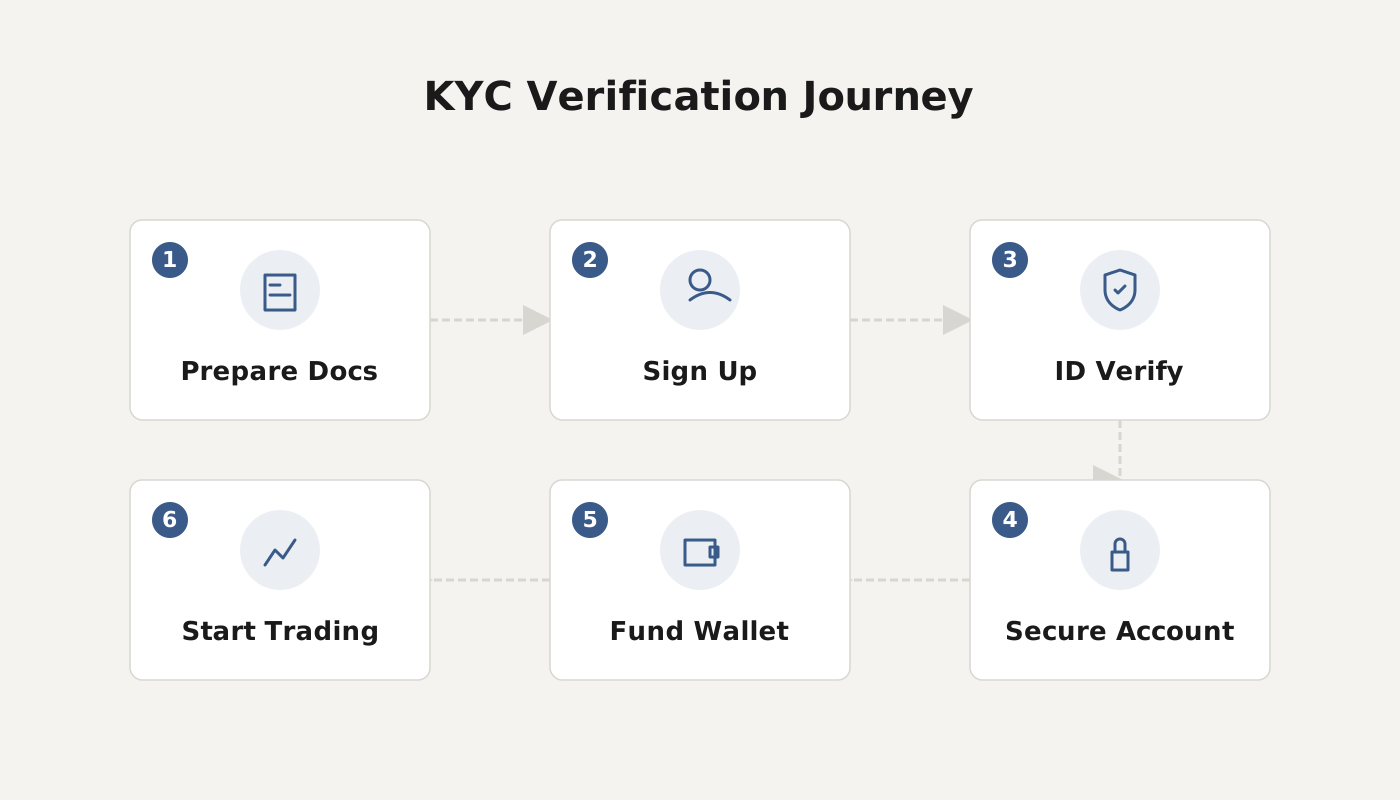
What does KYC verification mean?
KYC (Know Your Customer) literally translates to “understand your customer.” It is a real‑name authentication mechanism mainly used to prevent AML (Anti‑Money‑Laundering) crimes such as money‑laundering, identity theft, and financial fraud. Exchanges verify a user’s identification documents and residential address to ensure that financial activities are lawful and compliant.
What documents are required for KYC
KYC account verification is divided into personal accounts and corporate accounts.
1. Personal account verification
| Required material | Description |
|---|---|
| **Government‑issued ID** | High‑resolution scan or photo of the front and back |
| Proof of address | Utility bill (water, electricity, gas) or credit‑card statement issued within the last 3 months, showing the name and full address |
2. Corporate account verification
- Company business licence (scanned copy)
- Passport scans of the primary contact and beneficial owner (if a passport is unavailable, a front‑and‑back ID scan together with the personal page of the household registration book may be used)
- Company expense statement: Any corporate expense bill (water, electricity, gas, internet, telephone, social security, bank statement, etc.) dated within the last 90 days, issued by an official provider, bearing the company name and full address, and matching the information on the business licence.
- Personal expense statement: Any expense bill (water, electricity, gas, internet, TV, telephone, mobile phone, or credit‑card statement) for the primary contact or beneficial owner dated within the last 90 days, issued by an official provider, and showing the name and residential address.
- Corporate bank statement: Any bank‑issued statement for the company’s corporate account.
Three verification elements: Full name + ID number + mobile phone number.
Why KYC is required
Cryptocurrencies are inherently encrypted and can be pseudonymous, making them attractive tools for illicit actors to conduct money‑laundering, trade prohibited goods, and other illegal activities. KYC authentication, by confirming real identities, helps to mitigate these risks and raises the overall compliance level and security of the exchange.
Having understood the definition of KYC verification and the required documentation, investors can prepare the appropriate files more strategically when selecting an exchange, thereby completing real‑name authentication smoothly. For more KYC‑related information, please follow other articles published by Bitaigen (比特根).
*Note for global users:* fiat deposits are commonly accepted in USD via SEPA or SWIFT channels. U.S. residents should use Binance.US rather than the global Binance platform. Crypto gains may be subject to taxation in your local jurisdiction, so consult a tax professional for guidance.
Related Reading
- Gate.io (Sesame Open Door) – Exchange in Cayman Islands
- Huobi Review: Security, Credibility & Regulatory Risks
- Download OKX iOS App & Buy Bitcoin on iPhone (Apple ID)
💡 Register on Binance with referral code B2345 for the maximum trading fee discount. See Binance complete guide.



