
 Bitaigen Research
 In the highly volatile market of crypto assets, leveraged trading is both a tool for magnifying gains and a “double‑edged sword” that can push losses to the extreme in an instant. When used correctly, a small amount of capital can control a large position; but if leverage gets out of hand, losses are amplified in the same way and may even wipe out the entire account.
Over the past three years, leveraged trading has helped many traders achieve spectacular returns, yet the same amplification effect has also buried huge hidden risks. When the LUNA collapse occurred in 2022, about 95 % of the liquidation orders came from users employing leverage higher than 50×. This painful case once again confirms the core view that “leverage itself is not the source of risk; uncontrolled leverage is.”
We have organized the core mechanisms and common misconceptions of leveraged trading to help readers distinguish the boundary between profit and risk, and we provide practical operational ideas. Read the full article to master the key points for safely leveraging positions in a volatile market. We also analyze platform selection, margin management, and other practical details to help you build a robust trading framework.
1. What Is Cryptocurrency Leveraged Trading?
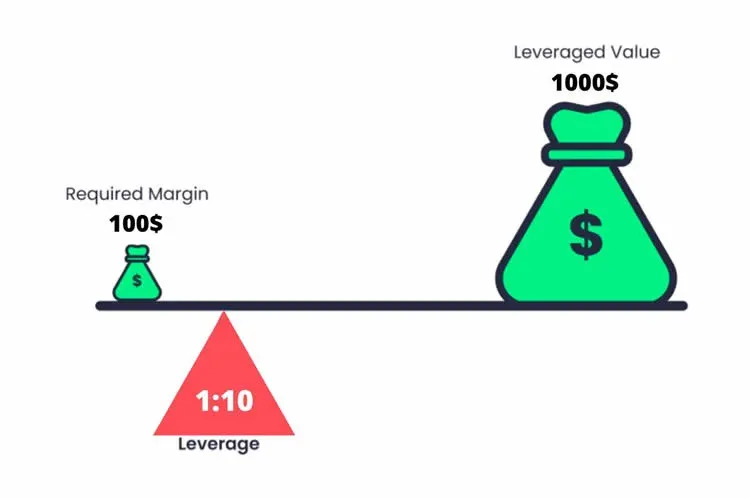
Leveraged trading essentially means borrowing funds from a trading platform so that a relatively small margin can control a much larger contract. For example, using 10× leverage, an investment of 100 USDT allows you to open a position worth 1,000 USDT.
Advantages Overview
- ✅ High capital efficiency: Control a large position with a small amount of capital
- ✅ Amplified profit potential: Capture profit from modest price movements
- ✅ Direction flexibility: Supports both long (bullish) and short (bearish) positions
Potential Risks
- ⚠️ Loss magnification: With 10× leverage, a 5 % adverse price move erodes 50 % of the margin
- ⚠️ Forced liquidation: When the account margin falls below the maintenance margin, the system automatically closes the position
- ⚠️ Extreme volatility: The sharp swings typical of crypto assets accelerate loss accumulation
2. How Does Leverage Simultaneously Amplify Gains and Losses?
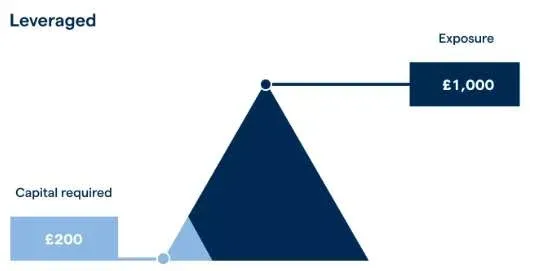
Leverage maps each point of price movement to a proportional change in the margin. With 10× leverage, a 1 % change in the underlying price equals a 10 % profit or loss on the margin.
Bitcoin Leverage Example
- Margin: 100 USDT
- Position size: 1,000 USDT (10× leverage)
| Market move | Result |
|---|---|
| BTC rises 5 % | Profit 50 USDT (50 % return) |
| BTC falls 5 % | Loss 50 USDT (‑50 % return) |
With 25× leverage, a mere 4 % adverse move can wipe out the entire margin and trigger a forced liquidation.
3. Glossary of Key Terms
| Term | Definition | Example | Note |
|---|---|---|---|
| **Leverage multiple** | The factor by which the position size exceeds the margin | 10× leverage = controlling 1,000 USDT with 100 USDT | — |
| **Position value** | Total amount of the trade (margin × leverage) | 100 USDT × 10 = 1,000 USDT | — |
| **Collateral asset** | Funds or tokens locked to maintain the position | 0.1 BTC used as margin | — |
| **Forced liquidation** | Automatic closure of a position when losses breach the maintenance‑margin threshold | BTC price drops 10 % → position liquidated | ⚠️ Higher leverage lowers the liquidation threshold |
4. Cross Margin vs. Isolated Margin: Comparing Two Margin Models
Choosing the right margin model is a cornerstone of risk management in leveraged trading. Most platforms offer Cross Margin (also called “full‑margin”) and Isolated Margin as two distinct options.
Cross Margin
- Funding pool: The entire account balance acts as a single collateral pool
- Risk diffusion: The system automatically reallocates funds, reducing the chance that any single position is liquidated
- Ideal for: Multi‑position hedging, experienced investors, longer‑term holdings in highly volatile environments
Isolated Margin
- Fund allocation: A fixed amount of margin is assigned to each individual trade
- Loss limitation: Losses are confined to the margin allocated to that specific position; other assets remain untouched
- Ideal for: High‑risk/high‑reward short‑term strategies, beginners, single‑trade speculation
| Feature | Cross Margin | Isolated Margin |
|---|---|---|
| **Collateral scope** | Entire account balance | Only the margin dedicated to the specific position |
| **Liquidation risk** | Lower (shared collateral) | Higher (position evaluated independently) |
| **Worst‑case loss** | Could deplete the whole account | Limited to the isolated margin of that position |
5. Step‑by‑Step Bitcoin Leveraged Trade Case Study
Scenario setup
- Forecast: BTC will climb from 50,000 USD to 51,000 USD (≈ +2 %)
- Margin: 300 USDT
- Leverage: 33× → Position value: 10,000 USDT
Potential outcomes
- Profit: BTC reaches 51,000 USD, yielding roughly 200 USDT (≈ 66 % return)
- Liquidation: BTC falls to 49,250 USD, resulting in a loss of about 150 USDT (≈ 50 % of the margin)
⚠️ With 33× leverage, a reverse move of only 1.5 % can trigger forced liquidation, highlighting the sensitivity of high‑leverage positions.
6. The Role of Funding Rates in Perpetual Contracts
Funding rates are the core mechanism that keeps perpetual contracts linked to spot prices; they are typically settled every eight hours between long and short participants.
Operational logic
| Position side | Funding flow | Impact on margin |
|---|---|---|
| Long (buy) | Pays the fee | Margin decreases → higher liquidation risk |
| Short (sell) | Receives the fee | Margin increases → extra risk buffer |
Cost illustration
- Contract size: 10,000 USDT worth of BTC perpetuals
- Funding rate: 0.01 % per 8‑hour interval
Daily cost = 0.03 % × 10,000 = 3 USDT
Monthly cumulative cost ≈ 90 USDT, which is 3 % of a 3,000 USDT margin.
Practical tips
- A positive funding rate (longs paying) often signals strong bullish sentiment.
- A negative rate lets short participants earn a passive income.
7. Three Fatal Risks of Leveraged Trading
- Market volatility risk
- Bitcoin can swing more than 10 % in a single day. With 50× leverage, a 2 % price move may trigger liquidation.
- In March 2023, a sudden 7 % hourly drop in BTC led to forced liquidation of roughly $320 million worth of leveraged positions across the ecosystem.
- Over‑leverage risk
- The higher the leverage, the smaller the price swing needed to breach the liquidation threshold.
- Rough benchmark: 5× leverage needs about a 20 % move, 20× needs ~5 %, while 100× can be liquidated by a 1 % swing.
- Counterparty risk
- Centralized exchanges may face insolvency or hacking (e.g., the FTX collapse).
- Mitigation: Prefer regulated venues such as CME, Kraken, or other platforms that are subject to robust oversight.
8. Professional‑Grade Risk‑Management Framework
Three‑Layer Protection System
- Position sizing
- No single trade should risk more than 5 % of total account equity.
- Formula: Maximum tolerable loss = Account balance × Risk percentage.
- Stop‑loss tools
- Market stop: Guarantees rapid exit during extreme volatility, but may incur slippage.
- Limit stop: Allows precise exit price in calmer markets.
- Portfolio diversification
- Suggested allocation:
- 50 % mainstream coins (BTC, ETH)
- 30 % mid‑cap tokens
- 20 % high‑risk small‑cap assets
9. Leveraged‑Trading Compliance Overview – United States Example
| Regulatory tier | compliant platforms | maximum allowed leverage | Remarks |
|---|---|---|---|
| CFTC‑regulated futures contracts | CME, Kraken Futures | 2‑5× | Designed for retail investors |
| State‑permitted perpetual contracts | Bybit (professional‑investor only) | Up to 100× | Retail users must trade through an FCM (Futures Commission Merchant) to stay compliant |
| Spot‑margin trading | Most platforms (subject to local policy) | Varies by provider | Must present risk disclosures and conduct suitability assessments |
Compliance highlights
- Retail traders must execute leveraged trades via a regulated futures commission merchant.
- Platforms are required to disclose risks clearly and perform suitability checks on users.
Note for U.S. residents: When accessing Binance services, use Binance.US rather than the global Binance platform to remain within regulatory boundaries.
10. Frequently Asked Questions (Q&A)
Q1: Can losses exceed the initial margin?
In normal market conditions, the maximum loss equals the margin you posted. However, extreme volatility can cause a “negative balance” (also called “margin breach”), where the account goes below zero; some platforms may require you to cover the deficit.
Q2: How is the liquidation price calculated?
- Long‑position formula:
Liquidation price = Entry price ÷ [1 + (Leverage × (1 − Maintenance‑margin rate))]
*Example*: Entry at 50,000 USDT, 20× leverage, 5 % maintenance margin → liquidation price ≈ 47,619 USDT (a 4.76 % drop).
Q3: What happens if my margin becomes insufficient?
The platform typically issues a margin call first. If you do not replenish the margin within the stipulated timeframe, the system will partially liquidate the position proportionally to the loss. In extreme cases, a full‑account liquidation may occur.
---
This concludes the core content of “The Complete Guide to Cryptocurrency Leveraged Trading: Risks, Strategies, and Mechanics.” For more introductory material on leveraged trading, you can search the archives of Bitaigen (比特根) or continue reading the related links below. Thank you for your attention and support!
Related Reading
- OKX Copy‑Trading Feature Review: How One Click Mirrors Pro Strategies
- Spot vs Futures: Key Differences in Cryptocurrency Trading
- Perp DEX: Decentralized Perpetual Contract Exchange
💡 Register on Binance with referral code B2345 for the maximum trading fee discount. See Binance complete guide.



