
 Bitaigen Research
 Vitalik Buterin is a co‑founder and chief architect of Ethereum, born in 1994 in Russia, holding Canadian citizenship, and is among the world’s youngest cryptocurrency billionaires.
In this article we systematically review the life story, technical contributions, and philanthropic activities of Ethereum co‑founder Vitalik Buterin, helping readers gain a comprehensive understanding of this blockchain leader’s thinking and vision. If you want to learn how he drives the smart‑contract ecosystem and shapes a decentralized future, keep reading.
Key Points
- Vitalik Buterin is a co‑founder of the leading smart‑contract platform Ethereum, currently 31 years old, with a Canadian‑Russian background.
- His holding of roughly 240,042 ETH gives his portfolio a value of about USD 10.4 billion, placing him among the youngest crypto billionaires globally.
- By creating programmable smart contracts, Buterin expanded blockchain applications from pure digital currency to decentralized applications (DApps) and finance (DeFi).
- He has donated more than USD 1 billion in crypto assets to charitable causes, covering COVID‑19 relief, AI safety, and longevity research, among other fields. *(Note: crypto‑related gains may be taxable in the recipient’s jurisdiction.)*
- His 2025 vision focuses on simplifying Ethereum’s architecture, preserving programmability, and boosting the scalability of decentralized systems.
Who Is Vitalik Buterin?
Vitalik Buterin is a Canadian computer programmer and a co‑founder of the world‑leading smart‑contract platform Ethereum. He was born on 31 January 1994 in Kolomna, Russia, under the name Vitaly Dmitrievich Buterin, and now resides in Canada.
As the primary architect of the Ethereum whitepaper in 2013, Buterin broke the limitation of Bitcoin being used solely as a digital currency and introduced the concepts of programmable smart contracts and decentralized applications (DApps). Today Ethereum processes billions of dollars worth of transactions each day and hosts thousands of DeFi protocols.
Buterin is also a thought leader in the blockchain space, frequently sharing insights on scalability, decentralized governance, and industry trends via blogs and conference talks. His recent proposal to streamline Ethereum’s architecture underscores his ongoing quest to make blockchain technology more accessible and robust.
Early Life and Education
When he was born in 1994, Buterin’s father Dmitri worked as a computer scientist, laying the groundwork for early exposure to programming.
At age six, Buterin immigrated with his family to Canada, benefiting from the local education system and developing outstanding abilities in mathematics and coding.
While attending The Abelard School in Toronto, he entered a gifted‑student program where he excelled in mathematics, programming, and economics.
At 17, he encountered Bitcoin for the first time through his father, igniting his interest in blockchain. He later enrolled at the University of Waterloo, serving as a research assistant to cryptographer Ian Goldberg.
In 2012, he earned a bronze medal at the International Olympiad in Informatics held in Italy, showcasing top‑tier programming skill.
The Birth of Ethereum
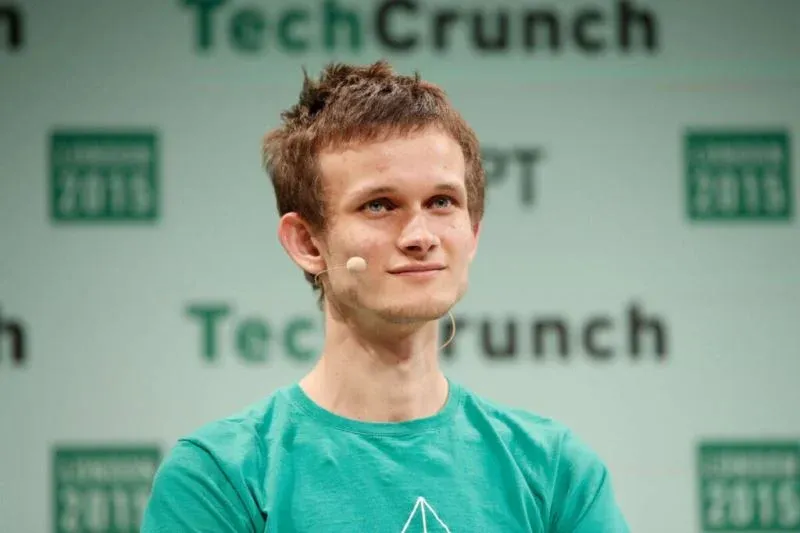
In 2013, while serving as the lead writer for *Bitcoin Magazine*, Buterin proposed adding a scripting language to Bitcoin for building applications. When the community failed to reach consensus, he decided to create an entirely new platform.
In November of the same year, Buterin released the Ethereum whitepaper, outlining a concept that “combines a decentralized mining network with a software development platform.” It was the first systematic proposal of a blockchain framework that supports smart contracts and DApps.
He subsequently teamed up with co‑founders Gavin Wood, Charles Hoskinson, Anthony Di Iorio, Joseph Lubin, and others to turn the vision into reality. In 2014 he received a $100,000 Thiel Fellowship grant, left university, and devoted himself full‑time to developing Ethereum.
At the North American Bitcoin Conference in Miami later that year, Buterin delivered a 25‑minute talk describing Ethereum as “a decentralized, permissionless, global computer,” and listed potential use cases such as crop insurance, decentralized exchanges, and DAOs.
In 2015 the Ethereum blockchain officially launched, ushering in a new era for blockchain technology and subsequently spawning an ecosystem worth tens of billions of dollars.

Net Worth and Token Holdings
Buterin’s net worth fluctuates with the price of Ethereum. According to Arkham Intelligence, he currently holds about 240,042 ETH, valued at roughly USD 10.4 billion, reinstating his status as a cryptocurrency billionaire.
In May 2021, the 27‑year‑old Buterin first crossed the $1 billion threshold; in November of the same year, Ethereum hit an all‑time high of about $4,870 USD, further inflating his asset base.
The market downturn of 2022 drove Ethereum’s price down more than 80 %, briefly pushing his wealth out of billionaire territory. By August 2025, Ethereum rebounded above $4,200 USD, and Buterin’s wealth re‑entered the ten‑digit range.
Beyond ETH, his portfolio includes stakes in projects such as Aave, WhiteRock, Moo Deng, Wrapped ETH, and others. While diversified, his holdings remain heavily centered on Ethereum.
2025 Vision and Latest Developments
Buterin’s 2025 vision rests on two pillars: strengthening Ethereum’s underlying infrastructure and expanding the decentralized ecosystem.
He recently proposed replacing the current Ethereum Virtual Machine (EVM) with RISC‑V, aiming to improve execution performance and reduce code complexity.
Buterin stresses the need to make Ethereum “as simple as Bitcoin” while retaining smart‑contract functionality. This involves streamlining the consensus layer, removing epoch and slot‑shuffling mechanisms, and building a more maintainable codebase to lower the entry barrier for new developers.
The newest proposals also cover faster transaction finality, stateless client architecture, and enhanced privacy features, with expectations that Ethereum Layer 1 scaling speed could increase roughly tenfold by next year.
He has publicly criticized the emergence of “pseudo‑decentralization” in the industry, urging a return to genuine user empowerment and core decentralization values.
Philanthropy and Social Impact
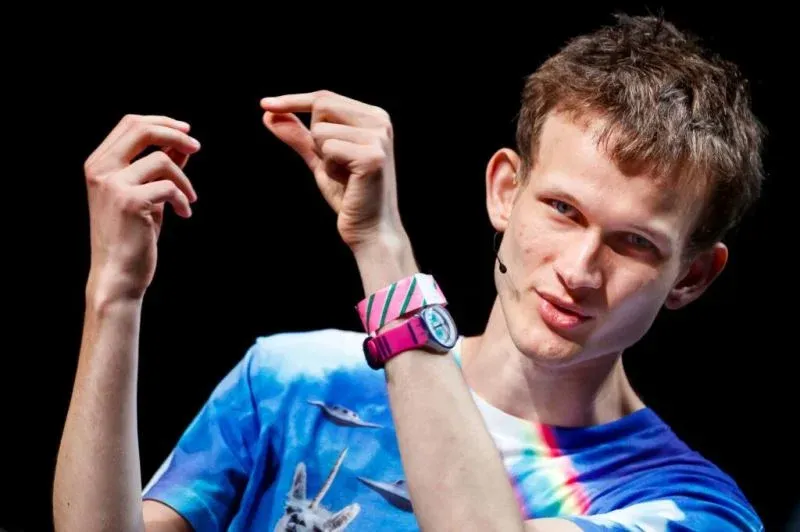
Buterin allocates a portion of his wealth to global charitable initiatives, focusing on AI safety, medical research, and humanitarian projects.
In 2021 he donated SHIBA tokens worth over USD 1 billion to an Indian crypto‑COVID relief fund. Although the donation caused the token’s price to drop by about 50 %, it provided crucial funding for pandemic assistance in the region.
In 2018 he contributed USD 2.4 million to the SENS Research Foundation to support anti‑aging biotechnology, and the same year he gave Dogelon Mars tokens valued at USD 336 million to the Methuselah Foundation, aiding longevity research.
Also in 2021, he donated USD 665 million to the Future of Life Institute to advance AI safety research, aiming to mitigate potential threats posed by advanced artificial intelligence.
During the Russia‑Ukraine conflict in 2022, Buterin posted on X (formerly Twitter) that “Ethereum is neutral, but I am not,” and supported several crypto‑charity projects helping Ukraine.
Personal Life and Philosophy
Buterin’s technical drive stems from a wariness of centralized services. A change in the World of Warcraft 3.1.0 patch weakened his favorite warlock abilities, making him acutely aware of the dangers of centralization and prompting his shift toward building decentralized currency.
In his about.me bio he wrote: “I cried myself to sleep that day, realizing how terrifying the consequences of centralized services can be.” This episode shaped his commitment to user empowerment and opposition to authoritative centralization.
Despite a high public profile, his private life remains relatively low‑key. His honors include Fortune’s “40 Under 40”, Forbes’ “30 Under 30”, and Time’s “100 Most Influential People” lists. In 2018 he received an honorary doctorate from the University of Basel Business School.
Academically, he is interested in economics, philosophy, and social coordination mechanisms, and he has collaborated with economist Glen Weyl on quadratic funding mechanisms that have funneled tens of millions of dollars into open‑source public goods.
Future Outlook
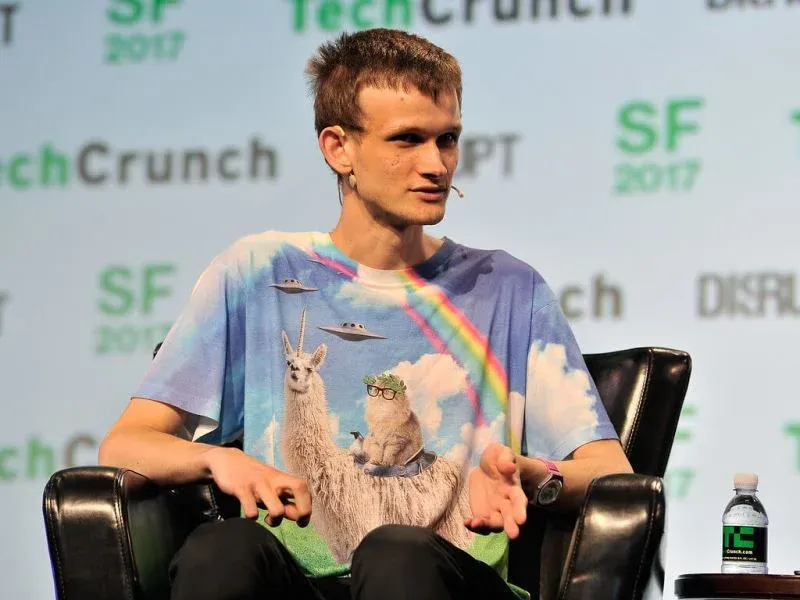
Buterin’s recent proposals indicate that Ethereum’s future will center on sustainability, simplicity, and scalability. By adopting a “partially stateless” client model and potentially migrating to RISC‑V, the computational resources required to run a node would drop dramatically, enhancing the network’s decentralization.
He is also working to lower development barriers so newcomers can start building on Ethereum more quickly, reflecting the experience he has accumulated over years of protocol evolution.
Within the broader crypto ecosystem, Buterin continues to exert thought‑leadership on AI safety, social coordination, and economic mechanism design. His quadratic funding initiative has already raised over USD 20 million for open‑source software, demonstrating blockchain’s potential for financing public goods.
As the Ethereum Foundation’s governance structure evolves, Buterin may transition from hands‑on coding to strategic guidance, driving breakthrough innovations whose impact could extend beyond blockchain itself.
Conclusion
From a curious teenager fascinated by Bitcoin to one of the most influential pioneers in blockchain, Vitalik Buterin has shaped Ethereum—a platform that now hosts thousands of applications and processes billions of dollars in daily transactions—through both technology and philosophy.
With an investment portfolio valued at roughly USD 10.4 billion, he re‑enteres the billionaire club, underscoring both personal and platform resilience. Buterin’s ongoing work to simplify Ethereum’s architecture and expand its decentralized reach signals a long‑term commitment to blockchain innovation.
Whether you are interested in cryptocurrencies, blockchain technology, or the key figures shaping modern finance, Buterin’s story illustrates the power of merging technical brilliance with philosophical ideals. As he continues to lead the evolution of decentralized technology, his influence on global finance and digital innovation is poised to remain profound for decades to come.
*This completes the full article “Who Is Vitalik Buterin? A Complete Introduction to the Ethereum Founder.” For more information about Ethereum’s founders, please follow Bitaigen (比特根) for additional articles!
Related Reading
- How to Look Up a Blockchain Contract Address Quickly
- Token Contract Addresses on Ethereum: Verify & Use
- 2025 Ethereum DeFi Landscape: $7.9B Spot ETF Fuels Maturity
💡 Register on Binance with referral code B2345 for the maximum trading fee discount. See Binance complete guide.



