
 Bitaigen Research
 Bitcoin BTC Mining Analysis: How to Capture Gains in a Trillion-Dollar Market in 2026?
Bitcoin Mining is the process of using high-performance computing equipment to solve complex mathematical puzzles in order to verify transactions, secure the network, and issue new tokens. Miners utilize ASIC (Application-Specific Integrated Circuit) miners to compete for bookkeeping rights within a global decentralized network. Upon successfully packaging a block, they receive block rewards and transaction fees. This serves as the core economic pillar supporting Bitcoin's value and its decentralized nature.
In 2026, the key to capturing gains from Bitcoin (BTC) lies in participating through mining pool collaboration, cloud mining, or platform-based value-added services. Since the block reward has been halved to 3.125 BTC, average investors should avoid the high barriers of solo mining and instead leverage low-threshold staking and financial instruments. In an environment where computing power competition is increasingly fierce, these diversified paths allow for the acquisition of steady on-chain returns.
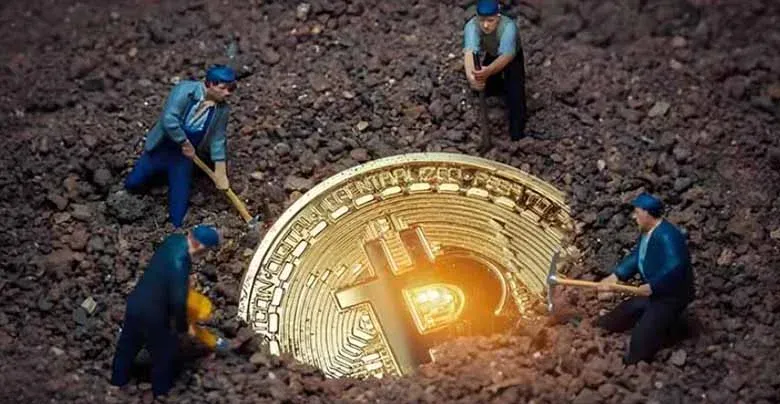
As the Bitcoin ecosystem evolves, mining is shifting from extensive growth to refined operation. This article will analyze how investors should think beyond traditional mindsets to capture on-chain value in a climate of white-hot hashrate competition. The Bitaigen editorial team has systematically organized a deep dive—from technical foundations to market trends—designed to help you establish a clear understanding and insight into the survival and strategic logic of this trillion-dollar market.
1. Technical Principles and Consensus Mechanism
Proof of Work (PoW) is the underlying consensus protocol for Bitcoin mining. It requires miners to expend electricity and computational resources to prove they have made a substantive contribution to network security.
The mining process can be compared to a global mathematical marathon:
- Core Objective: To calculate a hash value that meets specific criteria (the difficulty target).
- Computational Logic: Miners constantly change the Nonce (a random number) variable within the block header and perform SHA-256 hash operations on the data.
- Avalanche Effect: The hash algorithm is highly sensitive; a tiny change in the Nonce results in a completely different output. This ensures the unpredictability and fairness of the process.
Because the answer cannot be derived through direct logical deduction, miners must rely on massive amounts of random attempts. This extreme pursuit of computational power constitutes the "physical moat" of the Bitcoin network.
2. Block Construction and the Standard Mining Workflow
Bitcoin transaction confirmation and block generation follow strict logical steps, with a new block produced approximately every 10 minutes.
- Mempool Selection: Transactions awaiting confirmation first enter the Memory Pool (Mempool). Miners typically prioritize transactions with higher fees to assemble candidate blocks, maximizing their revenue.
- Constructing the Block Header: The candidate block includes the hash of the previous block, the Merkle Root, a timestamp, and the difficulty target.
- Hash Competition: Miners perform hash collisions at speeds of trillions of times per second.
- Network Broadcasting and Validation: Once a miner finds a hash that meets the difficulty requirement, they immediately broadcast it to the network. Other nodes verify the transaction validity and the Proof of Work before appending the new block to the main chain.
The successful miner receives the newly issued Block Subsidy of 3.125 BTC, along with all transaction fees included within that specific block.
3. Economic Model and Core Industry Data
Bitcoin’s economic value stems from its sophisticated deflationary model. The total supply is capped at 21 million coins, and the reward is halved every 210,000 blocks (approximately every four years).
Below are the core statistics for the current mining industry (denominated in USD):
| Metric Dimension | Data Details |
|---|---|
| **Block Reward** | 3.125 BTC (After the April 2024 halving) |
| **Network Hashrate** | Exceeding 1,044 EH/s (All-time high) |
| **Daily Industry Revenue** | Approximately $27.7 Million USD |
| **Hashrate Distribution** | The US is the largest global hub, accounting for over 38% |
| **Total Mining Market Cap** | Approximately $8.11 Billion USD |
This model mimics the scarcity of precious metals, ensuring Bitcoin's long-term resistance to inflation. For global participants, fiat on-ramps and off-ramps typically utilize USD via SEPA or SWIFT transfers.
4. Challenges and Industry Controversies
As the industry enters a stage of massive scale, energy consumption and hardware barriers have become major points of contention.
- Energy Consumption: The Bitcoin network consumes approximately 95.58 TWh of electricity annually, representing about 0.5% of global energy consumption. Its carbon footprint has sparked extensive debate among environmental organizations.
- Entry Barriers: In the early days, individuals could mine using a standard CPU. Today, one must rely on professional ASIC miners costing thousands of dollars each, requiring cheap electricity and professional cooling environments.
- Centralization Risk: Hashrate is concentrating toward large mining pools. The world's top three mining pools control a significant percentage of the total hashrate, which to some extent challenges Bitcoin's original vision of decentralization.
*Note for users in the United States: Please be aware that due to regulatory requirements, US-based residents must use Binance.US rather than the global Binance platform. Additionally, users should note that cryptocurrency gains from mining or trading may be subject to capital gains tax according to your local jurisdiction.*
5. Individual Participation and Innovative Revenue Paths
In the market environment of 2026, it has become extremely difficult for individual miners to achieve stable returns through "solo" efforts. Current mainstream participation has shifted toward professional collaboration:
- Joining a Mining Pool: By connecting individual hashrate to a large pool, rewards are distributed based on the proportion of contribution. This transforms the uncertain "lottery" of solo mining into a stable "salary stream."
- Platform-Based Financial Solutions: For users who do not wish to manage physical hardware, participating in the BTC ecosystem through trusted platforms like Gate.io is a more efficient choice.
According to the Gate BTC mining and value-added services page, market participation remains high:
- Total Staked: Has reached 2,477 BTC.
- Reference Annualized Yield: Some value-added services offer a reference Annual Percentage Rate (APR) as high as 9.99%.
- Low-Barrier Participation: Users do not need to purchase mining rigs; they can share in the growth dividends of the Bitcoin ecosystem through PoS (Proof of Stake) services or platform wealth management products.
Future Outlook
As of early 2026, the Bitcoin network hashrate has surpassed the 1,044 EH/s milestone, reflecting the continuous investment of global capital into network security. Although the fourth halving has slowed the issuance of new coins, the development of Layer 2 protocols is expected to increase the proportion of transaction fees within miner revenues.
In an era dominated by professional mining farms, ordinary participants are reshaping their connection to "Digital Gold" through smarter financial tools. The key to capturing gains in 2026 lies in identifying low-barrier, high-efficiency participation paths.
---
*This concludes our analysis of Bitcoin BTC mining. For more in-depth analysis of the cryptocurrency industry and real-time data, please stay tuned to Bitaigen and related professional content.*
Related Reading
- Bitcoin Mining Shareholding Disclosures Trigger Stock Moves
- Bitcoin Mining: Proof-of-Work, Difficulty & Coin Creation
- Bitcoin Miners Surge: Hash Rate Hits Record High
💡 Register on Binance with referral code B2345 for the maximum trading fee discount. See Binance complete guide.



