
 Bitaigen Research
 The rise of Bitcoin has attracted a vast number of miners globally, and mining difficulty is a critical factor influencing both the cost and profitability of these operations. So, what exactly is Bitcoin mining difficulty? How is it adjusted? This article will provide an in-depth exploration of this essential concept.
Bitcoin mining difficulty is a metric used to measure how much computational effort is required for miners in the network to find a hash that meets a specific target value. It is automatically adjusted approximately every two weeks to ensure that the average block time remains around 10 minutes.
The cryptocurrency mining mechanism serves as the backbone of most blockchain networks. Miners play a pivotal role in maintaining the operation and security of these systems. They perform the computational work necessary to verify transactions and add them to the blockchain. In return for their labor and resources, miners are rewarded with newly minted cryptocurrency tokens, a process known as the block reward.
This work performed by miners is based on a consensus algorithm called Proof of Work (PoW). This algorithm requires miners to solve complex mathematical puzzles to add new blocks to the blockchain. The complexity of these puzzles depends on the number of miners participating in the network and the total computational power they possess, commonly referred to as the network's hash rate.

Source: https://www.businessinsider.com/personal-finance/investing/bitcoin-mining
In this article, we systematically outline the concept and operational mechanism of Bitcoin mining difficulty. We clarify why it adjusts automatically every two weeks to maintain the block production rhythm and analyze how key variables such as computational power and hash rate impact difficulty. By grasping these points, readers can more clearly evaluate changes in mining costs and revenues. We recommend reading further to obtain a complete overview of the landscape.
What is Mining Difficulty?
Bitcoin mining difficulty measures the amount of work and complexity required for a miner to complete a computational task, directly impacting the costs and potential returns of mining.
Within the Bitcoin network, mining involves solving complex mathematical problems to validate transactions and append new blocks to the ledger. As the number of miners increases, the mining difficulty gradually rises. To ensure that the frequency of new block generation remains at approximately one every 10 minutes, the Bitcoin system automatically adjusts the difficulty roughly every two weeks. This is a vital mechanism for ensuring the stable operation of the network.
Mining difficulty reflects how hard it is for miners to solve the mathematical puzzles under the Proof of Work (PoW) mechanism. When the total computational power of miners increases, the system raises the difficulty to keep the block generation speed stable.
The adjustment of mining difficulty is based on a Target value. Miners must find a valid hash that is lower than this target. The smaller the target value, the higher the mining difficulty, requiring miners to perform more calculations to reach the goal. When the network's total hash rate increases, the target value decreases, thereby increasing the mining difficulty.
This mechanism is crucial for maintaining the balance of block generation speed. If mining were too easy, blocks would be generated too quickly, potentially leading to network instability or inflation issues. Conversely, excessively high difficulty would slow down block generation, causing significant delays in transaction confirmations.
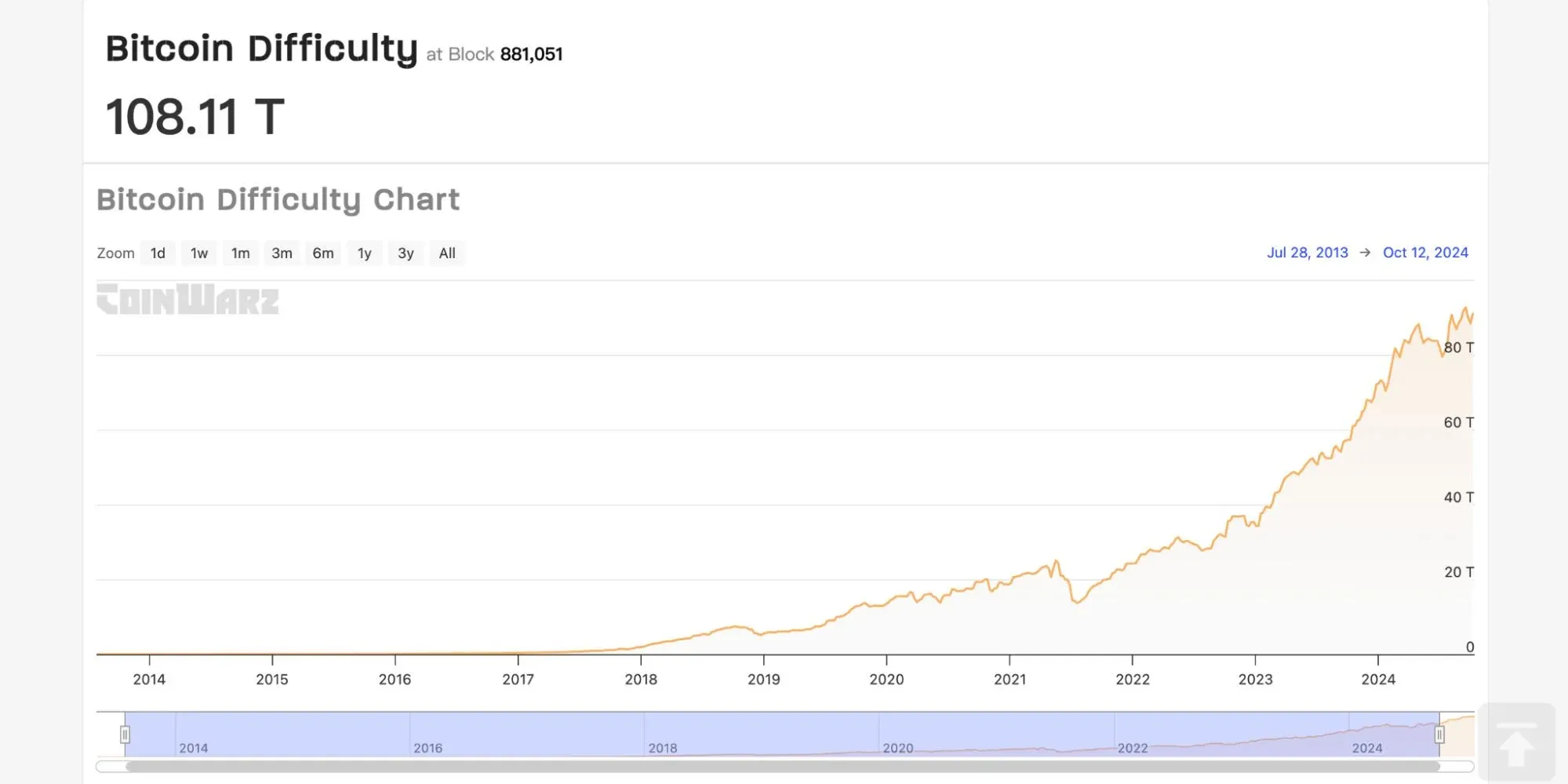
Source: https://www.coinwarz.com/mining/bitcoin/difficulty-chart
The Adjustment Mechanism of Mining Difficulty
Bitcoin mining difficulty is controlled by adjusting the Target value. Miners need to calculate a hash that meets specific conditions, and this condition is defined by the target. The size of the target value directly dictates the ease or difficulty of mining. When the computational power of miners increases and the mining speed accelerates, the system lowers the target value to ensure that blocks are generated every 10 minutes on average, thereby increasing the difficulty.
Take the 2018 Bitcoin mining difficulty adjustment as an example: at that time, the total hash rate of the Bitcoin network surged significantly, causing blocks to be generated faster than the 10-minute target. To maintain the 10-minute rhythm, the Bitcoin system adjusted the target value, forcing miners to perform more calculations and thus increasing the mining difficulty.
The Bitcoin protocol adjusts the difficulty every 2,016 blocks (which takes approximately two weeks). The core objective is to keep the average block time at around 10 minutes. The specific adjustment method is as follows:
- Actual Block Time < 20,160 minutes (i.e., 14 days): This indicates that the network's computational power has increased. The system raises the difficulty to slow down the block production speed.
- Actual Block Time > 20,160 minutes: This indicates a drop in computational power. The system lowers the difficulty to speed up block production.
The protocol also mandates that the magnitude of a single difficulty adjustment cannot exceed +400% (a fourfold increase) or -75% (a reduction to one-quarter) to prevent extreme fluctuations from causing network instability.
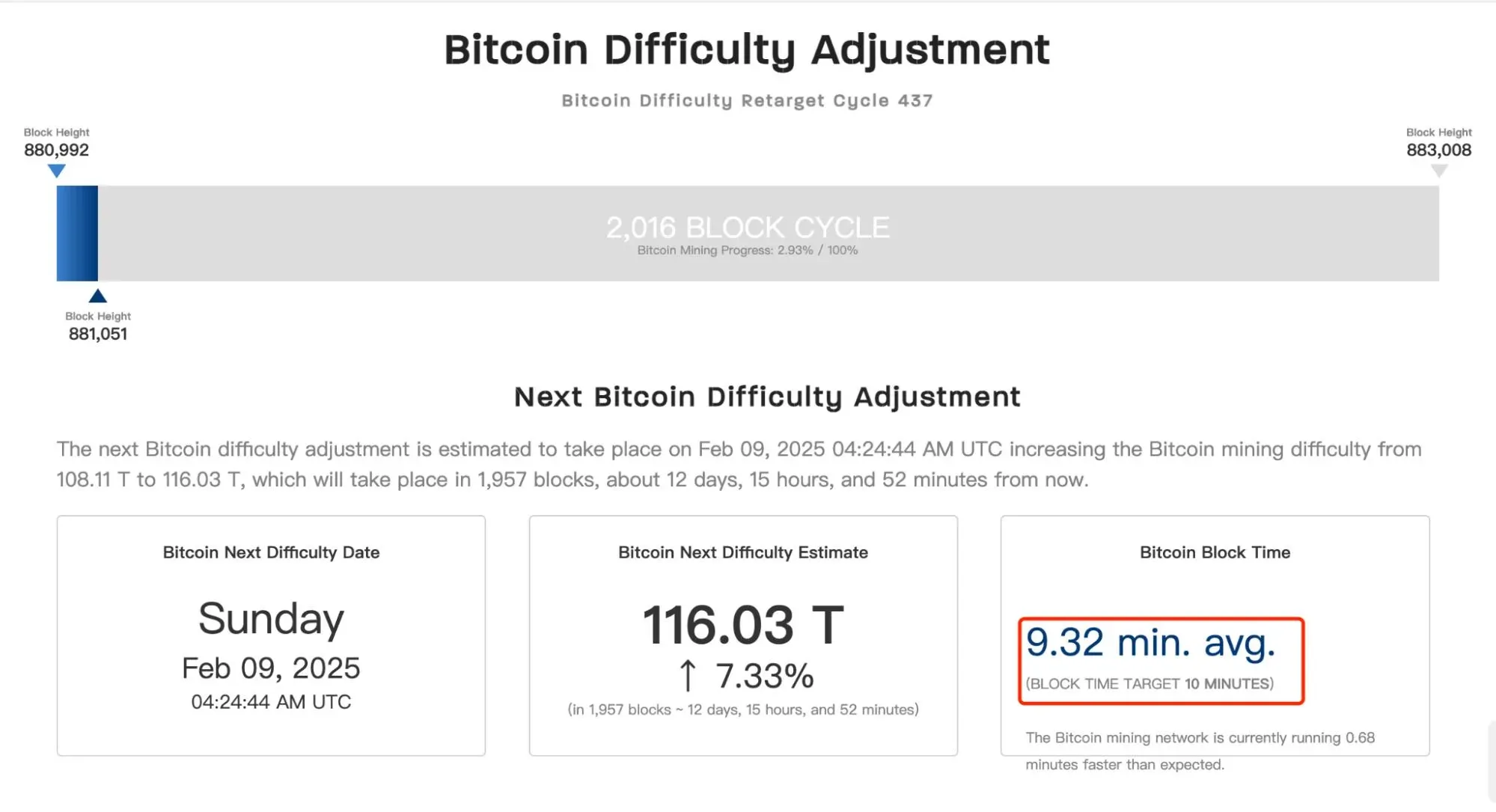
Source: https://www.coinwarz.com/mining/bitcoin/difficulty-chart
Factors Affecting Mining Difficulty
Bitcoin mining difficulty is influenced by several factors: the total network hash rate and upgrades in mining hardware technology generally increase difficulty, while miner exits or aging hardware can decrease it. Bitcoin price fluctuations attract or deter miners, driving changes in difficulty. Furthermore, mining costs, network block times, and regulatory policies also affect miner participation and hash rate. Miner behaviors, such as shifts in mining pools, can cause short-term difficulty fluctuations. Additionally, Bitcoin halving events and market cycles significantly impact miner revenue and participation levels.
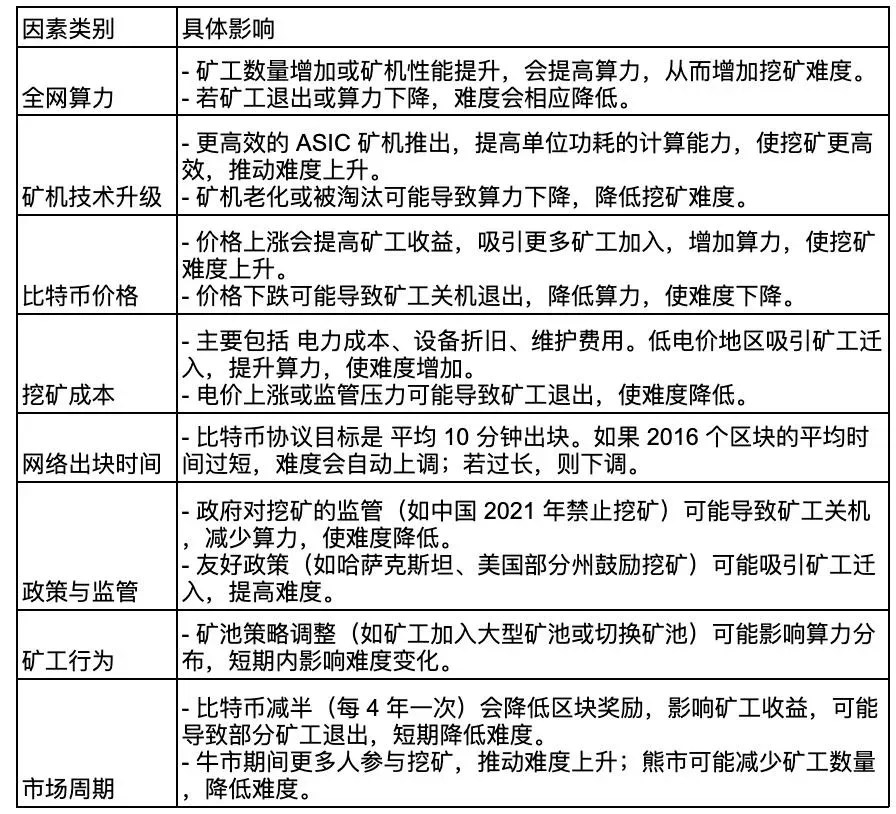
Below is a detailed breakdown of how each factor operates:
1. Total Network Hash Rate
The total network hash rate refers to the sum of all computational power contributed by all miners. The hash rate of the Bitcoin network changes as miners join or leave, which has a direct impact on the adjustment of mining difficulty.
- Increase in Hash Rate: An increase in the number of miners or the deployment of more powerful mining rigs raises the overall network hash rate, making it faster to find a valid hash. The system then increases the difficulty to maintain the 10-minute block target.
- Decrease in Hash Rate: Aging equipment, rising electricity costs, or a drop in Bitcoin's price may cause miners to exit, leading to a lower hash rate. The system then reduces the difficulty to ensure remaining miners can still produce blocks steadily.
- Mining Rig Efficiency: High-efficiency rigs, such as ASIC (Application-Specific Integrated Circuit) miners, have computational power significantly higher than traditional GPUs. Their widespread adoption quickly pushes up the total network hash rate, thereby increasing difficulty.
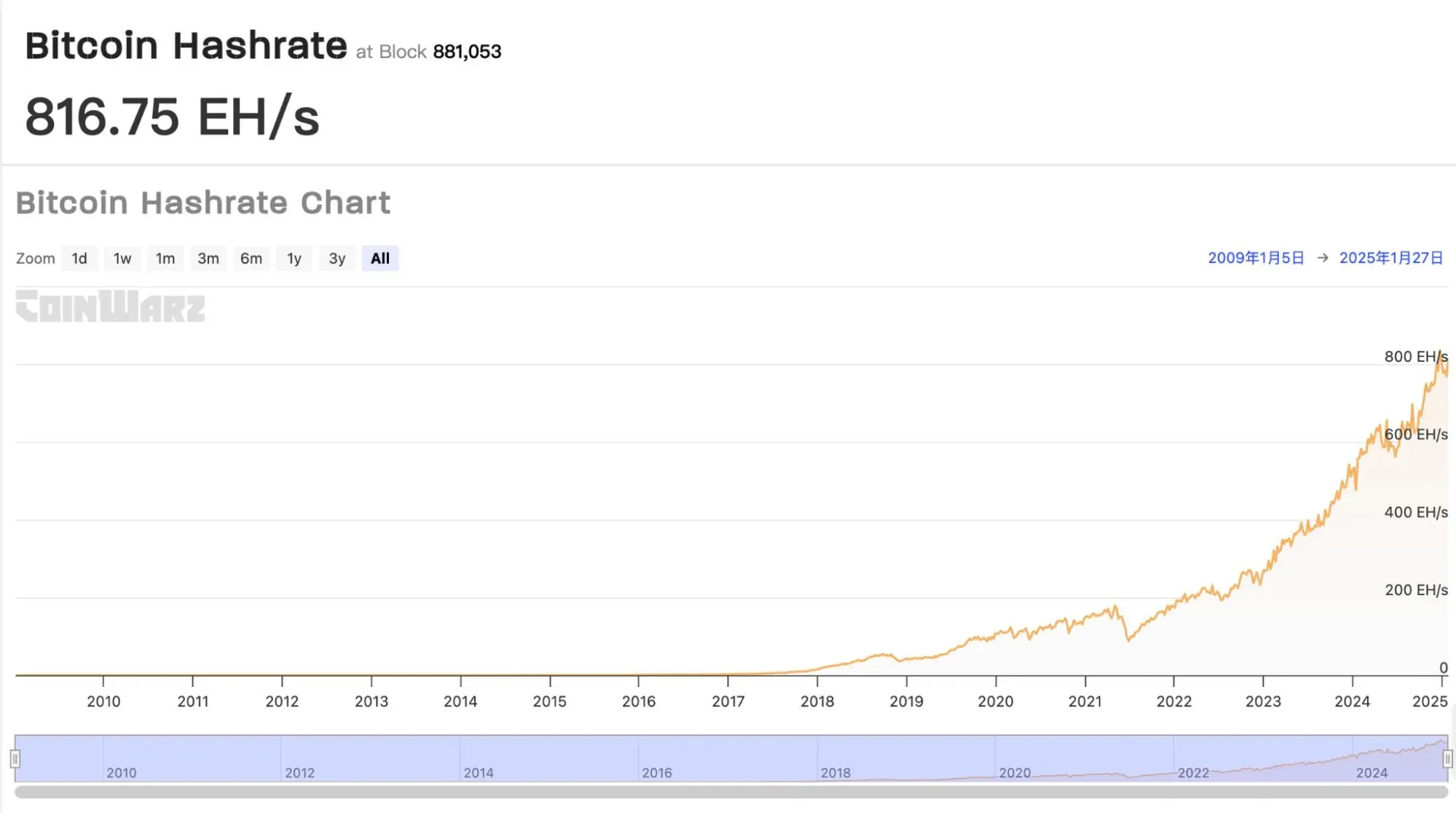
Source: https://www.coinwarz.com/mining/bitcoin/hashrate-chart
2. Mining Hardware Technology Upgrades
Technological progress directly enhances mining efficiency. In particular, the iteration of ASIC miners has caused Bitcoin's hash rate to grow exponentially.
- ASIC Miners: These devices are specifically designed for Bitcoin mining and have computational capabilities far exceeding general-purpose computers or GPUs. When a new generation of ASICs is deployed, the network hash rate rises rapidly, and the system adjusts difficulty upward accordingly.
- Hardware Obsolescence: Older devices are forced offline due to insufficient performance or high energy consumption relative to their output. This leads to a drop in hash rate and a subsequent decrease in difficulty.
- Technological Innovation: Reductions in energy consumption per unit of hash rate and lower production costs allow more miners to join the network, further driving up difficulty.
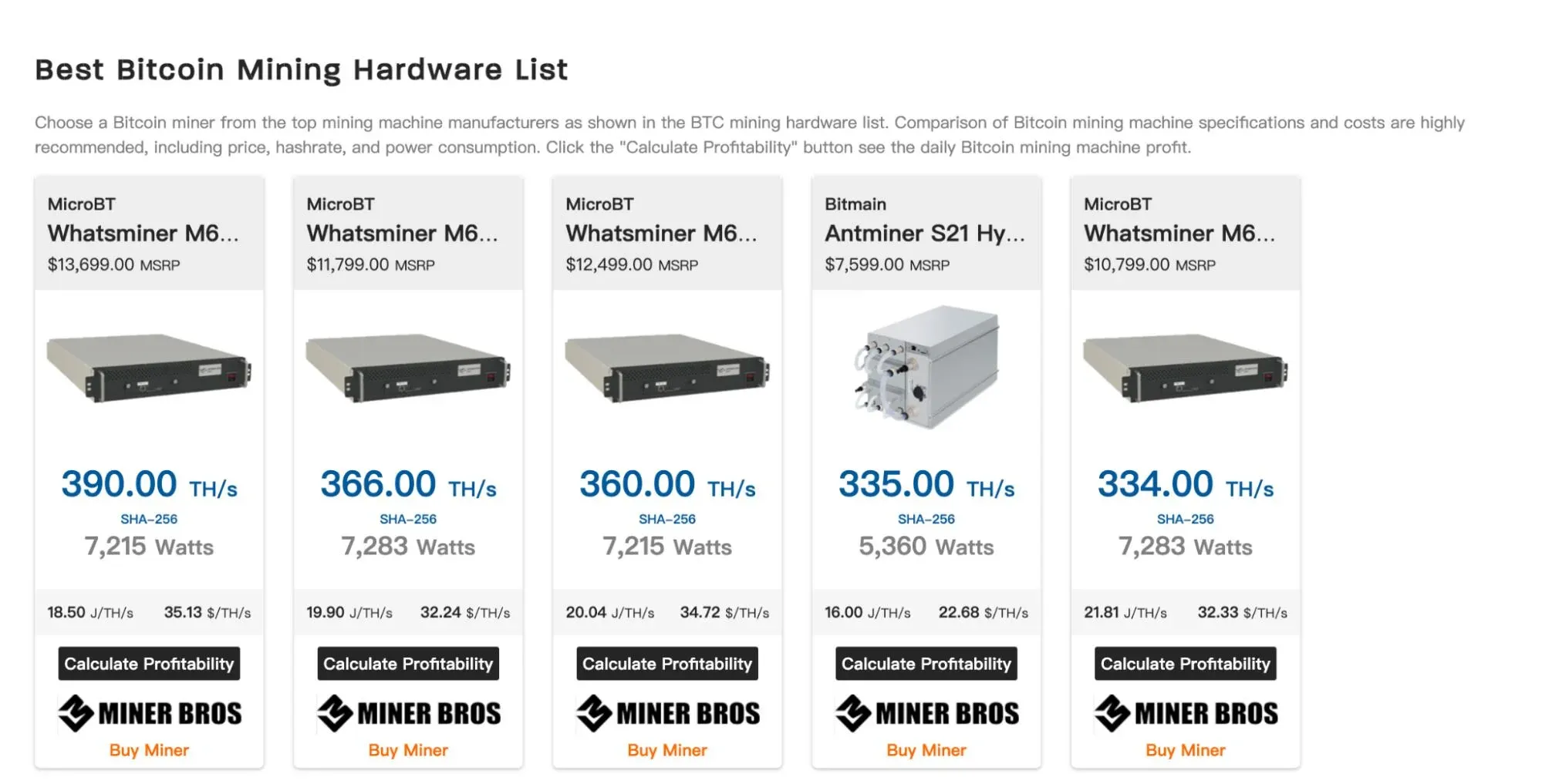
Source: https://www.coinwarz.com/mining/bitcoin/hardware
3. Bitcoin Price
Price is the core driver of miner profit expectations, which in turn influences hash rate and difficulty. In the global market, Bitcoin is primarily traded against the US Dollar (USD).
- Price Increase: Higher prices lead to higher revenue, attracting more miners to invest in equipment. This increases the hash rate and, consequently, the difficulty.
- Price Decrease: Revenue drops, and for some, the operational costs of inefficient rigs may exceed the rewards. This leads to some miners exiting the network, causing the hash rate and difficulty to decline.
- Market Volatility: Sharp price swings can lead to rapid changes in miner behavior, triggering frequent difficulty adjustments. Investors and miners often use platforms like Binance.US (for US-based users) or the global Binance platform to track these price movements.
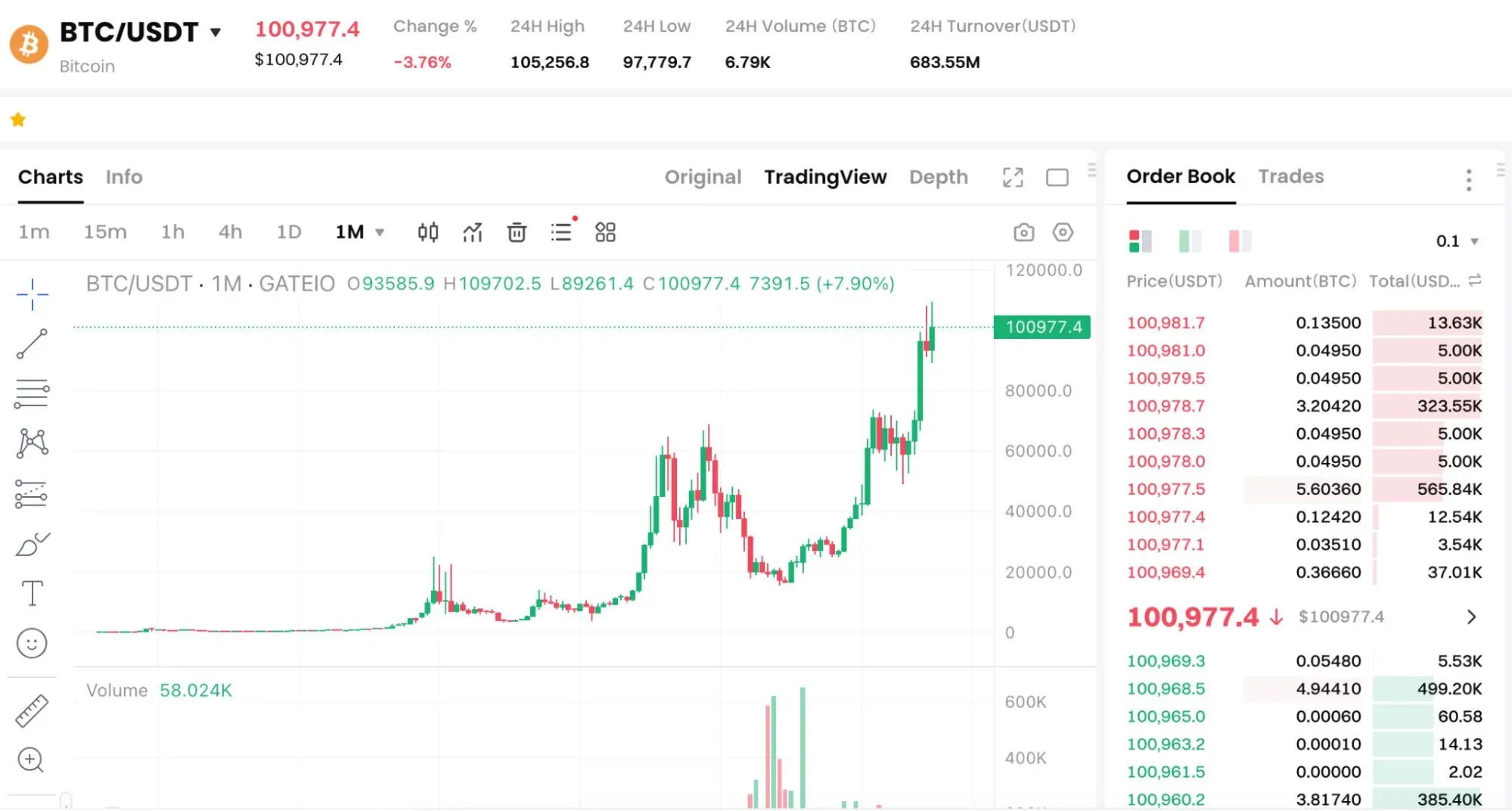
Source: https://www.Gate.com/trade/BTC_USDT
4. Mining Costs
Mining costs primarily include electricity fees, equipment depreciation, and mining farm operational expenses (OPEX). Changes in these costs directly influence whether a miner remains active.
- Electricity Costs: An increase in electricity prices raises operational costs. Some mining farms that rely on cheap power may be forced to shut down if rates rise, leading to a decrease in hash rate and difficulty.
- Equipment Depreciation: Mining rigs have a limited lifespan. As they age, their efficiency drops. If they are not replaced with new equipment, the hash rate will decline.
- Operational Costs: Rising management, labor, and infrastructure costs also squeeze profit margins, affecting the supply of hash rate. Miners often use SWIFT or SEPA transfers to settle large-scale hardware purchases or pay for industrial-scale electricity in USD or EUR.
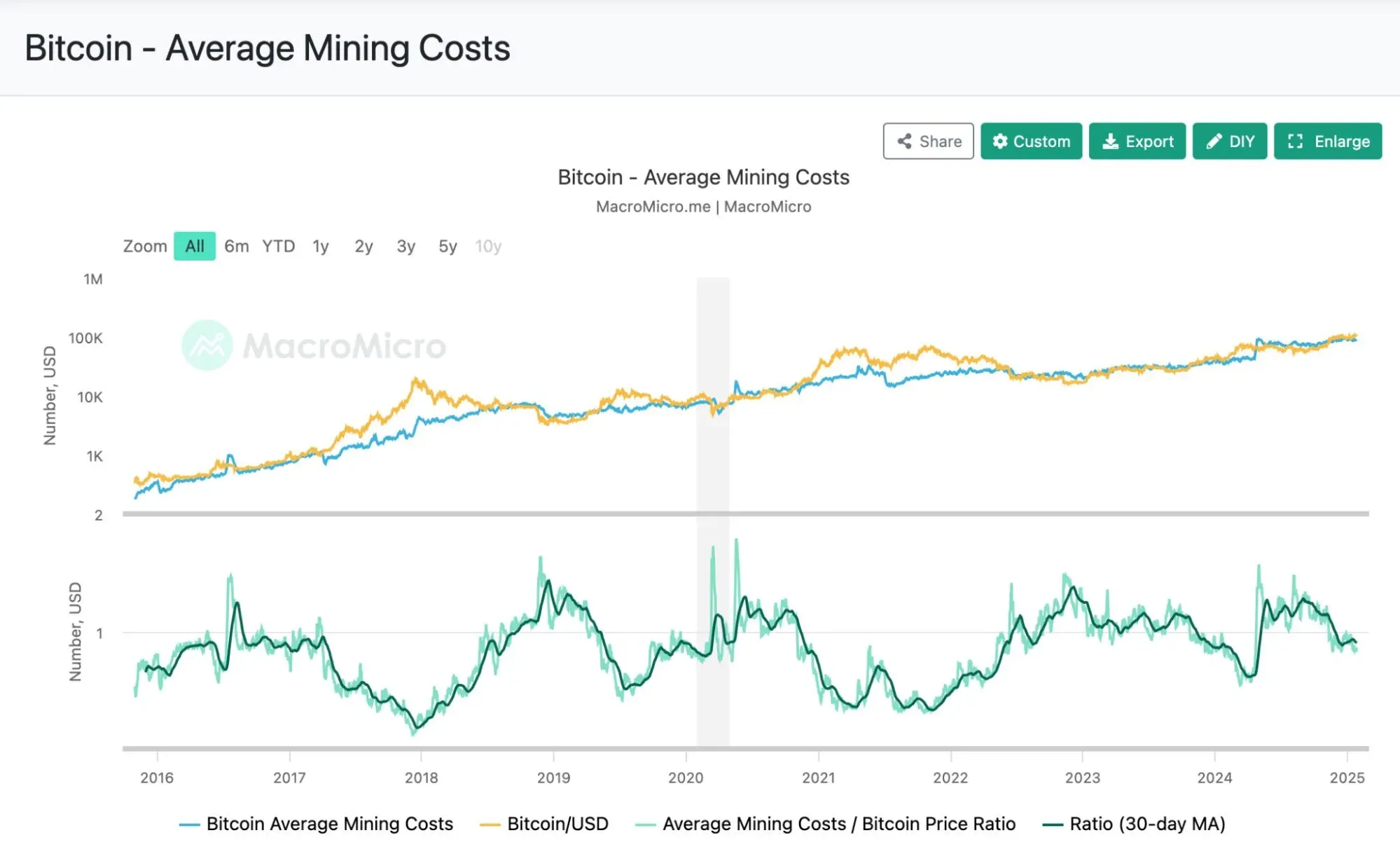
Source: https://en.macromicro.me/charts/29435/bitcoin-production-total-cost
5. Network Block Time
The Bitcoin system ensures block time stability through a difficulty adjustment every 2,016 blocks (approximately every two weeks).
- Short Block Time: If the actual generation time is less than 14 days, it indicates an increase in hash rate. The system increases difficulty to pull the block production speed back to the target level.
- Long Block Time: If the actual generation time exceeds 14 days, it indicates a decrease in hash rate. The system lowers difficulty to accelerate block production.
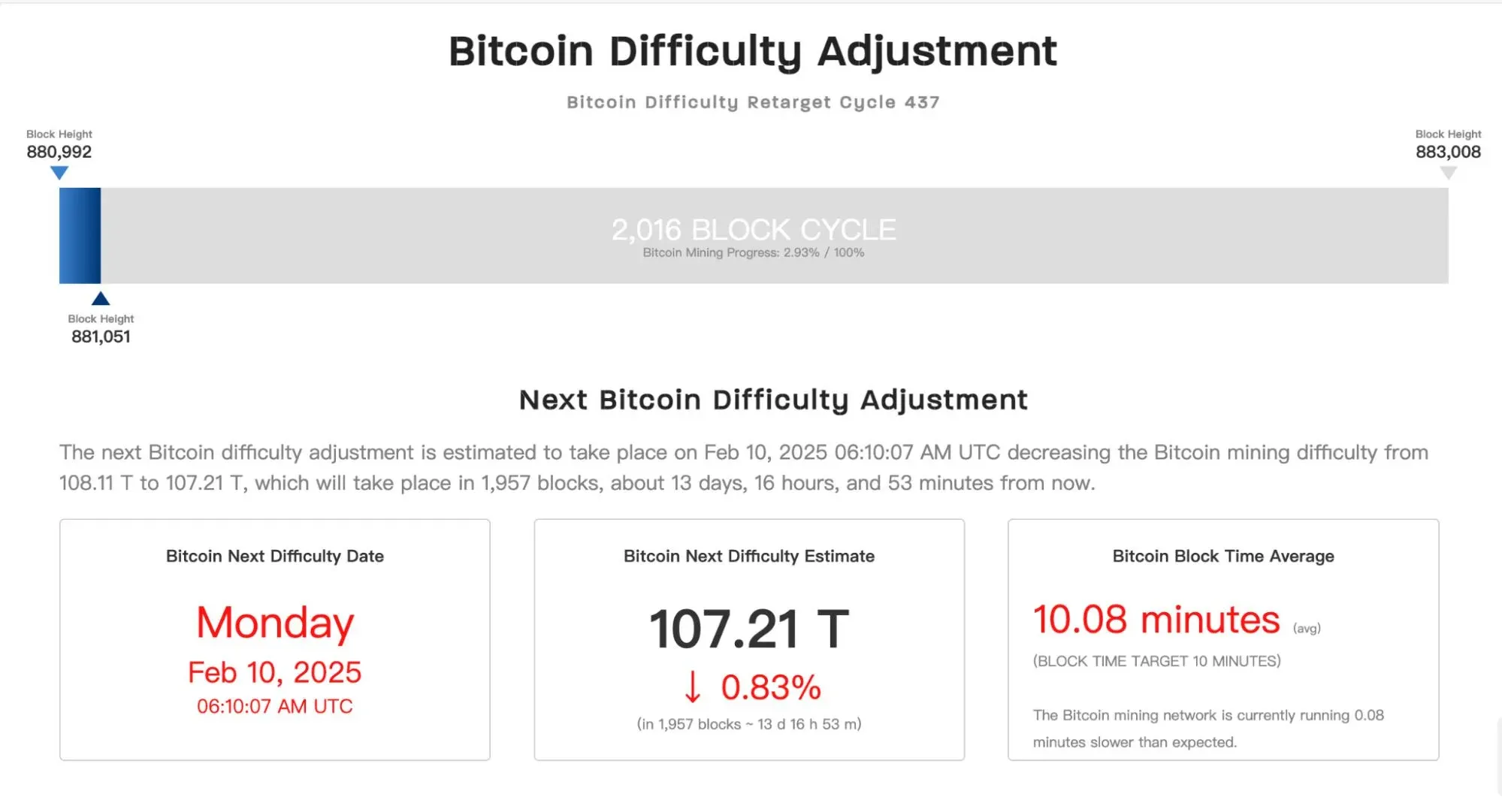
Source: https://www.coinwarz.com/mining/bitcoin/difficulty-chart
6. Policy and Regulation
The regulatory environment affects miners' operational costs and geographical choices, indirectly impacting the total network hash rate and difficulty.
- Policy Support: Some countries or regions provide cheap electricity or tax incentives to attract miners, leading to a concentration of hash rate and higher difficulty.
- Policy Crackdowns: For instance, the 2021 ban on Bitcoin mining in China led to a massive migration of hash rate out of the country. This caused a sudden drop in network hash rate and a record-breaking downward adjustment in difficulty. Since then, much of the hash rate has migrated to the United States, Kazakhstan, and other regions.
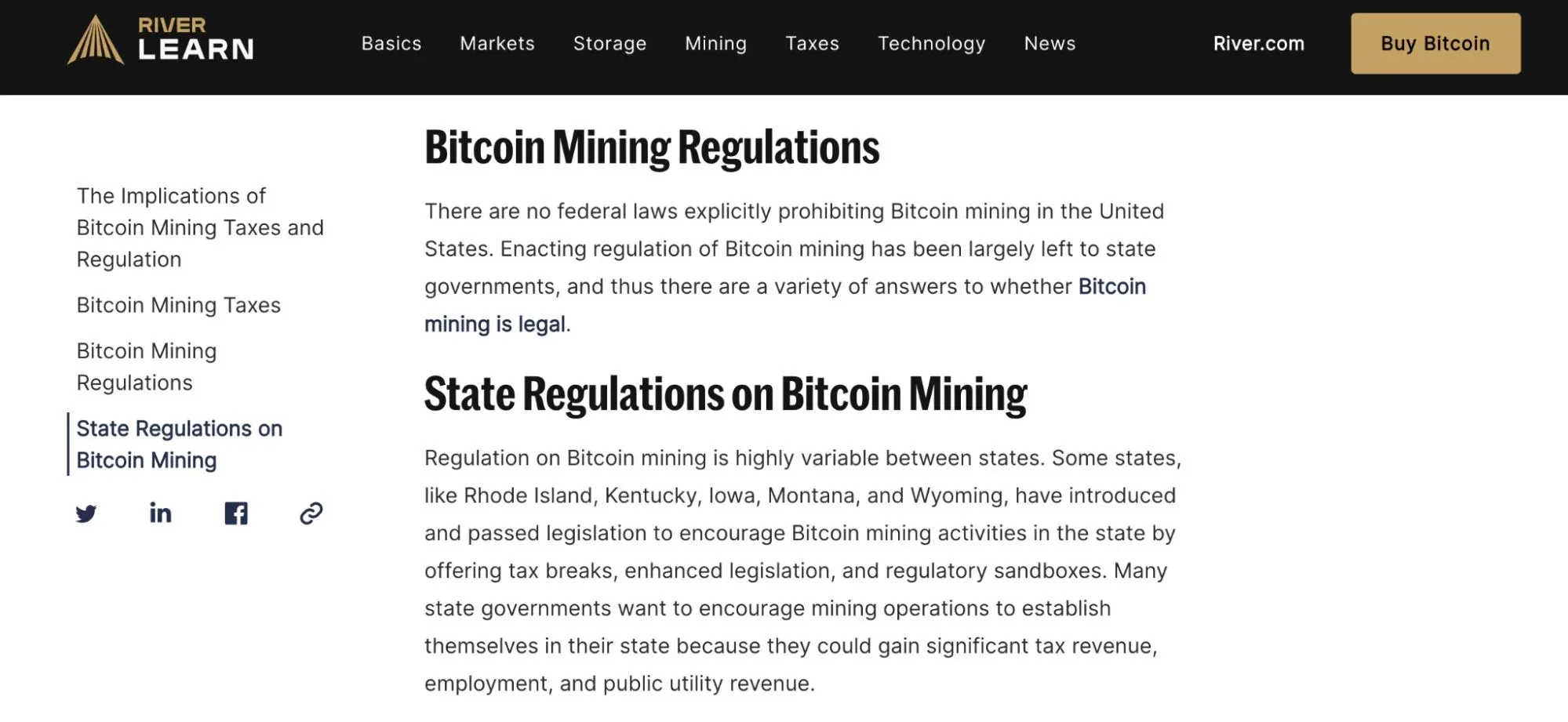
Source: https://river.com/learn/bitcoin-mining-taxes-regulation/#the-implications-of-bitcoin-mining-taxes-and-regulation
7. Miner Behavior
Miner strategies and the concentration of mining pools affect the distribution of hash rate, which in turn causes subtle fluctuations in difficulty.
- Mining Pool Centralization: If a few large mining pools control a high percentage of the total hash rate, it can impact network security and have a significant effect on difficulty adjustments.
- Pool Strategies: Reward mechanisms, fee
Related Reading
- AI‑Driven Deflation Could Push Bitcoin to $11 Million: Strive Analyst Forecast
- Bitcoin’s Surge: Speculative Bubble, Safe‑Haven Demand & Finance Re‑Pricing
- PlanB Bitcoin Chart Review: RSI & MVRV Bullish Signals
💡 Register on Binance with referral code B2345 for the maximum trading fee discount. See Binance complete guide.



