
 Bitaigen Research
 In this article we systematically outline the principles behind Bitcoin transaction fee calculation and the factors that influence them, helping users choose appropriate fee rates under different network conditions to avoid delayed confirmations or unnecessary costs. Continue reading for detailed information. The article also provides practical fee‑estimation tools and clarifies common misconceptions, assisting newcomers in getting up to speed quickly.
How to calculate Bitcoin transaction fees, how are Bitcoin transaction fees calculated?
Bitcoin transaction fees are charged based on the size of the transaction data in bytes, typically using a benchmark of 0.0001 BTC per kilobyte, and they are also affected by the level of network congestion. Users can select an appropriate fee rate directly within their wallet.
Bitcoin fees are not mandatory
“There’s no such thing as a free lunch,” but within the Bitcoin network fees are not compulsory. In Bitcoin’s early days, when the price was low and on‑chain activity was sparse, miners often did not care whether they received a fee and would even confirm transactions with zero fee. For example, at block height 100,000, the following transaction was included in a block despite paying no fee at all.
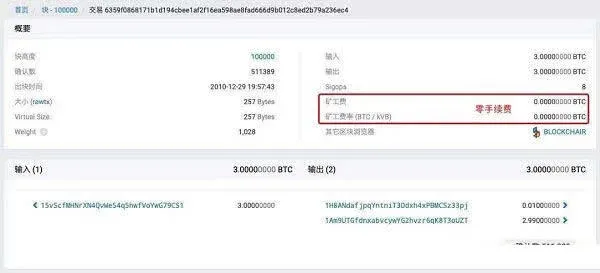
As Bitcoin’s price surged and transaction volume exploded, miners began to prioritize fee‑paying transactions to maximize their earnings. Today, a transaction that does not include a fee is very unlikely to be selected by miners for inclusion in a block.
Factors that affect Bitcoin fees
Bitcoin fees are independent of the amount being transferred; sending 1 BTC and sending 1,000 BTC can incur the same fee. The primary influencing factors are:
- Transaction byte size
- Fees are charged per byte; the common standard is 0.0001 BTC per kilobyte (any fraction of a kilobyte is rounded up to a full kilobyte).
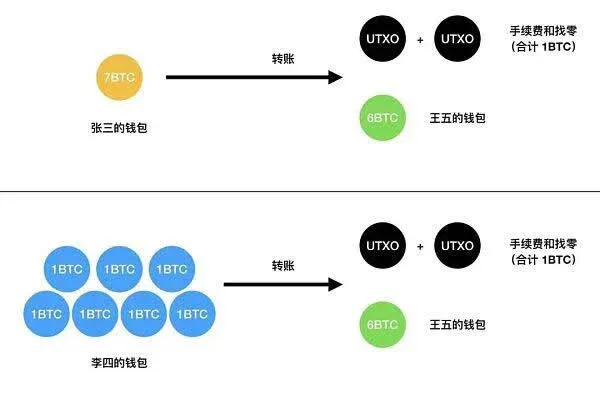
- The byte size depends on the number of UTXOs (unspent transaction outputs) involved, not on the transferred amount.
- Example: Alice uses a single 7 BTC UTXO to send 6 BTC, resulting in a relatively small transaction size; Bob, on the other hand, combines seven separate 1 BTC UTXOs to send the same amount, which significantly increases the byte count.
- Network congestion level
- When the mempool is crowded, miners tend to pack transactions offering higher fees first, effectively “jump‑starting” their confirmation.
- If you are not in a hurry, you can set a lower fee and wait for the network to clear before your transaction is included.
- Coin age (coin‑days) and other secondary factors
- Older coins that have been held longer may receive a slight priority boost, indirectly influencing the fee you might choose.
How ordinary users can set a reasonable fee
For most users, manually counting UTXOs, calculating byte size, and monitoring real‑time network conditions is impractical. The following simple approaches are recommended:
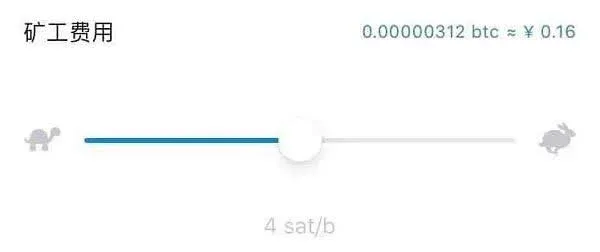
- Use the fee rate suggested by your wallet: The majority of Bitcoin wallets automatically propose a fee based on current network congestion and the estimated transaction size.
- Fine‑tune according to your urgency: If you need fast confirmation, you can increase the suggested rate modestly; if you can tolerate some delay, you may lower it slightly.
Summary
- Bitcoin fees are not mandatory; in the early network a zero‑fee transaction could be confirmed, but today paying a fee is essentially required for miners to include your transaction.
- Fees are mainly driven by transaction byte size and network congestion, while secondary factors such as coin age can also have an effect.
- The most convenient method for regular users is to rely on the fee recommendation provided by their wallet and adjust it slightly according to their desired confirmation speed.
The above explanation addresses the core question “How to calculate Bitcoin transaction fees, how are Bitcoin transaction fees calculated?” For more information on Bitcoin fees, please follow additional articles from Bitaigen (比特根).
💡 Register on Binance with referral code B2345 for the maximum trading fee discount. See Binance complete guide.



